How to Style a Bookshelf in a Small Singapore Apartment Without Making It Feel Crowded
A small Singapore home does not need to feel sparse or overloaded. With the right bookshelf proportions, warm materials, and disciplined styling, a compact living room can still have depth, character, and useful storage. The challenge is not finding more furniture; it is making each piece earn its place. This matters especially in HDB flats and condos in Tampines, Bedok, and Punggol, where living rooms often share their width with a dining zone, television wall, or a corridor leading to the lift.
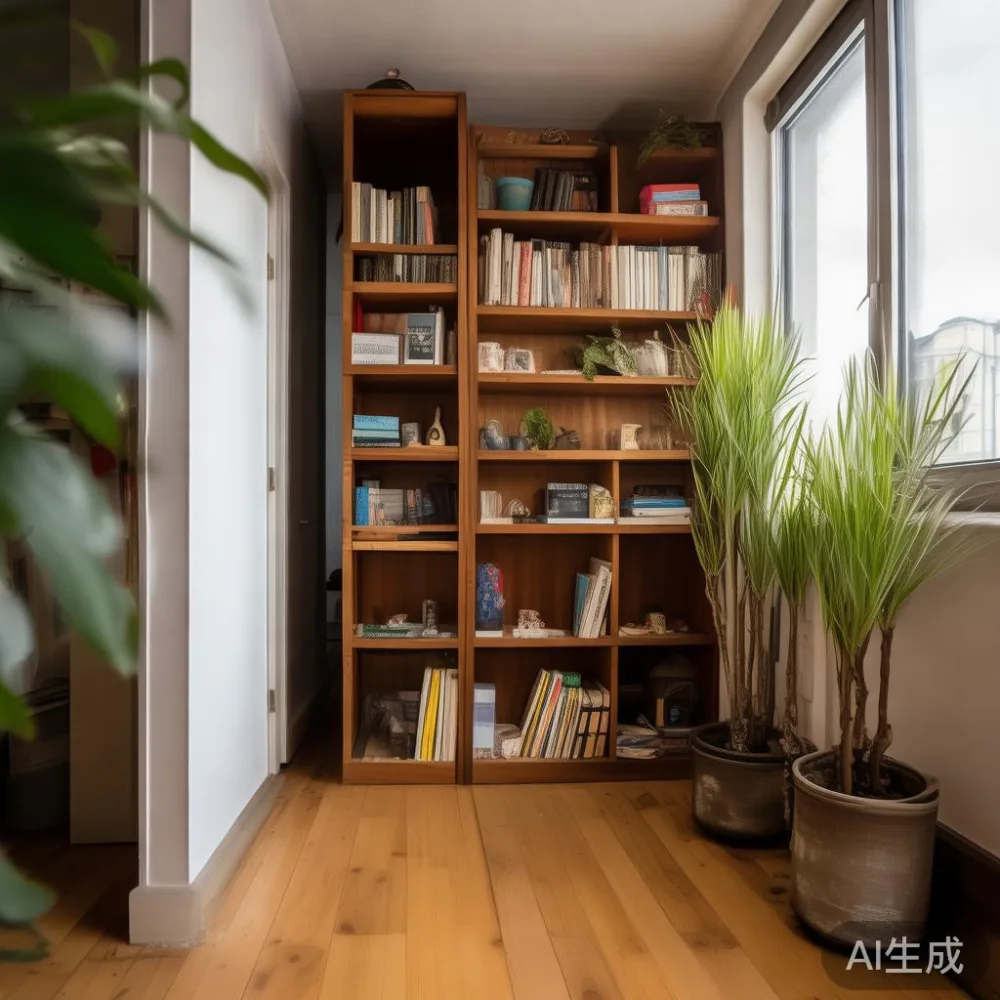
Think about scale before shopping. A bookshelf that reaches the ceiling can make a low room feel ordered, but an oversized unit with broad side panels may visually narrow a 280 cm wall. Measure the wall, the skirting board, the ceiling recess, and the socket positions before choosing a layout. Leave at least 6 cm beside a tall unit where possible, or align it deliberately with a nearby architectural edge. The goal is not to fill every centimetre. It is to create quiet breathing room around the books and objects you actually use.
How wide should a bookshelf be in a small Singapore living room?
For most HDB living rooms, a bookshelf between 80 cm and 120 cm wide offers enough capacity without creating a heavy block. A 60 cm-wide unit suits a recessed wall, a narrow console position, or a reading corner beside a window. In a larger condo living room, widths of 120 cm to 180 cm can work, provided the ceiling height and opposite furniture leave a comfortable visual gap.
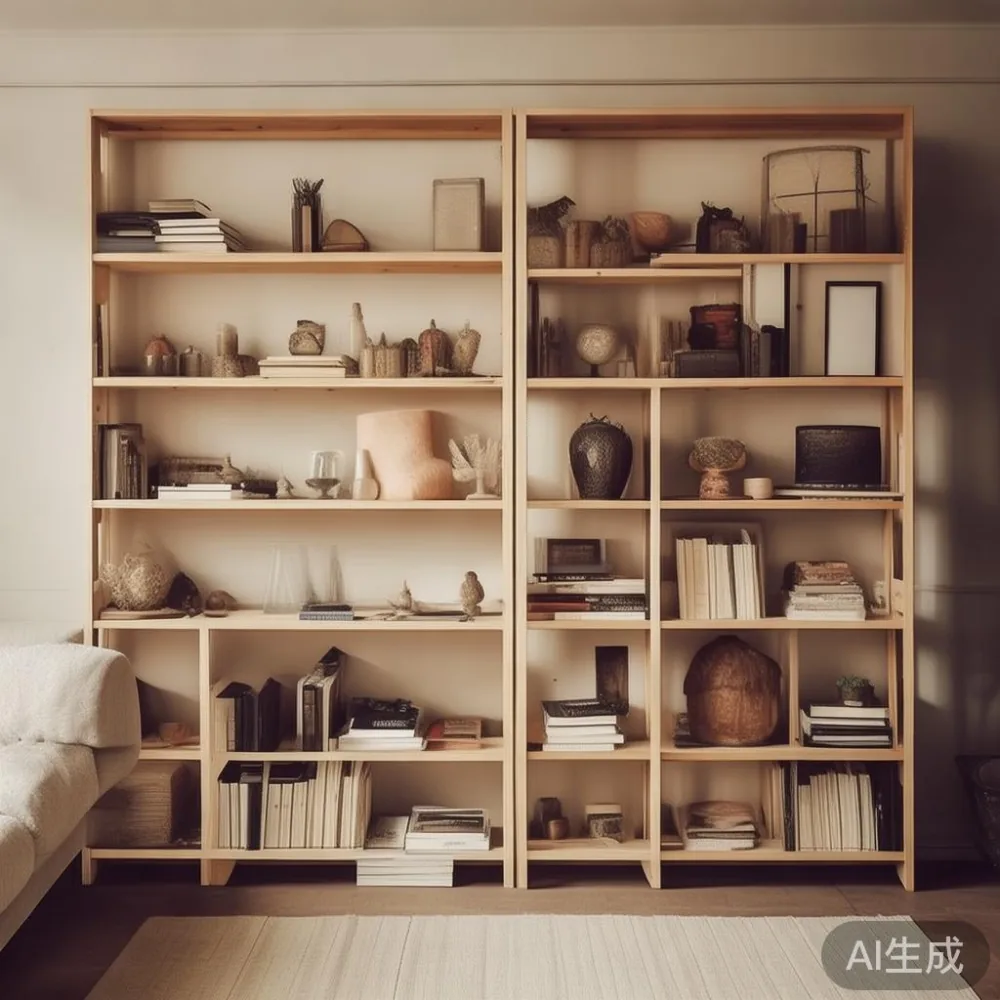
Height is equally important. A bookshelf around 180 cm to 200 cm tall balances a standard 230 cm to 255 cm ceiling in many Singapore interiors, while a unit above 220 cm can feel imposing in a compact HDB room unless it is shallow and fitted into a recess. For low ceilings, bookcases around 150 cm to 180 cm tall often create a more comfortable proportion. Check the lift and corridor dimensions before delivery: a packaged bookcase may be wider than its assembled size. Ask the supplier for the carton measurements, and keep in mind that lifts commonly require the package to fit through the door and turn inside the landing.
Depth deserves attention too. Books need roughly 20 cm to 28 cm of clear depth for standard hardcovers and paperbacks. A shelf depth of 28 cm to 30 cm is practical without projecting too far into the room. Decorative baskets and albums may need 32 cm to 35 cm. If a dining table sits nearby, allow 75 cm to 90 cm of circulation space; if a lift opens directly into the flat, leave room to manoeuvre the package instead of trying to angle it through immediately.
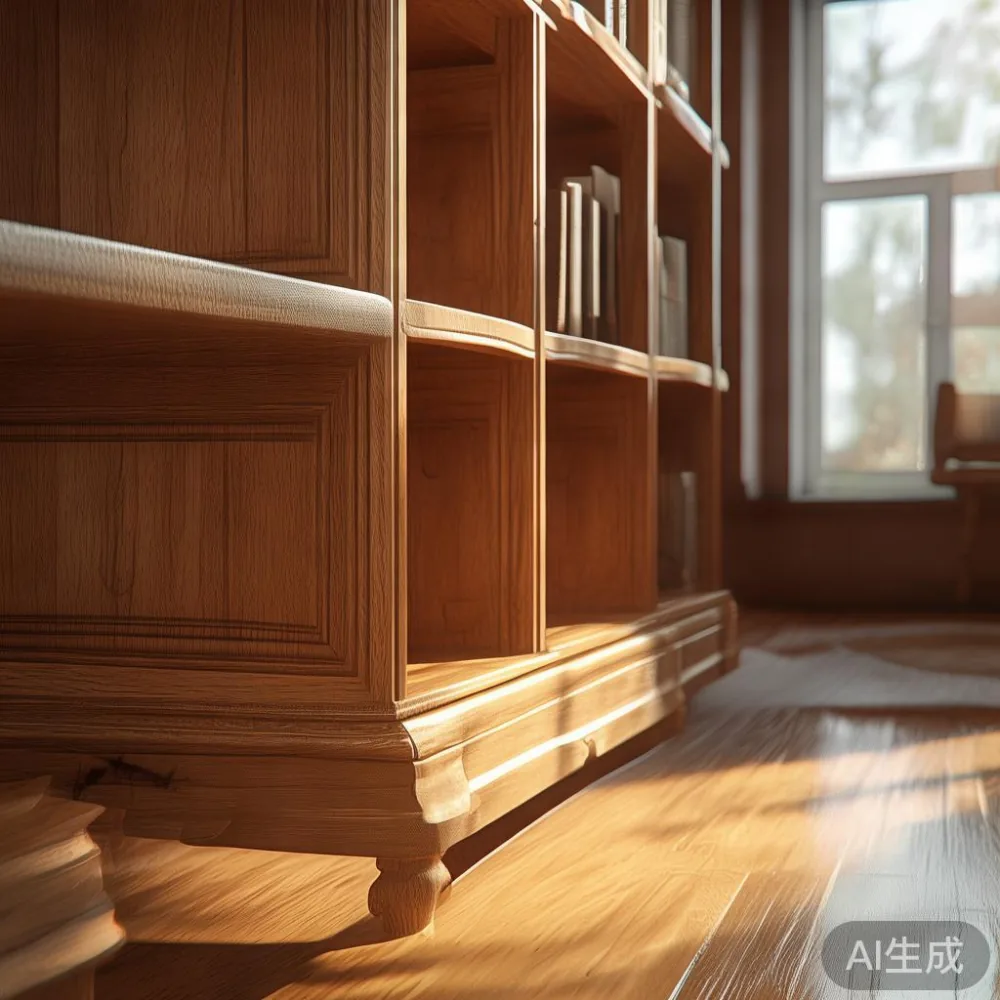
Scale can also be improved with the furniture around the bookshelf. A low solid wood sofa under a window, a compact dining table in pale timber, or a slim bed frame with a clean headboard can provide horizontal calm. A marble table can add reflective lightness, but its visual weight should stay away from the busiest corner. These decisions work together: the bookshelf becomes part of a balanced room rather than an isolated storage project.
Should a small apartment use open shelves or closed bookcases?
Open shelves create visual lightness because the wall remains partly visible. Closed bookcases conceal visual noise, but the doors need good proportions and hardware to avoid looking heavy. A mixed approach is often the most convincing: closed storage on the lower section, open shelves above, or one narrow cabinet beside an otherwise open bookcase.
For families in Bedok or Tampines who display books, toys, and daily objects, a hybrid bookshelf can keep the upper shelves calm while hiding cables, paperwork, and less attractive containers below. Choose shelves with a minimum internal height of 24 cm for paperbacks and 30 cm for art books. If the unit includes a cabinet, position the closed section nearest the television or dining area so its doors are less likely to obstruct circulation.
Open shelving does not mean displaying everything. Reserve one shelf for books used regularly, one for objects worth seeing, and leave at least 25% of the surface empty. This simple rhythm prevents the crowded feeling that arrives when every square centimetre is occupied. On a 90 cm-wide unit with five shelves, three populated areas and two lightly styled ones can look intentional.
For the lighting, an LED strip with a warm 2700K colour temperature adds depth without taking much space. A 6 cm to 10 cm profile mounted under a shelf can illuminate books without producing screen glare. Keep the transformer accessible and check the cable length before installation. In a humid environment, choose fittings rated for indoor use and leave ventilation around any electronic components.
What is the right way to arrange books on a bookshelf?
Begin with the largest books and place them near the ends or on lower shelves where they support the composition. Leave the centre flexible rather than forcing a perfectly symmetrical block from top to bottom. A balanced arrangement can include a dense group, an open group, and a single horizontal stack, creating contrast without making the unit look accidental.
Use books you read, not merely books you plan to read. Grouping by colour is neat, but grouping by subject, size, or cover design often feels more relaxed and authentic. In a family flat, a children’s section can occupy the lower 2 shelves, approximately 60 cm to 80 cm above the floor, so the books are easy for younger users to reach. Reserve the middle shelves for daily reading and the top shelf for lighter objects or rarely handled books.
Lean no more than 3 to 4 books against a support, and add a small bookend rather than allowing a row to collapse. For a more architectural look, alternate horizontal stacks with upright rows every 25 cm to 35 cm. Avoid filling the bottom shelf with large hardcovers at one end and small paperbacks at the other unless you secure the heavier items with a discreet bookend.
Styling objects takes restraint. Choose 1 to 3 pieces per open shelf, with a height relationship to the shelf above: leave at least 8 cm to 12 cm of visible space around a vase or framed print. A 22 cm to 28 cm ceramic vessel can work in a 30 cm-high shelf bay, while taller objects need at least 35 cm to 40 cm of vertical clearance. If you already own a light luxury accent chair nearby, repeat one or two of its colours in the books or objects rather than adding more furniture to the corner.
Can I style a bookshelf around a sofa without making the room feel crowded?
Yes, if the bookshelf supports the sofa zone rather than competing with it. Place the unit behind a compact solid wood sofa only when the sofa back is low and the shelf remains visible at the sides. In many HDB layouts, a bookcase beside the sofa is more practical: it gives the sitting area a defined edge while preserving the route to the dining area.
Keep the gap between the sofa arm and bookshelf between 15 cm and 25 cm, not enough for a walkway but enough to avoid a collision. If the room is only 300 cm wide, a 90 cm bookshelf plus a 190 cm sofa leaves just 20 cm, so dimensions should be checked carefully. In a 350 cm-wide living room, a 100 cm bookshelf and a 210 cm sofa create more manageable spacing.
A tall unit behind a sofa should be shallow, around 18 cm to 22 cm, if it is only decorative. A functional bookcase needs 25 cm to 30 cm. A narrow shelf running above the sofa can work if the ceiling is at least 245 cm and the shelf is securely fixed, but avoid placing heavy books directly above seated heads.
For mixed-use layouts, the bookshelf can sit opposite the sofa and act as a visual anchor. Keep the opposite wall low enough to preserve sightlines across the room. This is especially helpful in Punggol condos with open living and dining areas. A light-toned dining table, a small marble table, or a nightstand with slim legs can continue the airy effect without adding bulky silhouettes.
Is it better to paint the wall behind the bookshelf?
The wall colour should support the wood tone and the amount of visible surface. Warm white, soft greige, and pale putty can make a medium-oak bookshelf feel lighter against a compact room. A deeper colour can define the reading zone, but it should not make the wall appear narrower. If the bookshelf has open sides, paint the wall one or two shades lighter than the timber to reduce its visual mass.
For example, pale oak with visible grain can sit against a warm off-white wall, while walnut can pair well with muted green or stone. The bookshelf finish should be tested in the actual room under both daytime and evening light. Singapore homes often receive strong indirect light, so a finish that looks warm in a showroom may appear lighter near a window.
Paint behind a fully fitted bookcase if you are unsure because the wall will not be seen much. For open shelving, consider a plain backdrop: a large neutral print, a subtle textured wall finish, or one framed artwork. Avoid a dense pattern behind a busy book arrangement. The French light luxury approach favours tonal restraint, clear shapes, and a small number of polished details, such as brass-toned hardware or a sculptural lamp.
Post-modern light luxury can offer a different route: combine a traditional solid wood bookshelf with one unusual object, a curved frame, or a contrasting material. American light luxury leans towards practical comfort and layered textiles, so a throw, cushion, and warm lamp can soften the area around the shelf. In either case, the palette should stay to 3 main colours: timber, wall tone, and an accent colour.
How much does a solid wood bookshelf cost in Singapore?
A practical solid wood bookshelf can begin around SGD 600, while more substantial designs with thicker boards, adjustable shelves, or integrated cabinets may range from SGD 1,200 to SGD 2,800. A made-to-measure unit can cost more depending on width, depth, finish, and hardware. Always compare the quoted price before GST and confirm whether delivery, assembly, and wall fixing are included.
Singapore shoppers should also compare total ownership rather than purchase price alone. Solid timber shelves may be refinished, while lower-cost particleboard options can swell or lose rigidity if exposed to moisture. If a company offers a 10-year structural warranty and lifetime refinishing, the long-term maintenance cost becomes easier to plan. Some services, including refinishing or white-glove delivery, may carry separate charges; ask for those figures in writing.
MIDHILL has operated since 2008 and exports to more than 15 countries, which gives its material specifications and packaging process a useful international dimension. Local buyers can still check the practical details: estimated delivery time, carton size, lift access, return window, and GST treatment. Free shipping over US$350 is stated for qualifying orders, but the threshold should be confirmed for Singapore and converted at the applicable rate rather than assumed as a fixed SGD value.
Delivery estimates should allow roughly 7 to 14 business days for standard in-stock pieces, while custom sizing or special finishes may take 4 to 8 weeks. Confirm the lead time before arranging the installation date. A 14-day return period is useful, but heavy furniture can involve collection fees, restocking charges, or return shipping. Those terms are especially important when a bookcase must pass through a narrow corridor.
What should I check before ordering a bookshelf for an HDB or condo?
Measure the route from the lift to the flat door, including handrails, ceiling pipes, and the turning space at the landing. A standard HDB lift door may be around 80 cm to 90 cm wide, and a packaged bookcase can exceed 100 cm even when the unit itself is only 80 cm wide. If the carton is too large, the furniture may need to be flat-packed or assembled inside the home.
Record the wall width, ceiling height, skirting depth, and locations of power sockets and air-conditioning outlets. Leave 5 cm to 8 cm above a freestanding bookcase if the top is not fixed to the wall. For safety, tall shelves should be secured with an appropriate anti-tip bracket. Ask whether the supplied fixings suit plasterboard, brick, or concrete walls.
Check the weight too. A 180 cm-tall solid wood bookcase may weigh 45 kg to 75 kg depending on its construction. Two people should carry it, and the route should be cleared before delivery. If the lift cannot take the package, the supplier may be able to repack it, but repacking is safer than forcing a heavy carton into the cabin.
I visited a client’s Bedok flat last month to review a proposed reading corner. The living room measured 330 cm wide, and the original 120 cm bookcase made the route past the dining area feel pinched. We replaced it with an 80 cm-wide, 190 cm-tall bookshelf in a lighter oak finish. Its 30 cm depth held the client’s books, while the pale wall behind it visually softened the corner. Moving the nearby dining table 12 cm towards the wall created a clearer 75 cm passage and made the room feel larger without buying another square metre.
How can I make a small apartment feel more spacious around a bookshelf?
Use the bookshelf to organise sightlines. Keep the tallest mass on the longest uninterrupted wall, align its top with a nearby ceiling recess, or use it to mark a boundary between living and dining areas. Avoid placing it in the middle of a room unless the layout genuinely requires a divider. In a Punggol condo with an open-plan interior, a low shelving run can provide definition without blocking the kitchen view.
Keep the lower zone visually light. If the bookcase includes drawers, choose slim handles and a finish that matches the wall. Displaying fewer objects at eye level gives the room more breathing space. A lamp with a 25 cm to 35 cm shade can add warmth beside the shelf, provided the cable is routed along the skirting rather than across the walking route.
Other furniture should support the same composition. A slim wardrobe can create a calm bedroom wall, while a compact nightstand can repeat the bookshelf’s timber tone. If you are comparing options for the bedroom, questions such as best Japandi wardrobe for 2026 or best Nordic wardrobe for 2026 are useful prompts, but the actual fit matters more: a 150 cm-wide unit should still leave adequate door and corridor clearance. The same principle applies when learning how to style European bed in room, since every piece should reduce visual friction rather than add another focal point.
Accessories should be edited before they are bought. A single framed print, one plant under 40 cm tall, and a small bowl may be enough. Plants need light and ventilation, so a shelf near a window can suit a compact pothos, while a darker bookcase away from direct sun may be better for a low-light arrangement. Keep liquids away from the wood and use coasters beneath cups or vases.
How do I know when a small-apartment bookshelf has too much on it?
Step back 2 metres and look for three common signs. The unit appears darker than the surrounding wall because every shelf is filled. Books and objects form a continuous horizontal line with no empty space. The shelf blocks a window, competes with the television, or makes the main passage look narrower than 70 cm.
Remove 5 to 8 objects and see whether the room feels different. Clear one complete shelf near eye level. Group a few small pieces on a tray if they belong together. Move one frequently used object to a side table and reserve the shelves for books, a lamp, and a single artwork. A curated shelf can hold 20 books and still feel open because the spacing is deliberate.
Check the light as well. Switch off overhead lighting and use a warm lamp to reveal the display. If the shelf becomes a dark mass at night, add a 2700K LED strip or move the lamp closer. If it looks visually busy, reduce the contrast in book colours or place the most colourful covers on a lower shelf where the furniture can ground them.
For broader furniture comparisons, a solid wood sofa should be comfortable first and correctly scaled second. A dining table should leave 75 cm to 90 cm around each place setting, a bed frame should allow access on at least one side, and a wardrobe should open without colliding with a door or lift wall. These are modest numbers, but they make a flat easier to use.
Some shopping language invites attention without answering practical questions. If someone asks is Japanese sofa worth it, the response should cover dimensions, seat comfort, frame material, and compatibility with the room rather than rely on a fashionable label. Similarly, an Italian light luxury accent chair can add character to a reading corner, but it should occupy a deliberate 70 cm to 90 cm zone and complement the bookshelf rather than fill every gap.
What is the simplest bookshelf plan for a compact Singapore home?
Choose one wall, one dominant height, and one restrained colour story. A 90 cm-wide, 180 cm-tall bookshelf with 4 to 5 usable shelves is a sound starting point for many 300 cm-wide HDB living rooms. Keep books on 3 shelves, leave 1 shelf mostly open, and reserve the final shelf for a small lamp, plant, or grouped objects. Repeat the timber finish in one nearby piece, such as a compact nightstand or dining table, to create continuity.
The plan should also account for how the flat is used. In a condo shared by several people, closed storage can reduce visible clutter. In a quieter HDB flat, open shelves may make the space feel more generous. Warm lighting, 3 main colours, and clear 75 cm circulation routes do more for openness than replacing perfectly good furniture with smaller pieces.
Most importantly, the bookshelf should feel useful from the first day. Put the books you read within reach, keep decorative objects meaningful, and allow the unit to be imperfectly styled. A small home feels crowded when every item asks for attention at once. It feels calm when the arrangement has enough structure, enough variety, and enough empty space for daily life.