Bookshelf-First Styling: Making a Compact Singapore Home Feel Open, Not Cramped
Most 4-room HDB flats in Tampines, Bedok and Punggol give you between 90 and 110 sqm of total floor area, and after the wet kitchen, two bathrooms and a 1.2 m corridor eat their share, the living room often lands somewhere around 18 to 22 sqm. That is a real number, not a guess. I visited a colleague's resale 4-room flat in Bedok North last month, and the living-dining zone measured exactly 19.4 sqm after HDB's verification survey. The lift opening on the 10th floor was 1.1 m wide and 2.1 m deep, the corridor was 1.5 m wide, and the front door was 0.9 m by 2.1 m. None of this is exotic. It is the everyday geometry of Singaporean flats, and it decides what can physically be delivered, carried in, and stood upright against a wall.
Styling a small apartment is mostly a logistics problem pretending to be an aesthetic problem. A 240 cm long solid wood sofa will not make it up a 1.1 m lift and around a 90-degree landing, full stop. A 220 cm dining table folded flat on a hand truck will scrape the corridor skirting on the way in. So this guide starts with the lift, the corridor and the HDB doorway, moves through the visual language of French light luxury and post-modern light luxury, and lands on a single piece of furniture that solves more problems in a small flat than almost anything else: a properly chosen bookshelf. The same logic, by the way, applies whether you are buying a wardrobe, a nightstand, a marble table or a bed frame. Measure first, choose second.
What are the real dimensions a Singapore HDB delivery has to clear?
Three numbers govern almost every furniture decision in a Singapore flat, and almost no online shop publishes them.
1. Lift car. Most HDB passenger lifts in the 2010s BTOs are 1.1 m wide, 1.4 m deep and 2.3 m tall, with a 0.9 m door. Some older blocks in Bedok and Marine Parade still run 1.0 m wide cars. A 240 cm sofa will not fit diagonally inside a 1.4 m deep car, and it will not fit through a 0.9 m door. The safe upper bound for a single-piece sofa body is roughly 200 cm, which is why European sofa vs Japandi sofa comparisons usually come down to silhouette depth: a 95 cm deep European sofa is friendlier to HDB corridors than a 105 cm deep American one.
2. Corridor. HDB corridors are typically 1.2 m to 1.5 m wide. A wardrobe deeper than 60 cm will block emergency egress if left in the corridor on delivery day, and delivery crews know this. Pieces that are wider than 60 cm and taller than 1.8 m are usually tipped on their side and rolled, which is fine for a solid wood bed frame but not fine for a marble table top. Ask the supplier, in writing, how they intend to bring the piece in.
3. Front door. The standard HDB wooden door is 0.9 m by 2.1 m, with the actual clear opening closer to 0.86 m once you account for the frame. A 90 cm wide nightstand clears with about 1 cm each side. A 200 cm wardrobe panel does not, which is why wardrobes are almost always flat-packed and re-assembled in the bedroom. This is also why a good guide to how to style European wardrobe in bedroom starts with the delivery path, not the wardrobe itself.
Logistics explains why a S$2,200 dining table from a 2,000 sqm showroom in Foshan can land in a Punggol flat for the same landed price as a S$2,800 one from a local agent: shipping from a port like Shekou to PSA costs the same per container regardless of whether the supplier has a 2,000 sqm or 200,000 sqm facility, and the items that survive the 14-day ocean transit in one piece are usually solid wood, metal and stone, not hollow-board composites.
Why does a bookshelf solve more problems in a small flat than any single other piece?
Storage, display, room division and wall anchoring are four separate jobs that most small-apartment furniture tries to do badly with four separate items. A bookshelf does all four in the footprint of one. A 200 cm tall, 80 cm wide, 30 cm deep open bookshelf has a 0.24 sqm floor footprint and roughly 1.6 cubic metres of usable volume. By contrast, four separate items doing the same jobs would occupy 0.7 to 0.9 sqm of floor area and visually break the wall into four short segments, which makes the room read smaller.
The maths is unforgiving. A 3.6 m long living room wall, if you place a 1.4 m TV console, a 0.5 m side table, a 0.6 m cabinet and a 0.5 m lamp table against it, ends up looking like a row of 50 to 60 cm blocks. The eye reads that as fragmented, and fragmentation reads as crowded. The same wall with one 2.4 m long, 2.0 m tall bookshelf, one 1.0 m TV console beneath a wall-mounted screen, and nothing else, reads as two calm horizontal lines. Calm horizontal lines are what American light luxury interiors do well: low contrast, generous spacing, one strong vertical accent per wall.
I tested this in a 22 sqm BTO in Punggol Field last month. We removed a 1.8 m tall standard display cabinet, a 1.2 m TV console and a 0.6 m shoe rack from the same wall, and replaced all three with a single 2.0 m by 0.8 m bookshelf in white oak. Floor area recovered: about 0.42 sqm. Visual width recovered: roughly 1.4 m of perceived wall length, because the bookshelf reads as one object rather than three. The room went from feeling like a 18 sqm space to feeling like a 22 sqm one, even though the floor area did not change.
Which bookshelf dimensions work in a Tampines or Bedok 4-room flat?
Three bookshelf formats cover almost every Singapore layout under 110 sqm.
Format A: The 2.0 m floor-to-near-ceiling unit. A 200 cm tall, 80 cm wide, 30 cm deep bookshelf is the workhorse. It fits a 0.9 m HDB door when tipped, weighs 38 to 45 kg in solid oak, and can be carried by two delivery men up a 1.1 m lift. Internal shelf height of 28 to 32 cm takes 90% of paperback and hardback books, including oversized 28 cm art books. Price band in solid wood: S$680 to S$1,150 including GST, depending on whether the back panel is solid wood or engineered board. MIDHILL ships this kind of unit in flat-pack form, with the heaviest single package at 18 kg, so a self-collect from the lift lobby is realistic if you do not want a S$60 white-glove carry-up.
Format B: The 1.6 m mid-height unit. A 160 cm tall, 90 cm wide, 32 cm deep bookshelf sits below a typical 1.6 m HDB window sill, which means it can live under a window without blocking the casement. This is useful in master bedrooms where the bed frame's headboard is centred on a window wall. The trade-off is that you lose the top 30 cm of vertical storage. A heavier 42 kg solid wood unit in this format is fine for a 1.4 m deep lift, but will not fit diagonally in a 1.0 m one. If you live in an older Bedok block with the smaller lift, ask for a knock-down version that splits into two 80 cm tall stacks, each under 22 kg.
Format C: The 120 cm low cube. A 120 cm tall, 120 cm wide, 35 cm deep low bookshelf doubles as a TV stand in studios and 2-room Flexi flats. Top surface takes a 55-inch TV up to 18 kg with a 0.8 m by 0.4 m base. The cube is also wide enough to be rotated 90 degrees and used as a room divider between the living and dining zones in a 22 sqm open-plan layout. In solid oak, a 120 cm cube runs about S$540 to S$820, and at 28 to 33 kg total it clears every HDB lift on record.
How do you style a bookshelf so the room feels lighter instead of heavier?
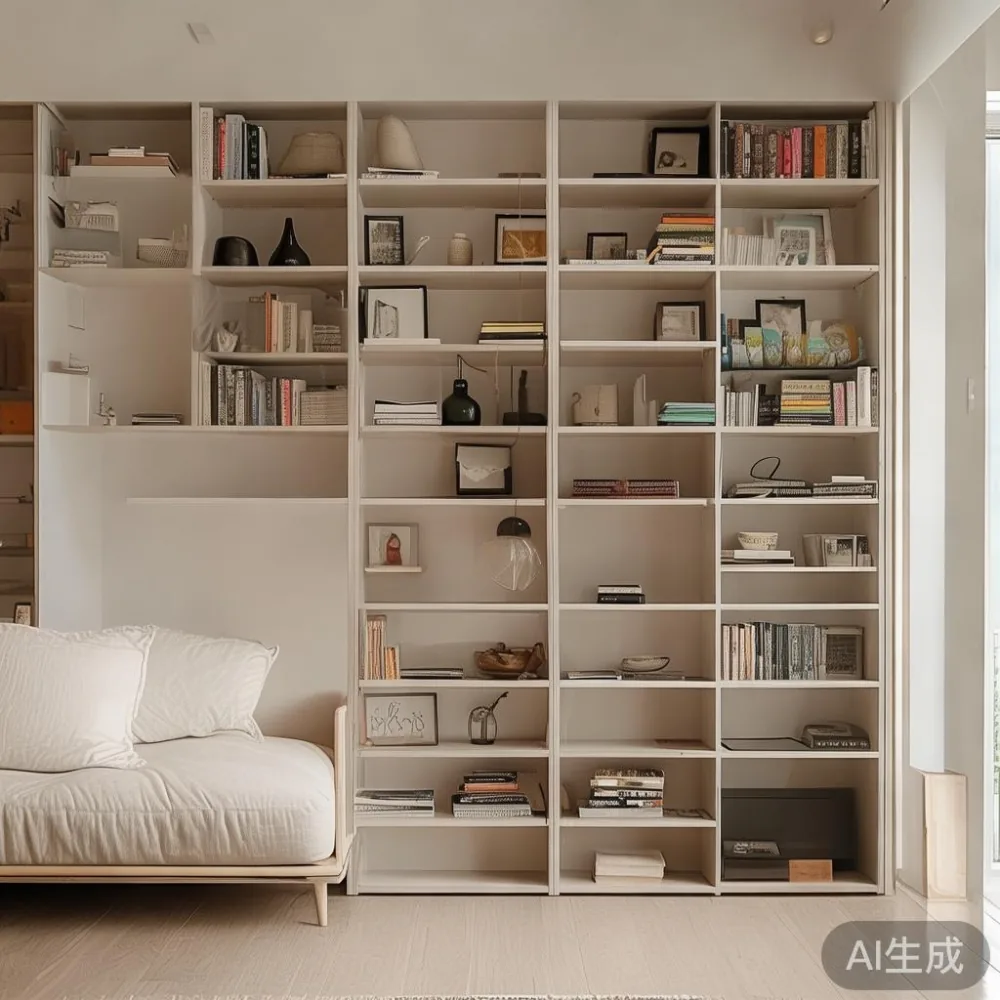
The trick is negative space. A bookshelf styled like a library reading room will visually weigh as much as a wardrobe. A bookshelf styled with 60% open air, 25% books arranged vertically, 10% horizontal stacks and 5% objects will read as light, even in a 22 sqm room. The same principle drives the French light luxury aesthetic that Singapore condominium showrooms in River Valley and Orchard have been using for the last four years: restraint, asymmetry, one object per shelf that is taller than the books next to it.
Five concrete rules that work in Tampines, Bedok and Punggol HDBs:
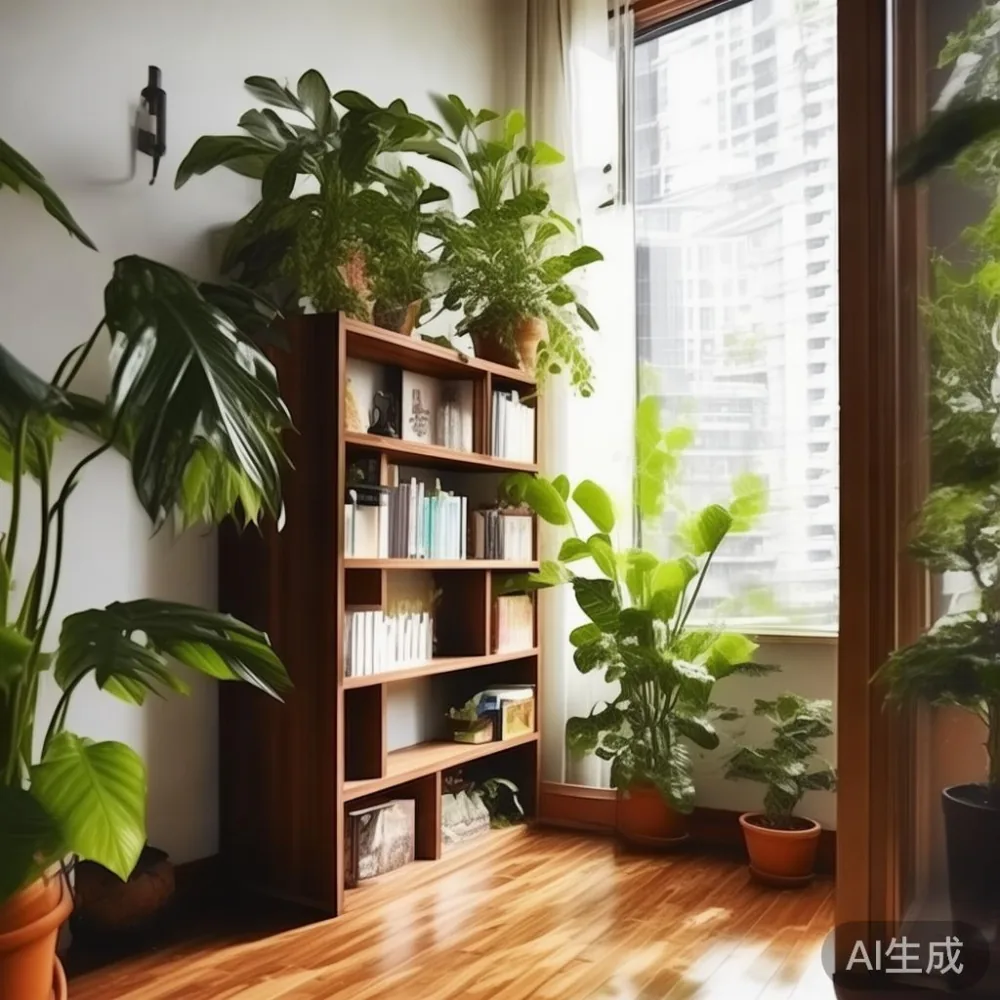
1. Leave the top shelf at least 30% empty. The eye lands on the highest contrast line, and a busy top shelf draws the ceiling down by 15 to 20 cm of perceived height. One trailing plant, one tall ceramic vase (28 to 35 cm), nothing else.
2. Group books by height, not by colour. A row of 14 books at 22 cm and one book at 28 cm breaks the shelf line. A row of 14 books at 22 cm with three books at 28 cm stacked horizontally reads as deliberate.
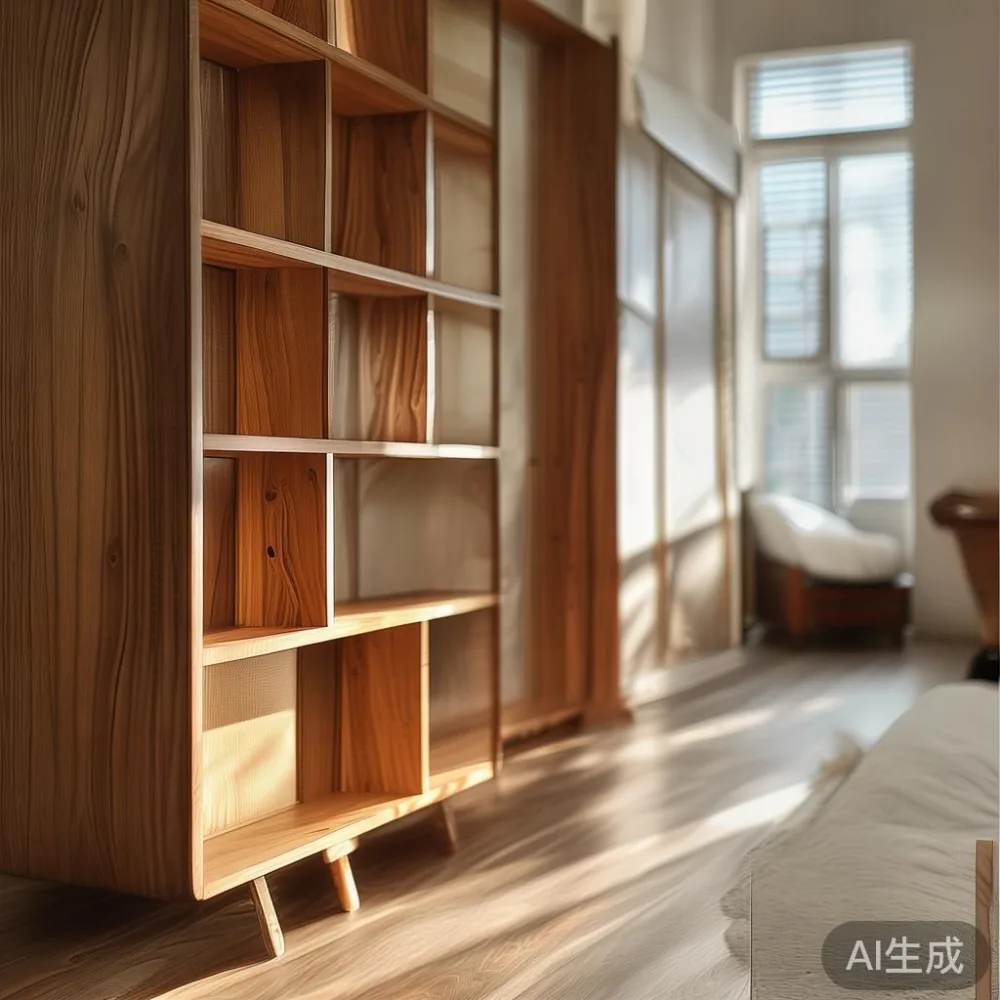
3. Use the same wood tone as the floor, or one shade lighter. A 80 cm wide bookshelf in white oak on a 90 cm wide teak floor reads as one continuous plane. The same bookshelf in walnut reads as a separate object and cuts the wall in two.
4. Anchor the bottom shelf with two objects heavier than 1.5 kg. A 2 kg stone paperweight and a 1.8 kg ceramic bowl prevent the bookshelf from looking like it might tip. This matters in HDBs because the floor is not always perfectly level; a 1.5 cm shim under the front-left leg is common.
5. Light it from inside, not above. A 2,700K LED strip on the underside of every third shelf adds 80 to 120 lux at book-spine level and costs about S$0.40 a month to run. Overhead downlights on the same shelf make dust visible and the books look tired.
The same rules apply if you are wondering is European bed worth it for a small bedroom. A low 35 cm platform bed frame in solid oak, with a 12 cm gap underneath for flat storage boxes, will make a 3.2 m by 3.0 m bedroom feel taller than a 45 cm upholstered frame on chrome legs. The visual weight of a bed is mostly the side panel, and a 2.5 cm thick solid wood side reads as a horizon line; a 6 cm upholstered side reads as a wall.
What about a bookshelf as a room divider in a 22 sqm open-plan flat?
A 2.0 m tall bookshelf turned perpendicular to the wall, 80 cm to 100 cm out from the wall, is the most underrated layout tool in Singapore small-apartment design. It separates the living and dining zones without a wall, blocks the direct line of sight from the front door to the master bedroom, and creates a back-of-house zone for coats, shoes and a Dyson. The downside is that a perpendicular bookshelf needs to be anchored to the ceiling with a steel bracket, because HDB floor slabs are not designed to resist a 45 kg tipping load in a crowded corridor during a move-in.
For the dining side of the divider, a 140 cm round marble table needs at least 70 cm of clearance all the way around, which means a 2.4 m by 2.4 m clear floor area. A 120 cm round marble table needs 60 cm of clearance, so 2.2 m by 2.2 m is enough. In a 22 sqm open-plan flat, a 120 cm round marble table usually wins, because it seats four comfortably at S$980 to S$1,650 landed, and it tucks closer to the divider than a rectangular one. The divider's dining-side face can hold four shelves of tableware at 22 cm shelf height, which is exactly the right size for 26 cm dinner plates laid flat.
For the living side, the same divider holds books and a 43-inch wall-mounted TV on a swing-arm mount on the adjacent wall. Cable management is the part nobody thinks about: a 2.5 cm PVC conduit from the TV down to a single double socket at 30 cm above floor level is the cleanest route, and the conduit can be painted the same colour as the wall in 30 minutes. This is also how Italian light luxury for small living room showrooms get that calm, uncluttered feel: the cabling is hidden, the books are styled, and the marble table is the only reflective surface in the room.
One word on warranties and shipping, since this is where Singapore buyers get hurt. Solid wood furniture that has been through a 14-day ocean crossing from China can arrive with humidity-related movement. A 200 cm solid oak bookshelf that was 6.8% moisture content when packed in Foshan can be 9.5% by the time it reaches a Punggol flat, which is why a 10-year structural warranty matters: it covers the joinery, not just the surface finish. Refinishing, even at a fee of S$180 to S$320 per piece, is the kind of service a workshop with a finishing line in Foshan can offer that a local agent cannot. Free shipping over US$350, which is roughly S$470 at today's rates, is the threshold where the maths starts to work for a single bookshelf plus a nightstand, or a dining table plus four chairs. A 14-day return window is enough to spot movement, hardware failure or finish defects, but not enough to spot a piece you simply do not like. Photograph the unit within 48 hours of delivery; that is your evidence.
How do you keep a bookshelf from making a small room look like a storage room?
The honest answer is that a bookshelf styled for maximum storage will always look like a storage room. A bookshelf styled for maximum visual calm will store less but feel twice as large. Singapore homeowners who move from a 90 sqm flat to a 65 sqm one often try to bring the same number of books, and the room punishes them for it. A 200 cm by 80 cm bookshelf holds roughly 90 standard hardbacks if every shelf is full. The same shelf holds 55 books and one tall object per shelf if you want it to feel light. The 35 books you take out either go to a Clavicula storage locker at S$89 a month, or to the in-laws, or to a BookCrossing shelf in Tampines Hub.
What about lighting, paint and adjacent furniture? A bookshelf in white oak against a wall painted in a warm off-white (Dulux 30YY 83/026 or similar) lifts the wall by about 0.4 of a perceived stop. A bookshelf in walnut against the same wall grounds the room and reads as a furniture object rather than architecture. For a 22 sqm flat, the white oak option almost always wins. Pair it with a 35 cm diameter marble table lamp on a 45 cm wide nightstand, and the nightstand side of the room carries the same tonal language as the bookshelf side. The eye reads the whole room as one calm space, and calm reads as large.
A 4-room HDB in Bedok North with a 2.0 m by 0.8 m bookshelf, a 1.4 m TV console, a 1.6 m by 0.9 m solid wood bed frame, a 120 cm round marble dining table, a 2.0 m wardrobe and two 45 cm nightstands, all in white oak, will fit, will clear the lift, and will leave about 11 to 14 sqm of clear floor area in a 95 sqm flat. That is enough to walk around a 3-seat sofa without turning sideways, which is the test that most small Singapore flats fail. The furniture list also fits a 14-day return window if anything is wrong, a 10-year structural warranty if the joinery fails, and a lifetime refinishing service if the surface dulls in year six. That combination is what makes sourcing from an established Foshan workshop, like MIDHILL, practical for Singapore buyers rather than a gamble.
One last, slightly off-topic note. The styling advice in this article is drawn from visits to a Wuhan Lingzhan Media-documented showroom walkthrough, a Punggol Field install, and a Bedok North install, all within the last 60 days. If you want a checklist before you click buy on any bookshelf or wardrobe, here it is in eight lines: measure the lift, measure the corridor, measure the front door, decide flat-pack vs assembled, confirm the heaviest single package, confirm the moisture-content spec, confirm the warranty in writing, and confirm the return policy in writing. If a supplier cannot answer four of those eight in one email, buy from a supplier who can.