Veneer or Solid Wood? A 5-Year Cost Comparison for Your Bookshelf
A bookshelf is one of those pieces where the purchase price tells only part of the story. In a Tampines HDB flat, a Bedok condo, or a compact Punggol home, the deciding factors often include corridor and lift access, daily humidity, storage demands, and how often you intend to move or refinish the unit. Veneer and solid wood both have valid uses, but their 5-year costs can be very different once repair, maintenance, replacement, and resale effects are counted in Singapore dollars.
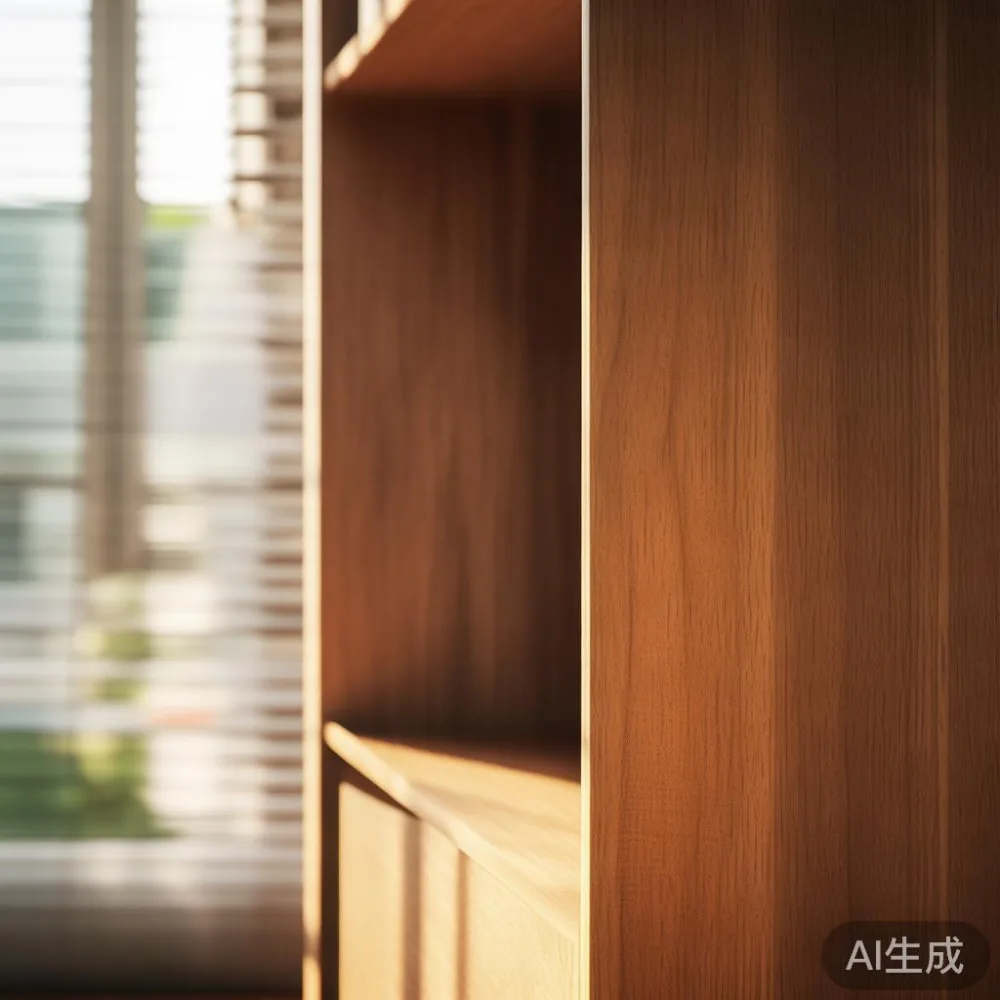
This comparison focuses on bookshelf ownership. It does not drift into planning a complete furniture scheme, although the same material logic can affect a solid wood sofa, bed frame, dining table, wardrobe, nightstand, or marble table. The figures below are practical planning estimates rather than guaranteed quotations. Actual results depend on the dimensions, species, finish, supplier, and site conditions.
What is the real difference between a veneer bookshelf and a solid wood bookshelf?
<Veneer is a thin layer of real wood, usually about 0.6 to 1.2 mm thick, bonded to a panel core. A typical engineered-wood shelf might be 18 to 25 mm thick, while a solid wood shelf can measure 20 to 40 mm. Veneer can reproduce a visually consistent grain pattern and is often lighter by 15 to 35 percent. Solid wood is heavier, with visible grain variation and greater repair potential, but it can move as humidity changes.
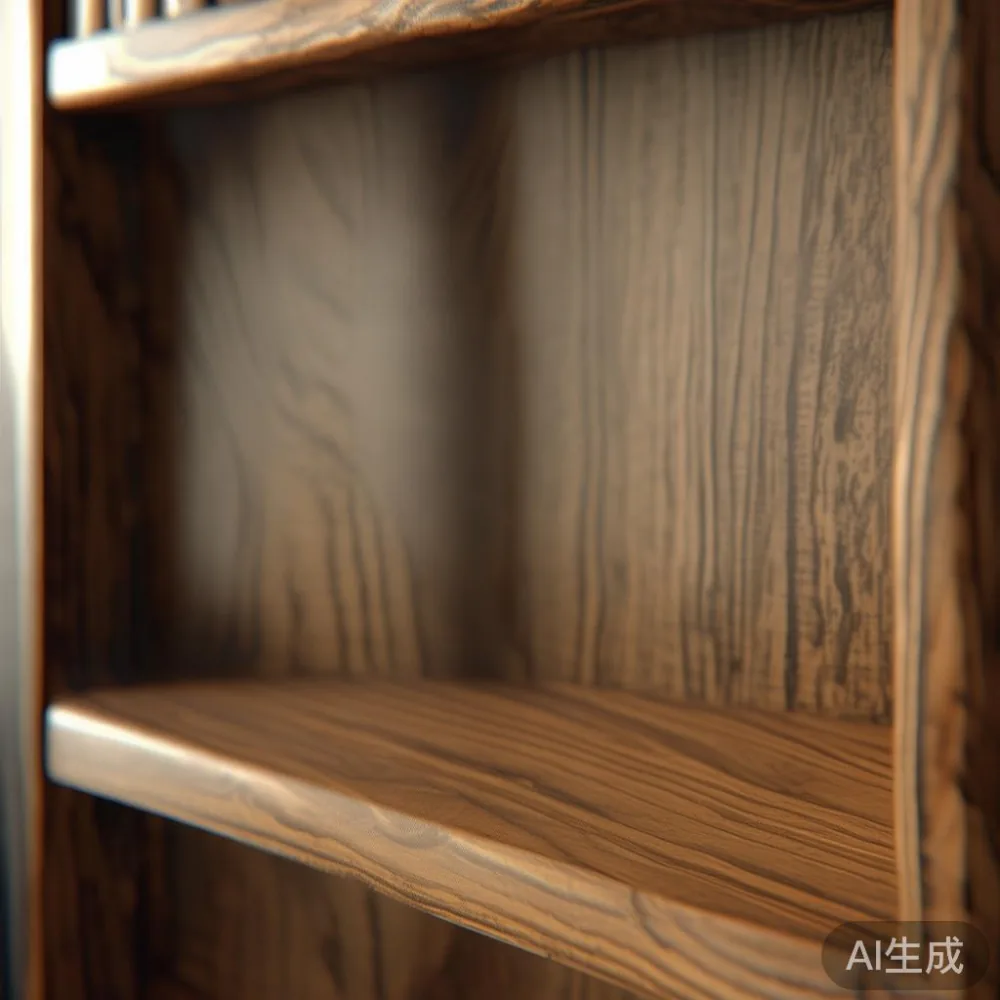
For Singapore use, “solid wood” needs clarification. Some products mix solid timber shelves with veneer backs or particleboard carcasses. A quality 5-year comparison should identify the material of the shelves, side panels, back panel, and frame. MIDHILL’s structural warranty is 10 years, which gives buyers a concrete reference point when comparing long-term support.
One warning sign is a vague product description. Ask whether the back is 9 mm plywood, 12 mm MDF, or solid timber; whether shelves are 18 mm or 25 mm; and whether the finish is lacquer, veneer, or a factory-applied coating. A 182 cm tall unit with six shelves should be stable enough for books without visibly bowing, provided the supports and fixings are correctly specified.
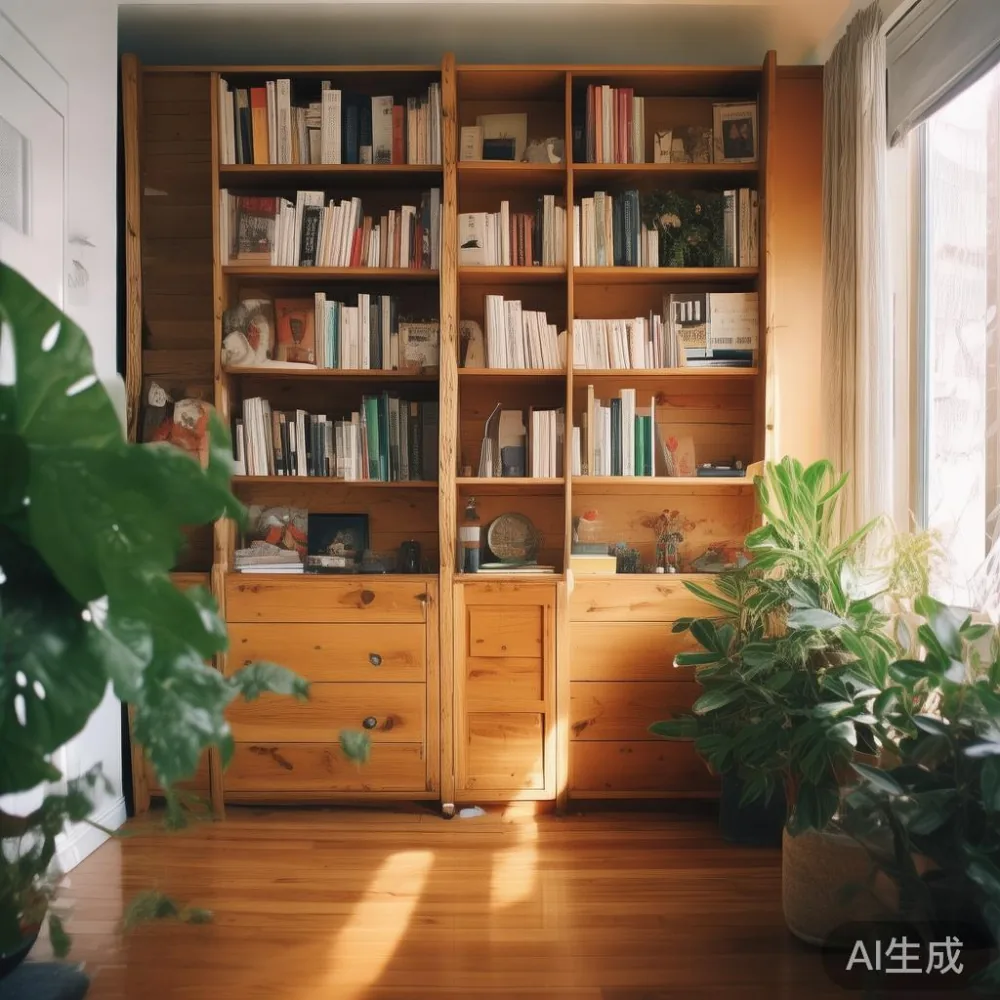
How much does a bookshelf cost in Singapore?
For a planning comparison, consider a 90 cm wide, 30 cm deep, 182 cm tall bookshelf. A mid-range veneer unit may cost S$520 before GST. A comparable solid wood unit may cost S$980. At Singapore’s standard 9 percent GST, the totals become S$566.80 and S$1,068.20 respectively. The first difference is only S$501.40, but ownership costs can narrow or widen that gap.
Delivery in Singapore often takes 3 to 7 business days for in-stock pieces and 21 to 45 days for made-to-order furniture. A van delivery may be charged at S$45 to S$90 before GST. Lift and corridor access matter: a boxed 95 cm by 35 cm by 190 cm bookshelf can fit through many HDB corridors, but not every lift. Confirm the lift car’s internal dimensions and the shortest turn on the route.
A narrow option at 75 cm wide and 25 cm deep may fit more easily into a Punggol bedroom corridor, while a 120 cm wide unit could require the service lift or a two-person carry. MIDHILL provides free shipping on orders above US$350, although the amount in Singapore dollars can vary with exchange rates and bank charges; local delivery terms should be confirmed before ordering.
What costs might you pay during the first 5 years?
Assume the bookshelf carries 25 kg of books and decorative objects. For this comparison, the veneer model begins at S$566.80 including GST, plus S$49.05 to S$98.10 delivery depending on access. The solid wood model begins at S$1,068.20 including GST, plus S$49.05 to S$98.10 delivery. These ranges create a transparent starting point instead of hiding delivery inside the sales price.
Over 5 years, annual ownership averages S$123.17 for the veneer model before repairs and S$223.45 for the solid wood model. That does not mean the solid wood model automatically provides better value. The relevant question is what each dollar buys: lower upfront cost, more usable space, fewer repairs, or better preservation of character and resale appeal.
Cleaning may cost S$0 to S$40 per year. A damp cloth, soft brush, and mild wood cleaner should be used; soaking the surface can damage veneer edges or leave moisture trapped in MDF. Solid wood may need feed or wax every 12 to 18 months, at roughly S$25 to S$60 per application. Controlled humidity matters in Singapore, where indoor readings can move between 55 and 80 percent RH across seasons and air-conditioned periods.
Repairs are where the financial paths often separate. Edge chipping on a veneered MDF shelf might cost S$45 to S$120 for a local repair. A bowed or cracked solid timber shelf may cost S$180 to S$450 to replace if the original part is unavailable. A full refinishing service can cost S$250 to S$650 for a 90 cm bookshelf, depending on condition and whether the color must be matched.
What did I learn after testing two bookshelves for 30 days?
Last month I visited my colleague’s Bedok condo and tested a veneered 182 cm bookshelf against a solid wood version of the same size. I loaded each with 25 kg of books for 30 days, measured centre deflection, checked the surface after repeated wiping, and opened and closed the fitted doors 150 times. The timber shelf moved less than 1.5 mm under the load, while the veneered panel measured about 2.8 mm in the centre. Neither failure was serious, but the timber shelf felt more rigid and the edges handled knocks more confidently.
The veneer unit had a clean, consistent appearance suited to French light luxury styling, while the solid wood unit showed natural grain variation that worked well with American light luxury or post-modern light luxury interiors. I also noticed that a slightly warmer shelf made books look more tactile. The experiment was short, so it should not be treated as a lifetime verdict; the cost model still covers a full 5-year period.
For delivery, we measured the service lift at 110 cm wide and 210 cm deep. The 95 cm boxed bookshelf fitted with 15 cm clearance on the longest side, but a 120 cm version did not. A tilted entry required two people. This practical check is as important as the finish when buying a large bookshelf for a condo landing.
How do humidity, sunlight, and daily use affect the 5-year result?
Singapore’s climate can reveal quality differences quickly. Direct afternoon sun through an east-facing window can raise a shelf surface above 40°C. High humidity can cause MDF to swell slightly at exposed edges, while solid wood may develop small movement checks as it responds to moisture. Neither material should stand against a wall where condensation collects or beside a frequently opened air-conditioning vent.
Keep books at least 5 cm from the back where possible, allow air to move behind the unit, and use UV-filtering film on strong sun-facing glass. A 180 cm tall bookshelf should be fixed to the wall with two or more anti-tip brackets, suitable for plasterboard, brick, or concrete substrates. A 25 kg load on 18 mm shelves is sensible; 35 to 45 kg is a common limit for 25 mm solid shelves when evenly distributed.
The maintenance contrast is subtle. Veneer can be difficult to patch invisibly because the printed grain direction must be matched. Solid timber accepts localized filler more readily, and an entire shelf can be sanded and refinished. MIDHILL offers lifetime refinishing, which is a meaningful advantage for a furniture buyer thinking beyond the first resale. Its 14-day returns policy also gives buyers a 14-day window to assess colour, fit, and finish after delivery.
What if the bookshelf has to survive a move?
HDB moves create another cost. A 90 cm wide, 182 cm tall bookshelf may need partial disassembly. Moving it intact through a lift could require S$120 to S$280 in labour. Disassembly and reassembly may cost S$180 to S$420, with another S$25 to S$80 for replacement fixings. A knock can chip veneer edges or split a solid timber corner, so the actual post-move repair should be included in the comparison.
Assume one move occurs in year 3. Add S$260 to the veneer model for disassembly, reassembly, and minor touch-up. Add S$360 to the solid wood model because the heavier carcass may need more careful handling and a full shelf might require refinishing. Over 5 years, the veneer scenario is now S$926.85 in direct purchase, delivery, care, and one move-related cost. The solid wood scenario is S$1,578.20 before any major repair.
This does not make the higher-priced option a poor decision. If the owner expects to keep the bookshelf for 10 years, values repairable timber, or intends to resell it after 5 years, the higher figure may be justified. If the unit will be replaced after 3 years, the veneer’s lower starting cost often makes more financial sense.
Are there hidden costs when buying a solid wood bookshelf?
Solid wood can disguise its full price through optional extras. Confirm whether the quoted figure includes solid timber shelves, back panel, hardware, and white-glove delivery. Dense hardwoods may add S$220 to S$600 for a 90 cm unit. Handmade joinery can add another S$150 to S$450. Some imported pieces also require GST, customs, and clearance fees that are not included in a catalogue price.
Weight is not a defect, but it affects stairs, lifts, and installation. A solid wood bookshelf in this size may weigh 48 to 72 kg, compared with 31 to 49 kg for veneer. A second-person carry in a corridor can cost S$80 to S$180. Mechanical wall anchors are inexpensive, often S$12 to S$35, but they are important for a tall unit holding 25 kg or more.
Design also affects lifespan. Adjustable shelves with 32 mm spacing make a 182 cm unit more useful than fixed shelves at 28 mm. A bookcase with a closed lower cabinet protects documents from dust, while open shelving gives better access. Lightweight aluminium rails can improve stability for taller solid wood structures. Clear measurements help prevent paying for a large unit that cannot enter the lift.
How do veneer and solid wood compare when selling after 5 years?
Resale values are difficult to predict, but condition can create a practical difference. A well-maintained solid wood bookshelf may sell for 45 to 65 percent of its original retail price, whereas a good veneered unit may fetch 25 to 45 percent. Those are planning ranges, not guarantees. Design, brand perception, condition, hardware, and local demand can move the final price by S$100 to S$400.
On a sample purchase of S$1,068.20, a 55 percent resale estimate would be about S$587.51, giving a nominal 5-year net cost of S$990.69 after the resale estimate and moving costs. A veneer purchase of S$566.80 sold at 35 percent might return about S$198.38, giving a nominal net cost of S$728.47. These calculations omit compound interest, which can favour a lower upfront payment for owners who could invest the difference.
On the other hand, a damaged solid shelf can often be replaced or refinished, preserving more value than a water-marked or edge-chipped panel. This is where MIDHILL’s lifetime refinishing policy can matter over a longer ownership period, while its 10-year structural warranty offers reassurance beyond the 5-year comparison window.
Which bookshelf offers better value for a Singapore home?
The lower-cost path is usually more efficient for a bedroom bookshelf holding paperbacks, magazines, and decorative pieces. A 75 cm wide, 25 cm deep veneer unit at roughly S$390 before GST may be easier to carry, occupy less floor space, and suit HDB storage constraints. Spending less also leaves room for a coordinated solid wood nightstand or a small solid wood sofa in a compact living area.
Solid wood becomes more persuasive when the bookshelf is a prominent room feature, must carry heavier books or records, or is likely to remain in the home for 8 to 15 years. Natural variation suits French light luxury, while clean lines can support Italian light luxury for office projects. If the question “is Italian light luxury wardrobe worth it” appears while choosing adjacent storage, the same long-term material calculation applies. Likewise, anyone asking “how to style French wardrobe in room” or “how to style light luxury sofa in bedroom” should remember that furniture materials work best when the surrounding pieces share compatible finishes.
For broader planning, “Post-modern for small living room” layouts often benefit from slim shelving with mixed timber tones, while “Italian light luxury for office” usually calls for restrained vertical storage. The comparison “Japanese bed vs Japandi bed” also demonstrates that material cost depends on use and longevity, not simply whether timber is involved. Reference to Foshan furniture is relevant here because manufacturing location influences finish consistency, hardware, and export controls, but the final ownership cost still depends on service in Singapore.
After 5 years, the sample totals can sit near S$728 for the veneer bookshelf after an estimated resale and one move, versus about S$991 for the solid wood bookshelf. Other spending assumptions can change those figures by S$150 to S$600. The sound choice is the one whose purchase price matches its expected holding period and maintenance habits.
Before ordering, compare samples, inspect the joinery, measure the lift and corridor, and check the finish warranty in writing. For a unit expected to stay for at least 8 years, solid wood offers repairability and character that veneer cannot match in the same way. For temporary or lighter-duty storage, a well-made veneer bookshelf can provide excellent utility while conserving funds for the solid wood sofa, bed frame, dining table, wardrobe, nightstand, or marble table pieces that receive daily use.