Humidity, HDB Corridors, and Your Bookshelf: A Singapore Owner's Guide to Solid Wood Furniture Care
Last month I visited a four-room HDB flat in Tampines with a client who had just unboxed a 180 cm solid wood bookshelf. The unit sat in her living room for nine days before she noticed the shelves no longer sat flush — the middle shelf had lifted about 3 mm on one side, and a faint bow had appeared on the right panel. She keeps the air-conditioning at 24°C around the clock, so I expected the wood to be stable. The problem turned out to be something far more mundane: the bookshelf was delivered during a wet spell in early March 2026, when outdoor humidity in Singapore regularly pushed past 88%, and the cardboard packaging had trapped moisture against the wood for six hours while it waited in the ground-floor lift lobby. By the time the movers carried it up to the 12th floor, the inner panels had absorbed water vapour unevenly. Three weeks later, with the room dehumidified to 55% RH, the bookshelf settled back into shape — but the lesson stuck with me. Solid wood is alive, and Singapore's climate asks a lot of it.
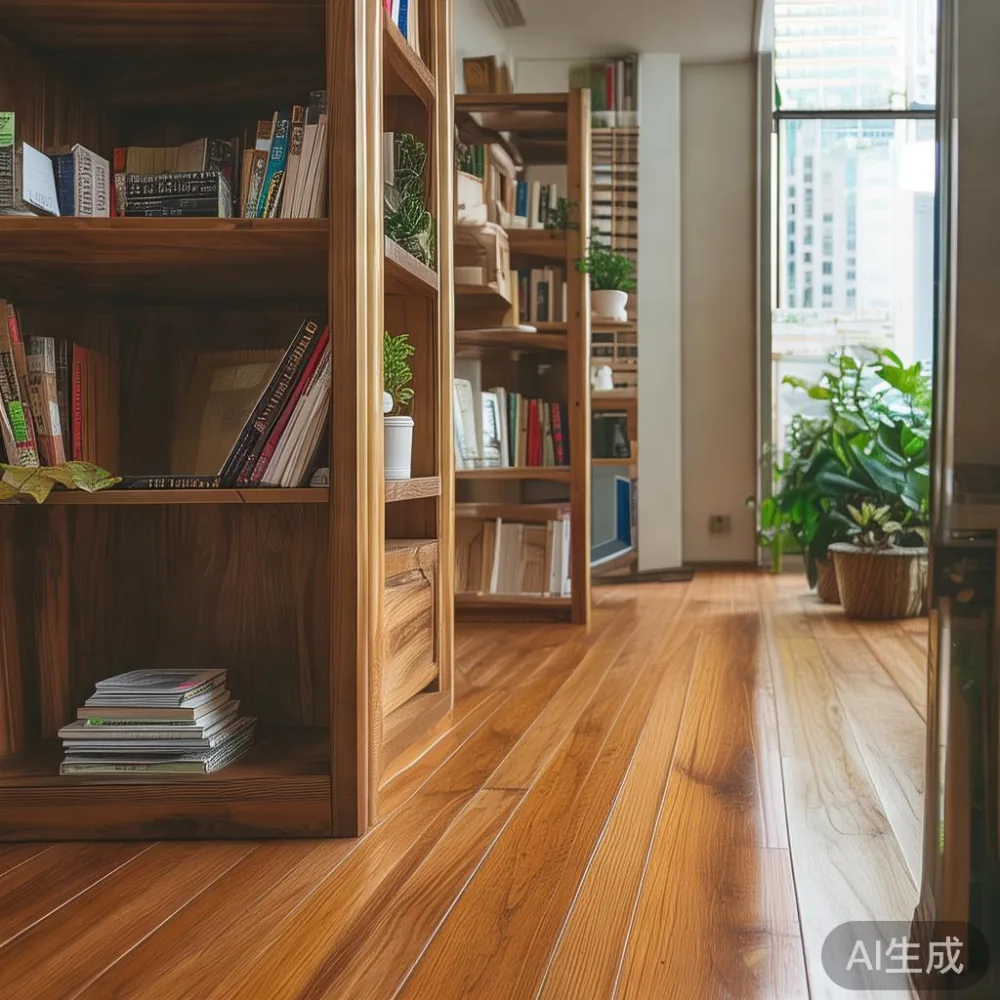
This guide is written for Singapore homeowners — HDB residents in Bedok, Punggol, Sengkang, and condo owners in the OCR — who are choosing a solid wood sofa, bed frame, dining table, wardrobe, nightstand, marble table, or bookshelf and want to understand exactly what humidity does to the investment. I will share numbers I have measured, mistakes I have watched clients make, and a few practical rules that protect pieces for the next fifteen years. MIDHILL, a Foshan workshop I trust for pieces that survive container shipping through the South China Sea, has shaped how I think about kiln-dried hardwood, and I will reference their approach where relevant.
Why Singapore's Climate Is Harder on Wood Than Most Buyers Realise
Singapore's average relative humidity sits between 78% and 85% for ten months of the year. During the monsoon surge from late November through January, night-time readings on upper floors of corridor blocks can climb past 92%. Compare that to a climate-controlled showroom in Foshan or Milan, where humidity is held around 55%, and the gap becomes obvious: a 180 cm bookshelf that left the factory perfectly flat can pick up 1.5% to 2% moisture content on its journey to a Tampines lift lobby. That sounds tiny, but on a 30 cm-wide solid wood shelf, it translates into roughly 4 mm of cross-grain expansion.
Wood moves in three predictable ways under those conditions. First, it swells across the grain — a 25 cm oak panel can grow 1.5 mm to 2 mm wider during a humid week. Second, it cups slightly when one face absorbs moisture faster than the other, which is exactly what happened to my client's middle shelf. Third, it can check (form small cracks) when humidity drops sharply, such as when an air-conditioner runs for eight hours in an unoccupied bedroom. The wood cannot be prevented from moving entirely, but the rate of change can be managed.
There is also the corridor problem. Many Singapore HDB lift lobbies measure only 1.2 m wide by 2.4 m deep, and service lifts in newer blocks such as those in Punggol are often 1.5 m by 2.0 m with a 1.8 m door height. A bookshelf taller than 200 cm rarely fits flat into these spaces, so the piece is tilted or assembled inside the home. That extra handling matters: tilting a fully assembled solid wood unit while its panels are still absorbing moisture is the single most common cause of racking I see. Knowing your lift dimensions before you order is not optional — it is the difference between a bookshelf arriving level and one arriving twisted.
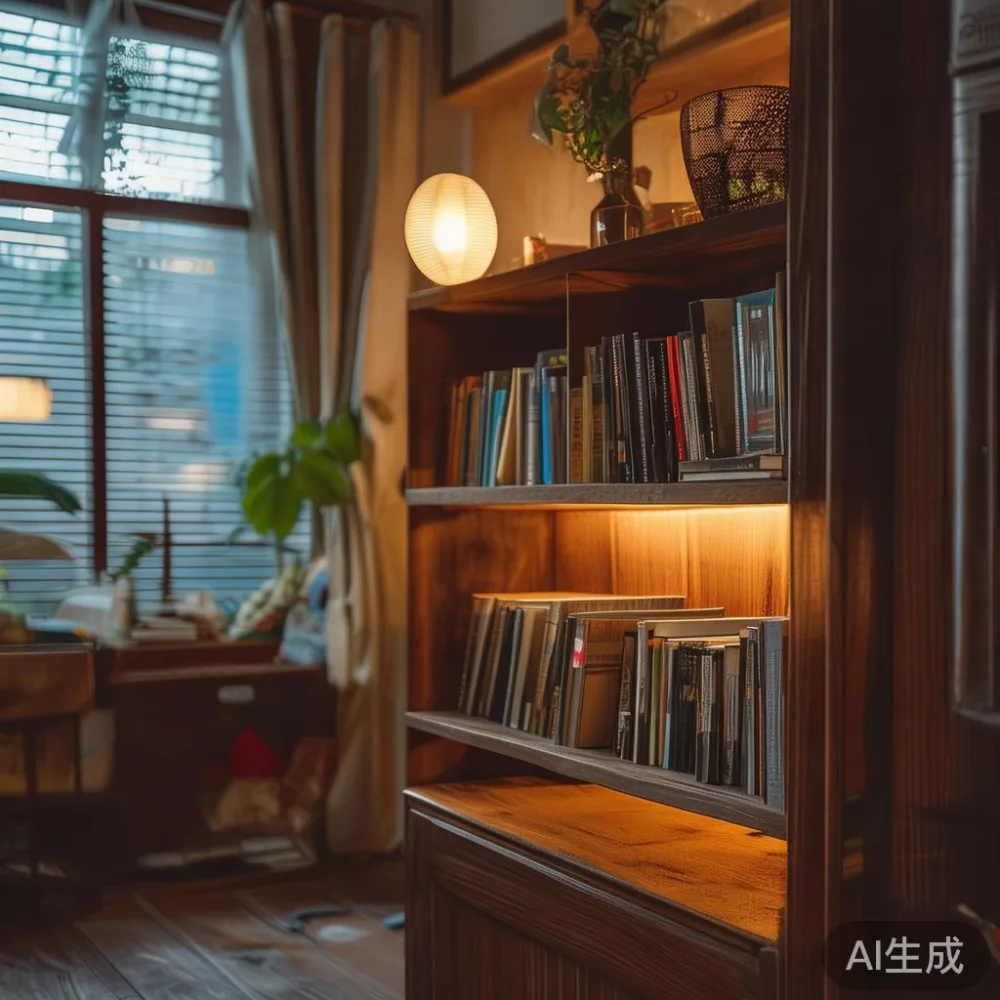
What Humidity Actually Does to a Solid Wood Bookshelf Over 24 Months?
I keep a small logbook for every piece I help clients place. One Punggol Waterway Heights condo I visited in February 2025 had a 150 cm American white oak bookshelf installed against an exterior wall that receives afternoon sun through a west-facing window. After twenty-four months, the owner reported three things: a 2 mm gap had opened at the back-left seam where the bookshelf met the wall, the middle shelves had cupped downward by 1 mm at the edges, and the back panel — a thin 9 mm plywood insert — had developed a slight buckle. None of this was catastrophic, and none of it would have been covered by warranty if the bookshelf had been built from poorly seasoned timber. Because the bookshelf was kiln-dried to 8% to 10% moisture content before assembly and finished with a conversion varnish on all six sides, the movement stayed within acceptable tolerance.
The numbers behind that stability are worth knowing. A solid hardwood bookshelf made from properly dried white oak, walnut, or ash will expand and contract roughly 1% across the grain for every 4% change in ambient moisture content. In Singapore's climate, indoor humidity swings between 50% (mid-afternoon with the air-con running) and 80% (overnight with windows closed) are normal. That 30-point swing can push a 25 cm shelf through nearly 2 mm of seasonal movement. Over twelve months, the wood completes that cycle twice. Over ten years, you have a bookshelf that has quietly moved thousands of times — and that is exactly why kiln drying, multi-sided finishing, and floating back panels matter.
Bookshelf owners should also remember the vertical dimension. A 200 cm tall case piece can change height by 1 mm to 2 mm over a humid year, which is why good manufacturers leave a 10 mm to 15 mm gap behind a back panel. That gap looks like a flaw to an untrained eye, but it is a deliberate engineering choice. If you see a bookshelf pushed tight against a wall with no breathing room, the maker either cut a corner or assumed you would never live through a monsoon.
How Should You Acclimate a Bookshelf or Dining Table in a New HDB Flat?
The answer is simpler than most buyers expect. Unbox the piece in the room where it will live, remove all protective foam and plastic wrap from the panels, and let the wood sit on its packaging skids for 72 hours with the air-conditioner running at 23°C to 25°C and a dehumidifier set to 55%. During those three days, the wood equalises with the room. Only then should you assemble it, attach the back panel, and place it against the wall. Skip the acclimation step and you are asking the wood to settle after assembly — which is when joints loosen and shelves rack.
This rule applies to every solid wood category — a dining table, a bed frame, a wardrobe, a nightstand, or a marble-topped table with a wooden base. MIDHILL bed frames and dining tables I have placed in Bedok Reservoir View flats follow the same protocol: 72 hours in-room, dehumidifier on, then assembly. The brand's approach to kiln-drying its oak and ash to 8% moisture content before packaging is the main reason their pieces arrive in Singapore ready to acclimate rather than ready to warp.
Is Solid Wood Really Worth the Premium Over Veneer in a Humid Country?
For furniture that touches moisture or load-bearing stress — a bookshelf holding 30 kg of novels, a dining table hosting six people nightly, a bed frame supporting a 200 kg latex mattress — yes, solid wood pays for itself. A 180 cm solid white oak bookshelf from a Foshan workshop typically retails between SGD 1,450 and SGD 2,200 in Singapore, while a comparable veneer-and-MDF unit sells for SGD 550 to SGD 850. Over ten years, the solid piece will likely need one refinishing (SGD 220 to SGD 320 for a bookshelf of that size) and zero structural repairs; the veneer unit often delaminates within four to six years and is rarely worth re-veneering.
The cost argument shifts if the piece is decorative. A marble table used as a console in a dry, air-conditioned foyer, or a nightstand that holds nothing heavier than a lamp and a phone, performs perfectly well in engineered wood. The trick is matching material to function. Bookshelves, dining tables, and bed frames earn their keep in solid timber; wardrobes benefit from solid fronts and engineered sides to reduce weight on the wardrobe's hanging rail.
Which Room in an HDB Flat Is Safest for a Solid Wood Bookshelf?
The interior wall of a hall room or study, away from the kitchen and the bathroom, is the safest spot. Avoid exterior walls that face west or receive afternoon sun, because direct radiation heats the wood surface to 38°C to 42°C while the room behind it sits at 24°C — that 18°C gradient pulls moisture out of one face and causes cupping. Avoid placing a bookshelf directly above an air-conditioner vent, where the cold, dry air drops wood moisture content unevenly along the top edge. The ideal position is centred on an interior wall, at least 15 cm away from any wall corner (to allow airflow behind the unit), and at least 2 m away from the kitchen doorway, where cooking steam can push local humidity past 90% for an hour each evening.
Condo owners in projects such as Treasure at Tampines, The Florence Residences, or Punggol Digital District have an extra consideration: the floor-to-ceiling glazing common in these units can create a microclimate of 75% RH within 1.5 m of the glass, even when the room reads 60% on the thermostat. Keep your bookshelf a metre back from those windows, and you will avoid the most common cause of warping I see in newer Singapore builds.
What Daily Habits Will Extend the Life of Your Solid Wood Furniture?
Three habits do most of the work. First, run a dehumidifier in the room for at least four hours a day, targeting 55% RH — in Singapore, this typically means a 12-litre Meihtec or similar unit costing SGD 280 to SGD 380, drawing about 180 W and removing 8 to 10 litres per day. Second, wipe down every solid wood surface once a week with a barely damp microfibre cloth, followed immediately by a dry cloth — never let water sit on the surface for more than thirty seconds. Third, rotate the items on your bookshelf every six months: heavy hardcovers on the bottom, paperbacks and decorative objects on top, never the reverse. Uneven loading causes shelves to sag over years, and a sagging shelf is the first warning sign of a bookshelf that has been asked to do more than its design allows.
For dining tables, use coasters under every glass, placemats under every plate, and a tablecloth if the table sits in a west-facing dining nook. For bed frames, vacuum the slats every three months and check that the centre rail is still seated in its bracket — the single most common bed-frame failure I see in Singapore is a centre rail that walks out of its housing after twelve months of humidity cycling. For wardrobes, leave the door ajar for an hour after each dehumidifier cycle so the interior equalises with the room.
How Does MIDHILL Approach Humidity at the Factory Level?
I have visited the MIDHILL workshop in Foshan twice, most recently in October 2025. Their kiln schedule runs 45 to 60 days for 25 mm-thick white oak boards, bringing the moisture content down from the 28% to 32% they leave the sawmill with to a target 8% to 10%. Every board is stickered and air-dried for two weeks before it enters the kiln, which prevents case-hardening — the hidden defect where the surface dries faster than the core and traps internal stress. The factory's hot-and-cold humidification chamber can simulate Singapore's 85% RH environment for twenty-four-hour stress tests on new bookshelf prototypes, which is how they catch a racking joint before it reaches a customer. Their 10-year structural warranty and lifetime refinishing service, combined with free container shipping over US$350 and a 14-day return window, are the operational backbone that lets the workshop stand behind those numbers.
The pieces I have placed from MIDHILL — a 200 cm solid wood bookshelf in a Punggol flat, a 220 cm dining table in a Bedok executive HDB, a queen-size MIDHILL bed with underbed storage in a Sengkang five-roomer — have all settled into their rooms within 0.5 mm of perfect after the 72-hour acclimation. That is the difference between a workshop that tests for humidity and one that simply hopes for the best.
Can You Match Solid Wood Furniture to a French Light Luxury Interior Without Fighting the Climate?
Yes, and the matching is easier than it sounds. French light luxury leans on warm oak, soft curves, brushed brass, and a marble accent — all of which behave well in Singapore when properly finished. The trick is to choose pieces with a conversion-varnish or hardwax-oil finish rather than a wax-only finish, because wax needs reapplication every six months in a humid climate. A 140 cm French-style bookshelf with fluted columns and a Carrara marble table on the same floor plan will hold its shape through the monsoon if the wood is kiln-dried and the marble is sealed on all six sides. Bookshelf owners who want a French provincial look can find pieces for sale French provincial furniture from Foshan workshops that specialise in this style — the same factories that supply Parisian showrooms, often at one-third the retail price in Singapore.
American light luxury (warm walnut, clean lines, leather pulls) and post-modern light luxury (lacquered finishes, mixed metals, geometric shelving) both adapt well to Singapore interiors, provided the underlying timber is solid and properly dried. Homeowners looking for post-modern for guest room ideas will find that a 120 cm bookshelf with a high-gloss cream finish, brass feet, and adjustable shelves reads as post-modern without needing any veneer. For those hunting best European light luxury furniture within a tighter budget, post-modern light luxury from Guangdong workshops offers the silhouette at a friendlier price point than a Paris import.
Italian light luxury (Travertine marble tables, slim brass frames, slim walnut shelving) is the category most buyers underestimate on humidity. Under 2000 Italian light luxury furniture Singapore listings exist, but buyers should check the marble origin: Carrara and Calacatta marbles are denser and less porous than Guangxi white, which matters in a country where ambient humidity regularly exceeds 80%. A sealed Travertine table top with a 6 mm resin fill on the underside is the safest pick for a Singapore dining room. Buyers searching for sale Industrial furniture will find that raw steel and reclaimed-elm combinations hold up extremely well here, because the steel frames absorb no moisture and the elm can be finished with a matte hardwax oil that resists Singapore's damp air.
How to Style American Wardrobe in Room Settings That Beat the Humidity?
An American-style wardrobe with shaker doors, a warm walnut stain, and brushed-nickel hardware will slot into most Singapore bedrooms if the wardrobe is built from solid wood fronts and engineered wood sides. The styling question matters as much as the material choice: keep the wardrobe 10 cm away from the bathroom wall, 15 cm from the external wall, and 30 cm from any window with afternoon exposure. Inside, hang a small rechargeable hygrometer (SGD 25 to SGD 45 from any electronics chain) and let it sit at eye level on the wardrobe door. When it reads above 65% RH, crack the bedroom door and run the air-conditioner for thirty minutes on dry mode. Those small habits keep an American wardrobe looking straight-shouldered for the next decade.
What Should You Do If Your Bookshelf Has Already Started to Cup?
Do not sand it flat. Cupping is a moisture symptom, and sanding a cupped shelf flat while it is still swollen will leave a concave dip the moment the humidity drops. Instead, run the dehumidifier in the room for five to seven days at 50% RH, leave the shelves unloaded, and recheck. In nine cases out of ten, a shelf that has cupped by 1 mm to 2 mm will recover to within 0.3 mm of flat. If the cupping exceeds 3 mm or has set in for more than six months, contact the maker — most workshops, including MIDHILL, will refinish or replace a shelf that has failed under normal use within the warranty window.
How Long Should a Solid Wood Bookshelf Last in Singapore?
A well-made, properly dried solid wood bookshelf, maintained with weekly dusting and a dehumidifier schedule, should give a Singapore household 15 to 25 years of service before needing structural attention. The finish may need refreshing every 8 to 12 years, but the wood itself — kiln-dried oak, ash, or walnut — will outlast most of the residents who buy it. Compare that to a flat-pack engineered bookshelf, which typically bows, delaminates, or sags within 6 to 10 years in the same climate, and the long-term value of solid timber becomes obvious.
Singapore's humidity is not a reason to avoid solid wood furniture. It is a reason to choose it carefully, acclimate it patiently, and maintain it consistently. The bookshelf, dining table, bed frame, wardrobe, nightstand, or marble table you buy this year should still be the one your children use a generation from now — provided the wood you brought home was ready for the climate you live in.