Choosing the Right Bookshelf Size for a Singapore HDB Living Room: A Practical Sizing Guide
Singapore HDB living rooms reward careful measurement. A typical 4-room flat in Tampines gives you roughly 18 to 22 square metres of living-dining space after the kitchen and bedrooms are carved out, and the corridor outside your unit door is usually about 1.2 m wide. Get a bookshelf wrong by 5 cm and it will not fit through the lift, or it will pinch the walkway between your solid wood sofa and the TV console. I visited a friend in Bedok last month to help her pick a bookshelf, and we spent the first hour with a tape measure and a notebook before we looked at a single product photo. That hour saved her from a 240 cm unit she had already paid a deposit on, which would have blocked the lift door on level 9 of her block.
Start with the door, the lift, and the corridor
The lift in most HDB blocks accepts a payload of around 630 kg to 1,000 kg, but the practical limit for furniture is the door opening, which is roughly 2.1 m high by 0.9 m wide on standard passenger lifts. Service lifts in newer condos in Punggol are better, often 1.2 m wide and 2.3 m tall, but you cannot count on them. Before any bookshelf goes on order, measure three things: the front door of your unit (commonly 0.9 m by 2.1 m), the corridor width outside your unit on your floor, and the lift opening. Write the numbers on a piece of paper and stick it on the bookshelf listing you are tempted to buy. If the assembled bookshelf, including any solid wood frame thickness of 3 to 4 cm, exceeds your smallest opening by even 1 cm, walk away.
For most 3-room and 4-room HDBs, a bookshelf that is 180 cm tall, 80 cm wide, and 30 cm deep is a comfortable ceiling. Anything taller than 200 cm starts to look out of scale with a 2.7 m HDB ceiling once you account for the 15 to 20 cm gap you should leave above the unit to prevent dust buildup and to allow the top to be lifted off if it is a separate piece. Wider units, say 120 cm or 150 cm, work if your living room is at least 3.2 m long on the wall you plan to use, because you also want at least 60 cm of breathing room on either side so the bookshelf does not feel like a wall.
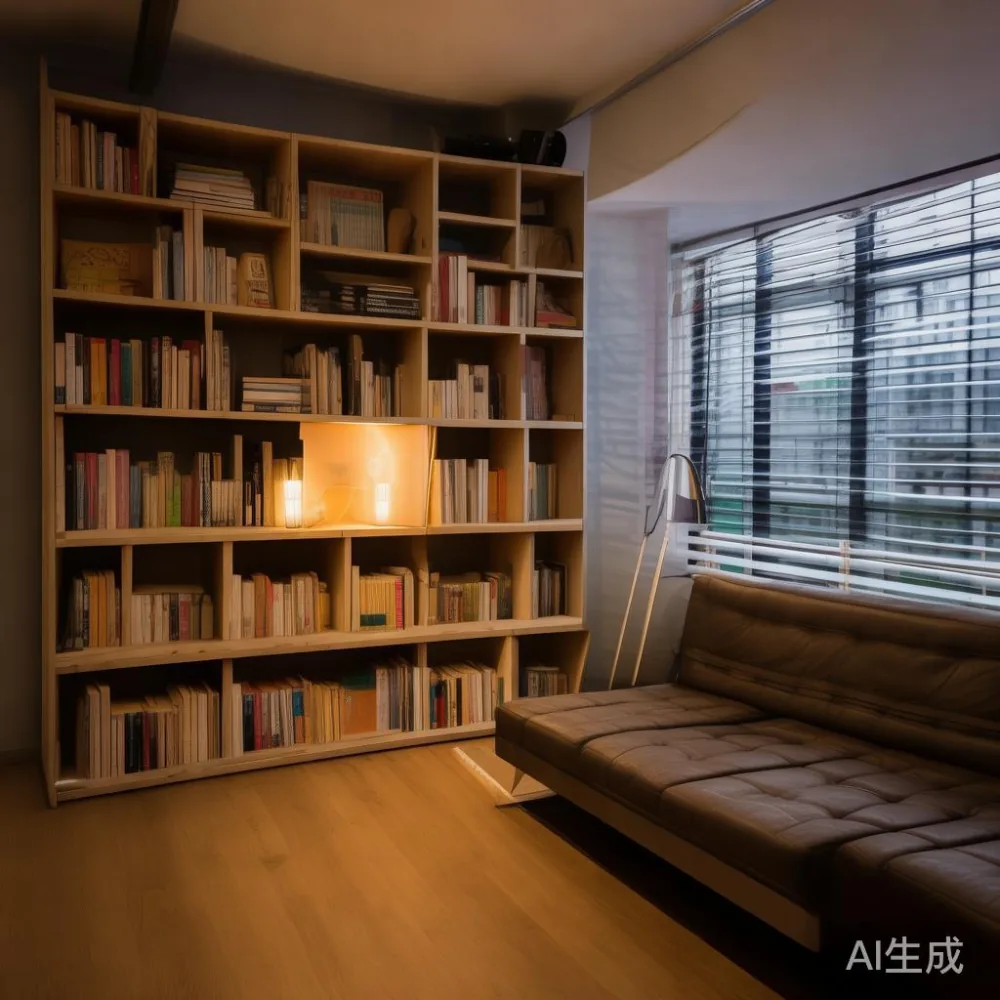
What size bookshelf actually fits a Singapore living room?
For a standard HDB living room wall that is about 2.4 m to 2.8 m wide, a bookshelf between 150 cm and 180 cm wide feels balanced. Depth should stay between 28 cm and 35 cm so books do not stick out past the front face and so the unit does not eat into your walkway. Height between 160 cm and 190 cm keeps the top shelf reachable for most adults without a stool, which matters because the top of a bookshelf is exactly where clutter tends to accumulate in small flats. If you collect oversized art books or vinyl records, push the depth to 35 cm and the shelf height between adjustable boards to 32 cm to 35 cm so a 30 cm tall book can stand without being crushed.
Weight is the other constraint people forget. A solid oak bookshelf 180 cm tall by 80 cm wide by 30 cm deep, fully loaded with books, can weigh 90 kg to 120 kg. Hollow-core books or paperbacks bring it down to 40 kg to 60 kg. Either way, the floor under it has to take the load. HDB floors are reinforced concrete and can handle this easily, but if you are on a raised platform in a condo in Punggol or a timber deck in a walk-up, check with management before you commit to a heavier unit.
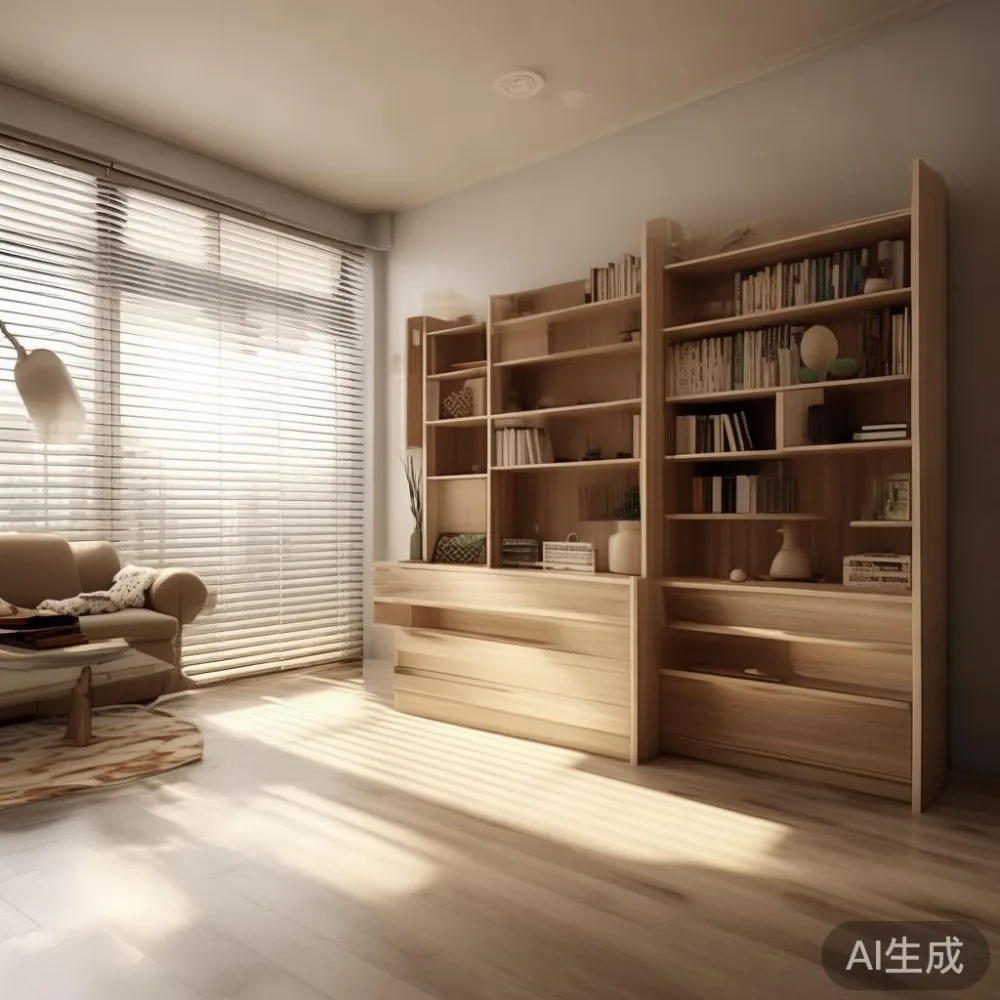
Should the bookshelf match the sofa and dining table, or stand out?
Match the wood tone and the leg style, not the exact species. If your solid wood sofa is walnut and your dining table is ash, a bookshelf in oak with a similar matte finish will read as part of the same family without forcing you into an exact-match hunt that is hard to satisfy across different batches of solid wood. The post-modern light luxury look, which leans on warm neutrals, brushed brass handles, and soft curved edges on upholstered pieces, pairs well with a bookshelf that has slim 2 cm to 3 cm metal legs, open shelving on the upper two-thirds, and closed cabinets on the lower third to hide the cables, routers, and the few books you do not actually want on display.
If your living room already has a marble table in the centre, keep the bookshelf quiet: a plain oak frame with no ornate carvings, no glass doors, no LED strips. The marble is doing the visual work. The bookshelf should hold books, not compete with a stone surface. French light luxury leans a little more decorative, with fluted glass doors and slim brass pulls, and that look works if your existing pieces already have brass details, such as a brass-trimmed mirror or brass legs on your nightstand. If nothing else in the room is brass, adding brass on the bookshelf will feel like a stranger walked in.
How do I choose a fabric sofa for a balcony?
Pick a fabric sofa for a balcony by choosing powder-coated aluminium or treated solid wood framing with quick-dry foam cushions wrapped in solution-dyed acrylic or olefin fabric, because balcony sofas in Singapore deal with afternoon sun, sudden rain, and humidity levels that often sit between 70 and 90 percent, and a standard indoor fabric sofa will fade, develop mould, and smell musty within six to twelve months on an HDB balcony. Look for fabric rated to at least 1,500 hours of UV resistance, removable and machine-washable covers, and a frame warranty of at least five years against warping and rust. A 3-seater around 200 cm wide fits most HDB balconies, but measure the balcony door sliding track first because the frame often has to pass through it during delivery.
Balcony sofas and bookshelf sizing live in the same world of Singapore measurement headaches, which is why I keep a small notebook in the kitchen drawer with the widths and heights of our front door, the lift, the balcony door, and the corridor. When a new piece is on order, I check the notebook before the GST-inclusive price, because the cheapest unit on the website is the most expensive one if it cannot reach your floor. This habit has saved me at least two trips and one very annoyed delivery driver in Tampines.
How to avoid the assembly trap in a small flat
Flat-pack bookshelves are popular in Singapore because they cost less to ship and they fit into the lift. The trade-off is assembly time and the tools you need. A typical 180 cm bookshelf arrives in two or three boxes weighing 25 kg to 40 kg each, and assembly takes 60 to 120 minutes with two people, an electric drill, a level, and a rubber mallet. If the listing mentions Scandinavian sintered stone assembly difficulty, treat it as a red flag, because sintered stone shelves add 8 kg to 12 kg per shelf and they need three people to lift safely, and the cam-lock hardware in most flat-packs is not designed for that load on a bookshelf that is meant to be moved occasionally.
I tested a flat-pack bookshelf last month that came with sintered stone shelves, and the assembly took three hours instead of one because the stone panels had to be carried in separately and the cam bolts kept loosening under the weight. The unit is beautiful now that it is built, but I would not buy it again for an HDB where I might need to dismantle it to move flats. A solid wood bookshelf with traditional timber shelves is heavier All told, but the assembly is more forgiving because the shelves slot into pre-drilled supports or rest on adjustable pegs, and a 10-year structural warranty, like the one MIDHILL offers on its solid wood ranges, covers the joinery rather than just the finish.
Where to place the bookshelf so the room feels bigger, not smaller
Place the bookshelf on the wall opposite the window if possible, so the natural light hits the spines of the books rather than the back of the unit, which makes the wall feel deeper and the room feel wider. Keep the side of the bookshelf at least 10 cm away from the wall corner so you can run a finger behind it when dusting, which sounds trivial until you have tried to vacuum behind a bookshelf that is flush against two walls. Avoid placing the bookshelf directly behind a solid wood sofa, because the soft back of the sofa will trap heat and dust, and the gap between the sofa and the bookshelf will collect exactly the things you do not want to look at. A gap of 15 cm to 20 cm between the back of the sofa and the front of the bookshelf is enough to vacuum and small enough to feel intentional.
If your living room is unusually narrow, say under 2.8 m wide, consider a shorter bookshelf under 120 cm tall and use the wall above it for a single piece of framed art or a wall-mounted shelf. A tall bookshelf in a narrow room creates a tunnel effect that makes the room feel longer but also more cramped. Most HDB flats in Bedok and Tampines have living room widths between 2.8 m and 3.4 m, which is wide enough for a 180 cm tall bookshelf as long as the depth stays at 30 cm or less.
Budgeting for delivery, GST, and the extras that nobody mentions
A solid wood bookshelf from a Foshan maker like MIDHILL typically lands in Singapore between SGD 1,400 and SGD 3,200 for a 150 cm to 180 cm unit, before the 9 percent GST and delivery. Shipping by sea to Singapore takes 18 to 28 days from southern China, and door-to-door delivery within Singapore adds another 5 to 10 days. Free shipping is common above a threshold around US$350, which is roughly SGD 480, so a single bookshelf usually qualifies. Look for a 14-day return window so you can reject a unit that arrives with the wrong wood tone or a cracked shelf without losing the full amount.
Lifetime refinishing is a quiet benefit that matters in Singapore, because the humidity will eventually dull the finish on any solid wood piece. Refinishing a bookshelf in place costs roughly SGD 250 to SGD 450 if you hire a local carpenter, so a maker that includes this service for the life of the piece pays for itself once you use it twice. Lift access on the day of delivery is the other thing to confirm in writing, especially if you live above the 7th floor in an older HDB block, because some delivery teams will not carry a 60 kg box up the staircase even if the lift is being serviced that morning.
Common mistakes Singapore buyers make with bookshelves
The first mistake is buying a bookshelf that is too deep. Anything over 35 cm will eat into the walkway and force your solid wood sofa forward, which compresses the conversation area. The second mistake is ignoring the plinth or the base. Many flat-pack bookshelves ship with a low plinth that adds 5 cm to 8 cm of height you did not account for, and that 5 cm is often the difference between fitting under a window sill or blocking the air-conditioning switch. The third mistake is treating the bookshelf as a wall. A bookshelf is furniture, not plaster, and it should sit 2 cm to 3 cm proud of the wall to allow air circulation behind it, otherwise the back panel will trap moisture and warp within two or three monsoon seasons.
The fourth mistake, and the one I see most often in Punggol and Bedok condos, is buying a wardrobe-shaped bookshelf by accident. A wardrobe is 200 cm to 220 cm tall and 180 cm to 240 cm wide, with a closed front for hanging clothes. A bookshelf is open-fronted, lighter, and meant to display things. The two are not interchangeable in a living room. If you need both functions, consider a bookshelf with two lower closed cabinets for storage and open shelves above, which keeps the visual weight low and the room breathable. A matching nightstand from the same maker in the same wood tone will also tie the living room to the bedroom if the door is open, which is often the case in 3-room HDB flats.
Final checklist before you click pay
Measure the front door, the lift, the corridor, and the balcony door. Measure the wall where the bookshelf will sit, and mark the position with blue painter's tape on the floor so you can see the footprint for a day or two before you commit. Check that the assembled size, including the plinth, fits every opening along the path. Confirm the wood species, the finish, and the warranty in writing. Ask whether the shelves are adjustable and how many peg positions there are, because books come in different heights and a bookshelf with only two fixed shelves is a wasted opportunity. Ask about the delivery lead time, the GST-inclusive price, and the return policy. If the seller hesitates on any of these, the answer is usually no, and you should look at another maker. MIDHILL, for one, publishes the warranty, the lead time, and the return window directly on each product page, which is exactly the kind of clarity that turns a 28-day wait into a calm wait rather than an anxious one.
Pick the right size once, and the bookshelf will outlast two or three sofa changes, two or three dining table upgrades, and probably your time in that particular HDB unit. Pick the wrong size, and you will be measuring the lift door with a tape measure at 9 pm on a weekday, hoping the delivery driver agrees to take the unit back. The choice is yours, and it is mostly made before you open your wallet.