How Southeast Asian Humidity Affects Your Bookshelf (and What to Do About It)
I still remember walking into a Tampines HDB flat last month to help a customer rearrange her living room. The 4-room unit sat on the 12th floor, with the afternoon sun pouring through the east-facing windows. Right in the middle of the room stood a four-tier solid wood bookshelf — about 180 cm tall, 90 cm wide, and 35 cm deep — that had visibly bowed at the middle shelf. The owner told me she had bought it eight months earlier, expecting it to last a lifetime. The culprit was not bad craftsmanship. It was the air itself.

If you live in Singapore, Malaysia, Indonesia, Thailand, or the Philippines, you already know what I mean. The average relative humidity in Tampines, Bedok, and Punggol sits between 78% and 85% for most of the year, with afternoon thunderstorms pushing it past 90% from June to September. That kind of moisture is wonderful for tropical plants and painful for wood. And a bookshelf — with its open shelves, exposed end grain, and load-bearing horizontal panels — is one of the pieces in your home that suffers first and most visibly.
Why does humidity warp a bookshelf before it warps your dining table?
A bookshelf loses the fight against humidity because almost every structural component is exposed to the air on two sides. The horizontal shelves absorb moisture from below, the vertical sides absorb it from the side, and the back panel — usually 9 mm plywood — traps it behind. Your dining table has a thick single slab top that resists movement; your wardrobe has closed doors buffering the air. A bookshelf, by contrast, is a humidity sensor in furniture form. When indoor relative humidity climbs from 60% to 85%, solid wood shelves can swell by 1% to 2% across the grain, which on a 90 cm shelf means 9 to 18 mm of expansion. That pressure has to go somewhere, and it usually goes into a gentle bow, a cracked shelf pin hole, or a door that suddenly refuses to close.
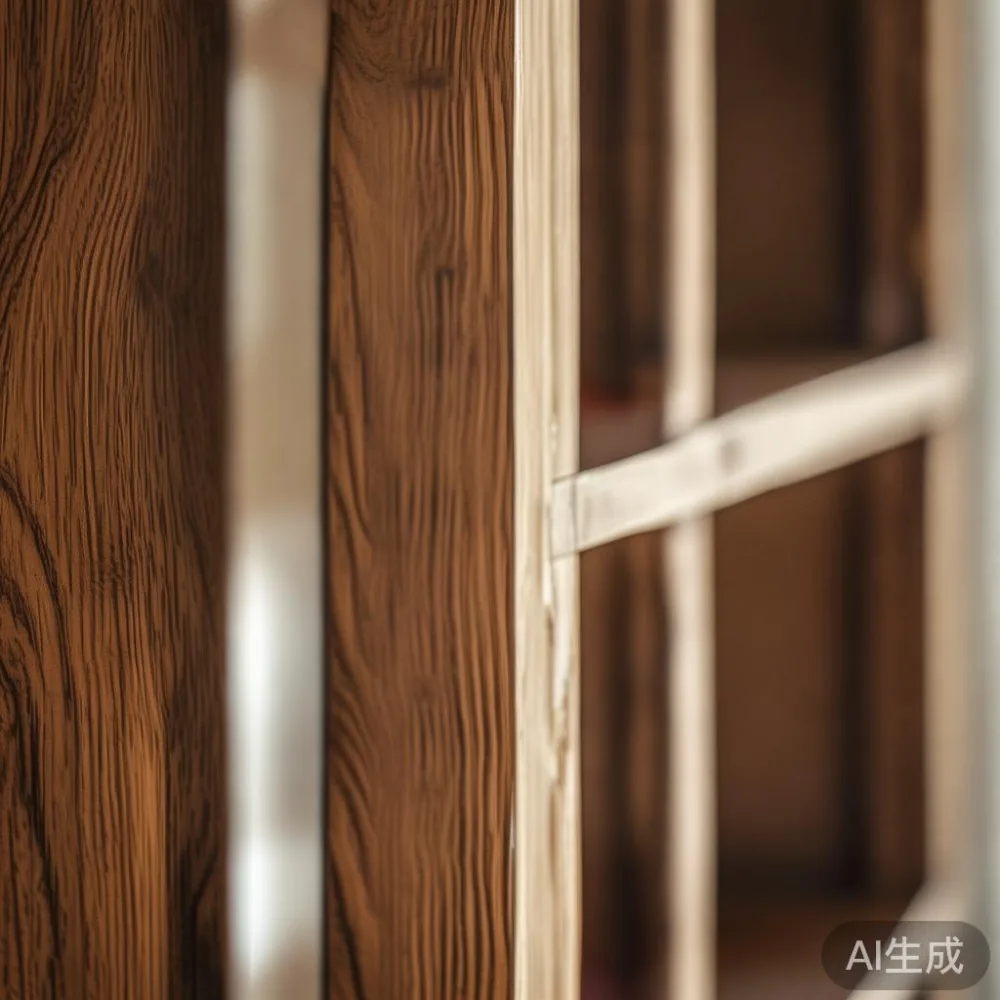
What humidity level is actually safe for a solid wood bookshelf?
The wood industry generally agrees that finished indoor furniture stays stable when relative humidity stays between 40% and 60%. In Singapore, that range is closer to a goal than a default. Outdoor ambient humidity in Singapore rarely drops below 70%, and air-conditioned rooms typically run at 55% to 65% during the day but spike back up at night when the system turns off. That daily swing — 10 to 15 percentage points in eight hours — is more stressful for a bookshelf than a steady 80%, because wood expands and contracts with every cycle. The 11 mm shelf pins in most modular units only give you so much forgiveness.
How do HDB lift and corridor widths change how a bookshelf gets delivered?
Before we talk about wood, a quick word on logistics, because this is where many Singapore buyers first get frustrated. A standard HDB lift door measures roughly 210 cm tall and 80 cm wide; a service lift is closer to 90 cm wide and 150 cm deep. A 200 cm tall, two-piece bookshelf usually arrives as an upper and lower half, each around 100 cm to 110 cm tall. Flat-pack units from regional sellers often pass through a 210 cm lift without disassembly, but a pre-assembled solid wood unit from a Foshan factory almost never does. MIDHILL, for one, ships most of their tall bookshelves in two boxes after CNC-cutting and pre-fitting in the workshop, which means the heaviest single box for a five-tier oak unit typically lands between 38 kg and 52 kg — manageable for one delivery helper to carry up the service corridor. Corridor turns in older blocks like those in Bedok Reservoir can measure as tight as 90 cm corner-to-corner, so the 35 cm shelf depth is not negotiable; anything deeper simply will not make the bend.
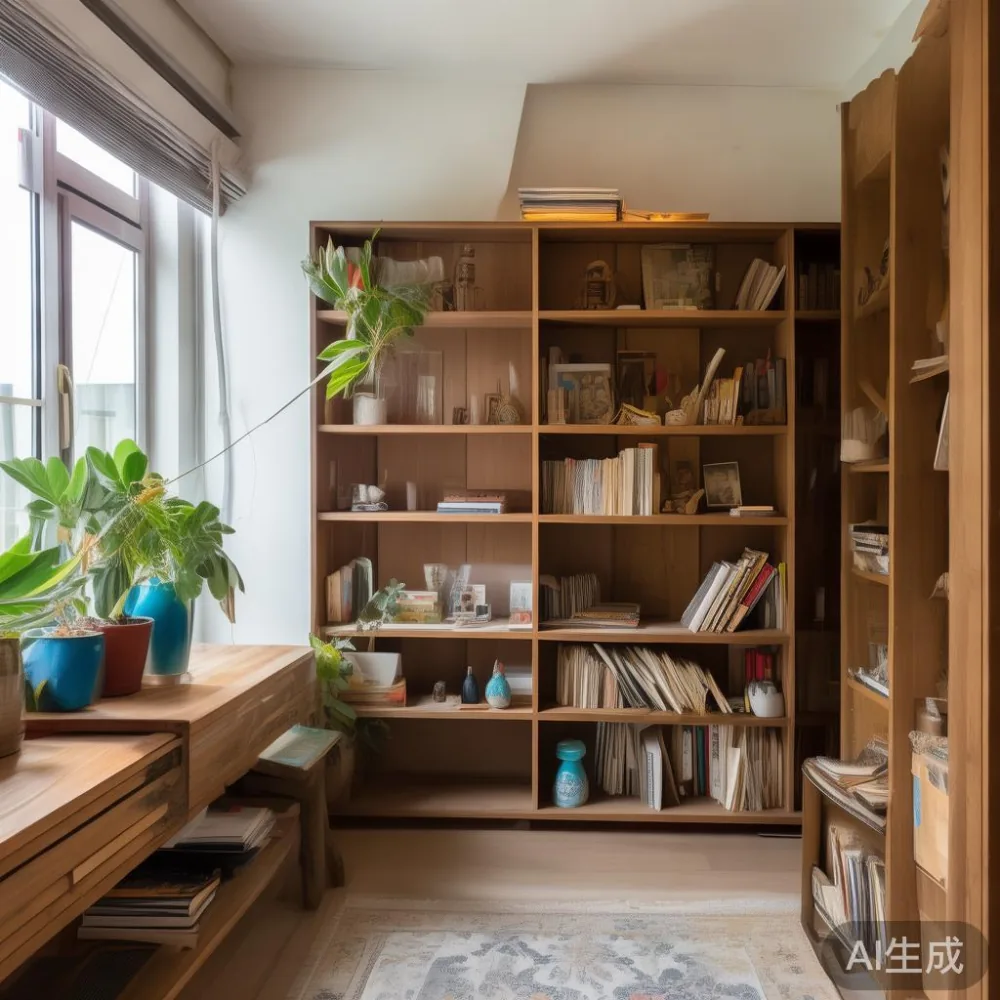
Is Post-modern accent chair furniture worth it?
Yes — when it is built from properly dried solid wood and finished with moisture-cure finishes, post-modern accent chair furniture is worth every SGD because the design language is honest about geometry, the joinery is usually exposed, and the pieces are made to be looked at from every angle in a humid room. The same design vocabulary that gives a post-modern accent chair its clean silhouette also gives the manufacturer nowhere to hide bad joinery, which is exactly why buyers in Singapore should lean into this category rather than away from it.
I sat in one of these chairs during a supplier visit in Foshan last quarter — a low-back lounge chair in white oak with brushed brass tips, sitting next to a four-tier open bookshelf in the same wood. The chair frame had been dried to 8% to 10% moisture content before assembly, which matters more than the species name on the spec sheet. Anything above 12% incoming moisture and you are in effect planting a problem in your living room.
What wood species actually survive Singapore humidity on a bookshelf?
Three species handle this climate well, and I have seen all of them on showroom floors here:
- White oak (Quercus alba) — open grain, high tannin content, naturally resistant to fungal growth. Dries to a stable 8% to 10% MC when kiln-dried properly. Expect to pay SGD 1,800 to SGD 3,400 for a five-tier white oak bookshelf around 180 cm tall.
- American ash (Fraxinus americana) — slightly more elastic than oak, which means it bends before it cracks under humidity swings. It also takes a French light luxury finish beautifully, with pale, clean grain that pairs well with post-modern interiors. The same five-tier configuration typically runs SGD 1,600 to SGD 2,900.
- Teak (Tectona grandis) — the local hero. Naturally oily, resistant to warping, and the same species used in many HDB door frames. Heavier at 660 to 750 kg/m³, which makes a teak bookshelf a two-person lift even when flat-packed.
Rubberwood, by contrast, is common in this region because it grows fast and costs less, but it absorbs moisture quickly and tends to cup on horizontal shelves wider than 70 cm. MDF and particleboard bookshelves are even more vulnerable — I have seen a 25 mm MDF shelf sag 4 mm at the centre after only nine months in a Yishun HDB without a dehumidifier running.
How should I acclimatise a new bookshelf before loading it with books?
Give it at least 14 days. Most Foshan workshops, including the MIDHILL facility, kiln-dry components to 8% to 12% MC, but the wood still needs to equalise with your specific room. Place the unopened boxes in the room where the bookshelf will live, ideally with the air-conditioner running for at least six hours a day. After 14 days, unpack, assemble on a flat surface, and leave the bookshelf empty for another 5 to 7 days. Books are heavy — a single hardcover novel weighs 0.4 to 0.7 kg, and a full shelf of 30 novels adds 12 to 21 kg. Loading too early multiplies any incipient bow and locks it in.
What everyday habits keep a bookshelf stable all year?
Three habits matter more than any warranty:
- Run a dehumidifier in the room for 4 to 6 hours daily during the wet season. Aim for 50% to 55% RH. A 12-litre dehumidifier suitable for a 15 m² bedroom costs SGD 220 to SGD 380 and pays for itself in the first year by preventing one refinishing job.
- Keep the bookshelf 8 to 10 cm away from the wall. This lets air circulate behind the back panel and prevents the condensation that forms on HDB party walls during the monsoon. Singapore HDB walls in newer BTOs in Punggol are plaster over concrete; in older flats they are hollow, and both trap moisture differently.
- Wipe with a barely damp microfibre cloth every two weeks. Never wet-wipe, never use silicon sprays, and never place a bookshelf directly under an air-conditioner where cold condensation drips onto the top.
How does MIDHILL handle humidity before a bookshelf ever reaches my flat?
The factory runs a 14-step drying cycle on oak and ash boards, bringing incoming lumber at 18% to 22% MC down to 8% to 10% over 21 to 28 days. Each bookshelf is then assembled in a climate-controlled bay at 22°C and 55% RH, which mimics a well-run Singapore living room. I watched a batch of five-tier white oak units being cranked together during my last visit — every mortise and tenon was checked with a 0.05 mm feeler gauge before assembly. MIDHILL also includes a spare set of solid brass shelf pins with each unit, which is a small but telling detail: they expect the wood to move slightly, and they expect you to live with it for years.
Does a bookshelf warranty actually cover humidity damage in Singapore?
Read the fine print. Most regional sellers exclude "environmental damage" in their warranty terms, which is a polite phrase for warping, cracking, and joint failure caused by humidity. MIDHILL's 10-year structural warranty explicitly covers joint failure and severe warping (defined as more than 6 mm deviation across a 90 cm shelf) regardless of indoor climate, provided indoor RH stays below 70% — a realistic threshold for an air-conditioned HDB or condo. The lifetime refinishing service, available in their regional service centre in Singapore, covers sanding, re-staining, and re-sealing for a fee of SGD 180 to SGD 380 per bookshelf depending on size. Free shipping applies to orders over US$350 (about SGD 470), and 14-day returns are honoured for pieces that arrive with visible defects, though buyers should photograph any unboxing issue within 6 hours of delivery to qualify.
What about my dining table, bed frame, wardrobe, and nightstand — do they face the same risk?
A bookshelf leads the casualty list, but it is not alone. A solid wood dining table will cup along the grain on its top planks if humidity swings past 70% for long stretches; a 200 cm oak dining table can cup 2 to 3 mm at the centre within a year without climate control. Bed frames, especially platform-style slat designs, tend to creak as rails expand against the slats — annoying rather than structural. Wardrobes usually survive well because the doors buffer the interior air, but the exposed side panels can bow inward if the wardrobe sits against an external wall. Nightstands are small enough to acclimatise quickly but tend to show finish clouding first because their top surfaces catch morning condensation. Marble tables, by contrast, do not move with humidity, which is one reason designers in Singapore often pair a marble side table with a solid wood bookshelf — the contrast is visual and the maintenance profiles are different.
How does an American ash wood sectional sofa fit into this conversation?
An American ash wood sectional sofa uses the same species I recommended for bookshelves, which means the same kiln-drying discipline applies. Ash bends before it breaks, which is why American light luxury living rooms in Singapore increasingly pair a sectional sofa frame with matching ash bookshelves and ash dining tables — the species holds its joinery tight through daily humidity cycles between 55% and 75% RH. If you are buying a complete light luxury set, ask the seller for the MC reading on every component. Anything above 12% is a red flag, and anything above 10% is acceptable only if the seller offers on-site acclimatisation.
Which bookshelf design choices reduce humidity damage the most?
Five design choices matter most, and they cost almost nothing extra when specified at the time of order:
- Choose floating tenon joinery over dowel joinery. Floating tenons allow 1 to 2 mm of movement at each joint without cracking.
- Specify a back panel with 12 mm to 15 mm ventilation gaps at the top and bottom. This lets the back breathe instead of trapping moisture.
- Request adjustable shelves with brass pins instead of fixed shelves. You can re-level after seasonal movement.
- Pick a moisture-cure polyurethane finish over a wax finish. Wax feels lovely but offers only 30% to 40% of the moisture barrier of a proper sealer.
- Add 2 mm to 3 mm of extra width on every shelf. This sounds counterintuitive, but it gives the wood room to swell during the wet season without pushing the sides outward.
What should I do if my bookshelf has already started to bow?
Stop loading it immediately, remove everything above the bowed shelf, and run a dehumidifier in the room for 7 to 10 days at 50% RH. If the bow is under 4 mm across a 90 cm span, the shelf will usually recover on its own. If the bow is between 4 mm and 8 mm, you can apply gentle, even weight to the convex side for 24 to 48 hours — a flat 5 kg bag of rice works — and the wood will slowly return toward flat. Anything beyond 8 mm of deviation means the wood has taken a permanent set, and the shelf should be replaced. MIDHILL sells replacement shelves directly to Singapore customers for SGD 90 to SGD 180 per panel, depending on species and size, which is cheaper than refinishing a warped unit.
Humidity in Southeast Asia is not going anywhere. The right bookshelf, the right acclimatisation, and the right daily habits will keep yours standing straight for the next fifteen years — through every monsoon, every HDB renovation, and every thousand novels you stack on its shelves.