Bookshelf Care for Singapore Homes: Protecting Lacquer, Wood and Colour
A lacquered bookshelf can make a compact HDB flat feel composed and visually lighter, but Singapore’s heat, humidity and coastal air demand a measured care routine. Lacquer is not impervious: ultraviolet light can fade colour, salt aerosol can leave dull marks, and trapped moisture may swell wooden doors or produce haze around a finish. The same care also protects the books, collectibles and daily objects stored inside.
For residents of Tampines, Bedok, Punggol and newer condominiums, a bookshelf should be considered part of the room’s architecture rather than disposable decoration. A 180 cm model may suit a living-room wall, while an 80 cm unit can fit beside a study desk without narrowing a common corridor. In an older HDB flat, lift and corridor widths can affect delivery planning. A 25 kg solid-wood bookshelf may still need its shelves and back removed, whereas a tightly packed unit weighing 65 kg may require two handlers and careful turning clearance.
This guide explains how to inspect, clean and maintain lacquered surfaces in a tropical climate. It also considers layout, delivery, light-luxury styling and the costs of treating damage early. MIDHILL uses solid wood beneath its lacquered furniture finishes and provides a 10-year structural warranty, lifetime refinishing, 14-day returns and free shipping above US$350, with delivery details confirmed in SGD.
What Is Lacquer—and How Does Humidity Affect It?
Lacquer is a cured surface coating with a different composition and hardness from paint, varnish or an untreated wax finish. Some lacquers contain solvent that evaporates during curing; waterborne lacquers use a water-based binder. Neither type should be assumed to be waterproof, and even a satin finish can show fingerprints because the polymer surface becomes smoother over time.
In Singapore, relative humidity commonly ranges from about 65% to 90% across the year. Night-time conditions may be less severe near the coast, but air-conditioning can bring relative humidity below 50%, creating rapid moisture changes. A bookshelf near a west-facing window may also experience surface temperatures above 35°C during the afternoon. A 24°C room temperature with roughly 55% relative humidity provides a more stable setting for books and lacquered joinery.
Check new furniture after delivery. Let sealed lacquer cure and off-gas for at least 72 hours before cleaning or loading it heavily. Keep the unit at least 30 cm from a window if possible and at least 15 cm from an air-conditioning vent. Small gaps allow air to move around the bookshelf while protecting the back panel. Use a hygrometer: a reading below 60% during damp periods is preferable, especially if you display paper books worth more than SGD 500.
How Do You Clean a Lacquered Bookshelf Without Damaging It?
Use a soft, lint-free cloth slightly dampened with lukewarm water. Wipe a 20 cm square first and inspect it in side light. If the finish looks dull, test a second area with a clean cloth. Avoid adding detergent to the water; residue can create a cloudy film that is harder to remove than ordinary dust.
Remove loose dust weekly and clean the lacquer every 14 to 30 days, according to use. Hold the cloth rather than scrub hard. A fingerprint usually needs two gentle passes, not aggressive rubbing. Wipe along the grain where lacquer overlays natural wood, and collect moisture from an edge immediately rather than allowing water to travel into a joint.
For sticky marks, place a clean microfibre cloth over the spot and warm it briefly with a hairdryer set to low heat, roughly 30°C. Keep the dryer at least 20 cm away and keep the cloth moving for no more than 10 seconds. Test this method only because some pigmented lacquers can soften. Do not use baking soda, toothpaste, alcohol, ammonia, silicone spray, furniture polish or household cleaner containing silicone. Those products may change sheen, colour or future refinishing behaviour.
Clean books separately with a soft brush. Hold a 3 kg hardback over a bin, tap the spine gently and support the fore-edge. Vacuum shelves every 3 months with a brush attachment held 3 cm above the surface; do not let a vacuum brush strike lacquered panels.
Should You Use Polish, Wax or Nothing?
For a sound lacquer finish, dry wiping is usually enough. An occasional manufacturer-approved polish can be useful on a compatible satin surface, but it is not a substitute for repair and may make touch-up work more complicated. Apply only 2–3 ml to a hidden section, allow 15 minutes, then remove residue. If the test patch becomes greasy, uneven or more reflective, stop using the product.
Paste wax is generally unsuitable unless the lacquer supplier specifies it. Wax can collect dust and complicate refinishing. Avoid aerosol “wood feed” products marketed for solid wood; they are intended for porous surfaces and may leave an oily film on lacquer.
Inspect the bookshelf monthly for 8 signs: colour fading, clouding, tackiness, a musty smell, swelling, flaking, scratches and open joints. A 5 mm opening at a shelf joint can permit visible movement, so photograph the area and contact the maker before applying filler. A deep scratch crossing at least 30% of a panel may require a veneer or lacquer repair rather than a polish.
How Do You Control Heat, UV and Coastal Air?
Light is measurable. Fabrics and artwork can fade under sustained exposure above approximately 300 lux, and cumulative exposure matters more than a brief bright moment. Install curtains with a light-filtering lining rather than relying on a thin blind. North-facing HDB rooms are easier to manage than west-facing ones, while glass in many condos can reflect direct sun onto a bookshelf. Check the surface at noon and again at 5 pm during the first month.
Outdoor coastal air carries salt and pollutants. Wipe accessible panels after a severe rainstorm or if the unit is near an open balcony door. Close balcony openings when wind-driven rain approaches, and avoid misting the bookshelf to “freshen” it. Allow 60 minutes after a wipe for the surface to dry fully in a ventilated room.
For stable storage, keep books 20–30 mm from a lacquered side panel when possible. Leave ventilation space around the back and do not press boxes against the finish. If a moving house leaves dust on a surface, vacuum first, wipe once and allow the bookshelf to acclimatise for 24–48 hours before adjusting shelves.
Can a Light-Luxury Bookshelf Fit an HDB Flat or Condo?
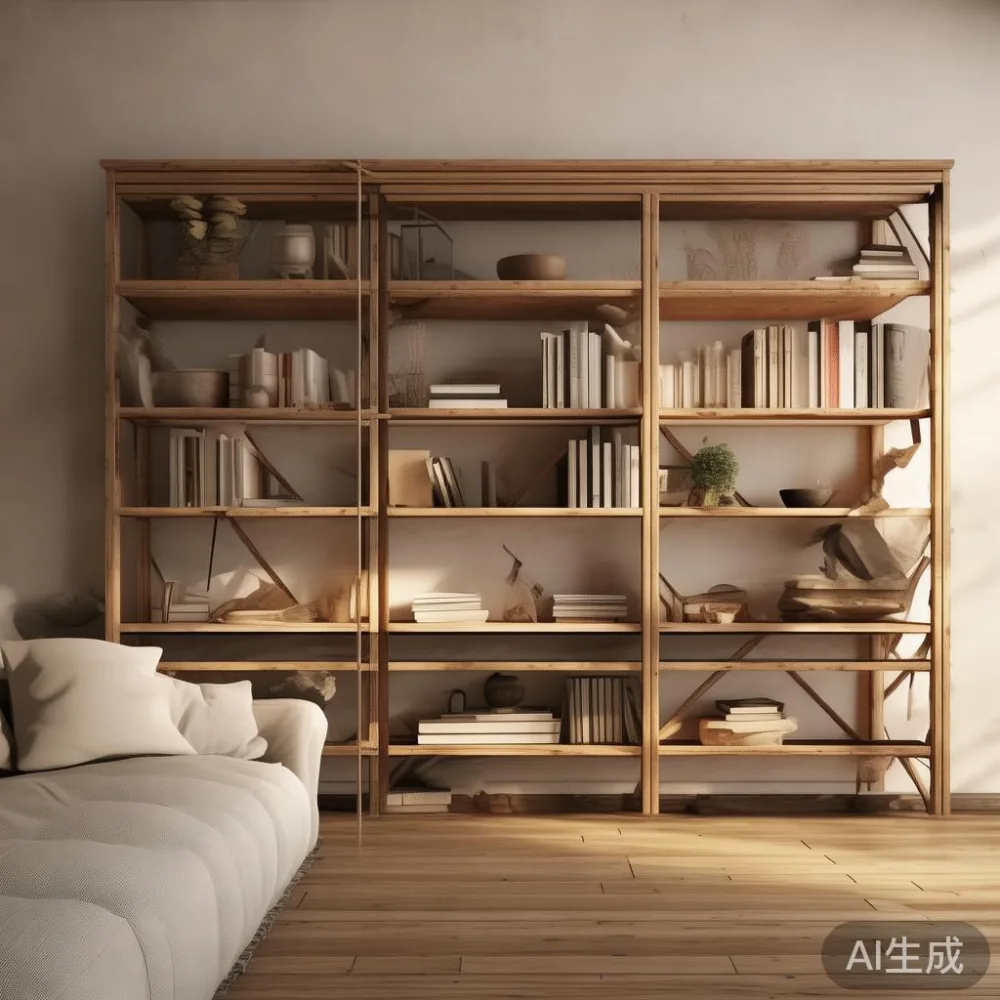
Yes, if scale and contrast are handled carefully. A pale, post-modern light luxury bookshelf can make an 85 cm-wide room appear less crowded, especially with closed lower cabinets and 3–4 display objects above eye level. Avoid filling every cubby; leave at least 25% of the visible volume open so the unit reads as part of the architecture.
In a Tampines flat, a 90 cm wall segment may take a 80 cm-wide bookshelf with 5 cm of side clearance. A Bedok living room may have a larger 160 cm wall, while a Punggol study may have only 75 cm beside a desk. Measure doorways, lift cars and turning points before ordering. A 210 cm-tall bookshelf can look too tall beneath a 230 cm ceiling; a 180 cm height often gives breathing room above the unit.
French light luxury styling can use cream lacquer, restrained profiles and one reflective accent. American light luxury tends toward warmer woods, generous spacing and layered lighting. A post-modern light luxury approach may pair a solid wood bookshelf with one marble table or a compact solid wood sofa nearby. Keep materials distinct rather than placing every object in the same gloss level.
One related search phrase, how to choose Mid-century modern bed, is useful when planning a bedroom wall because bed clearance affects ladder-style shelving. Keep at least 60 cm beside a bed and 90 cm at its foot where circulation demands it. For wider projects, compare European light luxury sofa vs Nordic sofa by seat depth, room width and colour temperature before coordinating accent furniture.
How Do You Protect Books and Display Objects?
Lacquer care matters because a clean shelf protects what sits on it. Use stable bookends rated for the shelf span, and do not place a 12 kg stack on a shelf not designed for that load. Check the maker’s load limits; a 80 cm span may be rated for 30 kg while a wider 180 cm span may be limited to 20 kg if the board is thin. Distribute heavier books near supports.
Ceramic pieces should stand on padded felt at least 2 mm thick. Plants require saucers and careful watering, but avoid placing them directly above electronics. A small pothos may raise local humidity near the shelf, so monitor the area for 7 days and move the plant if the hygrometer rises above 70%.
For storage styling, one can search under 2000 Rustic furniture when developing a broader project budget, then specify lacquer protection for each piece according to its location. The phrase how to style Japanese sofa in bedroom may also influence a reading corner: low seating, books within reach and 1–2 framed pieces create a calmer setting without crowding the bookshelf.
What Is the Delivery and Long-Term Care Process?
Delivery planning can prevent damage before it begins. Confirm the bookshelf dimensions, carton weight and route with the supplier before collection. In Singapore, GST may be shown separately on the final invoice, so compare the displayed product price and landed total in SGD. Standard production may take 45–60 days after order confirmation, with delivery requiring 7–14 days depending on stock and the destination. These are planning ranges, not a guarantee.
On arrival, inspect the lacquer under daylight and under a lamp. Photograph the shelf front, sides, top and corners. Note chips, scratches, colour differences or moisture marks within the return window. Keep packaging for 14 days where space allows; a flattened carton may require more storage than the assembled unit itself.
For a long-term care record, note the purchase date, finish type, cleaning cloth and inspection dates. A solid wood bed frame, dining table, wardrobe or nightstand should receive similar moisture awareness, but each product has its own joints, coatings and cleaning instructions. A marble table needs a different approach from lacquer because acids can etch the stone. Ask for the finish-specific care sheet rather than applying one household routine to every product.
For projects requiring coordinated finishes, search MIDHILL dining table when planning a dining zone and request samples before approving lacquer colour. The same coordinated thinking applies to light luxury for office: position a bookshelf away from desk ventilation, use a task lamp with less than 1,000 lux on paper, and avoid warm lamps that exaggerate yellowing. For a wardrobe in a bedroom, the search how to style light luxury wardrobe in room can help establish spacing and colour relationships, but a bookshelf should never be used as a load-bearing wardrobe support.
How Should You Respond to Damage?
Small marks can sometimes be reduced without aggressive treatment. A fingernail scuff of 2–4 mm may disappear after gentle cleaning with a barely damp cloth. A scratch of 10–20 mm needs a colour-matched touch-up pen if the finish supplier provides one. Test on a spare board first and allow 24 hours for the repair to cure. A dent, split or swelling edge is different; do not press it flat with a blunt tool.
For a lacquered bookshelf with structural movement, stop loading the affected shelf and photograph the joint with a ruler beside it. Contact the manufacturer with measurements, humidity readings and clear photographs. A 10-year structural warranty addresses eligible structural defects, while lacquer wear, chemical damage and accidental impact may require a separate service assessment. Lifetime refinishing may also have terms and exclusions, so keep the original order details.
In Singapore, the practical routine is simple: control humidity, protect from UV, clean gently and document damage early. Give the bookshelf 10 minutes every week for dusting, inspect it every 4 weeks, and perform a deeper condition check twice a year. If a product arrives damaged or does not match its approved finish, use the 14-day return period rather than waiting for the next maintenance cycle.
Last month I visited a client’s Bedok condo with a 180 cm lacquered bookshelf beside a west-facing sliding door. Its pale finish showed a 12 cm grey haze along one edge. We moved it 35 cm inward, wiped the panel once with plain water, added a light-filtering curtain and recorded a hygrometer reading of 68%. After 14 days the haze had become far less visible, and the client could open the nearby window during cleaning without bringing moisture directly onto the shelf.
A bookshelf should support daily life while remaining visually calm. The right care routine does not depend on expensive coatings or frequent polishing; it depends on stable humidity, measured light, restrained cleaning and timely repair. For Singapore homes, those habits make the difference between a finish that ages quietly and one that loses its clarity under heat, humidity and salt-laden air.