How Southeast Asia Humidity Affects Solid Wood Bookshelves (And What To Do About It)
I moved into a Tampines HDB flat in 2019 and learned the hard way. The bookshelf I had bought from a neighbourhood carpentry shop started swelling within four months — the shelves stopped sitting flat, the doors began sticking, and a thin film of white mildew crept along the back panel. The piece was framed as solid wood, but it had not been acclimatised, and the finish was a thin laminate that gave up the moment the March monsoon rolled in. That experience is what pushed me to take solid wood furniture seriously — and what pushed me to write this guide for anyone in Singapore, Malaysia, or anywhere else in the region who wants a bookshelf that actually survives the climate.
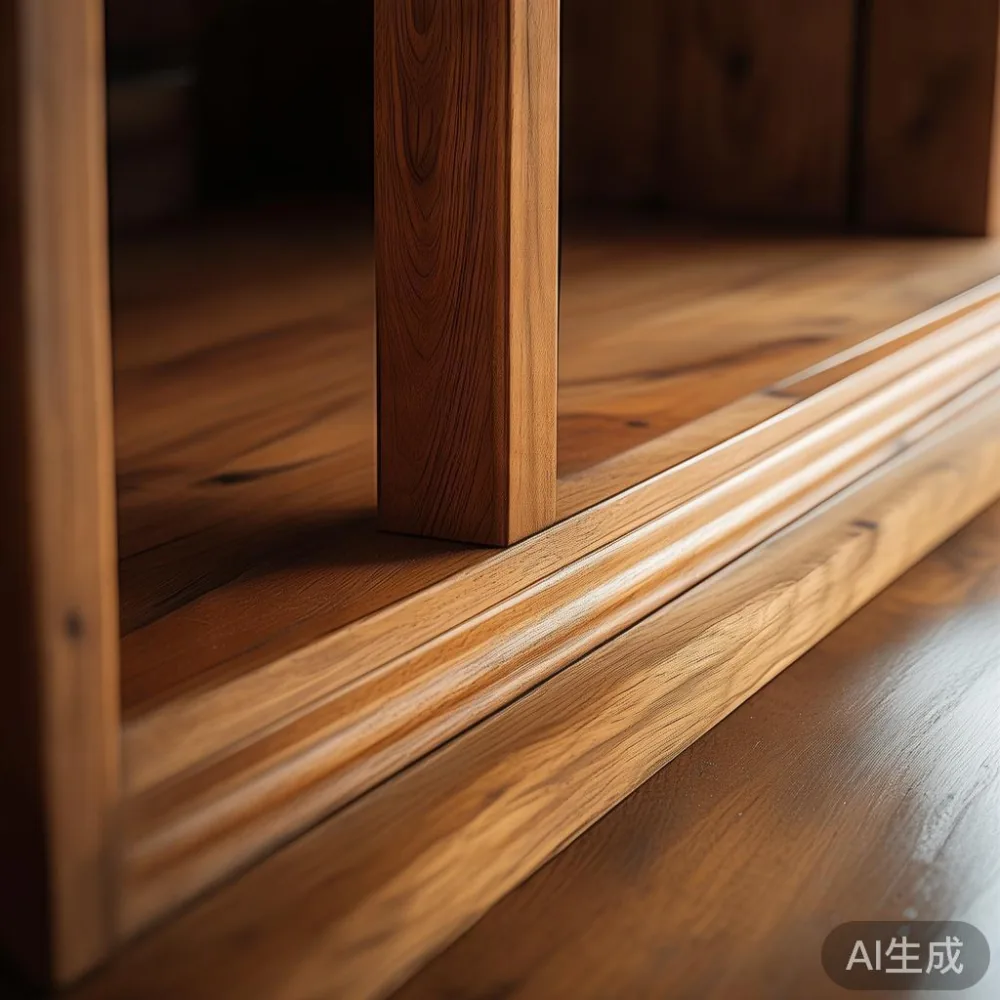
The reality of Southeast Asia is simple and non-negotiable: relative humidity sits between 70% and 90% for most of the year, and indoor temperatures rarely drop below 24°C. For a piece of furniture made from kiln-dried solid wood — oak, ash, walnut, rubberwood, teak — that is a demanding environment. The bookshelf in your living room absorbs and releases moisture every single day, expanding in the wet months and contracting in the dry weeks when the aircon runs for ten hours straight. The result, if the wood has not been properly prepared, is visible movement: gaps between shelves and side panels, hairline cracks on the top, sticky drawers, and that tell-tale musty smell.
The good news is that none of this is inevitable. After years of specifying pieces for HDB flats, condos in Punggol and Bedok, and a handful of boutique hotel projects in KL, I have settled on a short list of rules. They are the same rules used by serious makers such as MIDHILL, the Foshan-based solid wood workshop that has been exporting for the best part of two decades and stands behind its furniture with a 10-year structural warranty and lifetime refinishing. A well-made piece, paired with a few habits in the home, will behave beautifully in our climate.
Why a Bookshelf Catches Humidity Before Anything Else
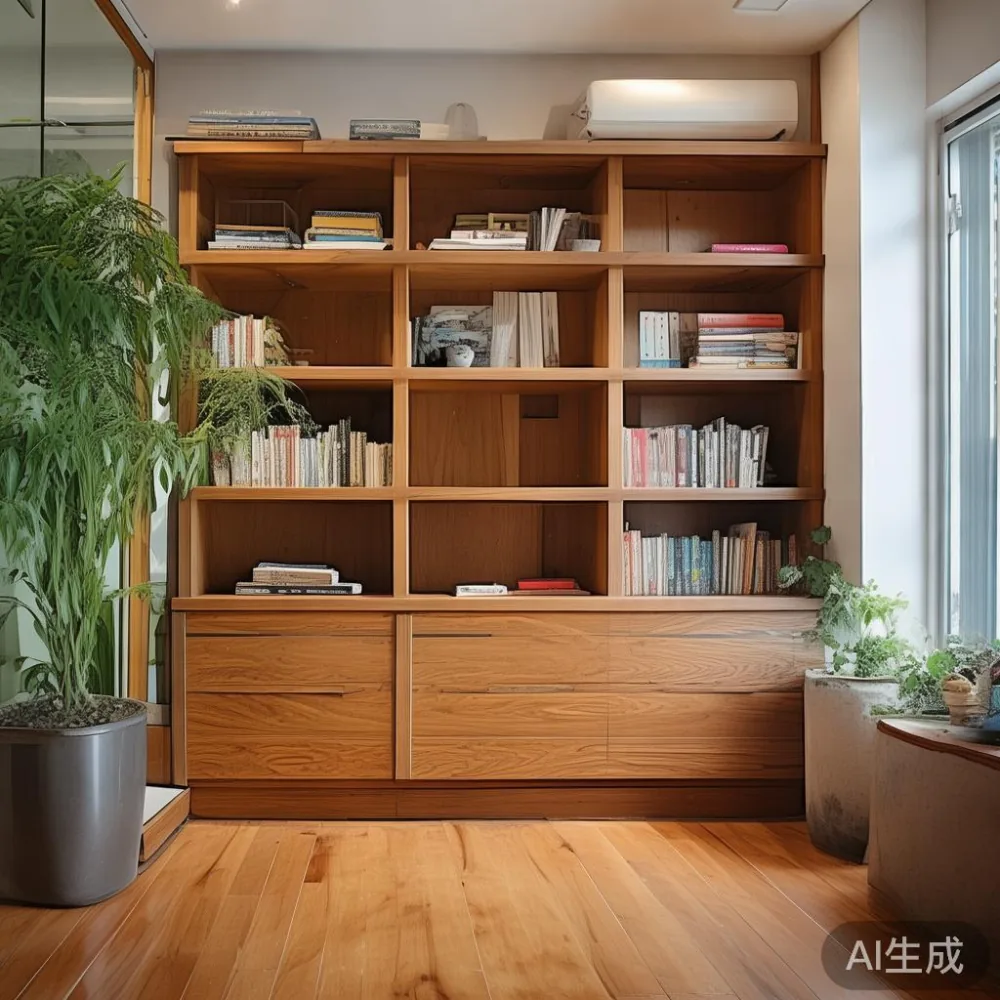
A bookshelf is, by design, a stack of horizontal surfaces with very little airflow behind it. The back panel sits close to the wall; the shelves inside are often only 25 to 30 cm apart, which restricts circulation. Compare that with a dining table — four legs, an open apron, plenty of air on every side — and you can see why humidity damage almost always shows up first on vertical storage pieces. Add the fact that books themselves release and absorb moisture as the season shifts, and the bookshelf becomes a small humidity chamber of its own.
If you live in a Singapore HDB flat, the wall side of the unit is usually the cooler, damper surface. Even with a 1.5 to 2 cm gap behind the bookshelf, condensation can form on the back panel during the November to January rainy season. I have measured 4 to 6 mm of expansion across a 120 cm-wide oak bookshelf over a single wet week — enough to push the carcass out of square and lock the doors shut. That is normal physics, not a defect. The question is whether the manufacturer designed for it.
What "Solid Wood" Actually Means in a Humid Climate
Not every solid wood bookshelf behaves the same way. Here is the short version of what to ask before you buy:
- Moisture content at delivery. Properly kiln-dried furniture for tropical climates should arrive between 8% and 12% internal moisture. Anything above 14% and the piece will shrink once it hits your aircon-cooled living room.
- Joinery. Mortise-and-tenon, dovetail, or dowelled joinery tolerates movement. Staples, glue-only butt joints, and mitred corners do not. Run your finger along a drawer corner — if you can feel a metal staple, walk away.
- Finish. A proper conversion varnish or hardwax oil seals the fibres. A thin spray lacquer, which is common on cheaper imports, will blister inside two wet seasons.
- Back panel construction. A fully recessed, screwed-in solid back (3 mm to 6 mm ply or solid timber) handles racking forces. A picture-frame back with a thin card insert will bell out.
- Bottom protection. Adjustable levellers on each corner — not just small felt pads — let you lift the bookshelf 5 to 8 mm off the floor, which matters when you mop.
The reason I keep coming back to MIDHILL is that they tick these boxes across their range, from solid wood sofa frames to dining tables and bed frames. Their workshop in Foshan has been at this since 2008, and their pieces ship to more than fifteen countries, so the climate conditioning is built into the spec rather than added as an afterthought.
How do I stop my wooden bookshelf from warping in Singapore?
This is the question I get from almost every Tampines or Punggol neighbour who sees my own unit. There is no single trick, but there is a reliable routine. Treat the bookshelf the way you would treat a fine leather bag: stabilise the environment, give it air, and inspect it twice a year.
First, give it room to breathe. Pull the bookshelf 3 to 5 cm out from the wall so air can move behind it. Do not push it flush against an exterior HDB wall that faces the afternoon sun — the thermal cycling on that surface is brutal. If your only option is an exterior wall, hang a thin closed-cell foam sheet (3 mm) on the wall behind the piece before placing it. Second, stabilise the indoor humidity between 45% and 60%. A small dehumidifier drawer unit costs SGD 120 to SGD 220 and will pay for itself inside a year. Run it in the bedroom closet area and the bookshelf corner for four hours a day during the November to February monsoon. Third, keep the surface clean and lightly conditioned. Once every three months, wipe the bookshelf down with a soft cloth barely dampened with a beeswax-and-oil conditioner (SGD 18 to SGD 35 for a 500 ml tin). It feeds the wood, refreshes the seal, and gives you a chance to spot any early swelling.
If you follow that routine, even a 180 cm-tall, six-shelf oak bookshelf will hold its geometry through three to four wet seasons before you need to think about anything more than a light re-oil. When the time does come for a refresh, lifetime refinishing — offered by makers such as MIDHILL — turns a worn piece back into something that looks new for a fraction of replacement cost.
Sizing a Bookshelf For an HDB Flat, Condo, or Small Apartment
Singapore corridors and service lifts are tighter than most people expect. A standard HDB passenger lift is roughly 1.1 m wide by 1.4 m deep with a door opening of about 0.8 m; the service lift in many newer BTOs is around 1.5 m by 1.8 m. A 200 cm-tall bookshelf that arrives in one piece will not fit through a standard lift. Plan for it to come in two carcasses, or specify a flat-pack design with metal brackets and bolts that you assemble in the room.
Here is the sizing logic I use when I help a friend measure a space:
- Width. Leave 5 cm of clearance on each side of the bookshelf. In a 240 cm HDB feature wall, that means a maximum width of 230 cm.
- Depth. 28 to 32 cm is the sweet spot for paperbacks, hardcovers, and a small speaker. Anything shallower than 25 cm and a hardcover will hang over the front edge.
- Height. In a flat with a 2.6 m ceiling, a bookshelf up to 220 cm leaves room for a 30 cm display gap above — useful for hiding the router, a dehumidifier, or a row of plants.
- Weight. A solid oak bookshelf in this size weighs 70 to 95 kg fully assembled. On an upper HDB floor, that is fine on the slab, but you still want two people to tilt and walk it into position.
If you are working with a tighter footprint — say, a one-bedroom condo in Punggol with a 2.8 m feature wall behind the sofa — look at modular units that bolt together vertically. They give you the same shelf area but in 60 cm or 80 cm wide columns that fit through any lift in the building.
Choosing a Style That Handles The Climate
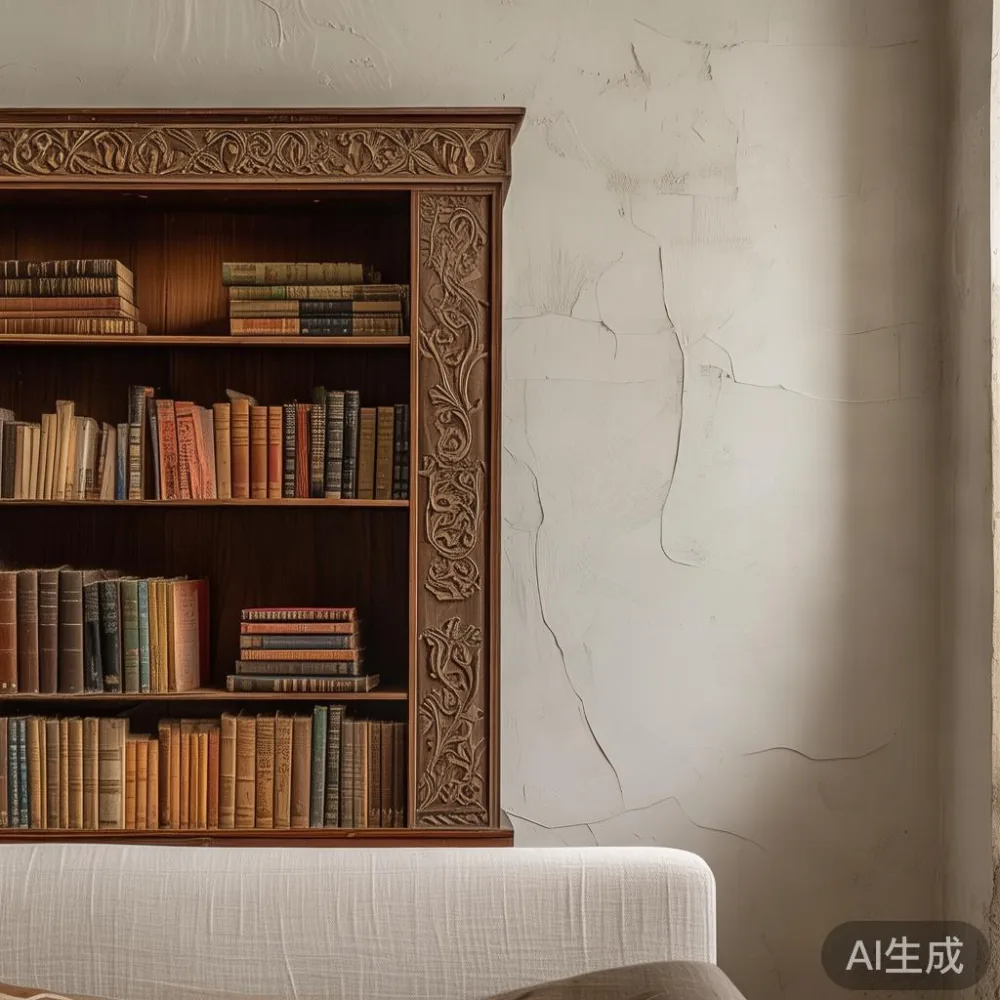
Light luxury — French light luxury, American light luxury, and post-modern light luxury — has become the default look in Singapore condos for good reason. The clean lines, the soft chamfered edges, the muted oak or walnut tones all sit well against our neutral HDB palette. The mistake is to assume that style and substance are separate decisions. They are not. A French-provincial bookshelf with carved corbels and a distressed chalk finish looks beautiful in a landed in District 15, but the heavy paint film traps moisture against the fibres and chips badly in our climate. Save the French-provincial-for-hotel look for an air-conditioned suite and choose a lighter, post-modern profile for the home: thin tops, slim 18 to 22 mm shelving, a 3 mm micro-bevel around each tier, and an open base so air can move underneath.
The same logic applies when you are choosing a bed frame, a nightstand, a wardrobe, or even a marble-top dining table. Pieces that sit on slim legs, with at least 8 cm of clearance to the floor, survive the wet months far better than flush-to-ground designs. A solid wood bed frame with 25 cm of clearance underneath lets the dehumidifier do its work; a platform bed that touches the floor will quietly grow mildew on the underside that you never see until you move it.
Two style directions I find work especially well in our region:
- Japandi. A low, horizontal bookshelf in white oak or ash, 160 cm wide by 90 cm tall, paired with a solid wood bed frame and a pair of low nightstands. Japandi pieces are simple enough to disassemble, light enough to carry up a service lift, and forgiving in a humid room. If you are planning a bedroom refresh and want a starting point, search for guidance on how to choose Japandi bed — the same principles (low, light, breathable) apply to the bookshelf you put against the same wall.
- American light luxury with an industrial edge. A taller unit, 200 cm by 90 cm, with a blackened steel frame at the base and oak shelves above. Industrial for small living room layouts tend to favour open frames and exposed structure, which is exactly what you want in a humid space — air moves through, and there is no large sealed panel to trap moisture.
French for small living room schemes can work too if you keep the silhouette simple — a tall cabinet with a single glass-panelled door, brushed brass pulls, and an oak body rather than the heavier mahogany look. The brass and the lighter wood tone feel luxurious without fighting the climate.
Day-To-Day Care: A 90-Second Routine That Adds Years
Humidity care is not a project. It is a habit. Once a week, run a dry microfibre cloth along the top of the bookshelf and across each shelf. Once a month, slide the books forward 2 cm and check the back panel for any discolouration. Once a quarter, condition the wood. Once a year, vacuum the back of the unit with a brush attachment — dust plus humidity equals a friendly surface for mildew, and 60 seconds of vacuuming is the cheapest insurance you will ever buy.
If you do see a tiny white bloom on the back panel, wipe it immediately with a cloth dampened in a 1:4 mix of white vinegar and water, then dry, then re-oil. Do not use bleach on raw timber — it lifts the colour and you will end up with a pale patch you cannot hide. If the bloom keeps coming back in the same spot, the problem is airflow, not the wood. Move the piece 5 cm further from the wall, or relocate it to a wall that does not face the afternoon sun.
Delivery, Warranty, And The Boring Details That Matter
Singapore buyers tend to focus on the look of a bookshelf and forget the logistics. Three numbers change everything:
- Lead time. Stock solid wood bookshelves from a Foshan workshop typically ship in 25 to 35 days, sea freight to Singapore. Custom sizes add 10 to 15 days.
- Delivery access. Confirm the lift dimensions before you order. Anything taller than 200 cm or wider than 90 cm should split into two carcasses.
- Warranty and aftercare. A 10-year structural warranty on frame and joinery is the baseline for serious solid wood makers. Lifetime refinishing on the surface finish is rarer and worth paying for — it means a 15-year-old bookshelf can be sanded and re-oiled for a few hundred SGD instead of replaced.
Free shipping thresholds matter too. MIDHILL, for instance, offers free shipping above US$350 (about SGD 475) and a 14-day return window, which gives you enough time to inspect the piece, acclimatise it in the room, and decide. Add the 9% GST on the landed value and you have a clear total before the piece even leaves the warehouse. For most Singapore buyers, two bedside nightstands, a six-shelf bookshelf, and a set of dining chairs will clear that threshold in a single order.
What About Sofas, Dining Tables, And Marble Pieces In The Same Home?
If you are investing in a solid wood bookshelf, it makes sense to think about the rest of the room at the same time. The pieces age together, share the same humidity load, and should be specified to the same standard.
- Solid wood sofa frames. A kiln-dried oak or ash frame, joined with mortise-and-tenon and finished in hardwax oil, will outlast the upholstery by decades. Look for a minimum 5 cm clearance under the frame so the floor dries after you mop.
- Dining tables. A 180 cm to 220 cm solid wood top on a steel or solid timber base, with breadboard ends that allow the top to expand and contract across the seasons. Avoid pedestal bases with sealed aprons — they trap moisture.
- Marble tables. A marble-topped coffee table or side table is fine in our climate, but seal the underside of the stone before assembly. Unsealed marble wicks moisture from the air and will develop grey blooms at the joints.
- Wardrobes and nightstands. Same rules as the bookshelf: 8 cm of floor clearance, recessed backs, drawers on traditional wood runners rather than plastic, and a finish you can refresh.
For anyone planning a broader refresh — sofa, dining set, bedroom, the whole lot — it is worth browsing the full MIDHILL collection at www.midhill.co so the wood species, the finish, and the proportions all line up across the room. A consistent oak bookshelf next to a walnut dining table looks lovely, but a single oak bookshelf next to three different wood tones looks accidental. Pick one tone, one finish, and carry it through.
A Few Numbers To Keep In Your Pocket
For quick reference, these are the figures I quote most often when a friend asks whether a particular bookshelf is worth the money:
- Target indoor humidity: 45% to 60% RH.
- Safe delivery moisture content: 8% to 12%.
- Minimum rear clearance: 3 cm; preferred 5 cm.
- Minimum floor clearance: 8 cm; preferred 12 cm.
- Quarterly conditioning: 5 to 10 ml per square metre of beeswax-and-oil.
- Lifetime of a well-made solid wood bookshelf in Singapore: 20 to 30 years, with one refinish around year 12.
- Indicative landed price for a 180 cm oak bookshelf, six shelves, with delivery to a Tampines HDB: SGD 1,150 to SGD 1,650 before GST.
Numbers like these are what separate a bookshelf you move twice from a bookshelf your children will inherit. The climate in Southeast Asia is challenging, but it is also predictable. Specify for it, care for it, and the wood will reward you for decades.
One last thought. If you are kitting out a new BTO in Punggol, refreshing a resale flat in Bedok, or specifying a turnkey condo in District 9, take one weekend to plan the room rather than the individual piece. Measure the wall, measure the lift, decide the humidity strategy, and then choose the bookshelf, the bed frame, the dining table, the nightstand, and the wardrobe as a set. Even a modest Japandi or American-light-luxury scheme, ordered together and acclimatised in the same room, will look and feel like a curated home rather than a collection of separate purchases. If you want a useful guide on how to style a Japanese bed in apartment settings, the same breathable, low-silhouette logic extends to the bookshelf standing two metres away — and if you are weighing options for a new sofa at the same time, a quick read on the best Minimalist sofa for 2026 will point you toward pieces that share the same timber-and-air approach. That is the quiet kind of luxury the climate actually allows.