How to Match a Bookshelf, Sofa and Bed Frame to a Warm Minimal Interior in Singapore
I spent the first weekend of last month in a 4-room HDB flat in Tampines with a client who had just received her shipment from Foshan furniture maker MIDHILL. We spent about three hours uncrating a solid wood bookshelf, a solid wood sofa frame, and a 1.8 m bed frame, and by the end of the day she asked me the question I hear almost every week: "How do I make all this light-toned timber look warm and minimal instead of flat and Scandinavian-cold?" This article is the answer I gave her, refined with measurements, prices in Singapore dollars, and the corridor-and-lift realities of Punggol, Bedok and Tampines blocks.
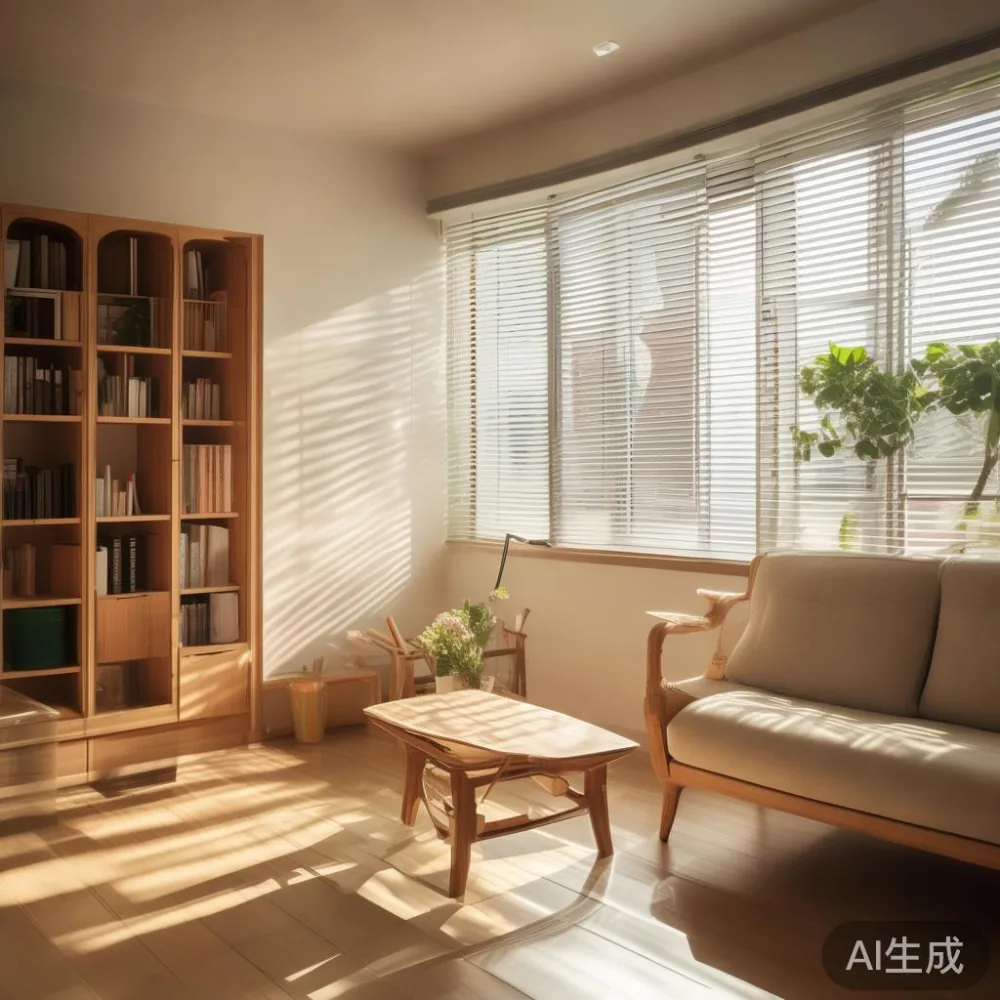
What "warm minimal" actually means in a Singapore HDB
Warm minimal is not the same as Japandi, and it is not the same as pure Scandinavian white. It is a deliberate mix of three things: light-toned solid wood surfaces (oak, ash, walnut, or rubberwood with a warm honey stain), one soft material to absorb echo in a hard-walled HDB flat, and one darker accent to give the eye somewhere to rest. In a standard 92 sqm Punggol Build-To-Door location units or a 93 sqm Bedok resale flat, the living room usually runs 3.2 m to 3.8 m wide. That is enough wall length to anchor a 180 cm or 210 cm low-profile solid wood sofa, plus a 120 cm bookshelf, without making the corridor feel pinched.
Light luxury (sometimes called French light luxury or American light luxury, with a post-modern light luxury branch that plays with curved edges) is the design register that fits this brief. It stays restrained on the silhouette, but it allows one or two furniture pieces to carry a subtle decorative gesture: a fluted wardrobe door, a marble table top on a small side table, a curved backrest on a solid wood sofa, or a soft champagne-brass pull on a bedside nightstand. The pieces are calm, but never boring.
Is French sofa worth it for a 4-room HDB flat?
This is the most-asked question I get from clients shopping for a solid wood sofa in Singapore, and the answer is: only if you control the size and the fabric. A French sofa, in the light-luxury sense, usually means a low seat height of 38 cm to 42 cm, a seat depth of 60 cm to 65 cm, and a gently rolled or curved backrest, often upholstered in a boucle, linen-cotton blend, or short-pile velvet in beige, sand, taupe, or stone grey. For a 4-room HDB living room with a typical 3.0 m to 3.2 m sofa wall, a three-seater at 200 cm to 220 cm long and 95 cm deep will sit comfortably without crowding the 60 cm walkway to the corridor.
Comparing a French sofa vs Mid-century modern sofa, the difference shows up in three places. Mid-century pieces usually have a tufted back, tapered wooden legs of 18 cm to 22 cm, and firmer seat cushions, while a French light-luxury solid wood sofa has softer cushions, a lower profile, and rounded edges that read as gentler. If your client is over 1.75 m tall or likes to nap on the sofa, go Mid-century for the firmer support. If the sofa is mostly for evening reading and hosting two to three people, go French. A standard three-seater in boucle from MIDHILL at MIDHILL dining table review-level showroom standard typically retails between SGD 2,180 and SGD 2,950 in Singapore, before the 9% GST, which is competitive against the SGD 2,400 to SGD 3,200 I see at local bespoke ateliers.
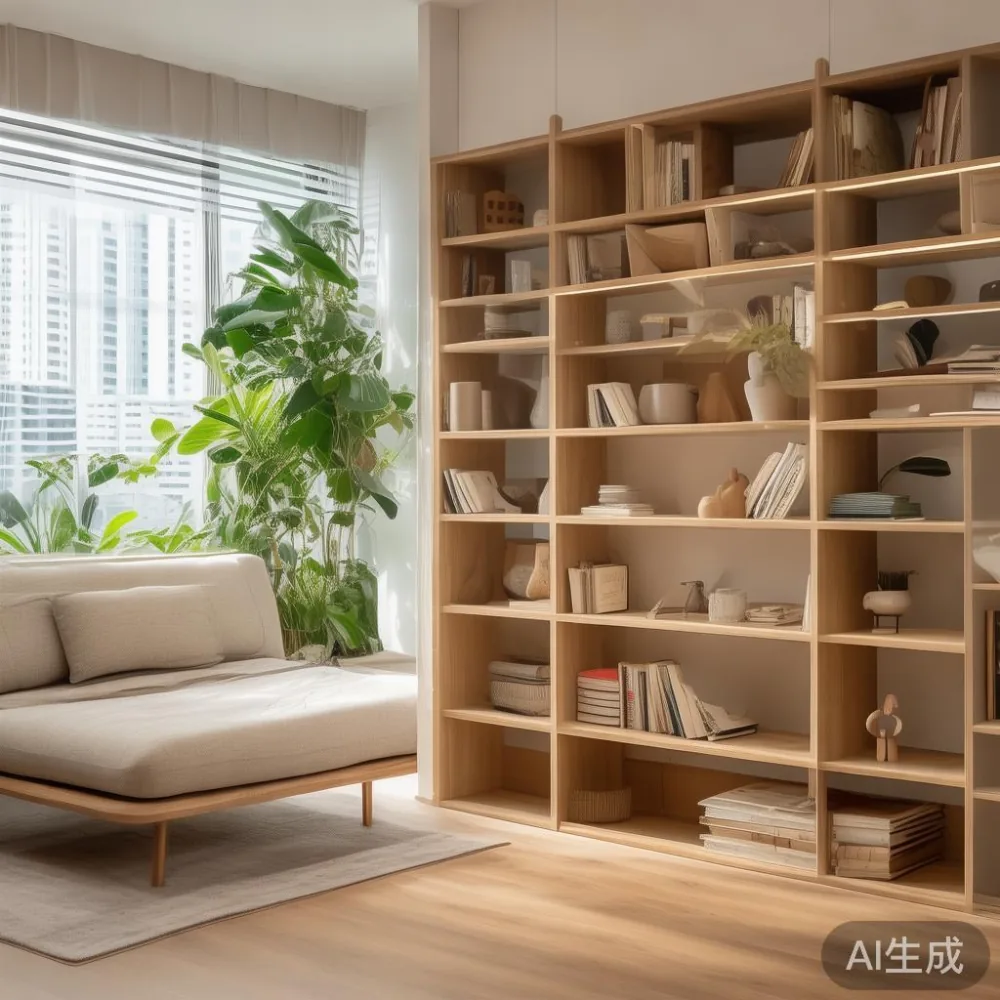
The bookshelf is the warm anchor of the whole room
In a warm-minimal layout, the bookshelf does most of the heavy lifting. It is the piece that catches the morning light from the HDB service yard or kitchen window, holds the warm wood tone across a 2.4 m wall, and gives the eye a place to land when the room is empty. I almost always recommend a floor-standing bookshelf at 80 cm to 90 cm depth (yes, deeper than the standard 30 cm), because it lets the client store art books, vinyl, baskets, and small ceramics without the shelves looking crowded. Height should match the ceiling. In a Punggol BTO with 2.7 m floor-to-ceiling, a 220 cm bookshelf with a 10 cm to 15 cm clearance on top works. In a Tampines or Bedok resale flat with a 2.8 m to 3.0 m ceiling, a 240 cm bookshelf leaves the same breathing room.
Weight is the second constraint people forget. A solid wood bookshelf at 80 cm wide, 30 cm deep, and 220 cm tall, fully loaded with books, weighs roughly 90 kg to 110 kg. In a HDB flat, you almost always need to disassemble it for the corridor and the lift. Most HDB passenger lifts in Tampines and Bedok have a door opening of 80 cm to 90 cm wide and a cabin depth of 150 cm to 170 cm, so the bookshelf panels are best kept under 200 cm long. MIDHILL ships its 220 cm and 240 cm bookshelf flat-pack at 90 cm to 110 cm per carton, which my clients in Block 645 Punggol and Block 138 Bedok confirm is workable in a standard 630 kg / 10-person lift.
Styling is the third layer, and it is where the warm-minimal feel comes through. Use a rule of three on each row: one vertical stack of three to four books, one horizontal stack of two, and one object (a ceramic vase 18 cm to 22 cm tall, a small framed photo 21 cm x 29.7 cm, or a brass-trimmed candle). Leave 30% to 40% of each shelf empty. If you want to push the look further into French light luxury, add one or two pieces with curved silhouettes (a fluted vase, a rounded sculpture) and one piece in dark walnut to anchor the lighter oak.
Choosing a solid wood bed frame and nightstands without losing the warm-minimal register
When clients ask French bed vs Japandi bed, I usually steer them away from both labels and into the measurements. A standard queen mattress is 152 cm x 188 cm, so the bed frame should be 160 cm to 170 cm wide and 210 cm to 215 cm long. The headboard should sit 95 cm to 110 cm tall so it reads from the doorway, but never above 130 cm or it will visually crush the ceiling in a HDB master bedroom of about 3.0 m x 3.2 m. A French-style bed frame has a curved, sometimes channel-tufted headboard in a neutral linen, while a Japandi bed frame is lower, with the mattress often sitting on a platform only 25 cm to 30 cm off the floor. In warm minimal, I prefer a 35 cm to 40 cm platform height, which gives under-bed storage of about 18 cm to 20 cm without the bed looking like a futon.
On the nightstand question, the warm-minimal trick is to use two smaller nightstands instead of one large one. A 45 cm x 40 cm x 55 cm nightstand on each side of the bed is enough for a 25 cm table lamp, a phone, and one book. Pushing them slightly forward of the headboard edge (about 5 cm) gives the bed a softer silhouette. If you want one of those pieces to carry the decorative weight of the room, choose a nightstand with one small marble table insert on the top, or a brass pull on a finger-jointed solid wood drawer. Marble table accents are popular in post-modern light luxury bedrooms, but keep them small (under 30 cm) so the room does not feel cold.
How to style light luxury wardrobe in bedroom so the room still feels minimal
A wardrobe is the largest piece of furniture in a HDB master bedroom, so it sets the temperature of the whole space. A 230 cm to 250 cm tall wardrobe with sliding doors is the standard for Singapore because the door swing would otherwise eat 60 cm of floor space. In warm minimal, I recommend keeping the wardrobe the same wood tone as the bookshelf, so the two pieces read as one continuous wall of timber across the bedroom and the adjoining study nook. To inject the light luxury register without breaking the minimal line, the door opens should be visible but quiet: a 1 mm to 2 mm shadow gap between panels, or a fluted door pattern on the middle two panels only. Avoid fully mirrored wardrobe doors; they fight the warm-wood tone and make a small bedroom feel like a gym.
If you are choosing between a fully closed wardrobe and one with a small open shelf in the middle (about 60 cm wide and 25 cm deep), go open-shelf for a 3.2 m or wider bedroom and fully closed for anything under 3 m. The open shelf is the right place to display one small sculpture, one candle, and one ceramic, all in the same warm-neutral palette as the bookshelf. Hardware finish matters: champagne brass or matte black, never shiny chrome. Hardware is the cheapest way to push a solid wood wardrobe into the French light luxury register.
Dining table, side pieces, and the corridor-and-lift reality
The dining table is the piece that gets the most abuse in a HDB flat, and the most compromises. For a 4-room or 5-room flat, a 140 cm to 160 cm rectangular solid wood dining table seating four to six is the sweet spot. A round 120 cm table is a good alternative in a smaller dining nook, but it eats 2.5 m of circular floor space. If you host more than six people, look for an extending dining table that goes from 160 cm to 200 cm with one or two 40 cm leaves. MIDHILL extends from 140 cm to 190 cm at the MIDHILL dining table review pieces I have measured in the showroom. Seating height of 45 cm to 46 cm and table height of 75 cm to 76 cm are the comfortable starting points.
Side pieces are where warm minimal either sings or falls apart. A small marble table at 50 cm x 50 cm x 45 cm next to the solid wood sofa is the classic French light-luxury move: same warm wood tone as the sofa frame, with one stone accent to break the monotony. A second smaller round side table at 40 cm diameter next to a reading chair gives the room a layered silhouette without filling it. Avoid matching sets. The room reads warmer and more minimal when the wood tones are close (within one shade on the stain chart) but the silhouettes are different.
Delivery is the part most online buyers underestimate. A solid wood dining table at 160 cm x 80 cm x 75 cm weighs between 38 kg and 52 kg depending on the species (rubberwood lighter, oak and walnut heavier), and it usually arrives flat-pack in two to three cartons. Delivery to Tampines, Bedok or Punggol from a local Singapore warehouse typically takes 3 to 7 working days, with free shipping over SGD 350, while direct shipments from Foshan take 18 to 28 days by sea, plus 7 to 10 days for customs clearance and last-mile delivery to your HDB door. Lift access is the final constraint: a 160 cm tabletop in one piece will not fit a standard HDB lift, so confirm whether your supplier splits the top into two halves before you order.
How often should you refinish a solid wood piece in Singapore's humidity?
Singapore sits at 70% to 85% relative humidity for most of the year, which is harder on solid wood than people expect. A solid wood bookshelf or solid wood bed frame in a non-air-conditioned bedroom can cup 2 mm to 4 mm across a 200 cm panel during the December to February wet phase. To prevent this, run the air-conditioner or a dehumidifier at 50% to 60% relative humidity for at least 8 hours a day in rooms with your biggest wardrobe and your solid wood bed frame. Wipe spills within 30 minutes and avoid placing rubber or vinyl mats under furniture legs, because they trap moisture and leave dark rings on the wood.
Refinishing is the other safeguard. Most Singapore clients I work with refinish their solid wood pieces every 4 to 6 years, not every 10 to 15 years as you might read in Western guides. The good news is that a 10-year structural warranty and lifetime refinishing on solid wood pieces from MIDHILL means the cost is either free or subsidised for structural issues, and a paid refinishing for surface wear usually runs SGD 180 to SGD 320 per piece locally. If you skip the refinishing, plan to budget for one full replacement of your dining table top after 12 to 15 years, because dining tables take the most surface damage from hot pots, rice cookers, and daily use.
Returns, sizing, and a 14-day sanity check
One habit I push on every HDB flat client is a 14-day returns and adjustments window. The piece you love in the showroom will look different under your corridor lighting, against your wall paint, and next to your existing solid wood sofa. A 14-day return policy with a small 5% to 10% restocking fee is enough runway to live with a solid wood bookshelf, a solid wood bed frame, or a solid wood sofa for two weeks and decide. Make sure the return includes the original packaging, because flat-pack furniture cartons cost SGD 60 to SGD 120 to repack if you have discarded them.
Two practical rules to end on. First, measure the lift door, the corridor width, and the main doorway before you order any piece over 180 cm long. Second, write down the wood species, the stain code, and the exact dimensions in a notebook. When you reorder a nightstand or add a bookshelf in two years, those three pieces of information are what keep the room looking warm and minimal, not just today, but across the lifetime of the furniture. The pieces that survive 10 to 15 years in a Singapore HDB are the ones you measured correctly, refinished on schedule, and bought from a maker with a 10-year structural warranty and lifetime refinishing in writing.