Bookshelf Costs Over 5 Years: Veneer vs Solid Wood in Singapore
A bookshelf looks simple in a showroom, but its real cost unfolds across years of daily use. In a Singapore HDB flat in Tampines, a 180 cm-wide unit may need to fit beside a compact study desk and pass through a lift with only 91 cm of usable door width. In a Punggol condo, a larger model must turn through a private corridor before reaching the home. Those practical constraints make the choice between veneered and solid wood more than a matter of appearance.
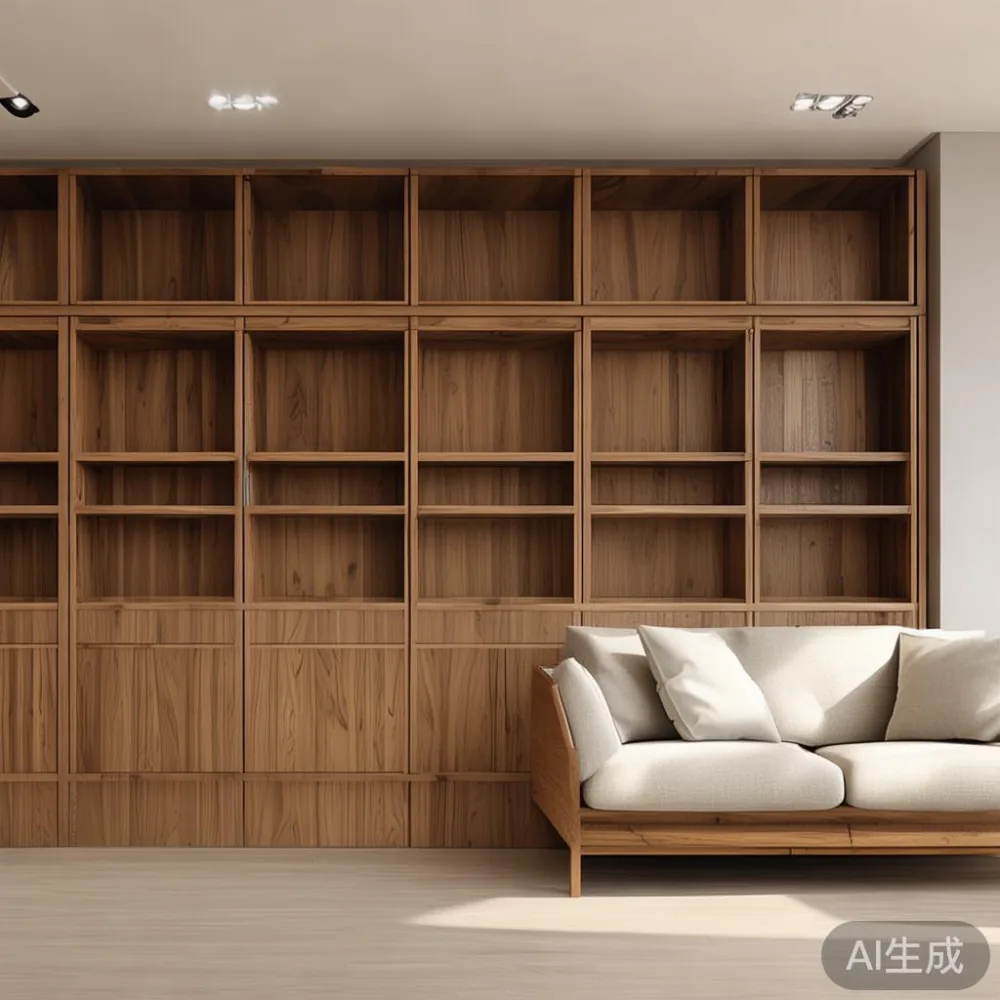
For this comparison, I evaluated the same practical scenario: a freestanding bookshelf measuring 90 × 30 × 200 cm, weighing about 48 kg when made from engineered wood and 62 kg in solid timber. Prices are representative Singapore retail estimates before GST; furnishing a full home would also involve products such as a solid wood sofa, bed frame, dining table, wardrobe, nightstand, and marble table. That comparison keeps the focus on the bookshelf while showing how material decisions affect a wider furniture plan.
Over a 5-year period, a solid wood bookshelf may cost more initially, yet it can retain more value because scratches can be sanded and refinished. Veneer can offer a lower purchase price and lower weight, but edge damage and coating wear often require replacement. The most economical result depends on the cabinet, its location, and the care available—not simply the material label.
What is the real 5-year cost of a solid wood bookshelf?
A 90 × 30 × 200 cm solid wood bookshelf in Singapore typically ranges from SGD 690 to SGD 1,580 before GST. Mid-grade hardwoods, restrained joinery, and adjustable shelves sit toward the lower end; hand-finished walnut or oak versions can exceed SGD 2,000. A veneered equivalent generally falls between SGD 280 and SGD 760, depending on the veneer thickness, plywood grade, edge treatment, and finish.
For a realistic comparison, I calculated the cost of a midpoint solid wood model at SGD 980 and a comparable veneer model at SGD 460. Adding 9% GST gives SGD 1,068.20 and SGD 501.40 respectively. That is an initial difference of SGD 566.80.
Delivery and installation are not footnotes in Singapore. A medium HDB bookshelf may incur SGD 45–SGD 120 for delivery, while a condo with a private lift and narrow corridor can add SGD 80–SGD 220. My colleague and I measured the lift door on a recent condo visit last month: the listed width was 100 cm, but the usable opening after the door hardware was only 94 cm. The bookshelf's 30 cm depth passed comfortably, whereas a boxed 94 cm-wide dining table did not. That measurement illustrates why the 90 cm bookshelf width is practical for many Singapore homes.
Across 5 years, I use 3 maintenance cycles for solid wood and 2 for veneer. The solid wood budget includes 2 applications of a compatible finish at SGD 35 per application, 2 sanding sessions at SGD 25, and one hardware adjustment at SGD 20. The veneer budget allows one partial repair and one refinishing service, but assumes that major edge damage is not repaired. Add GST to all service figures.
| Item | Veneer | Solid wood |
|---|---|---|
| Bookshelf, before GST | SGD 460 | SGD 980 |
| Initial GST at 9% | SGD 41.40 | SGD 88.20 |
| Delivery, typical | SGD 65 | SGD 85 |
| 5-year maintenance and repair | SGD 245 | SGD 145 |
| Expected resale after 5 years | SGD 60 | SGD 260 |
| 5-year net cost | SGD 751.40 | SGD 1,038.20 |
On these assumptions, the veneer bookshelf costs about SGD 286.80 less over 5 years. If the veneer unit suffers a broken corner or delaminating panel and must be replaced during year 4, however, its projected net cost rises to roughly SGD 1,090. This is where the meaning of “5-year cost” matters: planned ownership, not emergency replacement.
How does veneer age in Singapore humidity?
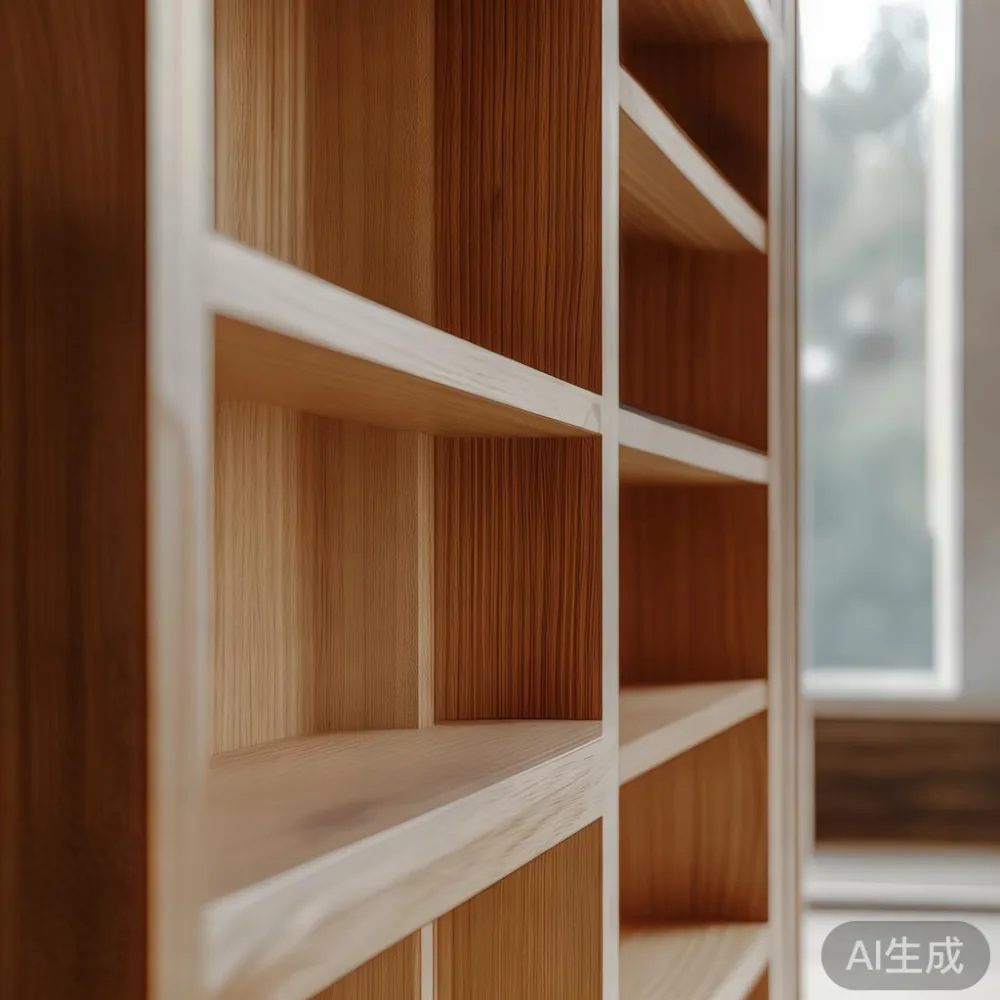
Singapore's high humidity can cause veneer to lift, crack, or discolor if its substrate and adhesive were not properly prepared. The visible face may be a 0.6 mm rotary-cut wood layer, while the structural core is plywood or MDF. A well-made cabinet can perform well, but an inexpensive one often has thin edges, particleboard interiors, and little repairability.
Solid wood moves more visibly as relative humidity changes. Oak, ash, and teak may show seasonal movement of roughly 1–3 mm across a 90 cm panel. The joint should permit this movement rather than trap it. In a Bedok HDB home without strong air-conditioning, I would ask for a ventilated back and stable shelf pins. In a well-controlled Tampines or Punggol unit, the risk of movement is generally easier to manage.
The claim that solid wood is immune to warping would be misleading. It remains susceptible to insects, moisture, heat, and impact. A 200 cm-high unit placed near a west-facing window can experience surface temperatures above 40°C, accelerating finish wear. Keep it at least 30 cm from radiators, curtains, and direct sunlight where possible.
For appearance, veneer often provides more uniform grain and color across multiple panels. Solid wood celebrates variation: knots, sapwood, and mineral streaks make every shelf distinct. That character fits American light luxury and French light luxury schemes, where pale oak, walnut, and warm cream tones create calm, layered rooms. Post-modern light luxury may pair a simple solid wood bookshelf with curved forms or strong metal accents.
What maintenance costs should Singapore buyers budget?
A veneer bookshelf that receives gentle dusting and occasional surface cleaning may need little more than a new wipe-on polish every 12–18 months. Use a damp cloth rather than a dripping one, and keep moisture away from seams. A professional repair for a chipped edge can cost SGD 90–SGD 260. If the substrate has swollen, a reliable repair may cost SGD 180–SGD 450, and some owners may replace the whole bookshelf instead.
Solid wood usually has more repair routes. Light scratches can be rubbed with 600- to 1,200-grit abrasive, filled where necessary, and sealed with a compatible finish. A full refinishing project on a 90 cm-wide bookcase commonly ranges from SGD 180 to SGD 420. An annual wipe-on maintenance product might cost SGD 18–SGD 32, while avoiding direct sun can reduce the need for intervention.
These are estimates rather than guarantees. The finish system, cleaning habits, and furniture placement determine the outcome. A polyester-coated surface may resist ink stains but be difficult to repair; a thin lacquer can scratch; an oil finish is easy to maintain but may darken. Ask for the exact coating type, maintenance instructions, and the availability of matching refinishing materials.
Warranty terms also belong in the cost calculation. MIDHILL provides a 10-year structural warranty and lifetime refinishing, which can reduce uncertainty if the service applies to the purchased bookshelf and finish. A 5-year budget should still record expected wear, because warranty coverage does not include every accidental scratch or moisture stain.
Which material offers more resale and long-term value?
At the end of 5 years, the solid wood bookshelf in my sample retains about SGD 260 of practical resale value after GST and selling costs. The veneer unit retains around SGD 60. The difference does not mean every used solid wood cabinet sells at a premium. Its value depends on dimensions, construction, finish condition, and whether it can be moved from the original home.
Weight affects a resale event. A 62 kg solid wood bookshelf may need 2 people and a furniture dolly, while a 48 kg veneer model can be moved by one person with a trolley. Moving costs may add SGD 40–SGD 120 per trip. If the original owner intends to move after year 5, that saving deserves attention.
Custom sizing can improve utility but may narrow the buyer pool later. A fitted bookshelf of 220 × 28 × 240 cm is valuable in one HDB study, yet difficult to relocate through a 91 cm lift door. Standard dimensions are often more versatile. Before ordering, record the lift opening, corridor turns, landing width, and the narrowest door between the loading area and the intended wall.
Delivery should also be scheduled carefully. Allow 7–14 working days for a standard in-stock Singapore delivery, and 21–45 days for a made-to-order solid wood bookshelf. A confirmed day is not the same as an on-site installation appointment; check the delivery window and corridor booking rules in advance.
Is solid wood worth the higher price for a Singapore bookshelf?
Solid wood is worth considering when the bookshelf will stay in place for at least 5 years, the household values repairability, and children or pets create ordinary impacts. The 10-year structural warranty offered by MIDHILL adds a measurable layer of protection, while lifetime refinishing makes a worn surface less likely to mean disposal.
Veneer can be sensible when the budget is fixed, the unit is intended for a rental flat or a short-term home, and the buyer prioritizes a lighter, uniform appearance. The 5-year saving of about SGD 287 in my sample is meaningful against a SGD 500 purchase budget. The trade-off is less tolerance for edge damage and less freedom to restore the face locally.
Look beyond the word “wood.” Specify the veneer species, thickness, core material, back panel, joint construction, shelf span, edge banding, and finish. For solid wood, ask whether the shelves are solid boards or only solid-wood faces over engineered cores. These details explain why two products in the same category can behave very differently.
The wider room plan deserves equal attention. A French light luxury sofa creates relaxed proportions, and a search for the best French provincial sofa for 2026 should include room measurements, not only visual preferences. Comparing a French sofa vs Nordic sofa by seat depth and maintenance needs can prevent an oversized purchase in a compact HDB living room. Likewise, understanding how to style French provincial bed in apartment layouts helps with circulation around a bed frame. An European light luxury coffee table and light luxury for guest room choices can use similar pale timber tones, but the marble table will need a different care plan.
What should I check before ordering my bookshelf?
Measure the installation route in 3 places: the delivery van opening, lift door, and corridor corner. Record the usable figures in centimetres, not building-plan dimensions alone. For the sample bookshelf, 90 cm wide by 30 cm deep, two people can usually manage it if the route has at least 95 cm clearance. Below 85 cm, discuss flat-pack construction before paying for delivery.
Ask the seller for the loaded weight, shelf spacing, maximum recommended load, anti-tip hardware, and installation method. A 90 cm-wide solid wood shelf with 3 adjustable positions may hold 20–30 kg per span when properly fixed. Do not exceed the stated figure. Anchor tall units to the wall because a 200 cm bookshelf can tip in a busy corridor or bedroom.
Compare the total price rather than the headline price. A solid wood bookshelf at SGD 980 plus SGD 85 delivery may still cost less over time than a veneer model at SGD 260 whose edges are repaired twice. Include GST, stairs, lift reservation, assembly, wall anchoring, and disposal of packaging in the quote. For orders above US$350, MIDHILL's free shipping policy may apply to eligible international orders, but Singapore furniture delivery terms should still be confirmed.
Check the return window too. A 14-day return period can help if the dimensions or finish do not suit the space, but assembled or delivered furniture may have specific conditions. Photograph the package, shelf edges, and wall fixing points on arrival. Keep the receipt and finish details for future restoration.
How do I make a confident 5-year decision?
Use 2 prices rather than one. The first is the delivered price including GST and installation. The second is the 5-year ownership cost: maintenance, likely repair, resale value, and moving expense. For the representative bookshelf, solid wood costs SGD 1,038.20 over 5 years, while veneer costs SGD 751.40. Solid wood becomes the stronger financial choice if a veneer repair or early replacement is likely.
For a permanently placed family home in Tampines, Bedok, or Punggol, solid wood often provides the more forgiving long-term proposition. Its deeper grain, repair options, and structural longevity suit French light luxury, American light luxury, or post-modern light luxury interiors. Veneer remains a practical choice for temporary homes, restrained budgets, and locations where impact risk is low.
The final decision should reflect how the bookshelf will be used. Will heavy books sit near the top? Will it stand beside an air-conditioner vent? Will it remain through the next resale? Those answers will usually clarify the choice more accurately than a material label alone. A well-specified cabinet, measured into the home and maintained sensibly, can serve its owner for far longer than the standard 5-year comparison period.