What Actually Drives the Price of Solid Wood Furniture (And Why a $4,200 Bookshelf Isn't the Same as a $1,100 One)
I spent last Saturday at a Jurong East warehouse with a friend who was comparing two bookshelves she had shortlisted. Side by side, both were labelled "solid oak," both had a similar silhouette, both were made in Guangdong — and the price tags read SGD 1,180 and SGD 4,260. She looked at me and asked, "Are they really that different?" We spent three hours pulling them apart, lifting them, sniffing them, and asking the floor manager some uncomfortable questions. That afternoon is the reason I'm writing this guide for anyone in Singapore trying to decode why a solid wood dining table, bed frame, or bookshelf can swing in price by 300% without looking dramatically different on a product page.
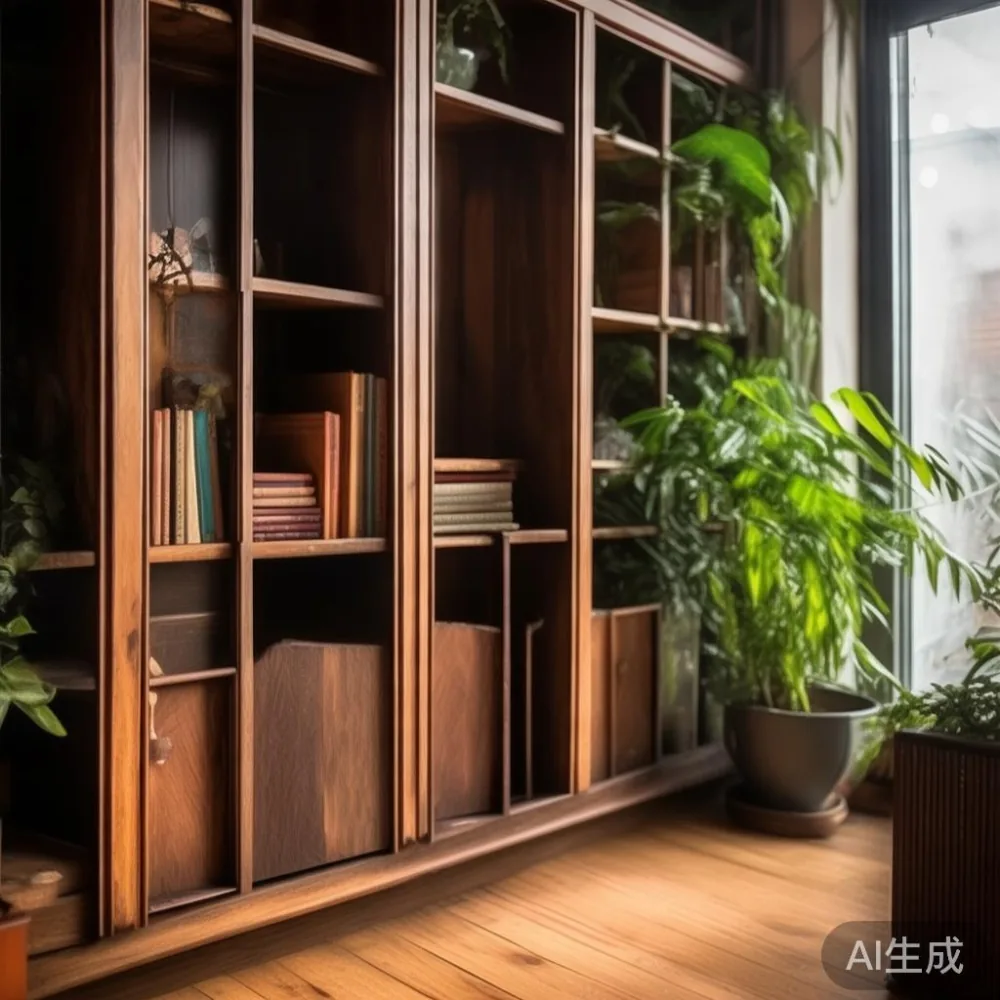
At MIDHILL, a Foshan workshop that's been cutting, planing, and finishing solid hardwood since 2008 and now ships to more than 15 countries, I've watched buyers arrive with the same three assumptions: that "solid wood" means one thing, that wood type is the only variable that matters, and that a higher price is mostly the showroom markup. None of those are correct. Below, I'll walk through the seven cost drivers that genuinely separate a $1,100 bookshelf from a $4,200 one, and I'll show you which ones are worth paying for when you're furnishing a 4-room HDB in Tampines or a condominium in Punggol.
1. Wood Species — and Why the Latin Name Matters More Than the Common Name
"Oak" is not a single material. White oak (Quercus alba) and red oak (Quercus rubra) grow at different rates, have different densities, and respond differently to Singapore's 80–90% humidity. White oak is roughly 755 kg/m³, red oak around 700 kg/m³. That 8% density gap translates into heavier shipping, harder machining, and a tighter, less porous grain that holds a French light luxury clear coat without yellowing. A bookshelf built from FAS-graded white oak will run SGD 3,800–4,500 in Singapore; a red oak bookshelf of the same dimensions, SGD 1,100–1,600.
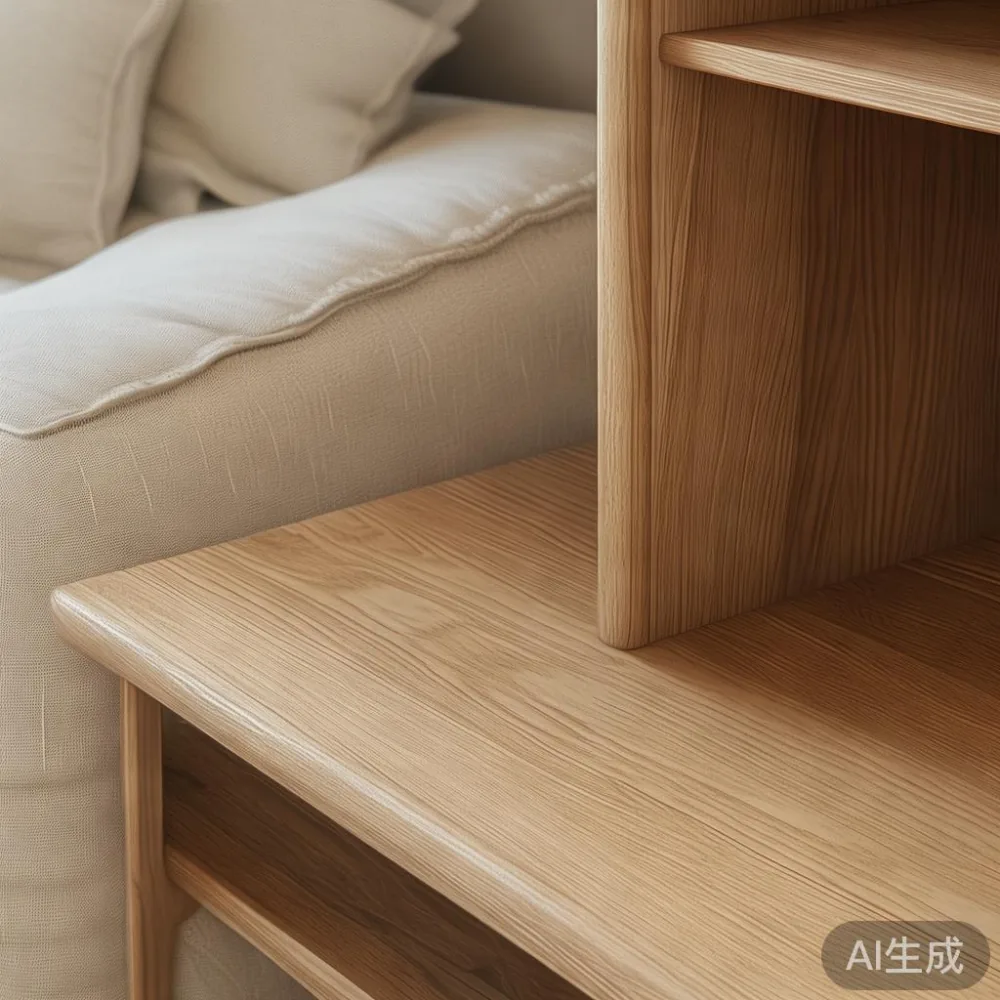
Other species you'll see in this price band: North American black walnut (around 660 kg/m³, prized for post-modern light luxury interiors), Burmese teak (around 670 kg/m³, naturally oily and resistant to HDB corridor humidity swings), ash (around 670 kg/m³, a common substitute for white oak in bed frames and dining tables), and rubberwood (around 560 kg/m³, technically solid wood but a budget-tier choice that dents easily). The question isn't whether the piece is "solid" — it's which tree, what grade, and how the boards were dried.
2. Moisture Content and Kiln Drying — The Hidden Reason Bookshelves Warp in Bedok
A 2-metre-tall bookshelf is a moisture antenna. If the wood leaves the kiln at 12% moisture content and lands in a Tampines flat with air-conditioning set to 22 °C and 55% RH, the boards will shrink about 1.5–2% across the grain. That's roughly 8–10 mm of movement on a 600 mm-wide side panel. If the kiln schedule was rushed — say, 5 days instead of the proper 21–30 days for 50 mm-thick white oak — the case will crack within six months.
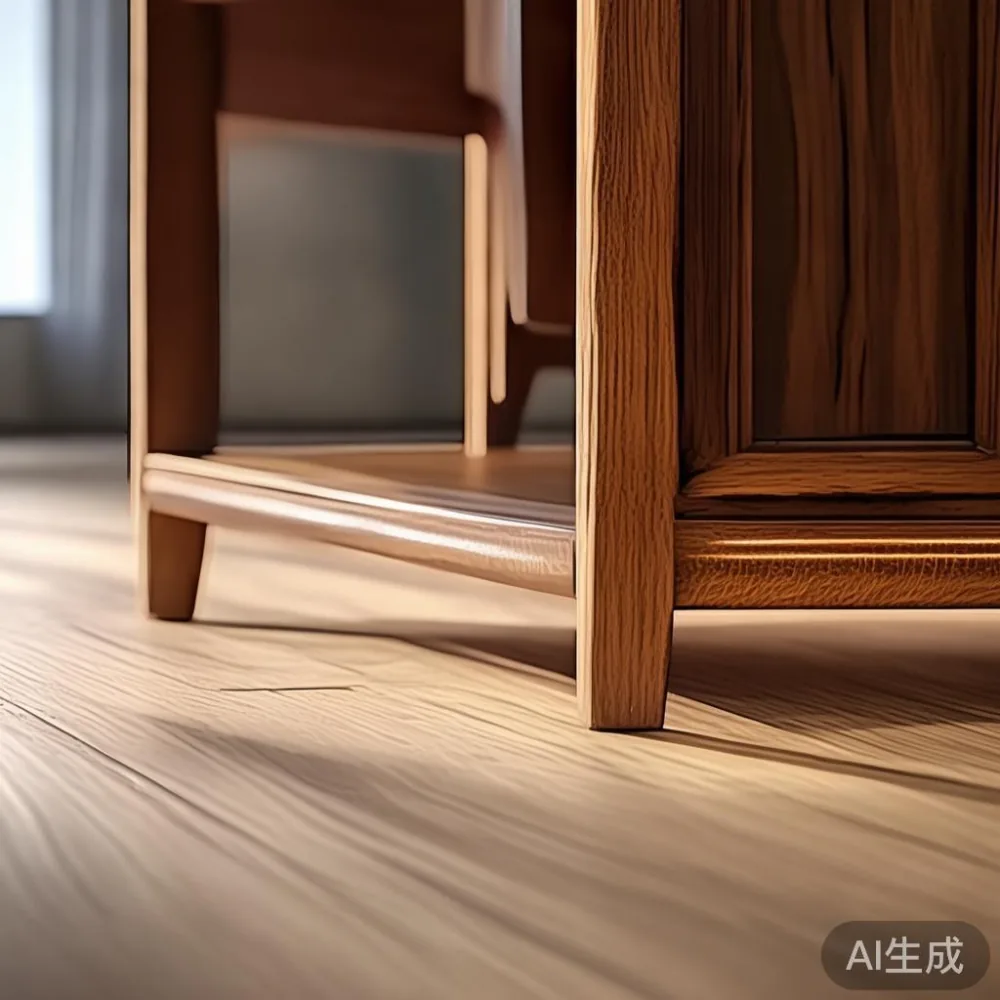
Proper factories use dehumidification kilns and target 8–10% MC for export to Southeast Asia. I watched the kiln logs at MIDHILL's Foshan facility last month: 28-day cycles for 45 mm stock, with stickers every 30 cm, and a final 7-day conditioning chamber. That energy shows up in the price — kiln drying alone can add SGD 300–500 to a large bookshelf, but it's the difference between a piece that survives three Singapore monsoons and one that bows inward by month nine.
3. Joinery — Dowels and Cam Locks vs. Mortise and Tenon
Pick up the back panel of any bookshelf. If it's a 3 mm MDF sheet nailed into a groove, you're looking at a piece that will rack sideways the first time a mover tilts it. The expensive version uses a 9–12 mm solid wood back panel, shiplapped or tongue-and-grooved into the sides, or — in the top tier — floating in a dado with wooden buttons that allow seasonal movement.
On the carcass itself, the joinery tells the real story. A cam lock and dowel bookshelf can be assembled in 25 minutes with an Allen key. A mortise-and-tenon bookshelf, pinned with hardwood dowels and glued with water-resistant Titebond III, takes a joiner 4–6 hours and requires a 1,200-piece batch to be economically viable. For a 1.8 m-tall bookshelf, expect a SGD 900–1,400 premium for proper joinery. The same principle applies to a bed frame — a dowelled side rail flexes under a 90 kg sleeper; a through-tenoned side rail with corner braces holds for decades.
4. Board Width, Thickness, and How the Tree Was Sawn
Flat-sawn boards are cheap because the sawmill gets the most usable volume per log. Quarter-sawn and rift-sawn boards — where the log is cut at 60–90° to the growth rings — waste up to 30% more material but produce boards that resist cupping. A plain-sawn white oak bookshelf top will cup visibly in a Punggol condo with east-facing morning sun; a rift-sawn top stays flat. A 25 mm plain-sawn top runs around SGD 180/m²; a 25 mm rift-sawn top runs SGD 320–380/m². Multiply that across a 1.8 m × 0.9 m bookshelf and you're already at a SGD 250 difference before any other cost is added.
Thickness is the next variable. A bookshelf side panel at 18 mm is the industry default. Side panels at 25 mm add rigidity but weigh 40% more — a meaningful number when your HDB lift door is 800 mm wide and your bookshelf arrives in two cartons totalling 95 kg. Premium builders go to 30–35 mm for the sides and 40–45 mm for the top and bottom stretchers, which is what gives a 1,500 kg-rated marble table-style heft to a heavy hardwood bookshelf.
5. Finish — Why a "Matte Clear" Bookshelf Can Cost $600 More Than Its Glossy Twin
Most Singapore buyers assume finish is a thin film you wipe on with a rag. In a serious factory, finishing is a 9–12 step process: sanding from 80-grit up to 320-grit, dye staining (optional), sealer coat, pore filler (for open-grain oak), colour coat, two topcoats, and a hand-rubbed final coat — with a 24-hour cure between each layer. A conversion varnish (acid-catalysed) finish is the gold standard: 5H pencil hardness, chemical-resistant, and stable under UV. It costs roughly 3× what a standard NC lacquer costs.
Then there's the hand-rubbed oil-and-wax finish you see on American light luxury walnut pieces. Each coat of hard wax oil penetrates 0.2–0.4 mm into the wood and is buffed by hand for 15–20 minutes. A bookshelf with six coats needs 4–5 hours of hand finishing, plus 48 hours of cure time. That labour is why a wax-oiled walnut bookshelf lands at SGD 3,400 while a lacquered walnut bookshelf of the same dimensions lands at SGD 2,700. The trade-off: wax oil feels warmer and can be spot-repaired, but it needs re-oiling every 18–24 months in a Singapore climate. MIDHILL offers lifetime refinishing on pieces bought from them — meaning the cost of that re-oiling is zero for the original owner, a small but real number when you spread it across 20 years.
6. Hardware, Soft-Close, and the Small Parts You Don't See
On a wardrobe, the hinges and drawer slides are 8–12% of the total cost. A standard 35 mm cup hinge costs SGD 1.80; a Blum Soft-Close with 110° opening costs SGD 6.50. A side-mount roller drawer slide costs SGD 4; a full-extension soft-close undermount costs SGD 22. On a three-door wardrobe with four drawers, that hardware line item alone ranges from SGD 140 (budget) to SGD 480 (Blum throughout). The soft-close mechanism is the difference between a wardrobe that lasts 8 years and one that lasts 25.
For bookshelves, the hardware question is the shelf-pin system. Steel pins in a 5 mm hole are fine for hardcovers. For a loaded bookshelf holding 80 kg of books — the realistic weight for a 1.8 m unit with 5 shelves — you want 8 mm pin-and-sleeve sockets or, better, fully adjustable metal standards. The bookshelf in MIDHILL's showroom in Tampines carries 110 kg on five shelves without a single shelf pin walking out of its hole. That comes from hardened steel pins and pre-bored metal-threaded inserts, not plastic. Cost difference: roughly SGD 45 on the whole piece. Worth it.
7. Logistics, Warranty, and What Happens When Something Goes Wrong
A solid wood bookshelf weighing 78 kg in a flat-pack carton is a logistics problem. Most Singapore HDB corridors are 1.2–1.5 m wide, and lift cabins are typically 1.1 m wide × 1.4 m deep × 2.1 m tall. A bookshelf that ships in one carton risks not fitting. Smart factories split the shipment into two cartons under 40 kg each, with moulded foam corner protectors and a 9-ply plywood crate for the glass or marble elements. Crating and double-cartoning adds SGD 180–260 per order but protects the piece.
Warranty structure is the last cost driver, and the easiest one to underestimate. A 1-year warranty is industry minimum. A 10-year structural warranty — which MIDHILL publishes in plain language on every product page — means the factory is confident the joinery, the kiln schedule, and the wood selection will hold up. Lifetime refinishing on wood surfaces is rarer and reflects an honest acceptance that all wood moves. Free shipping above US$350 (around SGD 480) and 14-day returns are standard at this tier; the question to ask any seller is who pays return shipping on a 78 kg bookshelf. The honest answer is the customer, which is why a 14-day inspection window matters more than a 30-day one for big pieces.
How do I choose a standing desk for a HDB living room?
Measure the lift first — a standing desk that is 140 cm long and 70 cm deep will not enter a typical HDB passenger lift (1.1 m wide × 1.4 m deep × 2.1 m tall) if the carton exceeds 1.35 m in any single dimension, so order a desk that ships in two boxes under 70 cm each.
For a Singapore HDB living room, the standing desk question actually starts with the lift, not the desk. Measure your lift cabin first — most HDB passenger lifts are 1.1 m wide × 1.4 m deep × 2.1 m tall, and the door opening is usually 800 mm. A standing desk that is 140 cm long and 70 cm deep will not fit a single carton through that door if the packaging pushes the length past 1.35 m. So the first filter is: does the desk ship in two boxes, each under 70 cm? If yes, it will clear the lift. If no, you'll be paying for a stair-climb delivery at SGD 80–150 per floor, and the desk may not physically fit up the staircase turn (HDB service stairs turn at 1.0 m radius landings).
Once logistics is solved, look at the frame. A solid wood standing desk top — say, a 120 cm × 60 cm piece of 25 mm ash or walnut — is the right call for a light luxury HDB interior because it warms up the visual field the way a French light luxury palette does, without going into full post-modern territory. The electric base should be a dual-motor with 120 kg load capacity, lifting range of 65–125 cm, and a noise rating under 50 dB (most HDB blocks have thin walls and a noisy desk becomes a complaint within a month). Look for a base that uses a solid steel column, not hollow tube, because the wobble at 110 cm height on a hollow column will shake your coffee cup. A complete solid wood top + dual-motor base in Singapore retails for SGD 1,100–1,800, with the wood top accounting for roughly 40% of that. Pair it with a solid wood nightstand in the same ash or walnut and you have a coherent reading corner that survives the move out of the rental at the end of the three-year lease.
Is a $4,200 Bookshelf Really Three Times Better Than a $1,100 One?
Three times better is a marketing claim, not a measurement. What's measurable is the service life: a properly kiln-dried, mortise-and-tenoned, conversion-varnished white oak bookshelf will hold 110 kg of books for 20+ years in a Tampines flat, while a dowelled, lacquered rubberwood bookshelf will start to sag at year 4 and need replacement by year 8. Spread the SGD 3,100 difference across 12 extra years and a few hundred books that don't get damaged by a leaning shelf, and the annual cost is roughly SGD 260 per year for the premium piece versus SGD 140 per year for the budget one. The real question is whether you want to furnish once or furnish twice.
There's also a secondary market. A well-maintained solid wood bookshelf from a known maker retains 45–60% of its value on Carousell after five years. A flat-pack bookshelf retains 10–15%. If you treat furniture as an asset rather than a consumable, the price gap narrows further.
A Practical 90-Second Checklist Before You Pay
Ask the seller four questions and the price usually makes sense: (1) What is the Latin name of the wood, and what grade? (2) What was the kiln-dried moisture content at packing, and can they show a pin-meter reading? (3) What is the joinery on the carcass — dowel, cam lock, or mortise and tenon? (4) What is the finish — NC lacquer, conversion varnish, or hand-rubbed oil? If the seller can answer all four with specific numbers, the price is built on something. If they answer with "premium quality" and "imported hardwood," the price is built on marketing. A solid wood dining table, bed frame, wardrobe, or bookshelf from a transparent workshop will outlast the lease, the resale, and probably the next renovation cycle — and that, more than any sticker number, is the actual return on what you pay.