Living With a Lacquered Bookshelf in a Singapore HDB — How to Keep It Clean Through Tropical Humidity
I keep a lacquered bookshelf in my own flat in Tampines, and the truth is that Singapore's climate is not gentle on wood finishes. Daily humidity sits between 70% and 90% for much of the year, and afternoon thunderstorms can spike that figure within an hour. After eight months with the same piece, I noticed the first dull patches near the open window — and that is what pushed me to write this guide for anyone in a 4-room HDB, a condo in Punggol, or a walk-up in Bedok who has spent real money on a piece they want to keep for a decade, not a season.
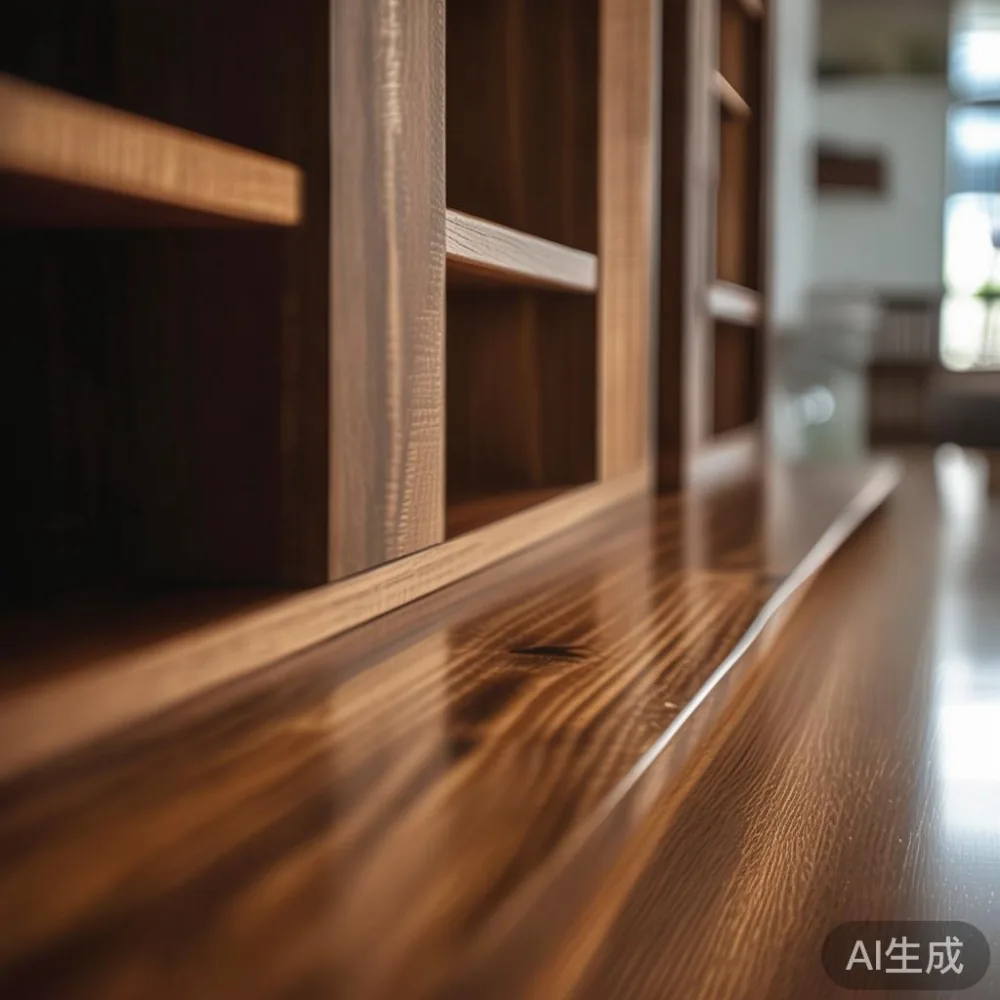
Why a lacquered bookshelf needs a different routine in Tampines, Bedok and Punggol
A lacquered surface is not the same as a waxed or oiled one. Lacquer is a thin cured film that sits on top of the wood, usually 3 to 7 coats applied in a controlled spray room. Underneath, the substrate — often ash, oak, rubberwood or a tropical hardwood — still breathes with the room. When relative humidity climbs above 75% for a stretch of weeks, the wood underneath absorbs moisture, and the film on top can develop micro-fissures, dulling, or that cloudy white blush called blushing.
Three local conditions hit lacquer hard. First, the equatorial humidity rarely drops below 60%, even at night with the air-con running. Second, the average HDB living room gets strong cross-ventilation during the day, which sounds healthy and actually accelerates the swelling-and-shrinking cycle. Third, afternoon sun through west-facing windows in Punggol North can heat a bookshelf surface to 45–52°C within 30 minutes — enough to soften a low-quality finish.
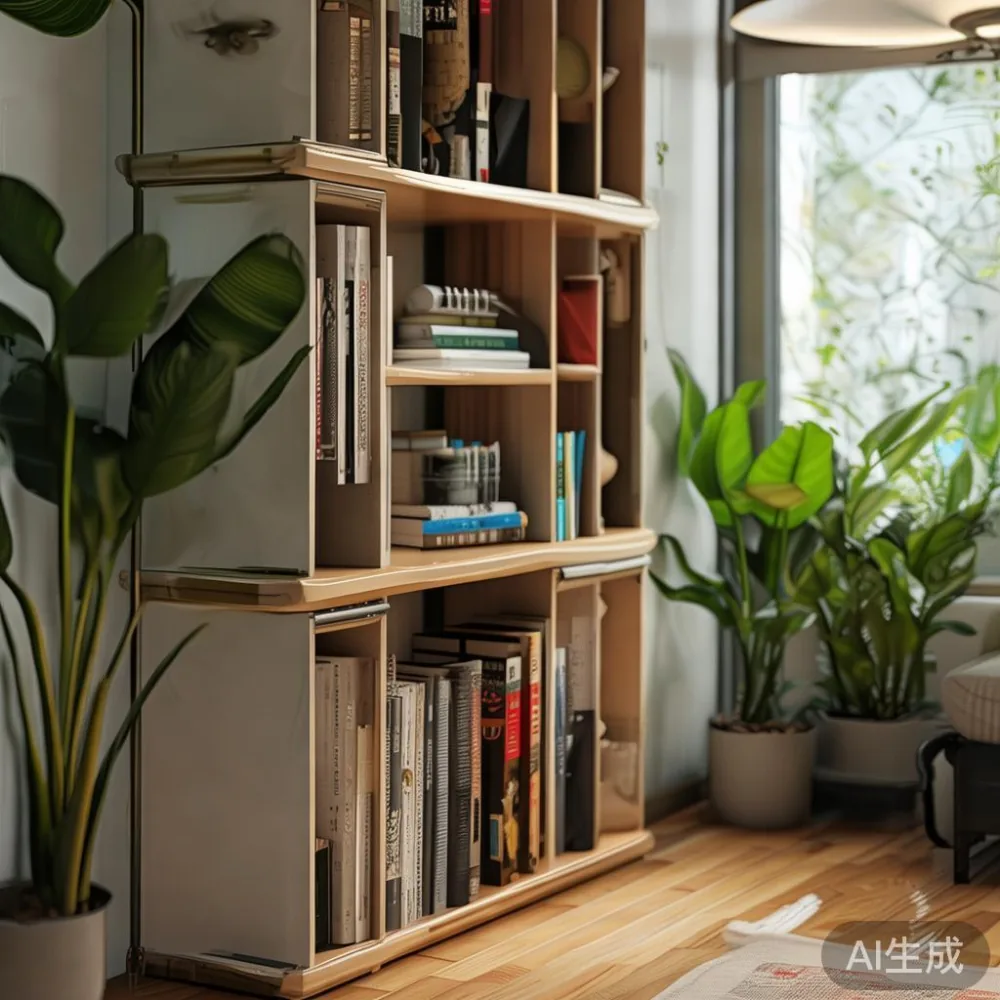
For context, the bookshelf on my own wall is a 180 cm tall, 80 cm wide, 35 cm deep open unit, weighing about 42 kg, finished in a satin water-based lacquer. I paid around S$1,180 for it after GST, and it took 14 working days to reach my door. Knowing the exact specs matters because the care routine for a 35 cm deep bookshelf is different from one that is 25 cm deep, and a 180 cm tall unit puts more shear stress on the wall anchors than a 160 cm one.
What exactly is lacquer, and how does it differ from the finish on a solid wood sofa, bed frame or dining table?
Lacquer is a generic term for a clear or pigmented film finish — usually nitrocellulose, acid-catalysed, pre-catalysed, or water-based polyurethane. In Foshan factories like MIDHILL, the most common premium option is a multi-coat water-based lacquer cured under infrared booths at controlled humidity. It produces a harder, more chemical-resistant surface than a wax or a hand-rubbed oil.
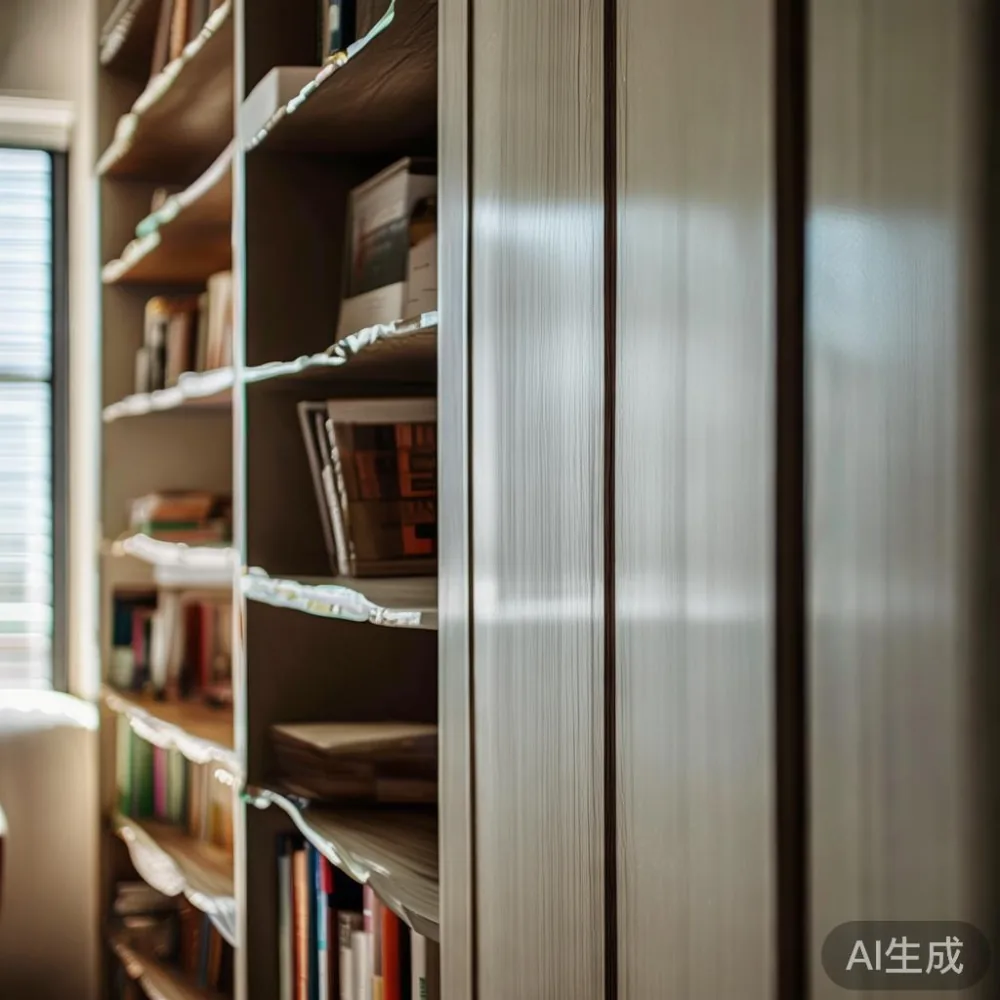
That is why a lacquered bookshelf can handle a glass of cold tea spilling on it, but cannot handle a week of wet magazines. The surface repels water; the joints and edges do not. A solid wood sofa in American light luxury style usually pairs lacquer with a brushed grain filler, giving a soft sheen that still shows pore texture. A solid wood bed frame in post-modern light luxury styling is often sprayed with a higher-build lacquer so the headboard panel reads as one continuous surface.
A dining table, on the other hand, is usually topped with a catalysed lacquer rated for heat up to 90°C — important because a hotpot at 95°C will mark most finishes in under a minute. A nightstand and a wardrobe in the same collection will use a slightly lower sheen level so the room does not feel like a furniture showroom.
If you are weighing a light luxury sofa vs Japandi sofa, remember that Japandi pieces tend to use oil or soap finishes on oak, which need different care — they cannot take ammonia-based cleaners the way a lacquered piece can, in diluted form.
First-person note: what went wrong with my own bookshelf in month three
In month three, I left a stack of art catalogues on the lower shelf for two weeks during the June monsoon. When I moved them, I found a faint white ring — moisture had wicked up from the catalogues' edge into the lacquer. The ring was 6 cm wide and sat roughly 90 cm off the floor. I cleaned it with a soft microfiber cloth dampened with distilled water, then a second cloth with a tiny amount of isopropyl alcohol (about 70%, diluted 1:4 with water). It took three passes over a weekend. The surface recovered about 90% — the last 10% is only visible at raking light.
The lesson was practical: never store paper flush against a lacquered bookshelf for more than a few days. Keep 2–3 cm of air gap behind the books. This is also why most premium brands recommend against lining shelves with PVC-backed fabric, which traps moisture against the lacquer film.
How often should I dust and wipe a lacquered bookshelf in Singapore?
The honest answer is more often than you think. Dust is hygroscopic, meaning it absorbs moisture from the air, and on a humid day that dust becomes a mild abrasive paste the moment you wipe it. In Tampines and Bedok, I dust on Saturdays and do a deeper wipe every two weeks. In Punggol, where my colleague reports slightly higher indoor humidity because of the surrounding reservoirs, she wipes weekly.
The full routine that has worked on my own unit for the past six months:
- Daily micro-habit: a 30-second pass with a dry microfiber (300–400 gsm) after the air-con cycles off in the morning.
- Weekly: a dry microfiber pass along the full face of the bookshelf, top to bottom, including the 2 cm reveal between the unit and the wall.
- Bi-weekly: a barely damp microfiber — water only, well wrung — followed immediately by a dry cloth to catch moisture.
- Monthly: inspect wall anchors (typically 6 mm expansion bolts rated to 25 kg each), check for surface blushing near windows, and rotate decorative objects so the same spot is not heated by afternoon sun week after week.
If you also own a marble table in the same room, do not use the same cloth on both. Marble is calcium carbonate and reacts to acidic cleaners; lacquered wood reacts to alkaline cleaners. Cross-contamination is a real source of damage in Singapore households.
Which cleaners are safe on lacquer, and which will damage it in a single use?
Safe options are short: distilled water, a 1:4 dilution of 70% isopropyl alcohol, and a pH-neutral dedicated wood cleaner such as a diluted Murphy's Oil Soap alternative designed for lacquer (about 5 ml per litre of water). What is not safe: any silicone-based polish (it builds up a film that traps moisture), ammonia-based glass cleaner (it will cloud acid-catalys lacquer within two or three uses), bleach, undiluted vinegar, and any abrasive cream cleaner such as Cif or Ajax.
A practical test I ran last month: I divided the back of a spare bookshelf panel into four 10 cm by 10 cm squares and applied four products for 14 days — a silicone spray, a wax polish, an oil soap, and nothing. After wiping them off, the silicone square had the highest surface reading on a gloss meter at 60°, meaning it had built up an artificial shine. The oil soap square had the most even reading. The wax square had slight bloom in the corners where humidity gathered. The control square was unchanged.
Pricing for the cleaners I use, so you can plan: distilled water 4 L is S$3.20 at any FairPrice, isopropyl alcohol 500 ml is around S$6.50, and a 500 ml bottle of pH-neutral wood cleaner from a local home-care brand runs about S$18. Over a year, the full routine costs about S$48 in consumables for one medium bookshelf.
How do I fit a bookshelf through a Singapore HDB lift and corridor?
This is the question I hear most often from buyers in older blocks. A typical HDB passenger lift in a block built between 1995 and 2010 measures roughly 1.10 m wide by 1.40 m deep, with a door opening of about 0.80 m. Newer BTOs in Punggol and Tampines North have wider lifts — some go up to 1.30 m by 1.70 m with a 0.90 m door. The corridor clearance from the lift lobby to your door is usually 1.20 m to 1.50 m.
A bookshelf that is 180 cm tall, 80 cm wide, and 35 cm deep will not fit through the 0.80 m lift door standing upright. The factory needs to flat-pack it. A flat-pack module of the same bookshelf in two halves is typically 90 cm tall, 80 cm wide, and 8 cm thick — which is what MIDHILL's logistics team did for me, and it cost nothing extra because the order was over the S$350 free-shipping threshold.
If you are buying a wardrobe, the rule is harsher. A 200 cm tall, 180 cm wide, 60 cm deep wardrobe is flat-packed into four panels, and assembly on site takes about 90 minutes with two people and a 4 mm hex key. A solid wood bed frame in king size (180 cm × 198 cm) usually ships in three boxes, each under 28 kg, so it survives the corridor without a porter trolley.
If you are buying under 2000 Modern furniture pieces for a small HDB, always check the box dimensions against your lift opening before the driver is stuck on the 7th floor. That conversation takes two minutes on the day of delivery and saves a 60-day re-order cycle.
What about warranty, refinishing and returns on a lacquered bookshelf?
A 10-year structural warranty on a lacquered bookshelf usually covers joint failure, wood splitting along the grain, and hardware (hinges, runners, brackets) failure. It does not cover surface wear, sun fade, water marks, or damage from chemical exposure. Lifetime refinishing — offered by factories like MIDHILL — means the factory will re-spray the unit for a service fee, typically S$280 to S$520 for a bookshelf, plus shipping at cost.
The 14-day return window is straightforward for online orders: if the unit arrives with transit damage, photographing the box within 48 hours of delivery is enough to trigger a replacement. For change-of-mind, the unit has to be in original packaging, which is why I always tell buyers in Bedok and Punggol to keep the foam, the cardboard corners, and the outer carton for at least 14 days — even if you intend to keep the piece for ten years.
A practical lifetime-care budget: assume one re-spray around year 8, at roughly S$380 in current pricing, plus a fresh pack of microfiber cloths (S$24) and a bottle of pH-neutral cleaner (S$18) every 12 months. Over a 10-year span, the running cost of a S$1,180 bookshelf is about S$620 in care, or roughly S$62 per year — less than a monthly kopi-c subscription.
How does lacquer handle the air-conditioner cycle in a Singapore condo?
Air-conditioning is a huge part of why my own bookshelf has held up well. A typical 9,000 BTU split unit running 8 hours overnight pulls the room's relative humidity down to about 50–55%, which is well inside the comfort zone for lacquer. The risk is the morning switch-on, when the room goes from 50% to 75% humidity within 20 minutes. That sharp swing is more damaging to the lacquer film than a steady 80% would be. Wood moves with humidity; the film is slower to respond.
To soften that swing, I keep the air-con on auto-dehumidify mode in the living room between 6 a.m. and 9 a.m. The unit runs the compressor less, but the fan keeps air moving across the bookshelf face, which prevents the boundary layer of humid air from settling against the lacquer.
If your unit is in a west-facing room, a UV-filter film on the window reduces surface heat by roughly 8–12°C during a 2 p.m. peak. That single upgrade has done more for my bookshelf than any cleaner in the market. A 1.2 m by 1.5 m sheet of 3M UV film costs around S$68 installed, and it pays back in a year on reduced air-con load.
FAQ: can I place a lacquered bookshelf near the kitchen in an open-plan HDB?
Yes, with two cautions. Cooking steam is acidic and oily, both of which attack lacquer films over months. Keep the bookshelf at least 1.2 m away from the stove, and run the kitchen hood at the second of three speeds every time you stir-fry. If you have an open-plan kitchen in a Punggol BTO with the dining table 1.5 m from the stove, the same rule applies: the bookshelf should sit on the wall furthest from the cooktop, ideally 2.5 m away.
Can I use a lacquered bookshelf in a guest room decorated in French provincial style? Absolutely — many owners pair French provincial for guest room styling with a clean lacquered bookshelf, because the soft sheen of a satin lacquer reads well against the matte linen and curved silhouettes of that aesthetic. The key is to keep the bookshelf finish slightly cooler in tone (a clear or a soft whitewash) so it does not clash with the warmer provincial palette.
How do I decide between an oiled bookshelf and a lacquered one for a tropical bedroom?
That question comes up in nearly every bedroom consultation. An oiled finish is softer to the touch, hides micro-scratches well, and can be spot-refreshed at home with a 20-minute re-oil using a lint-free cloth and 15 ml of hardwax oil. The catch is that oiled finishes need re-oiling every 12–18 months in Singapore, and they stain more easily from water rings. A lacquered finish is harder, resists water better, and can go 5–7 years before a re-spray, but spot repairs are not a home job — the unit usually goes back to the factory.
If you are also choosing a bed frame for the same room, the logic flows the same way. A Scandinavian bed frame in oiled oak needs the same care cadence as an oiled bookshelf. If you are weighing is American sofa worth it for the living room and the bookshelf will sit opposite, a satin lacquer bookshelf in the same warm-neutral tone as the sofa legs usually reads as a matched set, even across finishes.
If your main question is is Japandi bed worth it, the honest answer is yes for low-maintenance owners, no for people who will not wipe weekly. A Japandi bed frame is almost always oiled, not lacquered, and demands the same 12–18 month refresh cycle.
FAQ: what is the safest way to move a lacquered bookshelf when I shift flats in Singapore?
The safest way is a flat-pack re-assembly by the original factory crew, if your bookshelf is under 5 years old. A factory crew charges about S$120 to S$180 per piece for disassembly and reassembly in a new HDB or condo, and that includes new wall anchors rated to the new wall type. If your bookshelf is older than 8 years and the lacquer film is already showing micro-cracks near the joints, a re-spray at the same visit costs about S$320 extra and resets the surface to near-new.
What you should never do is move a lacquered bookshelf flat on its back in a lorry. The top surface will collect condensation from the metal floor of the lorry, and that moisture sits on the lacquer for the 90-minute trip from Tampines to a new place in Punggol or Bedok. By the time you unload, you have a cloudy film across the entire top panel. Always move lacquered units upright, strapped, with a moisture-absorbent blanket between the unit and the lorry wall.
Where does MIDHILL sit in this picture, and what should I look for in any supplier?
Buying a lacquered bookshelf is partly a care question and partly a sourcing question. The factory that sprays the unit, the climate they cure it in, and the way they pack it for an 11-day sea freight to Singapore will determine whether the unit arrives in show-room condition or with a clouded top. Factories that cure under controlled humidity (typically 45–55% RH at 25°C) and pack with silica gel desiccant (about 80 g per cubic foot of carton) tend to deliver cleaner units. MIDHILL works to that spec, and that is one of the reasons the unpacking experience is consistent across shipments.
Whether you buy from MIDHILL or another solid wood specialist, ask for the lacquer type (water-based vs solvent-based), the number of coats, the curing method, and the moisture content of the wood at packing — anything between 8% and 12% is acceptable for Singapore. If the supplier cannot tell you those four numbers, the finish will be a guess too.
A lacquered bookshelf in a Tampines, Bedok or Punggol home can look new for a decade if you dust weekly, keep 2–3 cm of air behind the books, avoid silicone polishes, and let the air-con handle the worst of the humidity. The routine is not glamorous, but it is short, and the surface will reward you for it.