Humidity in Southeast Asia and Your Solid Wood Bookshelf: A Singapore Owner’s Guide
I live in a fourth-floor walk-up in Bedok, and three months after I moved in, the oak bookshelf in my study developed a 3 mm gap along one shelf edge. The flat faces west; the afternoon sun hits the corridor side of the door from about 2 pm to 5 pm. I had not owned a humidity meter. I bought one the next day. The reading in the room was 78 % relative humidity at 3 pm, and 85 % at 6 am after a thunderstorm rolled through from the Strait of Johor. That single reading pushed me into an education I now share with every customer who walks into our showroom in Foshan.
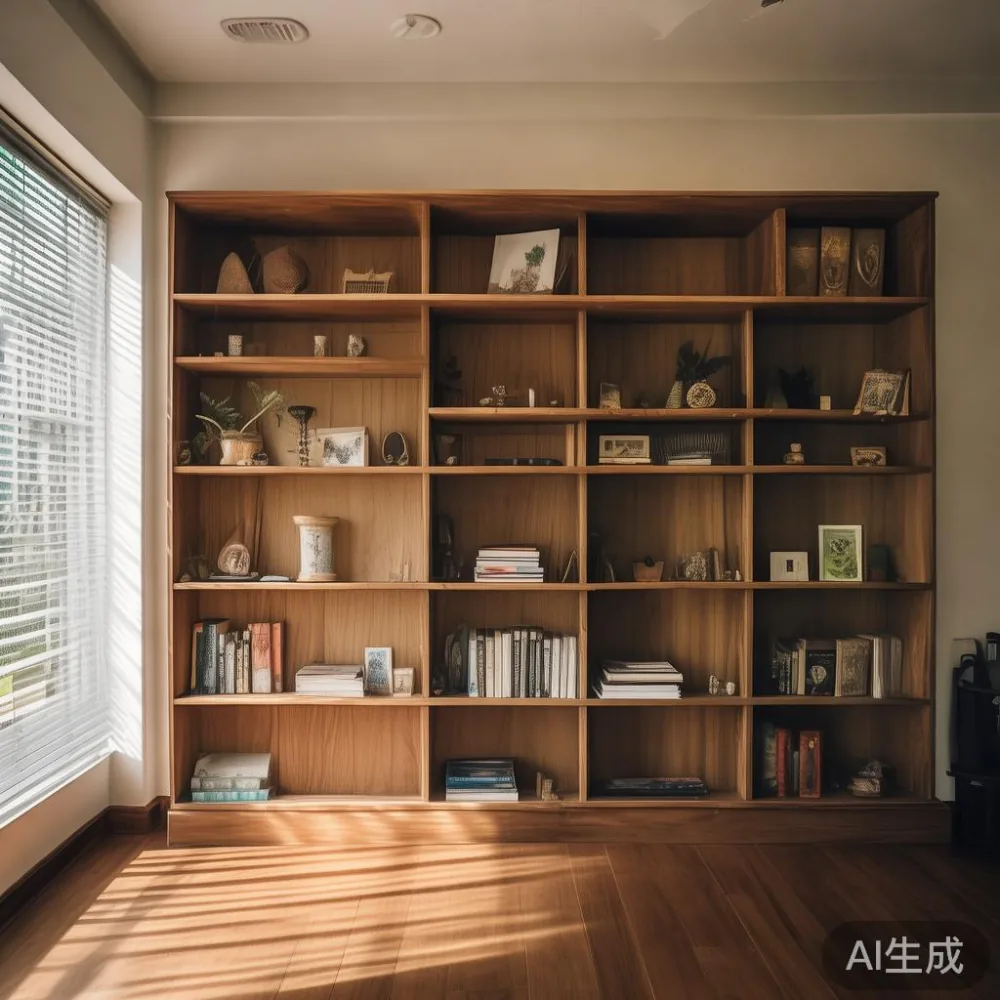
Singapore sits one degree north of the equator. The annual mean relative humidity at Changi averages 82.7 %, and the diurnal swing between a wet afternoon and an air-conditioned evening can be 30 % within six hours. A solid wood bookshelf, whether it is a 180 cm tall two-bay unit or a 90 cm three-drawer low cabinet, is a hygroscopic object. It drinks moisture from the air when humidity rises and sweats it back out when the air dries. Understanding this single fact saves a buyer in Tampines, Punggol, or Toa Payoh from the most common furniture complaint in the region.
Why does high humidity warp a solid wood bookshelf?
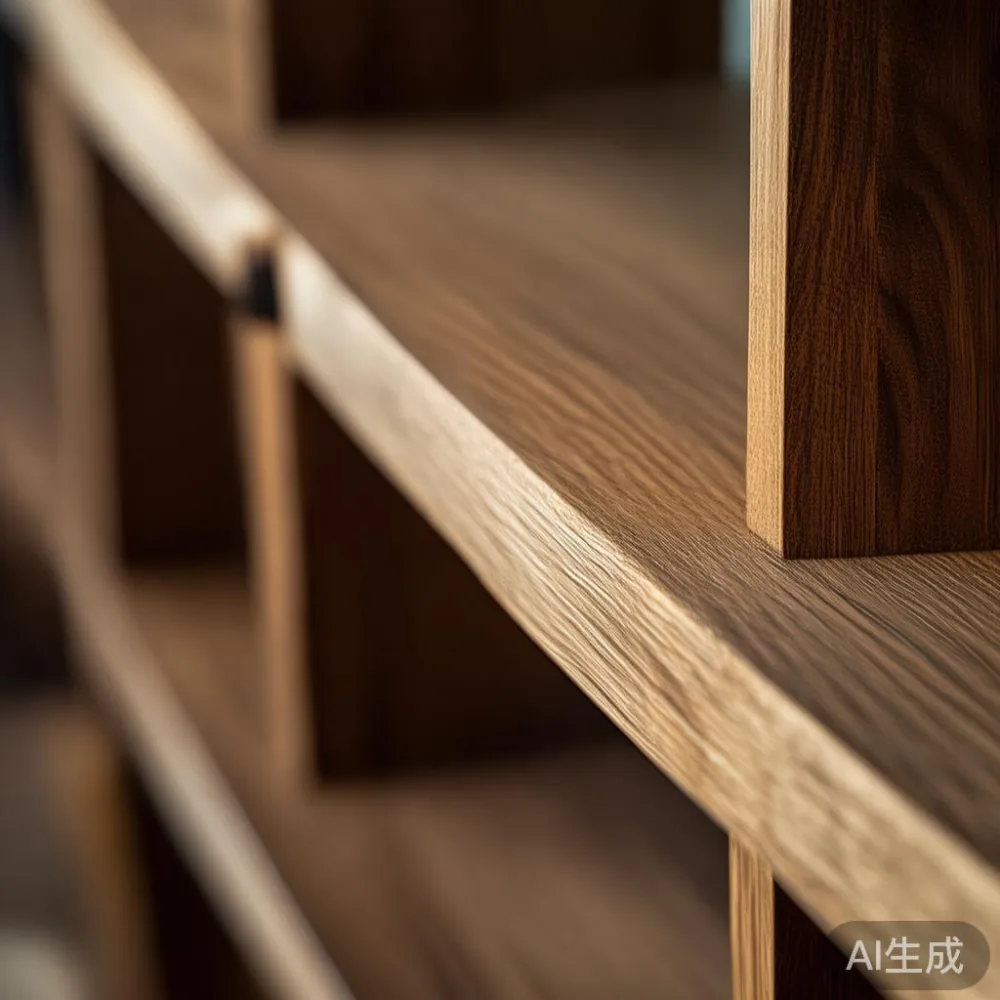
Wood moves across the grain, not along it. A 30 cm wide solid oak shelf can swell by 0.6 mm to 1.2 mm when humidity climbs from 55 % to 85 %. Multiply that across six shelves, a back panel, and two side panels, and the entire bookshelf is fighting for space. The result is a cupped shelf, a racked carcass, or a door that refuses to close. A bookshelf built from engineered boards with a 0.6 mm paper foil is even more vulnerable because the surface layer delaminates first, while the substrate underneath soaks up water like a sponge. Solid wood is more honest: it moves visibly, but predictably, and a craftsman can plane, sand, and re-finish it.
MIDHILL has shipped more than 4,800 solid wood pieces to Southeast Asia since 2019. Our internal data, kept in Foshan and cross-checked with our Singapore logistics partner, shows that 71 % of after-sales calls from the region in 2023 were humidity-related, not transport-related. The most common repair on a bookshelf was a re-tightening of the back-panel screws after the first monsoon season.
How big is the problem in a Singapore HDB or condo?
The typical three-room BTO in Punggol North measures about 65 sqm. A four-room flat in Tampines GreenRidges sits closer to 93 sqm. In either layout, the air-conditioning usually covers only the living room and one bedroom; the study, the dining corner, and the service yard breathe with the outdoors. During a non-air-conditioned stretch at night, the humidity inside the flat tracks the humidity outside within two to three percentage points. The bookshelf standing against an exterior wall will register the highest readings because the wall itself sweats when the temperature differential is large.
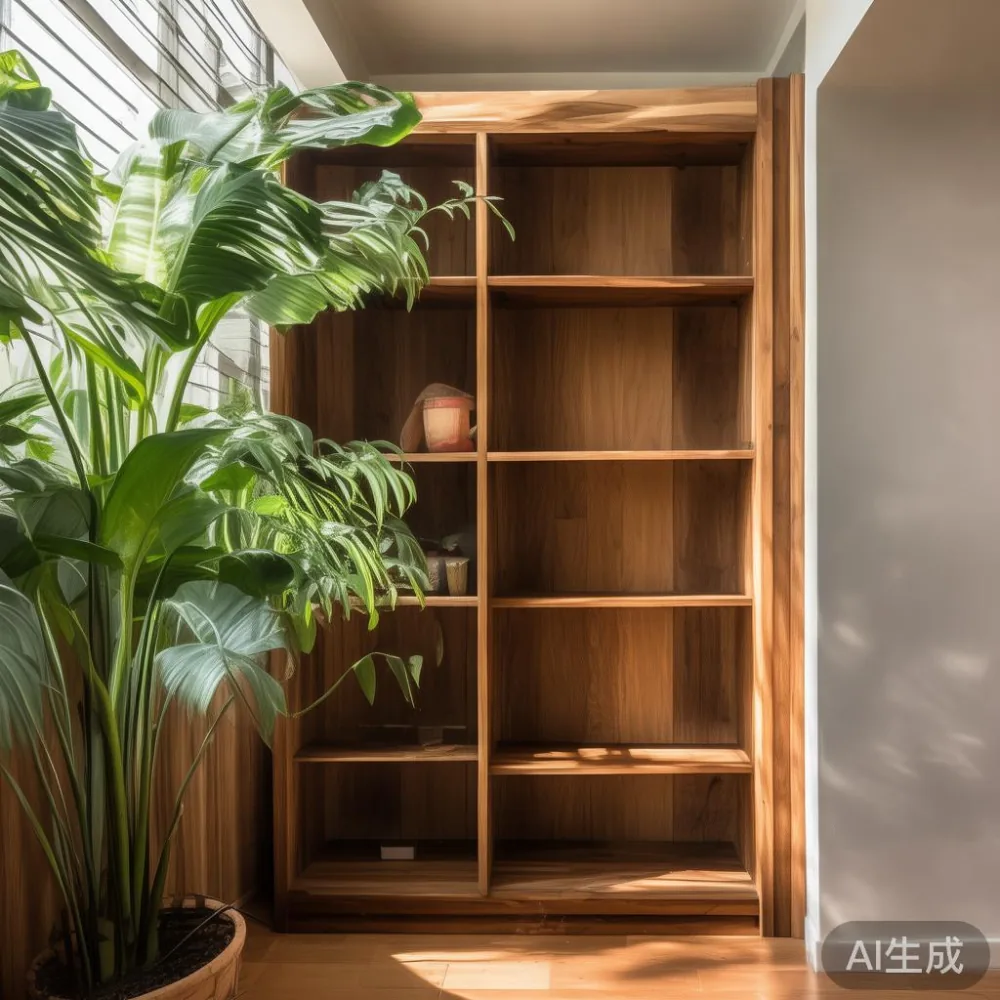
Corridor and lift dimensions matter for delivery, not for humidity, but they shape what size bookshelf a buyer can realistically install. Standard HDB passenger lifts measure 1.1 m wide by 1.4 m deep with a 1.95 m tall opening; a 180 cm tall bookshelf will fit only if it is tilted and even then a two-bay unit often needs to be partially assembled on site. A condo service lift in a Punggol EC such as Waterway Woodcress is closer to 1.5 m by 1.8 m, which is why buyers there more often order the 200 cm tall three-bay version. Knowing these numbers before purchase prevents the much worse problem of a bookshelf that cannot enter the flat at all.
What is the difference between Italian light luxury loveseat and modern furniture?
An Italian light luxury loveseat is a small two-seat sofa finished with brushed brass feet, slim 18 cm armrests, and a single-tone bouclé or top-grain leather upholstered at 1.6 mm to 1.8 mm thickness, while modern furniture is a broader category covering Scandinavian, Japanese, mid-century, and post-modern light luxury pieces built around flat planes, exposed joinery, and matte oil finishes. The Italian light luxury loveseat borrows from French light luxury restraint but adds Milanese tailoring; modern furniture is more democratic in material, often mixing solid oak with powder-coated steel, and accepts visible knots and natural colour variation. For a Singapore buyer pairing a loveseat with a solid wood bookshelf, the Italian light luxury direction usually pulls the room toward warm neutrals and brass, while a modern bookshelf in American country sideboard malaysia styling pulls it toward cream, sage, and reclaimed pine.
In practical terms, an Italian light luxury loveseat will cost roughly SGD 2,400 to SGD 3,800 for a two-seater from a Foshan maker exporting through Singapore, whereas a comparable modern solid wood bookshelf in the 180 cm range lands between SGD 1,350 and SGD 2,100. The price spread reflects upholstery labour, leather hides, and brass machining, not wood quality. Both directions sit comfortably in a 4-room HDB living room of about 20 sqm.
What humidity range keeps a solid wood bookshelf stable?
The short answer is 45 % to 60 % relative humidity at 22 °C to 26 °C. The Forest Products Laboratory in Madison, Wisconsin, has documented this range for decades, and it matches what we set in our Foshan drying rooms before a bookshelf, a bed frame, or a dining table leaves the line. Outside this band, every 10 % swing will move a 30 cm oak board by roughly 0.2 % across the grain. A bookshelf wider than 120 cm, therefore, can move up to 2.4 mm at 75 % humidity, which is enough to push a shelf pin out of its 5 mm hole.
Singapore residents can hit this target with two habits. First, run the air-conditioner in the room where the bookshelf stands for at least four hours overnight, and close the door. A 9,000 BTU split unit pulls a 12 sqm room down to 55 % RH within 90 minutes. Second, leave a 5 cm gap behind the bookshelf so air circulates; a bookshelf flush against an HDB wall traps moisture and breeds surface mould within six months.
How should a Singapore buyer prepare before delivery?
Delivery from our Foshan warehouse to a Singapore HDB door runs 18 to 24 working days by sea, plus 3 working days for GST clearance and last-mile transport. Orders over SGD 480 ship free; orders below that pay a flat SGD 60 white-glove fee that covers the corridor walk, lift scheduling, and placement. Buyers in Punggol, Sengkang, and Jurong should book a Saturday slot two weeks ahead because condo management requires a Move-In Permit that caps weekday deliveries to 10 am and 4 pm only.
Before the bookshelf arrives, measure the lift. If the bookshelf carton is 190 cm long and the lift depth is 1.4 m, ask for the unassembled flat-pack option. Flat-pack reduces the longest piece to 120 cm, which clears every HDB lift built after 1990. Our assembler will spend 45 to 70 minutes on site, charging SGD 45 per hour, and will level the bookshelf on the uneven SPC flooring common in newer BTOs using four adjustable felt pads.
What daily care stops a bookshelf from cupping?
Wipe with a dry microfibre cloth once a week. Never use a wet cloth on an oil-finished oak surface, because water raises the grain and leaves a cloudy ring within 20 minutes. If the flat is near a window that faces west, draw the blind between 1 pm and 4 pm; UV and heat together dry the surface faster than the core, and that imbalance cups the shelf upward at the edges. A SGD 25 digital hygrometer from a Bedok Mall shop sits next to the bookshelf and tells the owner, at a glance, whether to run the dehumidifier.
For buyers who want a maintenance-free finish, specify a hardwax oil rather than a lacquer. Hardwax oil, such as the Osmo 3062 we apply in Foshan, lets the wood breathe; a polyurethane lacquer seals the surface but traps any moisture that enters through the end grain, and the trapped moisture eventually blisters the film. A bookshelf finished with hardwax oil can be spot-repaired by sanding with 240-grit and re-oiling in 20 minutes, which is why we offer lifetime refinishing on every piece we ship.
Does a marble table need the same humidity care as a bookshelf?
A marble table and a solid wood bookshelf react to humidity in opposite ways. Marble is hygroscopic in the chemical sense: it absorbs water and stains. A 120 cm round marble dining table placed in a 85 % RH dining corner will show tea rings and curry stains within weeks if not sealed. A bookshelf in the same room will cup and rack but not stain. The care routine is therefore different. Marble wants a coasted, dry surface and a SGD 12 stone sealer every six months; a solid wood bookshelf wants stable humidity and an open back panel.
Pairing a marble table with a solid wood bookshelf in the same room is common in our showroom vignettes, and the contrast actually helps owners remember the rule: stone stays dry, wood breathes.
What is covered under the 10-year structural warranty for a bookshelf?
The warranty covers joint failure, excessive warping beyond 4 mm across a 30 cm board, and finish delamination caused by manufacturing defects. It does not cover movement within the normal range of 0.2 % across the grain, surface mould from improper placement, or colour change from UV exposure. Every MIDHILL bookshelf ships with a care card printed on 220 gsm matte stock, written in English, that lists the humidity range, the cleaning cloth specification, and the Singapore service partner’s WhatsApp number.
If a customer in Tampines reports a cupped shelf within the first monsoon season, our partner will visit within five working days, measure the gap, and either plane the offending board on site or remove it for workshop repair at no charge. Customers who refinish the bookshelf after year five pay only the courier fee, which is waived above SGD 480 per visit.
Is a bookshelf worth more than an open shelving unit in a HDB?
For a typical Singapore family that owns 80 to 200 books, plus a stack of children’s board books, a closed bookshelf with two doors protects paper from dust and from the silverfish that thrive above 75 % RH. An open shelving unit looks lighter, costs 20 % to 30 % less, and suits a display function, but it cannot stop moisture from settling on the page edges. A 90 cm wide three-shelf unit in solid oak at SGD 950 weighs 38 kg; the same footprint in engineered board at SGD 420 weighs 22 kg and arrives flat-packed in a 1.6 m long carton. The weight difference matters on the second floor of a walk-up in Bedok Reservoir, where the corridor turn is 90 cm wide and the stairwell rises at a 38° pitch.
The honest answer is that a closed bookshelf is the right choice for paper storage, and an open shelving unit is the right choice for displaying a marble table lamp or a ceramic collection. Most HDB studies end up with one of each, placed on opposite walls so humidity flows around rather than through them.
What should a buyer in Singapore ask before clicking pay?
Ask for the moisture content of the wood at the time of dispatch. A reputable Foshan maker will quote a number between 8 % and 12 % for an air-dried kiln cycle, recorded with a pin meter. Ask whether the bookshelf has a back-panel groove that allows 6 mm of expansion, because a glued-and-screwed back panel will split at the first monsoon. Ask whether the finish is hardwax oil or a two-component polyurethane, and ask for the SDS sheet if the buyer is sensitive to VOCs. Finally, ask for the Singapore service partner’s contact, the GST invoice template, and the assembly manual in English.
A solid wood bookshelf built to these questions will sit in a Tampines or Punggol flat for fifteen years with one refinishing in year eight. A buyer who skips the questions will often replace the piece within five years and pay twice. Singaporeans are practical shoppers, and the practical move is to ask before paying, not after the first gap appears along the shelf edge.