How Southeast Asian Humidity Shapes the Solid Wood Furniture in Your HDB Flat
I keep a small notebook beside my standing desk in Tampines, and on days when the floor feels tacky under bare feet, I scribble two numbers: the relative humidity on my hygrometer and how a sample block of ash has moved that week. Last month I visited a three-room flat in Bedok 154B where the owner had stacked three photobooks on the bottom shelf of a 90 cm open bookshelf. The shelf had bowed 4 mm from end to end after the December monsoon push. The fix was not a new bookshelf. It was a small bag of silica gel, a 12 mm gap behind the unit, and a piece of solid wood furniture that knew how to drink and release moisture without warping.
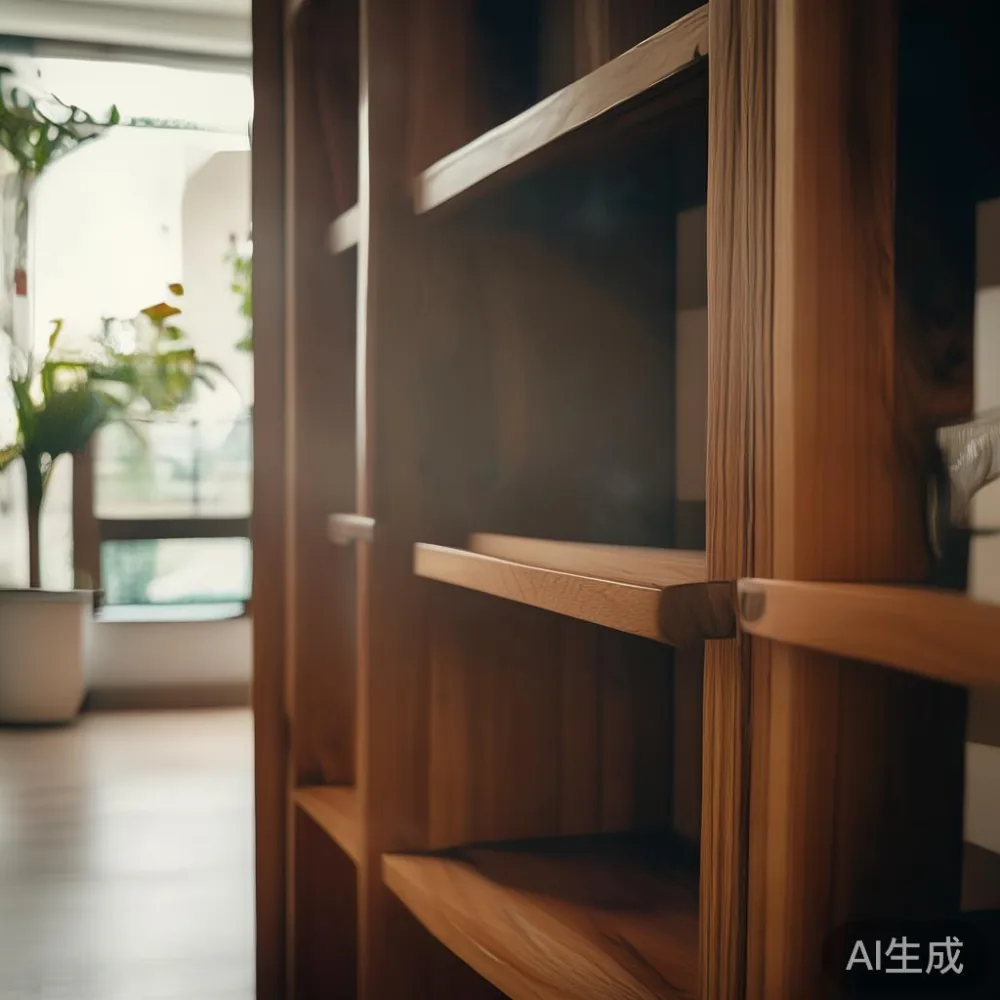
Singapore lives in a band of 60–85 % relative humidity for roughly nine months of every year. HDB corridors are 1.2 m to 1.5 m wide. Typical service lift openings measure 2.1 m tall by 1.0 m wide, and many newer blocks at Punggol now run cargo lifts that allow a 2.4 m flat-pack. Every one of those numbers shapes the kind of wood furniture that survives on this island, and every one of them is the reason Foshan workshops on the Pearl River Delta have spent three decades learning how to handle tropical air. MIDHILL is one of those workshops. Founded in 2008 in the furniture heartland of southern China, the brand ships solid wood dining tables, wardrobes, bed frames, and bookshelves to more than fifteen countries, and Singapore is one of its closest neighbours by sea.
Why does humidity in Southeast Asia affect wood furniture so strongly?
Wood is a hygroscopic material. It is constantly swapping water molecules with the air around it. For every 4 % change in moisture content, most temperate hardwoods move about 1 % across the grain. In Singapore, the daily swing from an air-conditioned living room at 22 °C and 55 % RH to a corridor at 31 °C and 78 % RH can pull a 200 cm bookshelf side panel in by 1.8 mm in a single afternoon. Over a year, the panel is breathing through a 3–6 mm range. Multiply that cycling across a French light luxury bed frame with a 220 cm headboard and a 180 kg wardrobe, and the engineering problem becomes obvious.
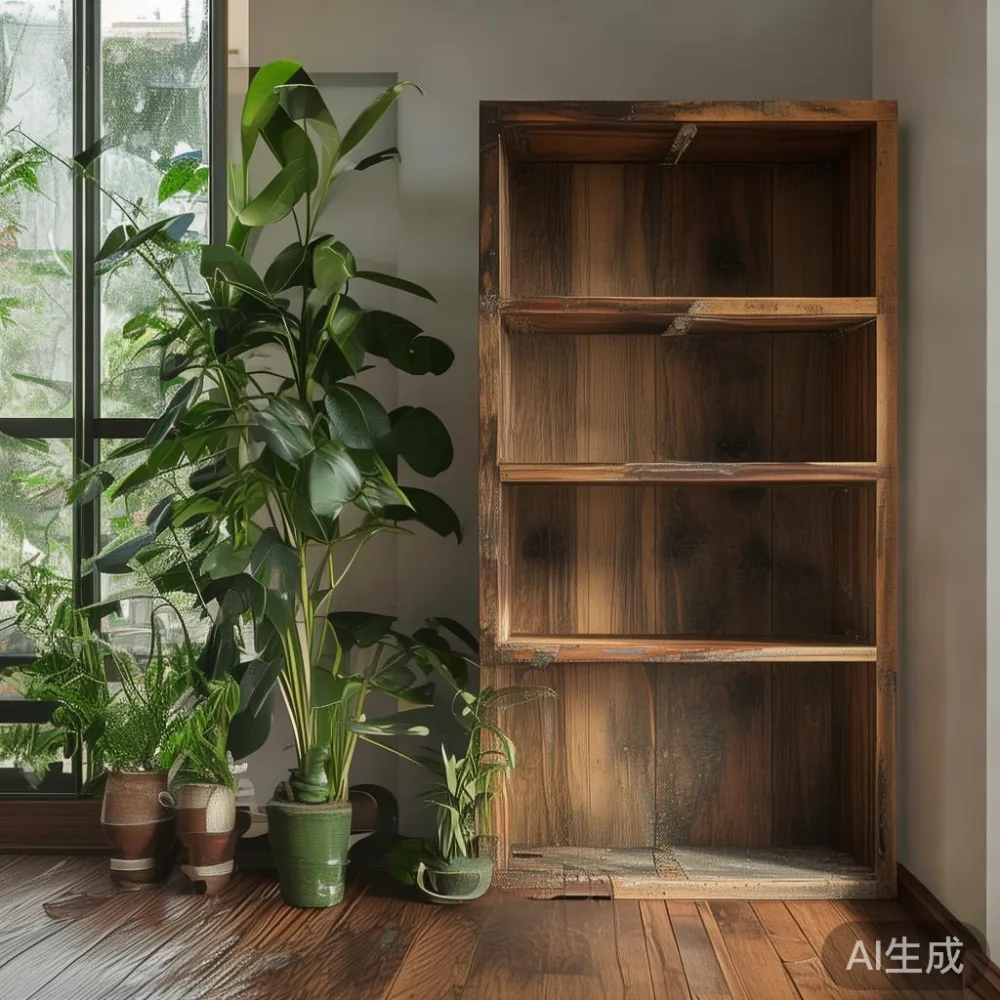
The practical effects show up in familiar ways. A six-seater solid wood dining table develops a 2–4 mm gap at one end of a leaf in July, then tightens again by Chinese New Year. A solid wood sofa frame creaks at the joints because the tenons have swollen against the mortises. Bookshelves develop a gentle U-bend in the middle when central air-conditioning is run at 18 °C. Nightstands show cracked lacquer along the grain. None of these problems signal a defect. They are the wood telling you it is alive.
What does Singapore's weather actually do to solid wood?
Tropical humidity pushes two failure modes into the open: expansion and contraction across the grain, and a slower, quieter problem called checking. Checking is the hairline cracking that happens when the surface dries faster than the core. It shows up on the sun-facing side of an American light luxury bookshelf in a Punggol corner unit when morning sun hits the timber at 32 °C while the indoor RH is still 75 %. The fix is shade, not varnish. In a Tampines five-room flat I visited in February, a customer had placed a 1.6 m solid ash bookshelf under a window for two years. The top shelf had a 1.5 mm check running 18 cm; the bottom shelf, shaded and cooler, was perfect.
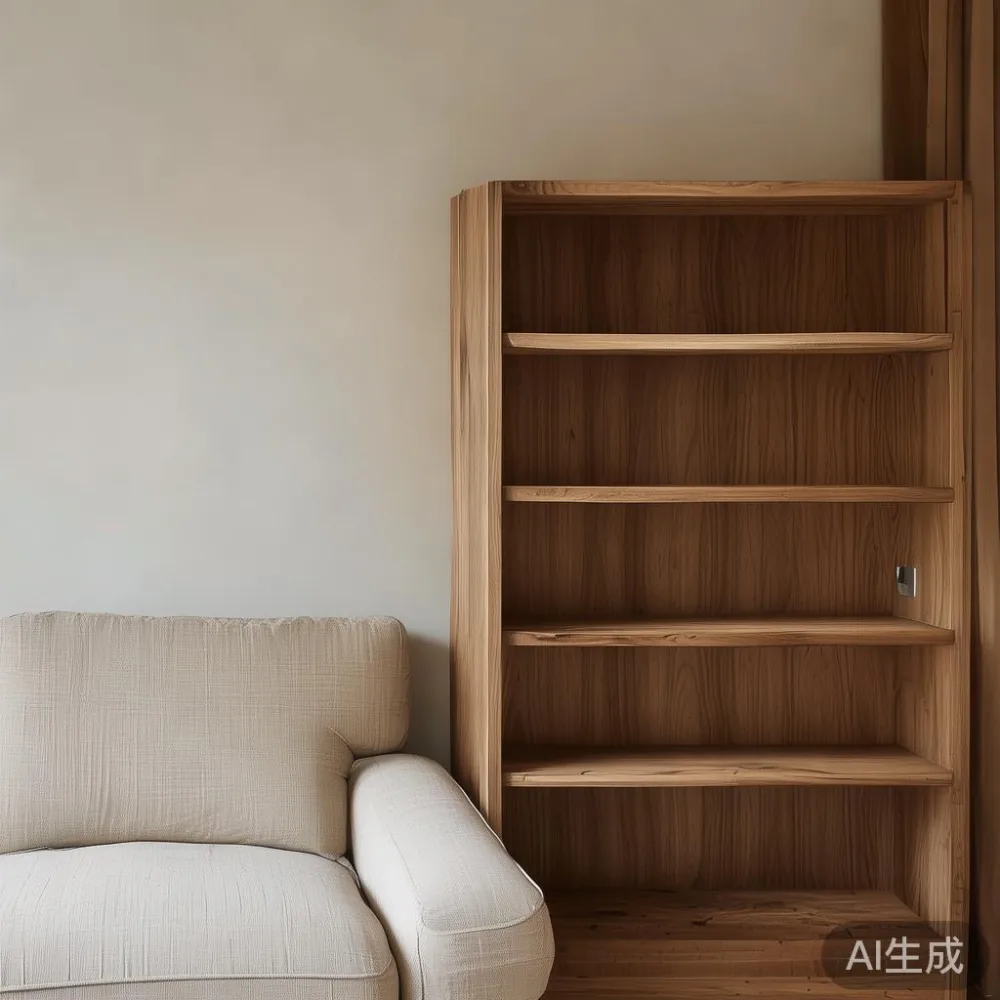
Beyond the surface, humid air also feeds mould on unfinished end-grain and on the underside of drawer runners. Singapore homes without a dehumidifier often register 70–78 % RH at 4 a.m. A dehumidifier set to 55 % drops the moisture content of an air-dried oak plank from roughly 14 % to 9 %, and that single drop is the difference between a quiet piece of wood furniture and one that squeaks at every joint.
Is light-luxury post-modern solid wood actually built for HDB life?
Yes, when the construction respects the wood rather than the catalogue render. Post-modern light luxury in furniture design leans into thicker proportions, hand-rubbed matte finishes, and exposed joinery that shows off the timber. A solid wood sofa built this way will use a 38 mm mortise-and-tenon frame with 18 mm floating panels that can breathe. A dining table will feature a 28 mm top with breadboard ends to control cupping. A French master bed for HDB flat that follows the same rules arrives as a 215 cm headboard, a 198 cm side rail, and a 198 cm footboard that fits through a 2.1 m service lift when disassembled.
The honest test before buying is the moisture content reading. A responsible Foshan maker kiln-dries hardwood to 8–12 % MC and ships it in shrink-wrap with desiccant. MIDHILL publishes kiln schedules and ships a small hygrometer card inside the wardrobe carton so a Tampines buyer can see that the timber left the kiln at the right number. Once the piece is in your flat, allow a 14-day acclimation period before any drilling or shelf-load test. The wood needs to settle into your particular 55–65 % RH zone.
How do I choose a sofa guide for a home office?
Pick the sofa frame first, the cushions second, and the warranty third, because in Singapore the frame is what humidity touches every single day. For a home office inside an HDB flat, start with a solid wood sofa frame in kiln-dried ash, oak, or walnut with a 38 mm to 42 mm main rail. Avoid MDF cores wrapped in veneer; they swell at the first wet season. Look for a frame depth of 90–100 cm, a seat height of 45 cm, and back cushions that zip out so you can air them on a sunny corridor (a 1.2 m corridor gives you exactly the turning radius). Confirm that the maker offers a 10-year structural warranty and a lifetime refinishing service, because a humid climate ages finish faster than fabric. Ask for the kiln-dried certificate and the load rating in kilogrammes — a three-seater should rate at 350 kg distributed, not just 220 kg pointed at the centre. Finally, measure the lift: a two-piece sofa that boxes at 1.95 m long by 0.95 m deep by 0.55 m tall will travel through any 2.1 m service lift, while a single 2.4 m box will not fit the older Bukit Batok blocks.
What about a solid wood dining table, bookshelf, and wardrobe in the same flat?
The three big pieces behave like one little forest. A 200 cm solid wood dining table with a 28 mm top will move across its width by 1.2 mm between a 55 % air-conditioned afternoon and a 78 % humid midnight. Leave the tablecloth off for two weeks of the year so you can see the grain breathe. A 90 cm wide bookshelf against an exterior HDB wall should sit 12 mm off the wall with felt pads to let air move behind it. A wardrobe in a master bedroom should never be pushed tight against a wet-area door; keep a 25 mm gap so the wardrobe back panel can dry on both sides.
Pricing in Singapore runs roughly: a six-seater dining table from SGD 2,180 to SGD 4,650 depending on species; a 90 cm bookshelf from SGD 880 to SGD 1,950; a 198 cm wardrobe from SGD 3,400 to SGD 6,200 for a three-door American light luxury wardrobe with internal drawers. Marble table accents for the same dining set add SGD 480 to SGD 1,200. Free shipping is typically triggered over SGD 350 in cart value, and a 14-day return window is the floor of any responsible buyer's contract. Lift access at Punggol, Sengkang, and most new Tengah blocks is now 1.4 m wide and 2.4 m deep, so a flat-pack wardrobe can travel as one piece rather than splitting into three.
Do I need a nightstand that matches the bookshelf, or can I mix timber?
Mix carefully. Wood furniture in a humid climate does not need to match by species; it needs to match by movement coefficient. A French light luxury nightstand in 18 mm white oak will move almost exactly the same as a bookshelf in white oak at the same thickness. Pairing a teak nightstand with an ash bookshelf is fine because the two species have similar movement ratios, but pairing a teak nightstand with a beech bookshelf will leave the nightstand sitting proud in November and flush in May. If you want a mixed look, hold the undertones warm-cool consistent: golden oak with golden ash, walnut with smoked oak, never light ash with dark walnut under a single ceiling lamp.
Simple care steps that save a SGD 4,000 dining table
Run a dehumidifier in the living room from 11 p.m. to 6 a.m. during the December and June monsoon peaks. Set it to 55 % RH. Keep a 12 mm gap behind every bookshelf and wardrobe against an HDB wall. Wipe spills within eight minutes; humidity amplifies water rings on lacquer. Rotate the dining table 180° every quarter so sun damage spreads evenly. Apply a beeswax refresher every nine months, never a silicone spray. These five habits cost about SGD 60 in care products per year and they protect roughly SGD 12,000 worth of solid wood sofa, dining table, wardrobe, nightstand, and bookshelf in a typical four-room flat. MIDHILL and similar Foshan workshops are happy to send a refinishing kit under the lifetime refinishing promise, but fewer than 20 % of customers ever need to call it in if the care steps above become habit.
A short buyer's checklist for humid HDB living
Measure the lift in centimetres before you fall in love with a 2.4 m wardrobe. Ask for kiln-dried certificates and the moisture content the piece was packed at. Confirm a 10-year structural warranty and a lifetime refinishing service. Pick solid wood over veneer for any piece wider than 120 cm or taller than 180 cm. Leave 12 mm behind every bookshelf and 25 mm around every wardrobe. Allow two weeks of acclimation before loading shelves. Use a dehumidifier set to 55 % between 11 p.m. and 6 a.m. during peak monsoon weeks.
Wood furniture in Singapore will never stop moving. That is its nature. The goal is not a museum piece frozen at 9 % moisture content; the goal is a bedroom, a living room, and a study where the timber knows your flat, follows your monsoon, and quietly settles into the rhythm of an HDB life lived well. A hand-finished bookshelf, dining table, bed frame, or nightstand from a Foshan workshop that has exported to fifteen countries is built for exactly that rhythm, and the cost of getting it right is usually less than one year of GST on the equivalent wardrobe from a department-store catalogue.