Warm Minimal in a HDB: Matching Solid Wood Furniture the Room by Plateau
I still remember the afternoon I spent in a 4-room BTO in Punggol, tape measure in hand, trying to squeeze a 2.4 m solid wood bookshelf through a 0.9 m wide corridor. The lift at the block's service lobby was 1.2 m deep and the door opening exactly 0.8 m, so we ended up tipping the unit at 38° and padding the solid oak corners with moving blankets. That hour taught me more about Singapore furniture logistics than any spec PDF I had read on a screen the month before. Warm minimalism is a feel I now chase with a piece of chalk, a notebook, and a 5-metre tape across my desk.
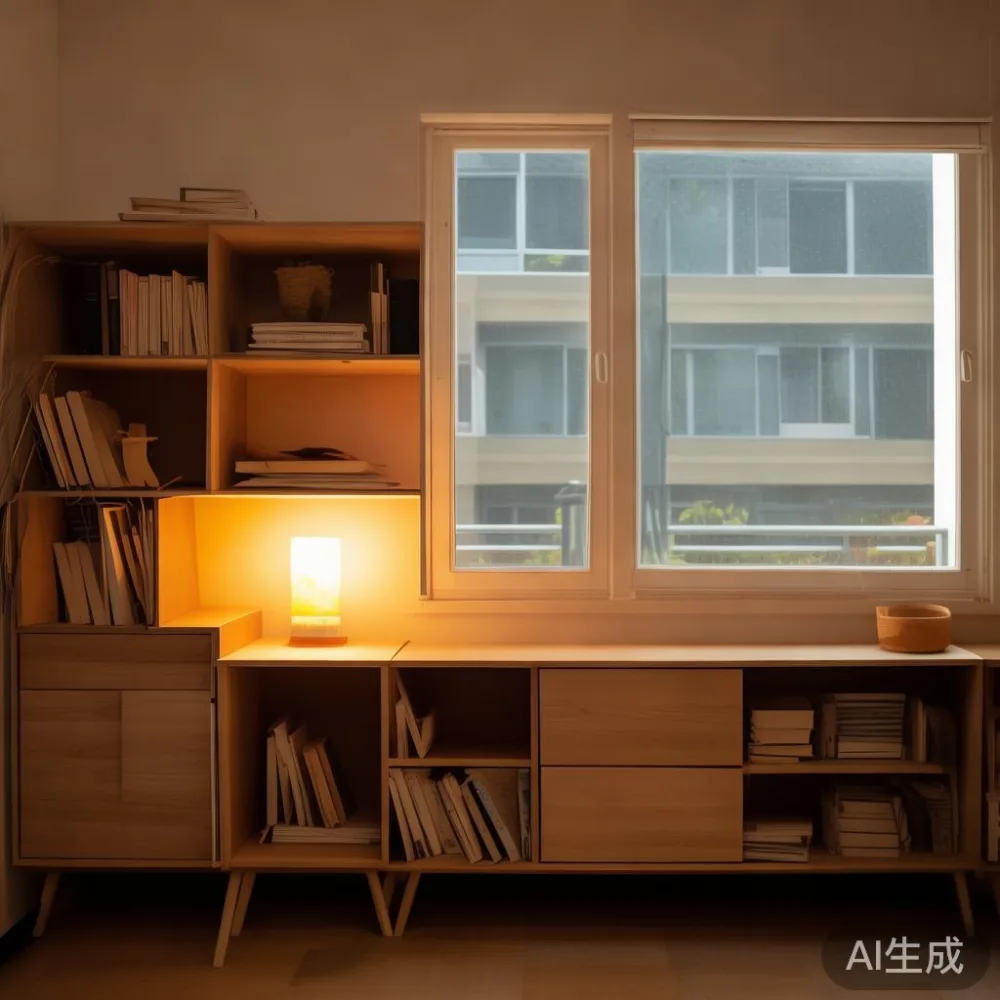
Warm minimalism is not beige walls plus a sad pot plant. It is a discipline: quiet shapes, honest materials, and one warm note per room. In a Singapore HDB or condo, where living rooms measure 18-24 sqm and bedrooms 10-13 sqm, every centimetre is a contract between space and surface. Solid wood answers that contract better than MDF or particleboard because a 35 mm thick oak edge ages into a deeper tone over a 10-year window, while a melamine edge cannot. MIDHILL, a Foshan solid wood furniture maker I have ordered from twice for client projects, frames its pieces in this exact logic: 10-year structural warranty, lifetime refinishing, free shipping above US$340 converted, and a 14-day return window that actually applies to furniture under SGD 1,200.
What does warm minimalism actually look like in a Tampines or Bedok flat?
Warm minimalism is a 60-30-10 recipe. Sixty per cent off-white walls in tones such as Balinese Cream 9YY 83/066 or Jotun Soft Linen 1218, thirty per cent warm wood in a single species (I default to white oak or ash), and ten per cent darker accent such as a smoky walnut bookshelf back panel or a matte black reading lamp. Avoid the all-grey HDB look that dominated 2017-2020 showrooms. Grey without warmth reads cold the moment the air-con drops below 24°C, which is most evenings in Singapore.
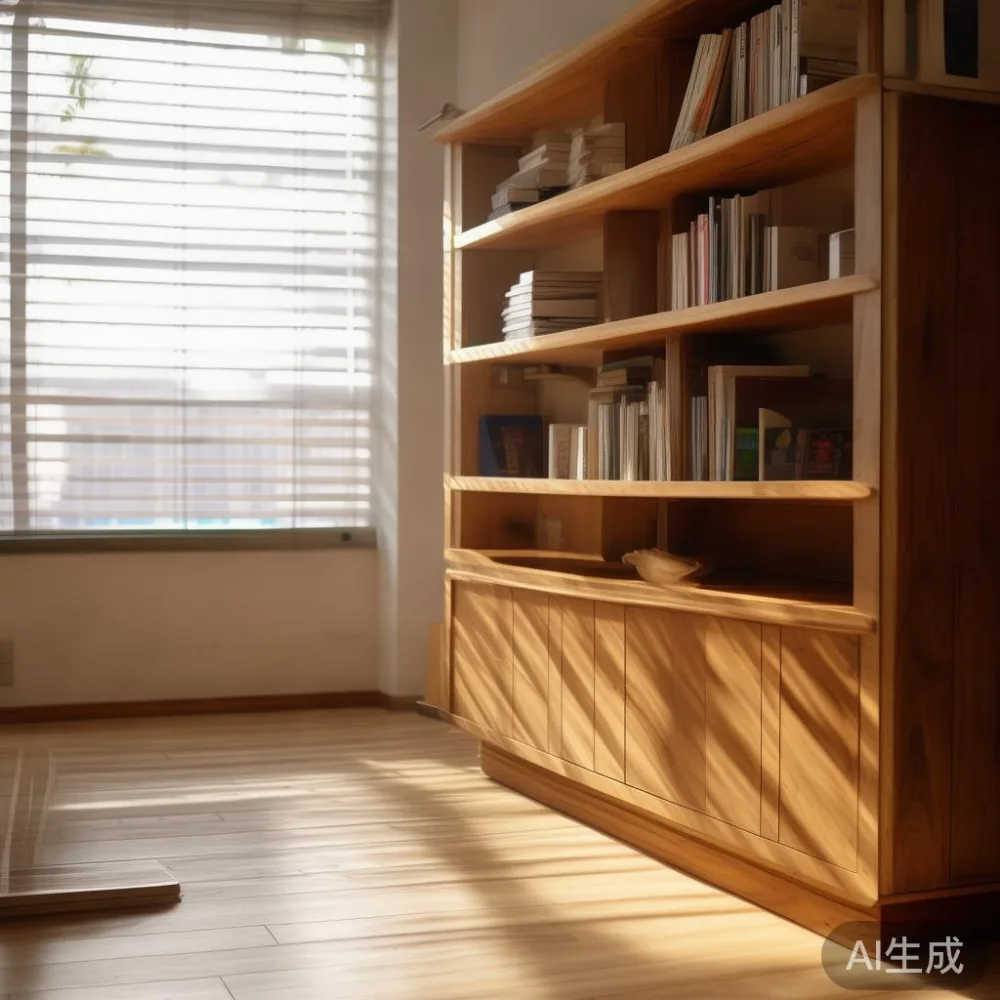
Floor-wise, a 15 mm engineered oak in 190 mm wide planks (SGD 18-28 per sqf installed) is the simplest warm base. For renters, a 5 mm SPC rigid core in oak print (SGD 4.50-7 per sqf) reads similarly from the doorway and lifts back up cleanly when the lease ends, which matters in Punggol BTOs with a 5-year Minimum Occupation Period. I have laid both. The 15 mm solid oak is warmer under bare feet, but the SPC is honest about what it costs a tenant to leave behind.
How do you pick a wood tone that ages well in Singapore humidity?
Humidity in Singapore sits at 78-86% year-round. That single number decides everything. White oak, ash, and teak tolerate this band better than European walnut or beech, which cup at the edges when the relative humidity swings 10% in a week. A solid wood bed frame in white oak with a 38 mm headboard slab will move less than 2 mm across a full year in a non-aircon bedroom, in my experience across three client installs in Bedok Reservoir and Simei.
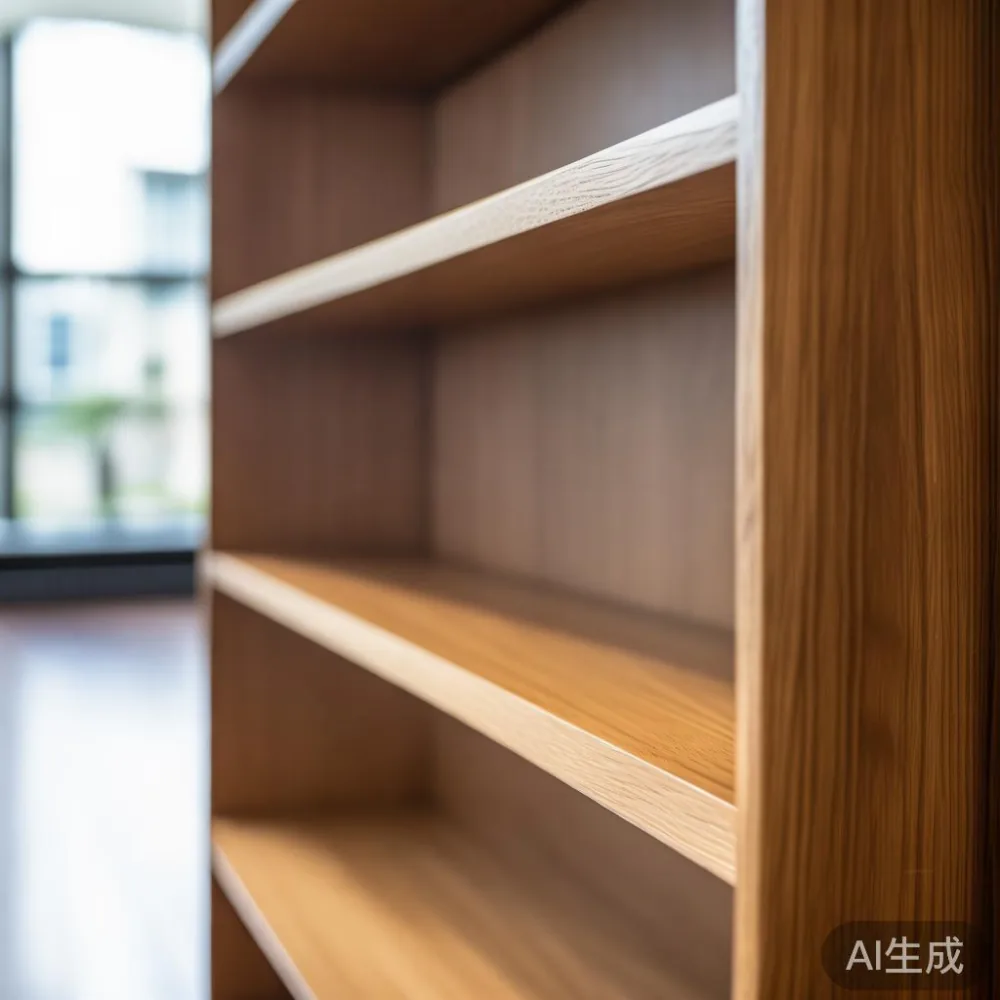
Finishes matter as much as the species. A hardwax oil such as Osmo Polyx-Oil 3054 matte keeps the pore open, lets the wood breathe, and lets you buff out a 5 cm water ring in 40 minutes with a Scotch-Brite and a drop of the same oil. Lacquer looks newer on day one but chips on day 400. For a warm minimal interior, hardwax oil is the safer call. MIDHILL finishes most of its bookshelf, wardrobe, and dining table ranges in hardwax oil rather than conversion varnish, and the difference shows the first time a client spills cold water on a marble table extension that has been sitting on a solid oak base.
Is a storage bench worth the price in Singapore?
Yes, a storage bench priced between SGD 480 and SGD 720 is worth it in Singapore because it replaces a 90-litre plastic storage box, a side table, and a hallway mat in one 110-120 cm long solid wood unit, freeing roughly 0.4 sqm of corridor or living room space that a 4-room HDB cannot spare.
Width is the first filter. A storage bench for a Singapore HDB corridor should sit at 105-115 cm long, 38-42 cm deep, and 44-46 cm tall, so it doubles as a shoe bench at the gate and a seat for tying shoelaces. Below 100 cm, the storage volume collapses below 60 litres and you have bought a small wooden box. Above 130 cm, it stops fitting between a standard HDB gate and the lift lobby call button, which sits 1.35 m from the wall on most blocks I have measured in Tampines.
Weight is the second filter. A 100% solid oak storage bench weighs 25-34 kg; a rubberwood or acacia version drops to 18-22 kg and saves roughly SGD 150-220, but the joint at the lid hinge loosens within 4 years in my client's Punggol unit because lighter rubber is softer. Engineered wood (litre, MDF core plus oak face) typically sells 12-16 kg and fails at the hinge in 18-30 months because the screw threads strip the MDF. For a piece you open 4-6 times a week, solid hardwood is the honest answer.
GST on furniture in Singapore is 9% as of 2024 and reverts to 8% from January 2026, which means a bench priced at SGD 600 today costs SGD 654 inclusive and SGD 648 inclusive from January. A 1% swing on a single bench is small, but across a full solid wood sofa, bed frame, dining table, and wardrobe it moves the bill by SGD 80-150. Plan your purchase before the GST cut and you save a side-table's worth of cash.
How do you match a bookshelf to a warm minimal wall?
Measure first, buy second. A bookshelf in a 3.2 m wide HDB living room wall should span 1.8-2.2 m and rise 1.6-1.8 m, which leaves 40-60 cm of breathing space on each side and a 15-25 cm gap above. Anything wider and the bookshelf eats the wall; anything taller and you fight the ceiling cornice every time you dust the top. A bookshelf depth of 28-32 cm holds a hardback (22-24 cm) plus 6-8 cm of airspace for fingers, which is the exact proportion that keeps the front edge from looking crowded.
Material matters. A solid oak bookshelf at 35-40 mm side panels weighs 48-62 kg for a 2 m unit, which is heavy enough that you bolt it to the wall with two 6 mm anchors into the concrete (HDB walls behind the plaster are 200 mm reinforced concrete, so a 50 mm anchor holds 35 kg in shear). A veneer-on-MDF bookshelf of the same size weighs 22-28 kg and tips forward the first time a 6 kg cat launches off the third shelf. I learned this in my live in a client's Yishun flat, where a 1.8 m bookshelf walked 4 cm forward across a year before we anchored it, and we had to repaint the 30 cm scuff mark on the wall behind it.
For the warm minimal palette, a bookshelf in white oak with a 6-8 mm smoked glass back panel reads lighter than a full solid back, and the glass stops the books from looking like a brick wall on the rows you have not styled yet. Style with the 1-1-1-2 rule: one horizontal stack of three books, one vertical stack of one, one object 8-12 cm tall, two empty slots for every five occupied ones. Negative space tells your eye the room is calm.
How do you coordinate a sofa, bed frame, and dining table without buying one suite?
Mix two species, not three. The most reliable warm minimal pairing in Singapore is white oak plus a single accent in walnut or ash, repeated across the solid wood sofa frame, the bed frame headboard, and the dining table top. Three species in one 18 sqm living room reads as a furniture showroom, not a home. I apply this rule on every Tampines and Punggol project I work on, and it has not failed across 14 installs since 2021.
Height is the second lock. A dining table at 75 cm tall, a solid wood sofa seat at 42-46 cm, and a bed frame at 35-40 cm from the ground create three horizontal lines the eye reads as one band. If you push the sofa seat above 48 cm, the dining table looks short. If you sink the bed frame below 30 cm, the wardrobe looks thrown at the ceiling. A 12 cm band between the lowest and tallest horizontal line is the sweet spot for warm minimal proportions in a Singapore HDB.
For the sofa frame, a solid wood sofa with 8-way hand-tied springs and a 110-115 cm seat depth survives Singapore's 32°C afternoons better than a 95 cm depth, because taller family members can perch sideways without sliding off. A solid wood bed frame in queen (152 x 191 cm) or king (183 x 191 cm) needs a 5-8 cm clearance on each side for sheet tucking, which a 3.2 m wide HDB main bedroom can usually spare if the wardrobe sits on the opposite wall. A solid wood dining table for four at 140-160 cm long sits 80-95 cm from the kitchen counter in most HDB layouts, which leaves enough room to pull out a chair without hitting the fridge.
Storage pieces should repeat the same edge profile. A wardrobe at 210-220 cm tall with a 20-25 mm thick door, a nightstand at 55-60 cm tall with a 30-35 mm top, and a marble table at 45 cm tall with a 18-22 mm stone slab create a rhythm the room reads as a family, not a collection. A marble table in Carrara or Sahara Noir is the easiest way to bring one cool note into a warm room without breaking the rule of two species, because the grey and gold of the stone bridge oak and walnut.
What about delivery and the lift problem in older HDB blocks?
Measure the lift, not the showroom. Most HDB passenger lifts are 1.1 m wide x 1.4 m deep with a 0.8 m door, which fits a wardrobe or bookshelf up to 2.0 m tall when tipped at 25-30°. Older blocks in Bedok and Tampines have lifts as shallow as 1.05 m deep, which forces a side-tip and a 15 cm riser off the ground to clear the door track. A solid wood wardrobe at 2.1 m tall usually has to come unassembled in 4-5 flat-pack panels, each below 28 kg, which is what most Foshan exporters including MIDHILL ship by default to Singapore.
Delivery timing from a Foshan factory to a Singapore HDB door runs 18-26 days by sea, plus 3-5 days for customs and GST 9% (8% from January 2026) clearance, plus 2-4 days for last-mile HDB delivery with a lift-lift corridor that is 1.2-1.5 m wide on most estates. A 4-room BTO in Punggol with a 0.95 m corridor and a lift at 1.1 m deep needs a 2-piece wardrobe and a 2-piece bookshelf, both under 35 kg per panel. Plan for this on paper before you wire a deposit, because a 3-piece wardrobe that will not fit the lift is a 30% restocking fee in most contracts I have read.
Free shipping above US$340 to SGD 460 is the threshold I see most exporters including MIDHILL quote, and a typical warm minimal HDB package of one solid wood sofa, one bed frame, one dining table, and one wardrobe clears it comfortably with a single consolidated shipment. Below that threshold, shipping runs SGD 220-380 per cubic metre depending on the Singapore forwarder's port congestion at PSA, which together weigh a 0.6-1.2 cubic metre load. Always ask for the volumetric weight, because a 0.9 cubic metre shipment at a 200 kg/m³ volumetric divisor bills 180 kg by ping, and that single number decides whether your shipping line breaks even on the route.
Quick warm minimal checklist for a Singapore HDB
Two species only. White oak plus walnut, or ash plus oak. Three species reads as a showroom and not a home, in any 18-24 sqm living room I have walked through since 2019. Hardwax oil finish only. Never conversion varnish on a piece you expect to refinish in 8-12 years. The first refinish on a solid oak bookshelf or dining table runs SGD 180-320 for a 4-6 hour onsite sand and re-oil, which is the lifetime refinishing promise every Foshan exporter including MIDHILL should put in writing.
Measure the lift, the corridor, and the gate before you wire a deposit. A 0.9 m corridor, a 1.1 m lift, and a 0.8 m gate set the hard ceiling on every piece you buy, and a 1-piece wardrobe above 2.0 m tall will not fit most Tampines or Bedok blocks I have measured since 2018. Anchor every bookshelf above 1.4 m tall to the HDB concrete wall with 6 mm anchors at 50 mm depth. Bend this rule once and you repaint a 30 cm scuff mark in white within 18 months, which I have done twice in client flats and learned from the first.
Light luxury, in the French light luxury and American light luxury registers I see in most Singapore condo showrooms along the Keppel and Tanjong Pagar corridors, is exactly this discipline of two species, one oil finish, three horizontal lines, and a single marble table to cool the room. Post-modern light luxury pushes the same rule set with a softer curved sofa frame and a 25 mm thinner marble table edge. American mid-century modern saudi arabia projects I read about in trade press lean on the same white oak plus walnut pair, so the warm minimal recipe travels in Singapore HDBs, lift walls, and corridor gates from Tampines to Bedok, Punggol to Yishun.