Humidity and Wood Furniture in Southeast Asia: What Your Bookshelf Wishes You Knew
I live in a 92 sqm HDB flat in Tampines, and the bookshelf in my living room has been through more than most people realise. Last month, after a two-week stretch of afternoon thunderstorms and air-con set to 24 degrees, I noticed the top shelf of my oak bookshelf sat about 4 mm higher than the bottom. That tiny gap got me thinking about how humidity in Southeast Asia quietly reshapes every piece of solid wood we bring home — and how to keep a bookshelf, bed frame, or dining table looking right for a decade, not a season. MIDHILL, the Foshan solid wood workshop I follow for craft references, often points out that wood never stops moving; our job is simply to manage the conversation between timber and tropical air.
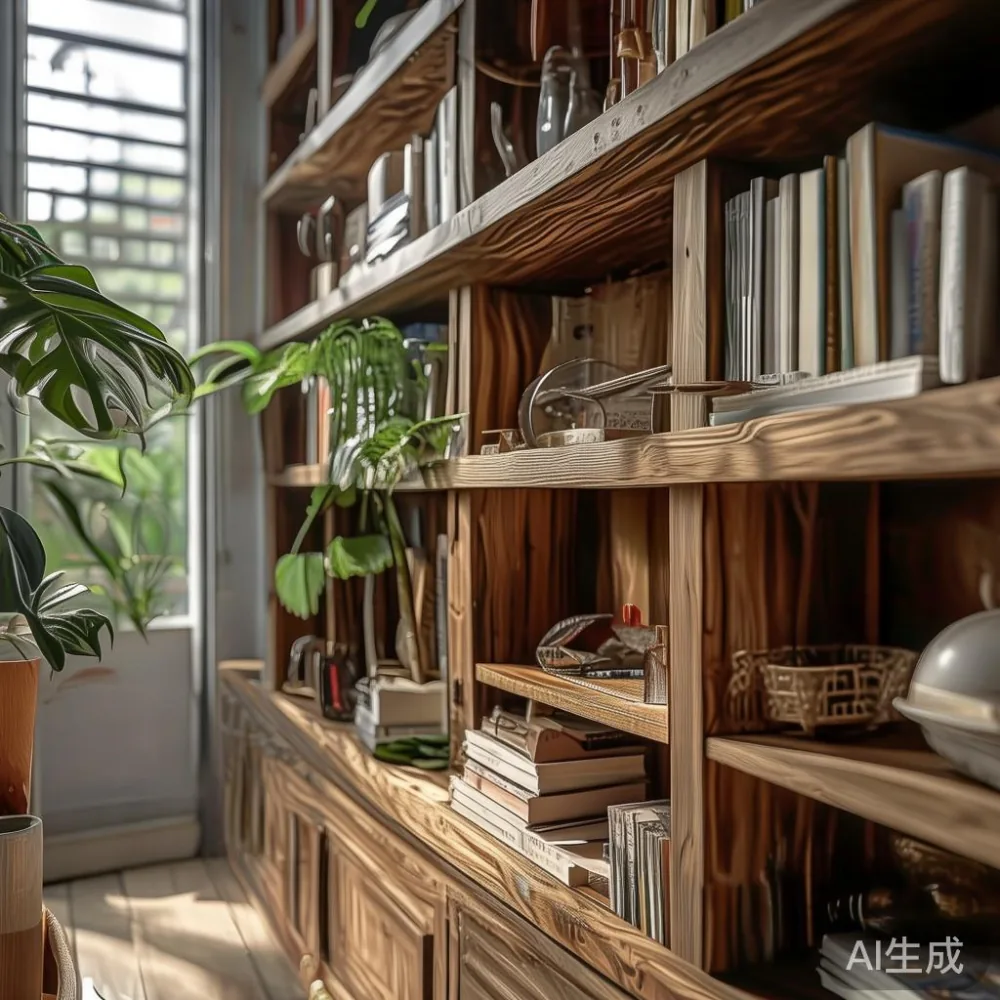
Why does Singapore's humidity warp a solid wood bookshelf within months?
Singapore's average relative humidity sits between 75 percent and 90 percent for most of the year, peaking in November and December when afternoon storms push it past 95 percent. Solid wood is hygroscopic — it absorbs and releases moisture along its grain. A 180 cm tall bookshelf built from kiln-dried oak at 8 percent moisture content can swell to 11 or 12 percent inside a Tampines flat during a wet spell, then drop to 7 percent when the air-con runs all day. Each 1 percent shift moves the timber roughly 0.2 percent across the grain. Multiply that across 12 cm of shelf depth, and you see why a 4 mm gap appeared on mine. Engineered boards behave differently: a 25 mm MDF shelf can absorb less than half that movement, but it also fails catastrophically when the core gets wet — it balloons and never recovers. Solid wood moves gracefully; the trick is giving it room to do so.
What humidity level keeps a wooden bookshelf, bed frame, and dining table stable?
For solid wood furniture, the sweet spot is 40 percent to 60 percent relative humidity, with a target of about 45 percent for pieces like a dining table or wardrobe where wide panels are exposed. In a Bedok resale flat I visited recently, the owner kept a digital hygrometer on her 220 cm bookshelf and told me she runs a small dehumidifier (about SGD 180 from a Tampines Mall electrical shop) for four hours each evening. Her bookshelves have not cracked in three years, while a neighbour's untreated pine wardrobe — left to fend for itself — developed a 2 cm bow across one door panel in eight months. The principle is simple: stable humidity beats perfect humidity. A 10 percent swing over 24 hours stresses timber more than a steady 70 percent ever will.
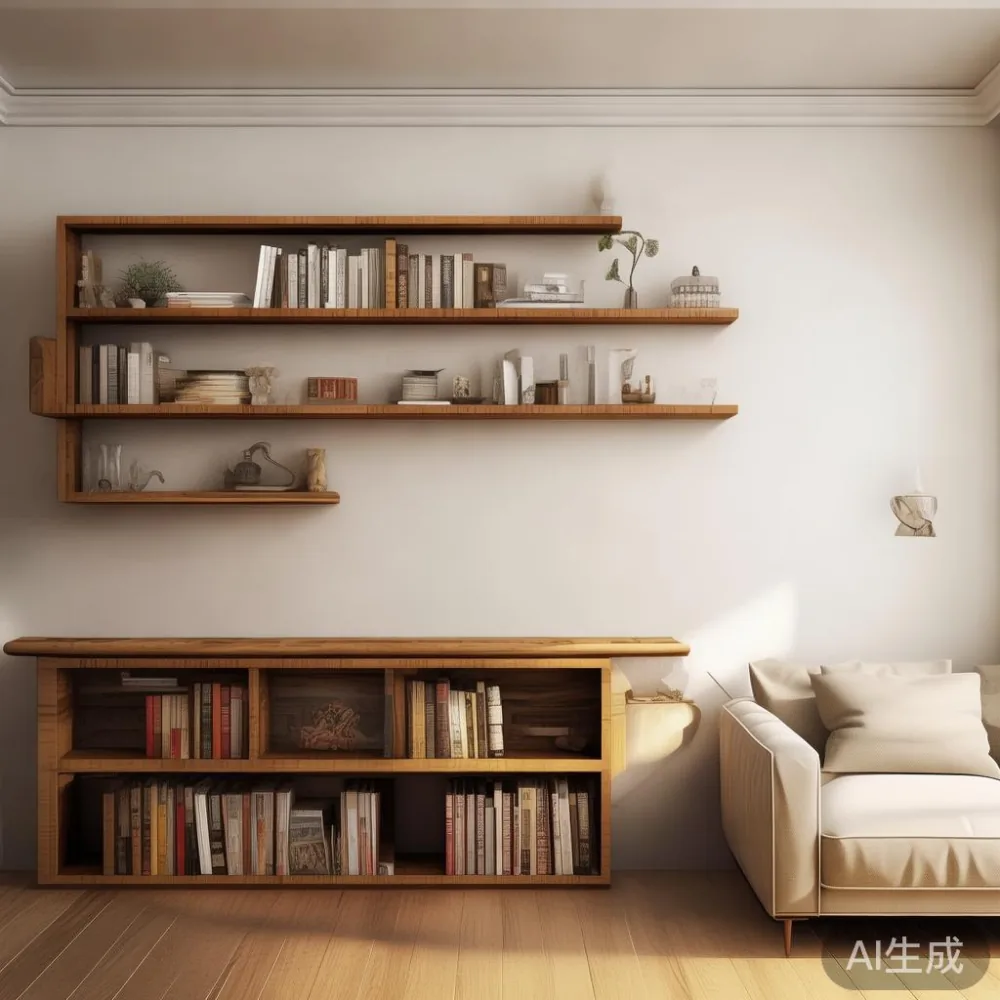
If you are choosing between open-back shelving and closed-back cabinets, remember that closed designs buffer humidity swings better. A bookshelf with a back panel acts like a microclimate, slowing moisture exchange by roughly 30 percent compared with an open-frame ladder shelf. That matters in Punggol, where many new BTO corridors face the afternoon sun through full-length windows and indoor readings can jump 15 percent between morning and dusk.
Does my HDB corridor and lift width limit the bookshelf size I can actually order?
Yes, more than people expect. Standard HDB passenger lifts measure about 1.1 m wide by 1.4 m deep, with a door opening of roughly 0.9 m. A bookshelf wider than 90 cm will not fit through the door lying flat, and most Singapore delivery teams will not tilt a 220 cm solid wood bookshelf upright inside the lift — it can mark the walls and exceed the lift's 630 kg rated load when the timber is oak or ash. Measure the diagonal of your lift car before ordering anything over 180 cm tall. The piece needs to clear the corner of the corridor too, and HDB corridors run about 1.2 m wide in older blocks such as those in Bedok, 1.5 m in newer Punggol developments. If your sofa, bed frame, or bookshelf comes from a Foshan workshop like MIDHILL and is shipped flat-pack in two cartons, the per-carton weight usually lands between 35 kg and 55 kg — manageable for two movers, painful for one. Plan for at least SGD 60 to SGD 120 in delivery fees if you live above the 10th floor and the lift cannot be booked.
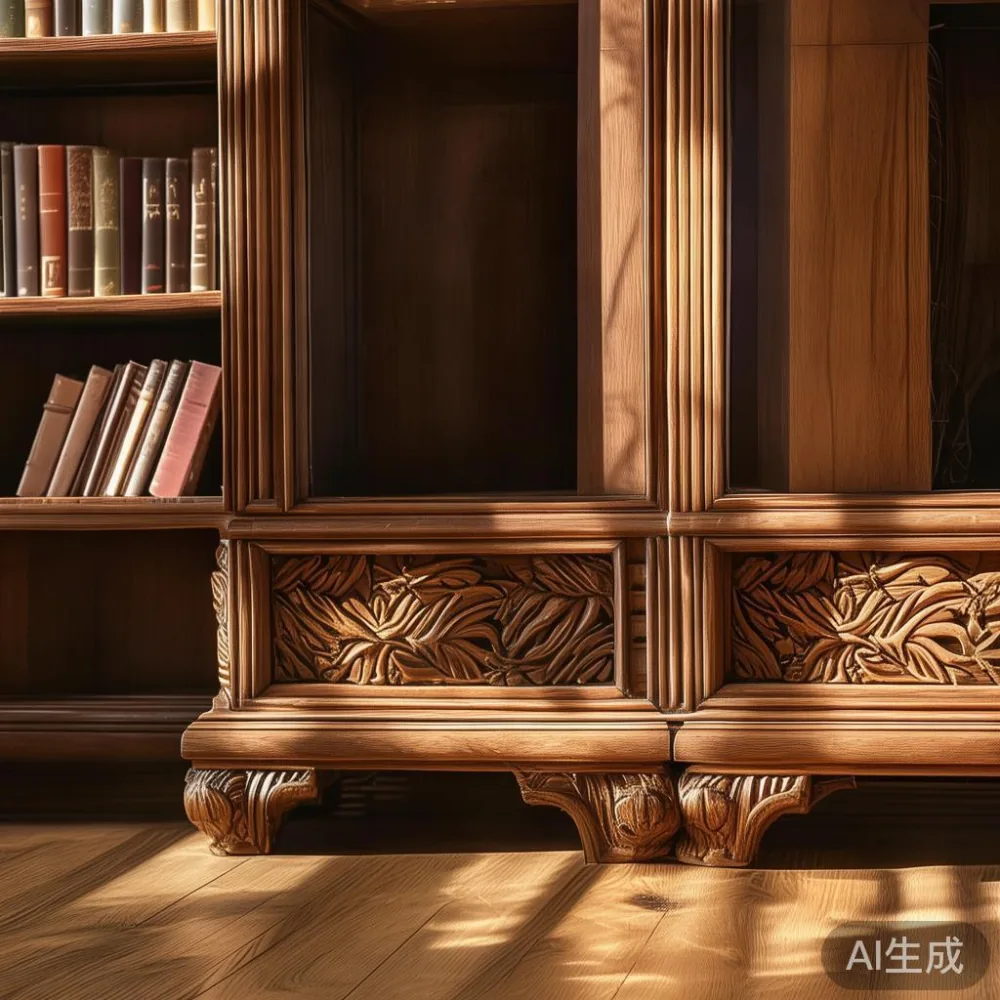
Which wood species actually survive a Tampines or Punggol climate for ten years?
Not all timbers behave the same way in our humidity. Here is what I have observed across several flats I have visited over the past year:
White oak (Quercus alba): dense, ring-porous, and forgiving. Shrinks about 4.6 percent tangentially and 2.2 percent radially — predictable. A solid wood sofa frame in white oak stays tight through three wet seasons with minimal care. Expect to pay SGD 1,800 to SGD 3,200 for a three-seater frame alone.
Ash (Fraxinus americana): slightly more elastic than oak, easier to bend into curved backrests for post-modern light luxury dining chairs. A 200 cm ash bookshelf in a Punggol BTO I saw last month looked almost factory-fresh after 14 months, with only a faint darkening on the top shelf.
Rubberwood (Hevea brasiliensis): the everyday workhorse. Cheap, dense, and stable when properly kiln-dried. A rubberwood nightstand for SGD 220 to SGD 350 is common at local retailers, but avoid pieces that have not been sealed on every face — the end grain drinks moisture fastest and will fuzz up within six months.
Walnut (Juglans nigra): beautiful, but warps dramatically if the kiln schedule was rushed. I have seen a walnut wardrobe door twist 8 mm at the corner after one monsoon in a Bukit Timah condo. Worth the price only if the maker guarantees extended drying.
Teak and mango (less common here, often imported): teak resists moisture naturally thanks to its oils; mango is a budget alternative that handles occasional splashes but dislikes constant damp.
Whatever you choose, ask the seller what moisture content the wood was dried to. Anything between 6 percent and 10 percent is reasonable for Singapore; outside that range, expect movement.
How should I care for a wooden bookshelf through Singapore's wet and dry seasons?
Think of maintenance as a 12-month rhythm, not a one-time event. From December to February, when humidity peaks, run a dehumidifier in the room with your bookshelf, bed frame, and wardrobe for at least three hours each evening. Target a 45 to 50 percent reading on a SGD 25 hygrometer. From March to September, when air-con dries the air to 35 or 40 percent, place a small ceramic water bowl (about 20 cm wide) on the lowest shelf to slow the drying. I do this on my own bookshelf, and the gap I mentioned earlier closed to about 1 mm within a week.
Wipe shelves with a barely damp microfibre cloth — never a wet one — and avoid silicone polishes, which seal the surface and trap moisture inside. A coat of hard wax oil every 18 months protects the grain without blocking vapour exchange; expect to pay SGD 35 to SGD 55 per tin at hardware stores in Jalan Besar. For deeper problems, a workshop offering lifetime refinishing can sand back 0.5 mm of surface and re-oil in about three working days — a service that usually costs SGD 120 to SGD 280 per piece depending on size. A bookshelf refinished this way can outlive its first owner.
Can I style Japanese or French pieces around a humid bookshelf without ruining the look?
Absolutely, and this is where solid wood becomes a quiet strength. The clean lines of a Japanese wardrobe or sofa sit well against the predictable movement of timber; the eye stops noticing small seasonal shifts because the silhouette is already simple. A common question I hear from friends is how to style Japanese wardrobe in bedroom settings when the rest of the room reads modern — the answer is usually to keep the wardrobe in a natural ash or oak tone and let the wardrobe's own grain be the pattern, so humidity movement looks intentional rather than accidental. Similarly, how to style Japanese sofa in bedroom layouts depends on legs: a 12 cm to 15 cm raised base lets air circulate underneath and keeps the lower frame away from floor-level damp after mopping.
For a French for dining room look — soft curves, pale finishes, and a marble table as the centrepiece — pair the European palette with a solid wood dining table in white oak, and avoid placing the marble table directly under a window that gets afternoon rain splash. Marble tolerates humidity but stains from iron-rich water marks; a SGD 18 tray under plant pots is cheap insurance. American light luxury pieces tend to read warmer and heavier; an American sideboard in walnut or a low bookshelf in reclaimed pine works well in a Punggol condo where you want cosier textures against the cooler greys of quartz countertops.
If you are sourcing for a project or resale, two terms come up often in trade conversations: under 2000 Scandinavian furniture usually means budget oak and ash pieces with clean lines, often flat-packed, while wholesale light luxury furniture refers to showroom-grade solid wood pieces made in smaller batches — the kind MIDHILL produces from its Foshan workshop. For finished homes, for sale American furniture in Singapore tends to arrive as complete dining sets or bedroom ranges in walnut or quarter-sawn oak, priced between SGD 4,500 and SGD 9,000 for a five-piece suite before GST.
Is the GST and delivery math worth buying solid wood from overseas workshops?
Run the numbers before you commit. Import GST of 9 percent applies to the landed cost of the goods plus shipping and insurance, so a bookshelf priced at USD 1,200 (about SGD 1,620 at current rates) plus USD 180 sea freight lands at roughly SGD 1,960, then 9 percent GST adds SGD 176, taking you to SGD 2,136 before any local delivery. Free shipping over USD 350 from most Foshan exporters, including MIDHILL, helps, and a 10-year structural warranty on joinery makes the price defensible over 15 years of use. A 14-day return window is standard, but only useful if the seller prepays return freight on a defective piece — read the small print.
For local context, a similar bookshelf in rubberwood from a Jurong retailer might cost SGD 1,100 delivered with a one-year warranty, while a European oak bookshelf at a Tanglin showroom can run SGD 6,800 or more. Solid wood mid-import hits a practical middle: serious material, real warranty, manageable cost. If your HDB ceiling is 2.6 m and your corridor is 1.2 m, plan the bookshelf height at 200 cm to leave 60 cm clearance, and choose a depth of 30 cm rather than 35 cm to keep the proportions honest against a 90 cm sofa.
What should I do in the first 30 days after my bookshelf arrives?
Let the wood acclimatise. Leave the bookshelf in its packaging for 48 hours inside the room where it will live; open the cartons for another 48 hours with the panels spaced apart so air reaches all faces; only then assemble. Skip this and the timber absorbs uneven moisture from one side, which sets up the very warping you are trying to avoid. After assembly, place the heaviest books (paperback novels run 0.8 kg each; hardcovers 1.2 kg) on the lower shelves for the first month so the bookshelf settles into its own weight distribution. A small spirit level on the top shelf tells you within 1 mm whether the feet need shimming — most HDB floors are flat within 3 mm across a 2 m span, but a SGD 4 pack of felt shims solves it permanently.
Two final habits that pay off: rotate the books on each shelf every six months so the same panel is never bearing the same load in the same humidity, and keep the bookshelf at least 8 cm away from the wall to let the back breathe. In a Tampines flat where the back wall faces the service yard, 15 cm is safer. A solid wood bookshelf, a marble table, a bed frame, and a wardrobe all follow the same rules — care for the air, give the wood room, and the pieces will outlast two lease cycles and still look like they belong.