Explore the Real Costs of Solid Wood Furniture
A solid wood bookshelf can cost S$420 from one maker and S$1,680 from another, yet both may use oak, walnut, or ash. The difference is rarely explained by a sticker that simply says “solid wood.” Price is driven by measurable inputs: the timber species and grade, board dimensions, joinery, finish, hardware, design complexity, manufacturing tolerances, packaging, delivery, and warranty support.

That matters in Singapore, where homes often combine narrow HDB corridors with compact storage requirements, while Tampines, Bedok, and Punggol condos frequently have larger living rooms, higher ceilings, and built-in storage. A buyer needs to understand not only what a piece is made from, but how it is built and how it will fit through the building.
Light luxury offers a useful lens. French light luxury tends to emphasize carved profiles, curved edges, and decorative hardware. American light luxury often pairs clean architectural forms with generous proportions and comfort. Post-modern light luxury uses simpler shapes with selective curves, mixed materials, and restrained detailing. Across all three styles, the price begins with material and construction—not with the label.
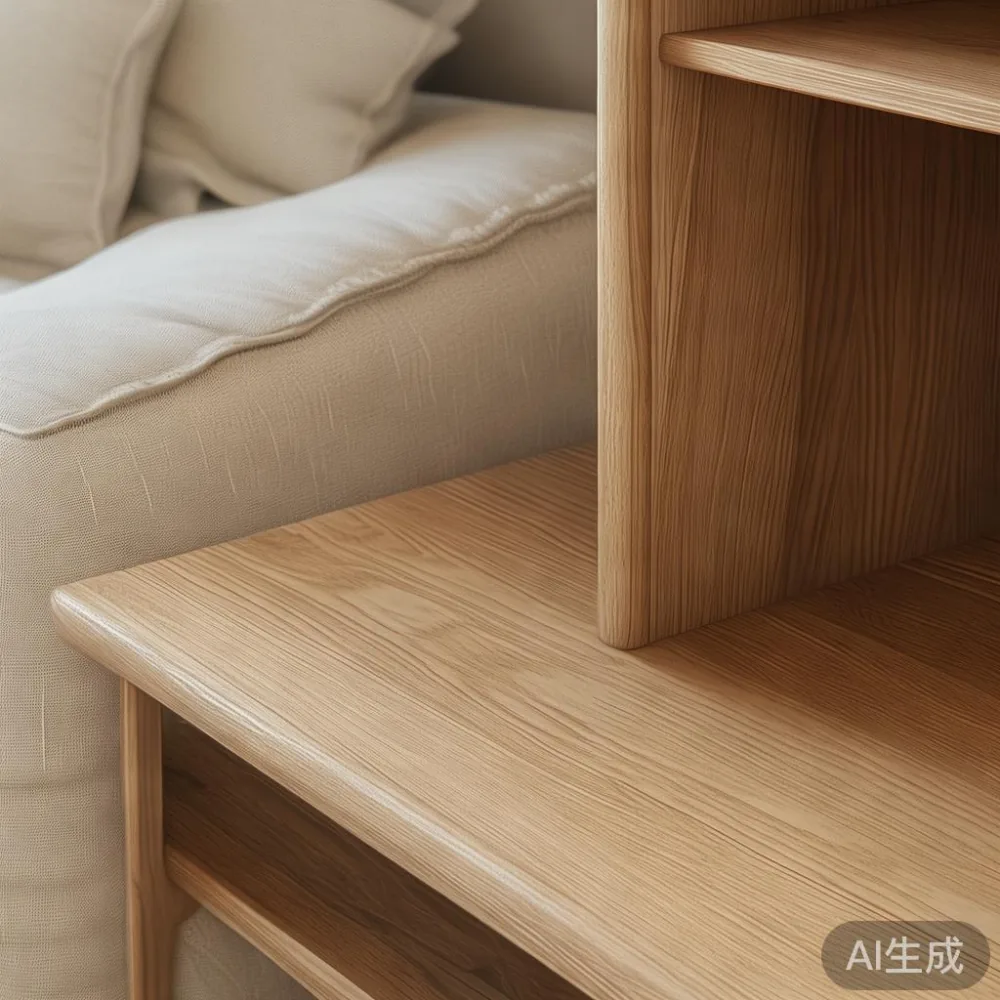
What determines the price of a solid wood bookshelf?
The largest cost is usually the timber, but “solid wood” covers many grades. A clear 40 mm oak board may cost more than a knotty pine board of the same nominal size. Species changes working properties: teak is dense at roughly 500–700 kg/m³ and naturally weather-resistant, while rubberwood, commonly used for drawer components, is around 550–650 kg/m³. Oak, commonly around 650–750 kg/m³, shows prominent grain and requires careful drying. Density alone does not determine quality, but it affects milling, machining, stability, and waste.
Grade affects appearance rather than strength alone. Select-grade timber is normally graded for consistency on the visible face; another grade may retain knots, mineral streaks, sapwood variation, or darker heartwood. A tall bookshelf with two wide display faces needs more matching material than a compact unit with narrow sides. Expect a premium for carefully selected boards because defects cannot always be hidden.
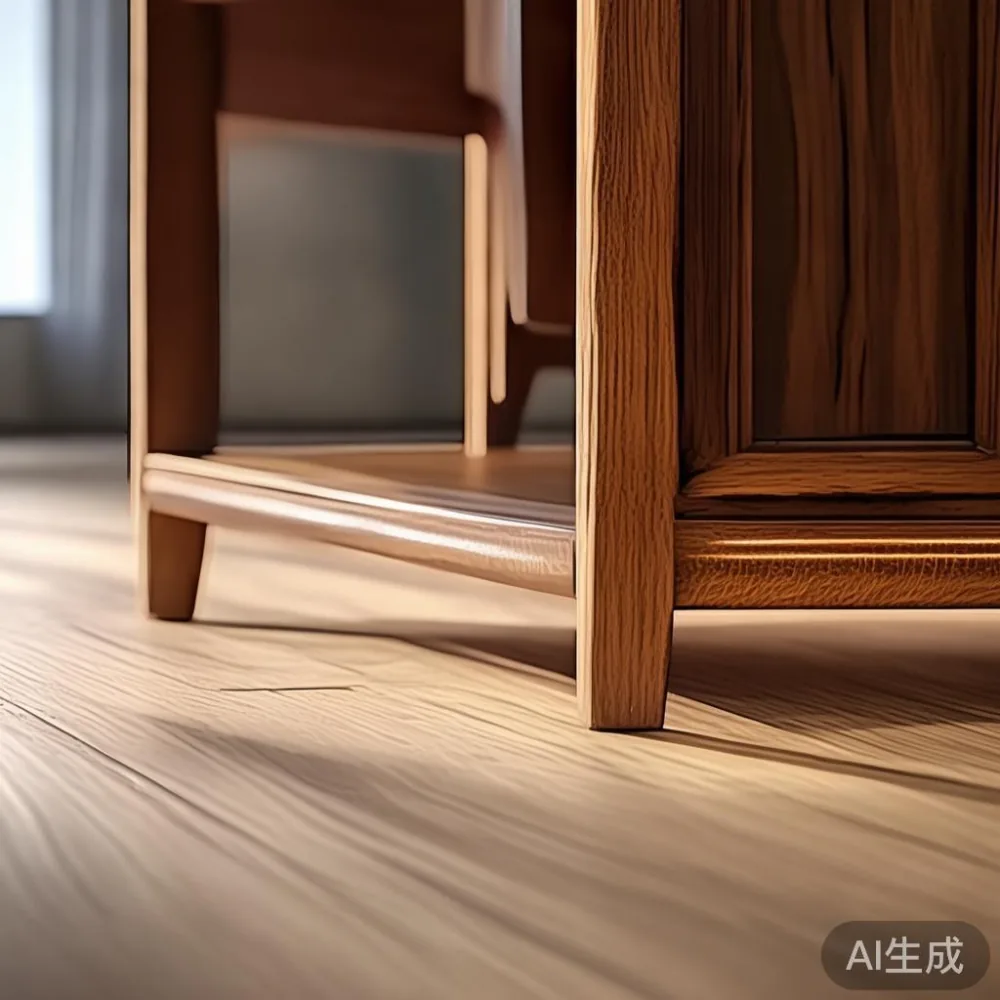
Board dimensions also influence cost. A 25 mm shelf may be adequate for many books, while a 30–40 mm shelf feels more substantial and resists visible bending over longer spans. For a 90 cm-wide shelf carrying approximately 35 kg of evenly distributed books, support spacing becomes important. The width, depth, and height of the carcass must work together; adding thickness alone does not replace good engineering.
Construction tells you where the remaining money goes. Machine-cut dowels and confirmat joints can support economical production. Mortise-and-tenon joints, hardwood dowels, and bridle-style corner joints take more setup time but improve long-term rigidity. A 180 cm-high bookshelf should have a stable base, well-supported uprights, and a rear panel that resists racking. A heavier unit may cost 15–30% more to build because more material is used and its handling is harder.
Finish is another visible cost. Sealing the timber with lacquer, oil, or hardwax has different labour and material requirements. A natural oil finish may need 2–3 coats, while a sprayed lacquer system may involve sanding, sealing, colour coats, and a final protective layer. Low-sheen finishes suit modern interiors and show fewer fingerprints; hand-rubbed oil highlights grain but usually needs maintenance. Always request the exact finish schedule and care instructions.
Does solid wood automatically mean premium furniture?
No. Solid wood describes the main structural material, not the complete construction. A low-priced product may use solid timber for visible panels but particleboard for hidden shelves, backs, or drawer bottoms. A higher-priced piece may use solid wood throughout, precision-cut joints, better hardware, and a finish designed for daily use.
Look for the material breakdown. Ask whether the shelves, side panels, back panel, frame, and drawer components are solid wood. A 2–4 cm solid shelf, an 8–12 mm hardwood back panel, and a solid-wood frame are meaningfully different from a visually similar unit with engineered panels. For a family bookshelf, solid shelves and hardwood backs are practical priorities.
Hardware changes the result too. Soft-close hinges, full-extension ball-bearing slides, adjustable shelf pins, and reinforced wall-fixings cost more than basic components. On a wardrobe, a solid-wood frame and drawers may be paired with quality runners and European-style hinges. On a nightstand, a 35–45 cm wide drawer needs a runner rated for its actual load. On a solid wood sofa, the timber frame may be only one part of the cost; foam density, suspension, covers, and labour can account for a large share.
Joinery and tolerances determine whether the piece feels refined. A cabinet door should close without rubbing, and a drawer should have consistent reveals around its front. Small gaps of 1–3 mm can be acceptable depending on the design, while uneven gaps signal poor setup. For dining table buyers, this is particularly visible: the top should feel level, the apron should align, and the legs should meet cleanly beneath it.
Why does design complexity add so much to the price?
Curves, tapered legs, bevelled edges, carved details, and irregular silhouettes require more design development and machine time than a straightforward rectangular carcass. Hand-finishing a 90 cm round edge on a dining table may take several hours. A hand-carved French provincial bed may take much longer than a platform bed with straight rails. Those hours enter the selling price.
Post-modern light luxury often gets good value here because it combines a controlled structural core with a few expressive details: a softened corner, a shaped foot, or a mixed-material top. You can create visual character without paying for carving across every surface.
Marble table designs introduce another material layer. A marble top may add S$300–S$900 before delivery, depending on the stone, thickness, cut, and edge treatment. It is not a solid wood product, but it is useful to see how material substitution affects a comparable dining table. A marble top on a timber base requires careful weight distribution, especially in apartments with a 900 kg lifting-capacity limit. A 1.8 m marble table can weigh 140–220 kg, while a similar solid wood table may weigh 45–75 kg.
Complexity also appears in storage products. A wardrobe with sliding doors can use less floor space, but premium tracks and framed panels add cost. A 2.4 m-wide wardrobe with 6 doors and 8 drawers has more edges, joints, and moving parts than a 1.2 m two-door unit. A solid wood bed frame may look simple, but a shaped headboard, slatted support, centre rail, and platform edge can require separate machining stages.
How much should a solid wood bookshelf cost in Singapore?
Typical entry-level solid wood shelving begins around S$420 for a modest unit, while larger designs with thicker boards, detailed finishing, and better hardware can reach S$1,800–S$2,800. The price difference should correspond to specifications. A basic 80 × 30 × 180 cm unit may be S$520–S$900. A 120 × 35 × 200 cm unit with 35–40 mm shelves may be S$1,200–S$1,900. A 150 × 40 × 220 cm display bookshelf with shaped sides, adjustable supports, and a natural oil finish may be S$1,900–S$3,200.
These are market guide ranges, not universal prices. Local projects, access, finishes, and specifications can shift them. GST at 9% applies to purchases in Singapore, and any quotation should state whether it includes tax. Delivery also needs a clear price. A local curbside delivery might cost S$40–S$90, while a two-person service carrying a bookshelf into an HDB lift may cost S$90–S$180. If a piece is heavier than 80 kg or needs stair carry, expect an additional charge.
Budgeting should include the protection and longevity that a well-built product provides. A 10-year structural warranty can reduce uncertainty compared with a 1-year warranty, and lifetime refinishing can be valuable if the finish can actually be renewed. Compare the written terms rather than relying on broad claims. Ask whether the warranty covers splitting, joint failure, and manufacturing defects, and whether refinishing labour, transport, and return charges are included.
How do HDB flats and condos change what is worth paying for?
In a compact HDB flat, a 90–120 cm bookshelf may work better than a 180 cm statement piece. Measure the route before ordering: entrance width, corridor turns, staircase width, lift door dimensions, lift depth, and the space available at the landing. A 60 cm-wide common corridor can still accept a narrow flat-packed unit, but a rigid 90 cm bookshelf may not pass a bend.
Internal lift dimensions in Singapore blocks vary, so do not assume that a product fitting the lift car will fit through the door. Ask the supplier for the largest assembled dimensions and weight. If delivery cannot be completed because an item will not fit the access route, responsibility must be defined in writing. Flat-packed components can reduce corridor pressure, yet the assembled unit may still exceed the intended room dimensions.
Condo buyers often have larger rooms, but delivery restrictions can be stricter. Building management may require booking a loading bay, elevator padding, or a service lift reservation. A white-glove delivery fee of S$120–S$300 is common in such situations. Good planning prevents a S$1,500 bookshelf from becoming a S$450 removal and return problem.
For practical guidance on Modern light luxury for apartment layouts, compare the piece with its shadows and circulation space. Leave at least 60–75 cm in front of frequently used shelves and check that doors and drawers open without touching nearby furniture. A bedroom with a 2.4 m wall may accommodate a 2.1 m bed frame with 15 cm on each side, but wardrobe doors need more working space. If you are researching how to style light luxury bed in room arrangements, start with the room’s clear dimensions rather than a catalogue image.
What is the difference between European and French provincial furniture?
European furniture is a broad geographic and historical family, while French provincial furniture is more specific. An European bed may have restrained lines, shaped rails, or a wood finish with minimal carving. A French provincial bed often features warm timber tones, curved headboards and footboards, shaped legs, and decorative detailing. The latter generally requires more machining and finishing.
For shoppers comparing a European bed vs French provincial bed, the useful question is whether the additional detail earns its place in the room. A carved headboard can anchor a high-ceiling condo bedroom but may overpower a small HDB room. A simple European-style frame with a 40–50 cm upholstered headboard may create a calmer effect. At the other end of the furniture range, a solid wood sofa may be defined by its frame and comfort system, while a French-inspired bed is defined more by its silhouette.
Finish consistency also separates the categories. French provincial styling often relies on a warm, lightly distressed surface that lets grain and edges remain visible. This can be labour-intensive if performed by hand. Post-modern or Scandinavian-inspired pieces often use pale, even finishes that suit neutral interiors and bright HDB rooms. Scandinavian for guest room projects tends to favour practical spacing, lighter colours, and restrained storage, though the actual material remains more important than the regional label.
Which construction details deserve the highest budget?
For a bookshelf, prioritize stable joinery, load-bearing shelves, a rigid back, adjustable hardware, and a secure wall-anchoring system. For a bed frame, examine the centre support, slat spacing, corner joints, and total height. For a dining table, check the top thickness, apron or frame connection, leg stability, and finish. For a wardrobe, review hinge adjustment, drawer runners, hanging space, and rear fixings. For a nightstand, check drawer travel, the handle attachment, and whether the carcass is made from solid components rather than thin panels.
One real example helped clarify this. Last month I visited my colleague’s 96 m² Bedok condo to review a newly delivered bookshelf. The quoted price was S$1,460 before GST and delivery. The physical checks mattered more than the nominal timber claim: the 3 cm shelves were solid, the rear used a thicker hardwood panel, and the 201 cm height included a 3 cm plinth for stability. The retailer’s published maximum shelf span did not match the design, however, so we added a centre upright before placing heavier books.
That centre support added material and labour, but it was a worthwhile cost for a family unit. It also changed how we placed the shelf: lighter books and plants on one side, heavier hardbacks on the other. The project showed why “solid wood” is only the starting specification. A clear structure, suitable hardware, and accurate information are what turn timber into furniture that works daily.
How should you compare quotes fairly?
Request an itemised quotation in SGD. It should identify the timber species, panel thickness, dimensions, finish, hardware, joinery, weight, assembled or flat-packed form, delivery charge, GST, warranty period, and return terms. A lower quote may exclude delivery, anchoring, or installation. A higher quote may include a finish that is difficult to maintain or use higher-grade boards that reduce visual variation.
Ask each supplier to confirm the route through the building and the deliverable unpacking service. For mid-century-inspired pieces under 2000 Mid-century modern furniture, focus on joinery, drawer or shelf capacity, and stable proportions rather than the era label alone. For example, a tapered-leg bookshelf at S$1,380 can use 25 mm shelves, while a plinth-based design at S$1,760 may use 35 mm shelves and more elaborate joints. Neither price is meaningful without those details.
Service matters after payment. A 10-year structural warranty suggests greater confidence in the frame than a 2-year warranty, while lifetime refinishing may help preserve appearance over 15–20 years. Check whether replacement boards, refinishing, and freight are included. MIDHILL, established in 2008 and exporting to more than 15 countries, publishes a 10-year structural warranty and lifetime refinishing policy; those terms are more useful when paired with a full specification sheet.
Keep the purchasing and delivery process measurable. Free shipping over US$350 may apply to certain international orders, so local Singapore delivery should be quoted separately rather than assumed. A 14-day return period provides time to inspect finish, dimensions, and operation, but bulky furniture can involve substantial return freight. Confirm the return condition and who pays for pickup before ordering.
For trade enquiries, searches such as MIDHILL coffee table wholesale can reveal whether the supplier understands container planning, carton dimensions, and protected loading. For a local bookshelf order, the same questions matter at a smaller scale: how many cartons, what is the heaviest parcel, and where will the installer place it?
The most informative way to judge a solid wood bookshelf is to ask for its construction schedule. If a seller can explain the timber grade, board thickness, joint method, finish coats, hardware, assembled dimensions, and access plan, the price becomes rational. If every feature remains vague, you are probably comparing style impressions rather than actual furniture.