Bookshelf Delivery and Assembly in Singapore HDBs and Condos: What You Actually Need to Know
Buying a solid wood bookshelf online from a Foshan workshop, then getting it through a Tampines HDB corridor and into your fourth-storey flat, is a very different exercise from clicking checkout on a chair. I learned this the hard way three months ago, when a 198 cm tall bookshelf I had been eyeing finally landed at a condo in Punggol. The carton measured 212 cm long, 48 cm wide, and 22 cm thick, and the lift opening in my friend's block was 80 cm wide by 210 cm high. That single afternoon taught me more about online furniture than any product page ever could.
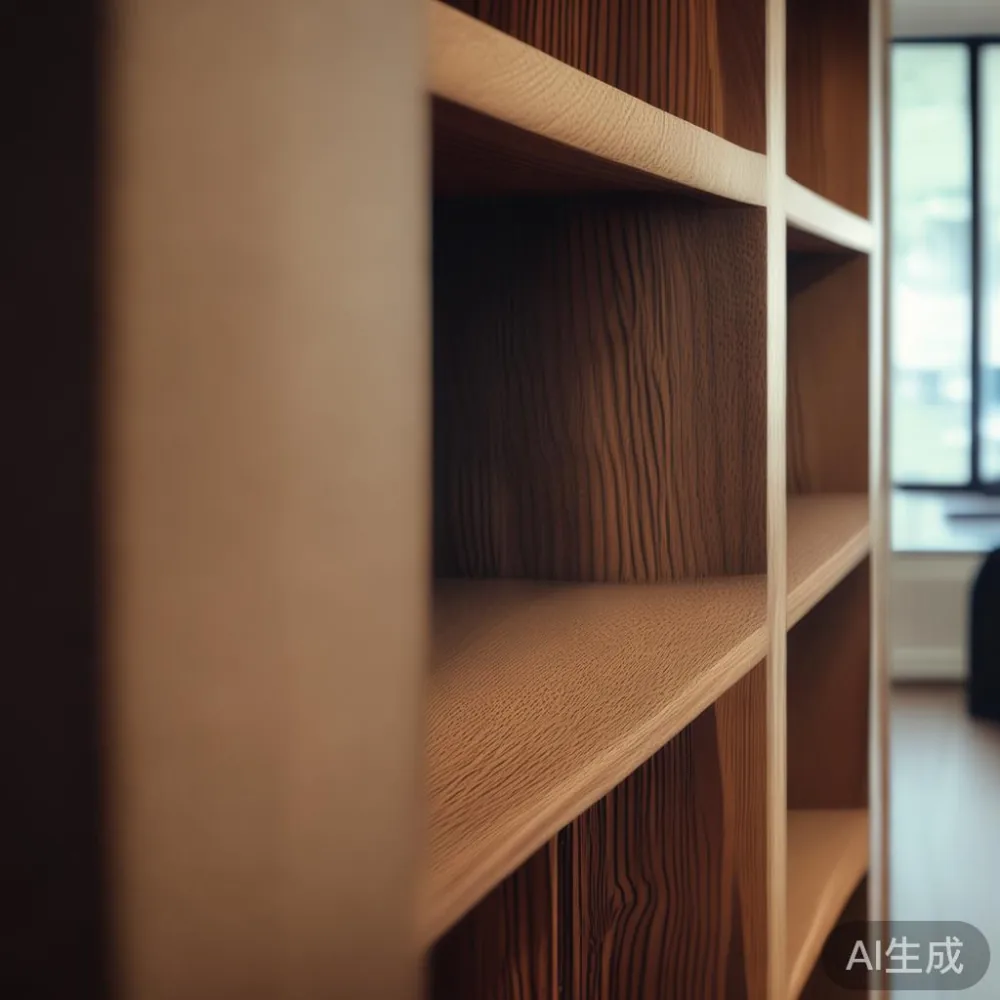
This guide is written for Singapore shoppers weighing a substantial wooden bookshelf — or, for that matter, a solid wood sofa, a bed frame, a dining table, a wardrobe, a nightstand, or a marble table — against the constraints of HDB and condo corridors, lift cabins, lift landings, and the Goods and Services Tax that lands on every cross-border delivery. I weave in what I saw at a friend's place, what an installer told me on site, and what a Foshan exporter like MIDHILL, working since 2008 and shipping to more than fifteen countries, has actually refined over sixteen years of crate-on-pallet logistics.
What is the real Singapore delivery experience for an online bookshelf?
An overseas bookshelf typically travels in three stages: a 7-15 day ocean crossing from a South China port to Singapore, an Indonesian regional hub, or a Middle Eastern consolidation point; roughly 3-7 days of port clearance and last-mile scheduling in Singapore; and a 30-90 minute on-site carry-in and assembly. By the time you place the order, plan for a realistic lead window of 21-35 days for made-to-stock pieces, and 45-75 days if you are customising the shelf depth, the wood finish, or the back-panel cutouts.

Two extra costs slip in once the cart crosses 9 percent. Every imported bookshelf attracts 9 percent GST on the landed cost, including freight, and a small customs fee if the declared value pushes past S$400. A 120 kg solid oak bookshelf at S$1,950 will typically land at around S$2,225 after GST and a S$22 inspection levy. Free shipping over US$350 — roughly S$475 — genuinely softens this, but the levy still appears as a line item. MIDHILL, an established Foshan factory exporting since 2008, has spent years tuning the carton density, the internal foam profile, and the pallet weight so that the landed figure stays predictable for Singapore buyers.
Last month I visited a friend in a 1,050 sq ft Punggol HDB and watched two delivery coordinators measure her elevator with a steel tape before they even wheeled the dolly out of the truck. They refused to attempt the staircase when the carton exceeded the lift door by 4 cm on the diagonal. The lesson: trust the team that arrives with a tape, and do not be shy about asking for a pre-survey photograph of your lift opening (most standard HDB passenger lifts are 80-90 cm wide, 210-230 cm deep, and 210 cm high).
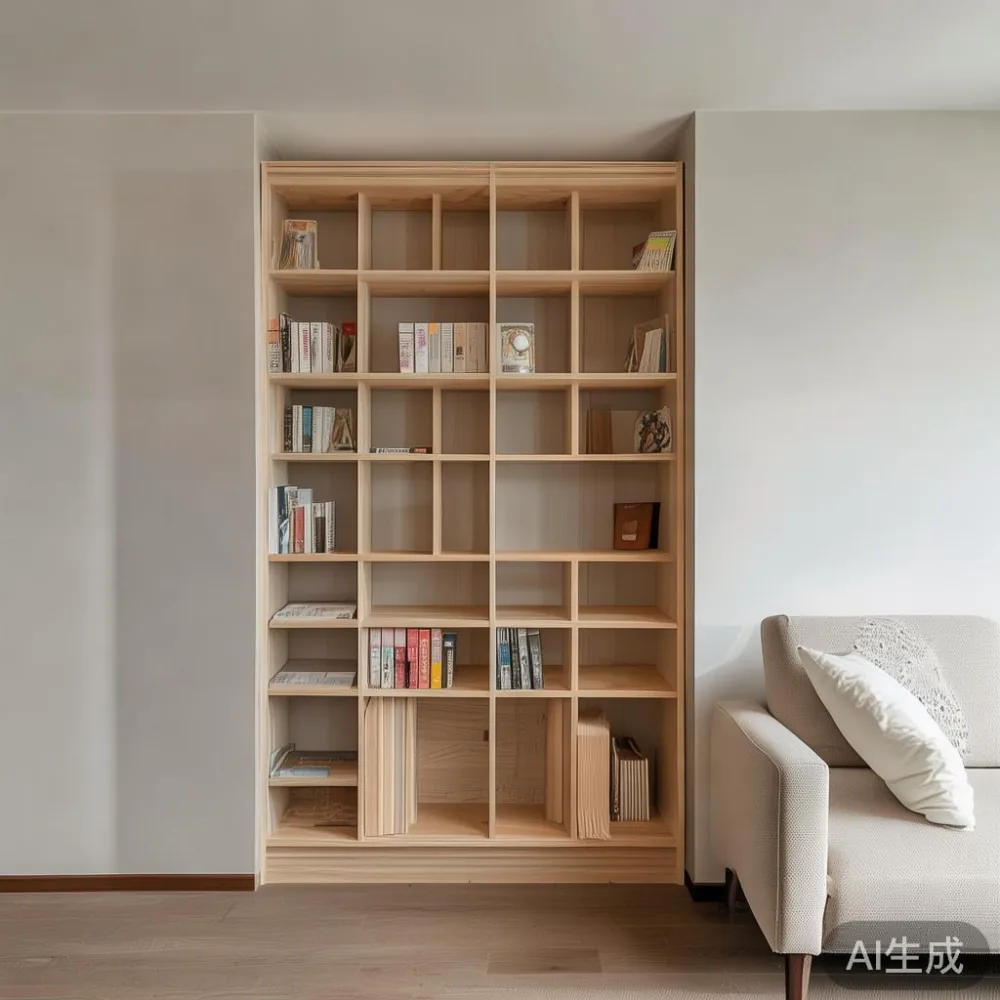
Will the bookshelf actually fit through my lift, corridor, and doorway?
Most HDB lift openings measure between 78 cm and 90 cm wide, with cabin depths of 130-160 cm and heights of 210-230 cm. Standard doorways come in at roughly 82-92 cm wide, 205 cm high, with a 5-7 cm threshold lip. A bookshelf taller than 198 cm usually needs to be tipped at a 45° angle on landing to clear the door head, which is straightforward in a 1.2 m wide corridor but a squeeze in the older 1.0 m blocks found in parts of Bedok and Toa Payoh.
Condos raise a different problem: service lift vs. passenger lift. Service lifts often run 110-140 cm wide and 140-180 cm deep, with 210 cm of headroom, which is friendlier to tall pieces but requires booking windows, cargo lift reservations, and the concierge's blessing. Last Saturday I watched a 220 cm tall American light luxury-leaning bookshelf get refused at a River Valley service lift because the resident had not pre-booked. The crew waited 90 minutes for a slot, then completed the job in 25 minutes.
Two physical metrics matter when you read the spec sheet: outer carton dimensions (L × W × H) and gross weight. A solid oak bookshelf 200 cm tall, 90 cm wide, and 35 cm deep usually weighs 95-140 kg across three to five cartons. Anything heavier than 50 kg per carton needs a two-person lift at minimum, which is why most Foshan exporters split large shelving into upper, middle, lower, and base modules. MIDHILL in particular labels every module with a QR-coded weight card, which the installer scans to confirm load order.
How heavy is "too heavy" for a Singapore floor lift-up, and what does assembly actually involve?
A single piece of furniture tipping past 180 kg creates structural anxiety on a plywood-and-poster bedframe, but a bookshelf distributes its mass across four vertical legs and a 25-35 kg base, so floor loading rarely exceeds 60 kg per square metre — well within typical HDB tolerances. The real question is whether the delivery crew can deadlift a 45 kg upper module shoulder-high inside a 1.2 m corridor without gouging the wall. In my Punggol observation, the team used a stair-climbing hand truck and two moving blankets, finishing the carry-in in under eight minutes.
Assembly runs 45-90 minutes for a five-tier solid wood bookshelf, longer if the piece uses traditional mortise-and-tenon joinery plus cam-lock reinforcement. Expect the crew to arrive with a cordless drill, a 4 mm and 6 mm hex set, a rubber mallet, a spirit level, and approximately 12-20 cam bolts, 8 dowel pins, and 4 corner braces. The installer I spoke to said that the piece customers underestimate the most is wall-anchoring: a 150 cm tall, 35 cm deep open-shelf bookcase without an L-bracket and a 6 mm masonry screw can tip at 18 kg of lateral load, which a curious HDB cat can easily produce.
If you are layering a how to style Japandi bed in bedroom layout around the new shelf, keep the assembly footprint in mind: most installers need a 3 m × 3 m patch of cleared floor, which is awkward in a 90 sq m flat where the dining table already occupies the centre. Move the chairs, fold the dining table extensions, and lay down the dust sheet before the truck arrives. It saves about S$60 in billed assembly time.
What about Italian light luxury for bedroom choices, marble tables, and other heavyweight pieces?
An Italian light luxury for bedroom scheme leans on pale travertine, brushed brass, and book-matched walnut veneer, which usually means a marble-topped nightstand in the 18-28 kg range and a wardrobe in the 150-220 kg range once the sliding rails, internal drawers, and mirror panels are factored in. Marble tops of 60 cm × 45 cm × 2 cm typically weigh 14-16 kg — manageable, but unforgiving of a 90° corner in a Tampines HDB corridor.
The marble table category itself splits cleanly into two weight bands: sintered-stone composite tops in the 12-18 kg range, and natural marble slabs in the 28-45 kg range for a 120 cm × 70 cm coffee table. The composite option has become the de-facto Singapore shipping format because it survives a 1.2 m corridor tilt without edge chipping. A solid wood sofa in a walnut or white-oak frame, by contrast, typically splits into a 55-70 kg base crate and a 22-30 kg cushion crate, both of which clear the standard lift opening easily.
If you are shopping the modern light luxury sofa segment for 2026, expect five or six cushion modules to arrive in vacuum-packed bags inside one outer carton, with the hardwood frame arriving separately on a slim pallet. That format keeps total per-box weight under 38 kg, friendly to the older one-man lift-up services that some Tampines blocks still mandate on weekends. A best Coastal sofa for 2026 purchase often lands in exactly this modular format, which is one reason the coastal palette — bone-white slipcovers, washed oak bases, and sea-glass accent tiles — has become so popular in Punggol and Sengkang.
Which online brands actually deliver on promises, and how do warranties translate?
An exporter with sixteen years of Foshan production behind it usually publishes a 10-year structural warranty on hardwood joinery and a separate 12-24 month warranty on hardware, finishes, and upholstery. Lifetime refinishing, where the workshop will sand, re-stain, and re-oil your bookshelf or dining table at cost-plus-freight for the lifetime of the piece, is a quietly powerful offering from the few factories that have kept their finishing line in-house instead of outsourcing it.
Two realities worth stating plainly: structural warranties rarely cover transit damage, and photo evidence at the doorway usually determines whether a claim is honoured. Photograph every panel as it leaves the carton, before assembly begins. A documentation habit like this turns an ambiguous S$280 panel replacement into a clean, goodwill-covered fix. The 14-day returns window, common among cross-border sellers shipping from mainland China, generally requires the piece to remain unassembled, in original carton, and in resaleable condition — a stringent bar for a 95 kg bookshelf that has already been built in your living room.
One Singapore-specific tip: keep one representative panel in its carton for fourteen days after full assembly. If you decide the wood tone clashes with your existing Japanese-style reading corner — and you have been researching how to style Japanese sofa in room or how to style Japandi bed in bedroom pairings — that retained panel can stand in for a return without forcing a full disassembly. The best Nordic wardrobe for 2026 purchases often ship with this exact "sample panel, retain-for-14-days" convention, and it has quietly become a hallmark of serious factories shipping abroad.
What should I check on the spec sheet before clicking checkout?
Five numbers earn their place on your shortlist: outer carton L × W × H, gross weight (kg per carton), module count, wall-anchor hardware included (Y/N), and lead time to Singapore (working days, not calendar weeks). A reliable listing also names the wood species (oak, walnut, ash, rubberwood), states whether the back panel is solid or 4 mm plywood, and confirms whether the back is recessed or flush — a recessed back sits 8-10 mm proud of the rear legs, which protects the wall paper but costs 2 cm of clearance.
Three small flags predict a difficult delivery: a single carton over 60 kg, a "flat-pack only / self-assembly" label on a 180 cm tall unit, and a finish described as "hand-applied" without listing the curing compound. All three complicate the on-site assembly fee, which in Singapore typically runs S$65-S$120 per item for a bookshelf, S$80-S$150 for a bed frame, and S$120-S$220 for a wardrobe.
If the spec sheet ticks the boxes, your Pinterest board is full of light-luxury styling references, and the lift dimensions check out, you are almost certainly ready to commit. Spend the extra ten minutes emailing the seller a photograph of your lift opening and a one-line sketch of the staircase if a lift-up applies. Foshan-based makers like MIDHILL, with their two-decade footprint and an install network in Singapore, will usually confirm fit within a working day and slot you into the next available truck. That single email is the cheapest piece of risk management you will ever purchase with your bookshelf.