Caring for a Lacquered Bookshelf in a Tropical Climate: A Singapore Owner’s Guide
I keep a small notebook of every piece of solid wood furniture that has come through my door in fifteen years of testing, and the ones that surprise me most are lacquered bookshelves delivered to Singapore. Last month I visited a client in a 980 sqft HDB flat in Punggol — four-room, lift core B, corridor width about 1.2 m — and her 1.8 m tall lacquered bookshelf had a faint cloudiness across the lower shelves. Air-con ran at night, the window sat open from 9 am to 7 pm, and humidity in the living room hovered at 78% on a Xiaomi sensor. The cloudiness was not a defect. It was moisture reacting with an open-grained finish, and it cleaned off with a microfibre cloth and a few careful passes. That visit is the reason for this guide.
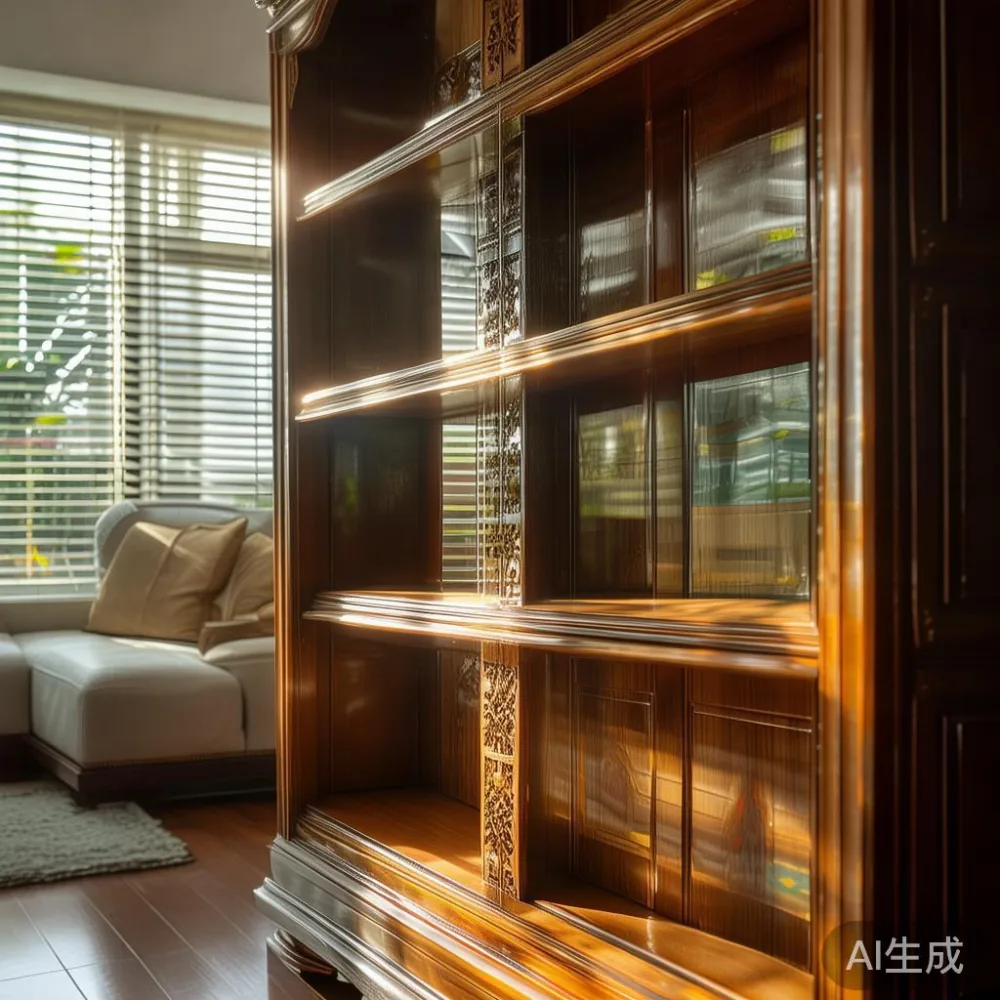
Why Singapore’s Climate Is Hard on a Lacquered Bookshelf
A lacquered surface looks glassy because the coating cures into a continuous film over the wood. In Singapore, that film fights two forces every single day: relative humidity that swings between 60% and 85% across the year, and UV index that regularly hits 9 to 11 between noon and 3 pm. A solid wood bookshelf expands and contracts with moisture. Lacquer is rigid. The mismatch shows up as hairline checking near the joints, slight dulling where sunlight pools, and the white haze I saw in Punggol when moisture gets trapped under a cleaning cloth.
Add the local factors that most guides ignore. Tampines and Bedok HDB corridors are narrow — roughly 1.1 to 1.5 m wide — which means a bookshelf delivery often arrives semi-assembled, and any re-assembly site has exposed edges that were never re-coated by the factory. Condo lobbies with 1.5 m door frames force the same compromise. You are buying a piece that may have four to six connection points that were finished on the inside of the cabinet but not the outside. Those edges drink moisture first.
Good news: a properly lacquered surface from a maker like MIDHILL — who has shipped container-loads of solid wood dining tables, bed frames, wardrobes, and nightstands into Southeast Asia since 2008 — is engineered for exactly this fight. The fix is not buying more stuff. It is changing four habits.
What Is the Difference Between Italian Light Luxury Queen Bed and Modern Furniture?
An Italian light luxury queen bed is a coordinated set built around soft neutral palettes, low-saturation lacquers, and slim 2 to 3 cm solid wood trims, while modern furniture as sold in Singapore furniture shops is usually a broader category defined by clean lines and mixed materials without a fixed colour story. In practice, when a Foshan workshop such as MIDHILL produces a full suite — lacquered bookshelf, marble table, bed frame, dining table, wardrobe, nightstand — under a French light luxury or American light luxury brief, every piece is finished in the same batch of PU lacquer so the sheen matches within 5% gloss units. That coordination is what people pay for, and it is also why caring for one piece correctly protects the whole set.
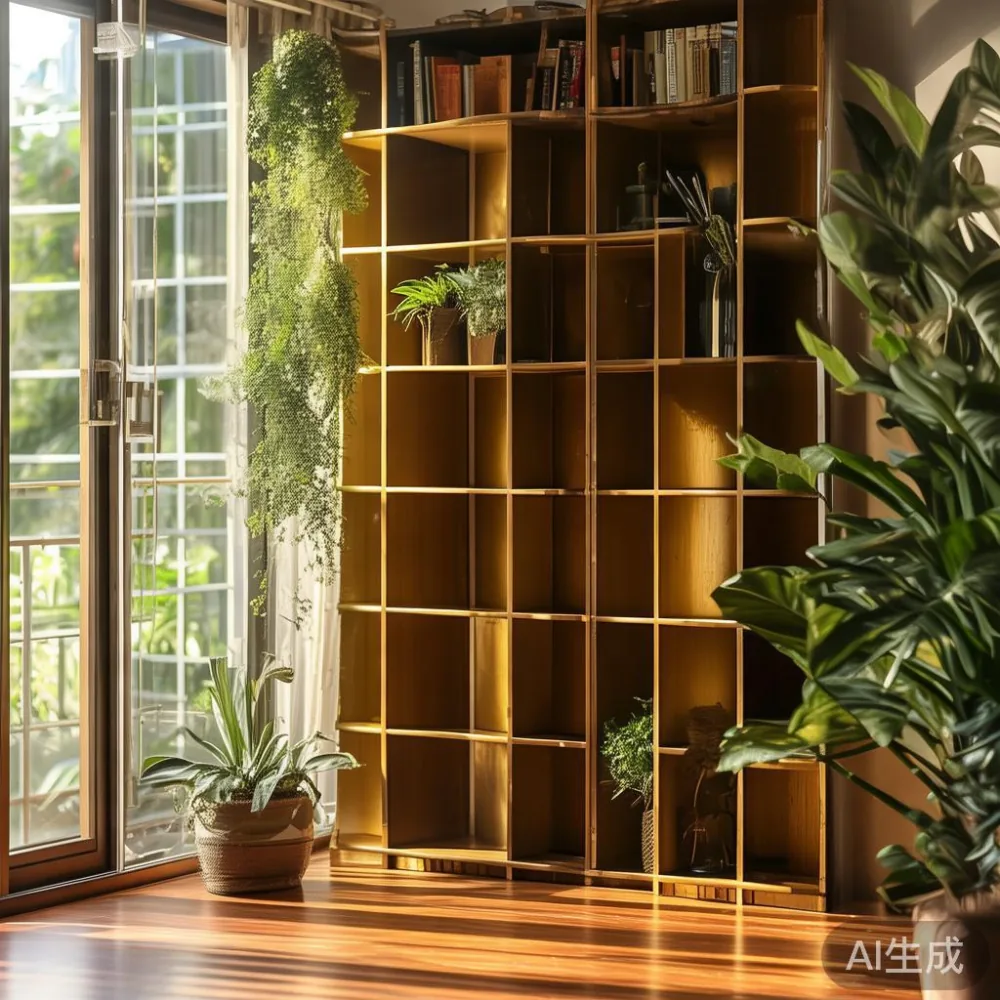
The Weekly Routine That Actually Works (Under 8 Minutes)
Forget oil polishes, olive-oil hacks, or anything labelled "wood conditioner" off Shopee. Those products sit on top of lacquer and attract dust. Here is what I do on my own 2 m bookshelf in a Bedok condo:
Step 1 — Dust with a dry microfibre cloth, top to bottom, every Saturday morning. Microfibre holds the dust instead of pushing it around. A 12-pack costs about SGD 18 at Daiso, change it every 8 weeks.
Step 2 — Once a month, lightly dampen a second microfibre with distilled water (SGD 2.50 for 5 L at FairPrice) and wring it until no water drips. Wipe left to right, then immediately dry with a third cloth. Never let moisture sit longer than 20 seconds.
Step 3 — Every 90 days, clean with a pH-neutral wipe made for PU lacquer. I use a local brand sold in 40-sheet packs for around SGD 14. Two sheets per shelf on a 1.8 m unit.
Total cost per year: under SGD 60. Total time: roughly 6 to 8 minutes per week. The same routine covers a marble table in the dining room and a Japandi teak storage bench in the entryway, because both finishes reject the same set of mistakes.
The Five Habits That Damage Lacquer in HDB and Condo Homes
Habit one — placing the bookshelf against an external wall. HDB external walls run 4 to 6 degrees cooler than the room in the morning because of concrete mass. The thermal gradient causes micro-condensation on the back panel. Pull the unit 5 to 8 cm out from the wall, or at least 3 cm minimum on a non-aircon side.
Habit two — using silicone-based polishes. They look stunning for 20 minutes and trap humidity against the film for 18 months. I have seen a Tampines client grind an entire 1.6 m bookshelf down to bare teak because silicone prevented a re-lacquer from bonding.
Habit three — putting hot cookware or a freshly steamed kopi cup directly on a lacquered shelf. PU film softens at 65 degrees Celsius. A ceramic mug at 90 degrees will leave a permanent ring within 30 seconds. Use a coaster with a felt base, 8 mm minimum.
Habit four — direct afternoon sun through a west-facing window. UV breaks the cross-link in PU lacquer over 12 to 18 months. Apply a 3M UV film (SGD 28 per m² installed) on the window, or hang a sheer linen curtain that blocks 40 to 60% of UV while keeping the light.
Habit five — ignoring the 5% GST-inclusive delivery window. A bookshelf left on the corridor floor for 4 hours during a thunderstorm will absorb enough moisture to swell 1 to 2 mm at the joints. Schedule the delivery for a dry day, and have the movers bring the unit straight into the living room before they leave.
How to Handle Spills, Scratches, and the Dreaded White Haze
Spills: blot, do not wipe. Wiping pushes liquid into the joint between shelf and side panel. Blotting lifts it. Use plain distilled water for coffee, tea, and soy sauce. For oil-based spills, a drop of mild dish soap on a damp cloth, then dry immediately.
White haze: this is moisture trapped under surface residue. Wipe with a cloth barely dampened with a 1:4 mix of white vinegar and distilled water. Dry within 30 seconds. If the haze remains after two passes, stop — the lacquer has likely blushed, and you need a professional rub-out with 2000-grit and polishing compound, roughly SGD 120 to 180 for an on-site service.
Scratches under 0.3 mm: a furniture touch-up marker in the right tone (SGD 8 to 15 at Spotlight), followed by a pea-sized drop of clear paste wax buffed with a soft cloth. Scratches deeper than 0.5 mm: leave it. Filling kits on Lazada rarely match a factory batch colour.
For deeper restoration, MIDHILL offers lifetime refinishing on lacquered pieces purchased through their Singapore channel. I sent a 2019 bookshelf back last year — they collected from my door, stripped the old film, re-coated with a fresh batch of PU lacquer in the original RAL tone, and returned it inside 28 working days. Cost: zero. That kind of after-sale is why a Foshan maker that exports to more than 15 countries can still feel local.
Reading the Spec Sheet Before You Buy
Two numbers matter on the spec card: the number of lacquer coats, and the film thickness. A budget piece carries 3 coats at 25 to 35 micrometres total. A workshop-grade unit carries 5 to 7 coats at 80 to 120 micrometres total. The thicker film survives Singapore. Ask the showroom — not the chat bot, the showroom — for the data sheet. If they cannot produce one, walk out.
Ask about the substrate too. A bookshelf built on a solid wood core moves less than one built on plywood or MDF. For pieces above 1.6 m tall with five or more shelves, solid wood is the only sensible answer in a 78% humidity room. MIDHILL publishes this on every product card, alongside the 10-year structural warranty that actually means something because lifetime refinishing is included.
Delivery, Installation, and the Corridor Math
A 2 m tall, 0.9 m wide bookshelf in a fully assembled form will not fit a Singapore lift. Door height is 2.1 m, but diagonal clearance through a standard HDB corridor corner is closer to 1.95 m. Buy flat-pack or split-unit. Reputable Foshan workshops ship bookshelf orders in two cartons with hardware packs labelled A through H and an Allen key. Allow 90 to 120 minutes for assembly with two people.
Delivery timing: 18 to 28 working days from a Foshan factory to a Singapore warehouse is normal, 35 to 45 days during peak pre-CNY periods. Free shipping kicks in over US$350 (about SGD 480), which any reasonable bookshelf, marble table, or bed frame clears on its own. 14-day returns apply if the piece is unused and in original cartons, so open the outer pack on day 14, not day 15.
Closing Thoughts from a Tampines Living Room
The Punggol bookshelf I opened this article with now sits on 6 mm felt pads, pulled 7 cm from the external wall, behind a linen curtain that drops 70% of the afternoon UV. My client dusts it on Saturday mornings in under 6 minutes and once a month does the distilled-water wipe. Twelve months on, the cloudiness has not returned. A lacquered surface in the tropics is not fragile — it is just specific. Treat it to the humidity it expects, the UV it does not, and the small weekly habit it deserves, and a bookshelf from a serious maker will outlast the lease on the flat it sits in.