Singapore Bookshelf Guide: Sizes, Shelves, Materials and Real Costs
Practical Singapore bookshelf advice on dimensions, humidity, prices, delivery, materials, and choosing storage that fits HDB and condo homes.
- What size bookshelf should I buy for a Singapore HDB or condo?
- How many shelves do I need for books, files and display items?
- Can solid wood bookshelves withstand Singapore humidity?
- How much should a bookshelf cost in Singapore?
- What dimensions and shelf spacing work for different book sizes?
- Should I choose a freestanding bookshelf or a built-in unit?
- How will a bookshelf be delivered and installed in a Singapore home?
- How do I check bookshelf quality before paying for it?
- Which bookshelf is easiest to assemble and maintain?
- How do I make a bookshelf work in a small Singapore room?
What size bookshelf should I buy for a Singapore HDB or condo?
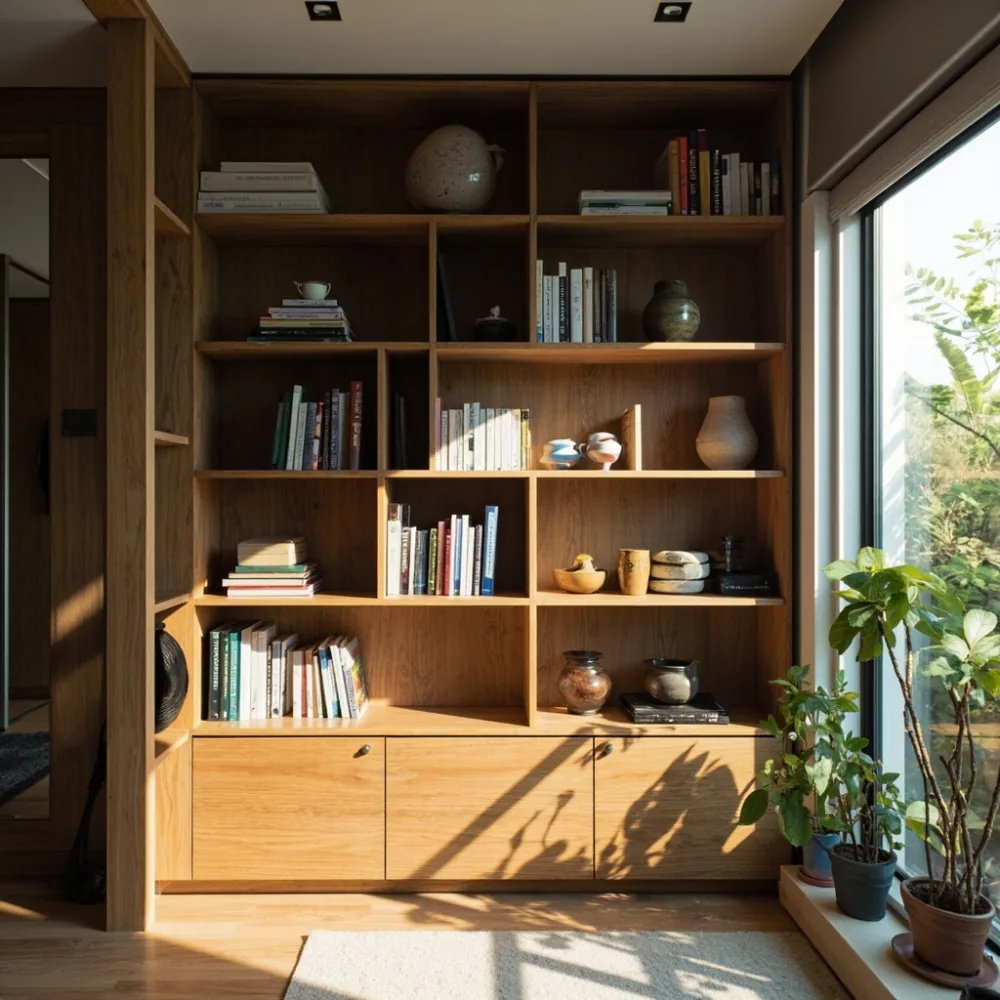
Match the footprint to your room
Measure the ceiling and wall clearances
Allow practical access space
I start with the empty wall, not the catalogue. A standard HDB living room may offer only 90–180 cm of uninterrupted wall space, while a compact bedroom could have just 60 cm beside a desk. Condo interiors often have recessed walls, narrow corridors and ceiling boxes that make an apparently tall unit awkward to position.
For most Singapore homes, I consider a bookshelf between 80 cm and 120 cm wide. Height depends more on ceiling height and storage needs than on style. Leave 5–8 cm above a tall unit if it sits against a flat wall, or 10–15 cm if it needs to stand beside a ceiling box or curtain. The depth matters too: 20–25 cm fits most paperbacks and standard hardcovers; 28–35 cm is better for albums, magazines and oversized art books.
- HDB living room: 90–150 cm wide, 25–30 cm deep and 180–200 cm high is a practical starting point.
- Condo study: 80–120 cm wide, 20–25 cm deep, with at least 8 cm of working clearance.
- Bedroom landing zone: 60–90 cm wide keeps the passage usable, but check the door swing carefully.
I also measure the route from the lift to the room. A 200 cm tall bookshelf may fit through an HDB doorway diagonally, but a boxed unit can still be difficult to turn in a corridor. Small space furniture is most useful when its footprint is deliberate, not merely small.
How many shelves do I need for books, files and display items?
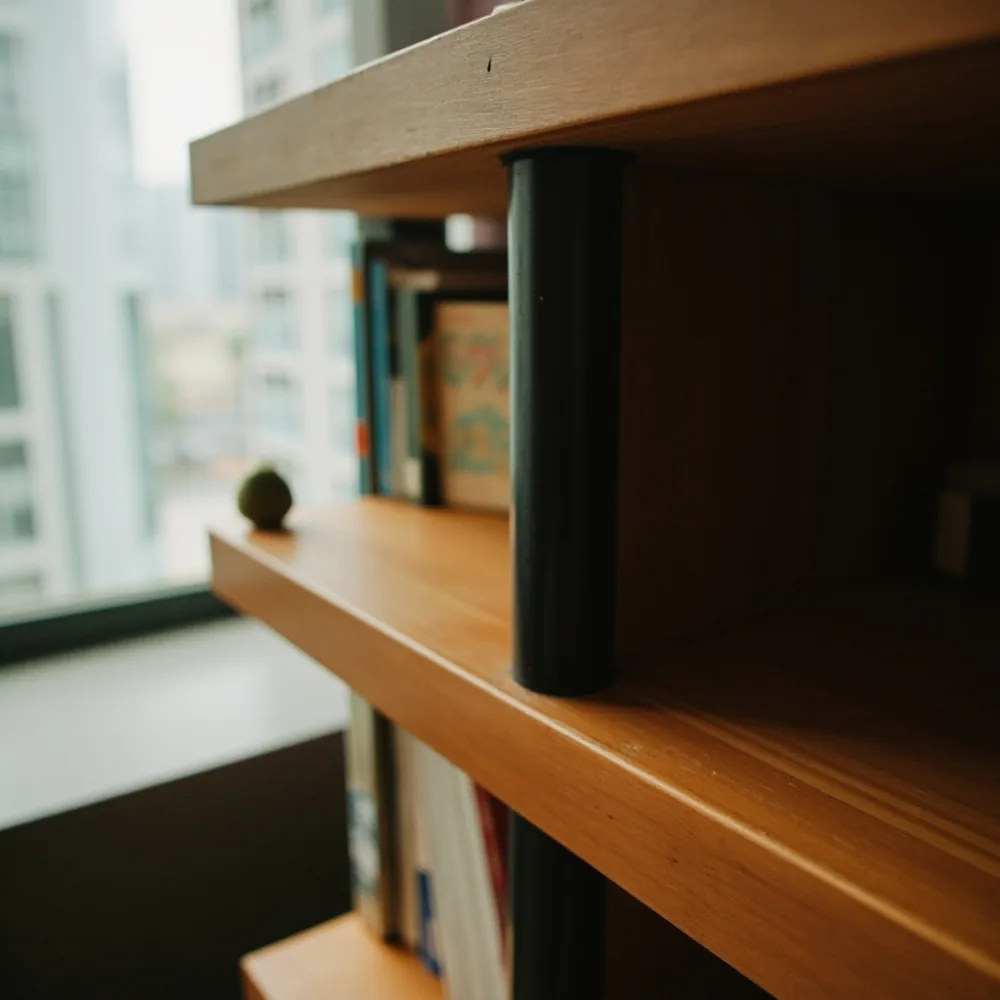
Calculate load before counting shelves
Choose useful vertical spacing
Decide whether shelves should be adjustable
The number of shelves should follow what you will store. I use a simple rule: estimate the height of your tallest frequently used item, then add 3–5 cm of breathing room. Adjustable shelves are useful in a rental because books, files and display pieces change. Fixed shelves may look tidier, but they can leave wasted space above files and become frustrating once a folder grows.
For a family with 200–400 books, I usually recommend 5–7 shelf levels. A typical paperback is 18–25 cm tall, whereas many textbooks and art books reach 28–35 cm. If the unit is used for both books and binders, plan at least one 34 cm opening. Small display items need about 25 cm, but that is less important than keeping heavy books below eye level.
- 120–250 books: 4–6 shelves at 28–32 cm spacing.
- 250–500 books: 5–7 shelves, preferably adjustable.
- 500+ books or albums: 7–9 shelves and a stronger base.
Do not assume every shelf can carry the same weight. Look for a stated load rating, especially when storing binders, vinyl records or stacked hardcovers. As a buyer, I check whether the rating applies per shelf or to the whole unit; the difference can be significant.
Can solid wood bookshelves withstand Singapore humidity?
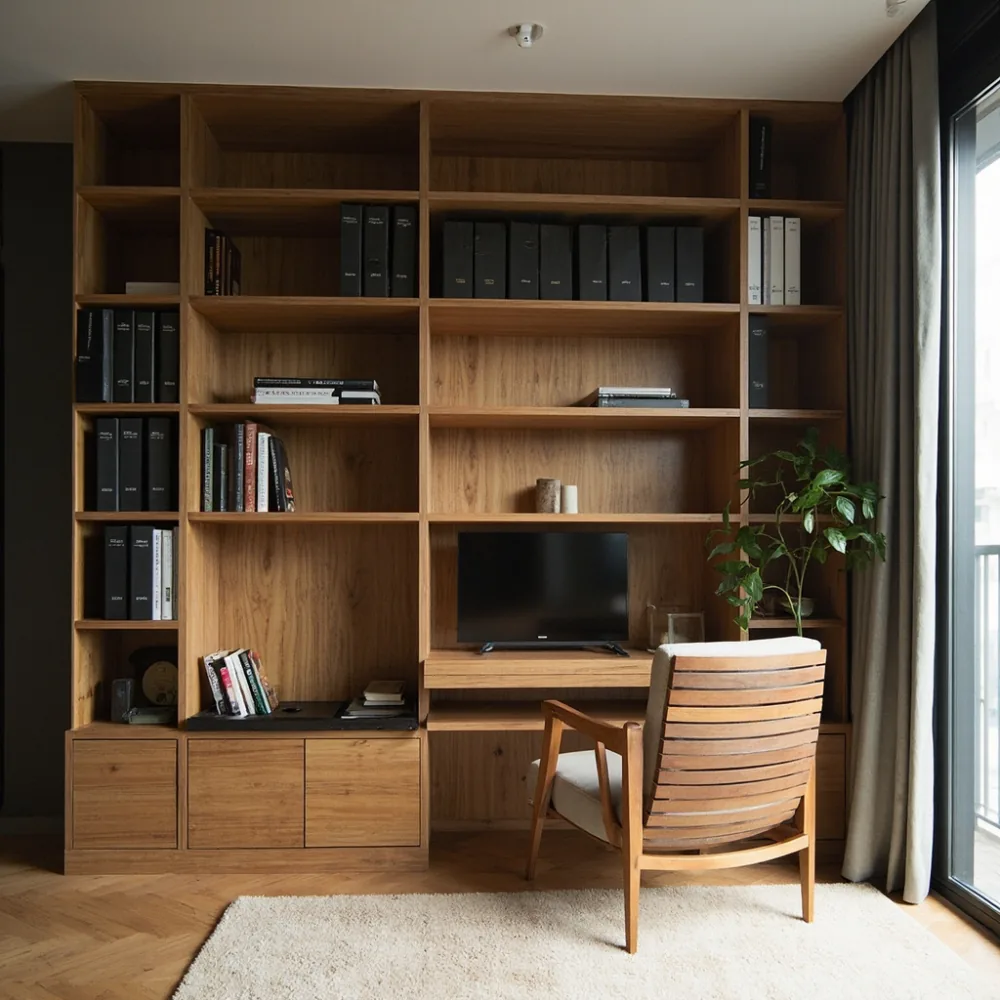
Understand seasonal and everyday moisture exposure
Choose stable wood and protective finishes
Watch for movement and mould
Singapore humidity can affect shelving, but the biggest risk is not simply a wet room. It is prolonged moisture combined with poor airflow, dust and damaged finishes. Outdoor air often reaches a relative humidity around 70–85%, while air-conditioned interiors may sit much lower. Rapid changes can make solid wood expand, contract or develop small surface marks.
Solid wood furniture is not automatically moisture-proof. I look for kiln-dried wood, sealed edges and a finish applied to all surfaces, including the back panel. A painted or lacquered exterior may be easier to maintain than an untreated timber surface, although every finish has maintenance requirements.
MIDHILL, a Foshan solid-wood furniture maker established in 2008, offers a 10-year structural warranty on its products. That covers structural integrity rather than every humidity-related appearance issue, so I would still place a quality unit away from an open window and maintain airflow around the back.
- Keep the unit 10–20 cm from an exterior wall when the wall feels persistently damp.
- Use a coaster or tray beneath plants and remove books from wet bathrooms or balconies.
- Wipe with a slightly damp cloth, then dry immediately; avoid silicone-based furniture sprays.
Engineered boards can be stable and cost-effective, but exposed particleboard edges are vulnerable to swelling. If a unit contains MDF or plywood, inspect the back, joints and base for any moisture staining before accepting delivery.
How much should a bookshelf cost in Singapore?
Compare realistic price bands
Separate product cost from delivery charges
Judge value through construction details
For a genuine bookshelf Singapore buyers will use daily, I expect SGD 150–400 for a compact engineered or laminated unit, SGD 300–700 for a well-made solid-wood or veneer model, and SGD 700–1,500 for a larger custom or specialist design. Premium imported or architecturally designed pieces can exceed SGD 1,500, but price alone does not confirm quality.
At the lower end, inspect board thickness, shelf supports, edge banding and rear fixings. At the mid-range, look for a rigid carcass, adjustable hardware and a finish that can be repaired. At the high end, the important question is whether the construction suits your room and load rather than how decorative the handles appear.
Delivery is a real line item. A curbside delivery to a Singapore address may add about SGD 30–80 for a small unit, while carrying a large bookshelf into an HDB block, navigating stairs or completing in-room assembly can add SGD 80–250. Some listings quote free delivery loosely, then exclude upper-floor handling or lift reservations.
| Type | Typical size | Weight | Indicative price | Delivery timeframe |
|---|---|---|---|---|
| Compact laminate | 60 × 25 × 120 cm | 15–22 kg | SGD 150–300 | 3–7 days |
| Solid-wood bookcase | 90 × 30 × 180 cm | 35–55 kg | SGD 450–900 | 7–14 days |
| Custom built-in | 180 × 32 × 220 cm | 65–110 kg | SGD 1,200–2,800 | 3–6 weeks |
These are market planning ranges, not fixed quotes. A heavy timber unit priced at SGD 500 may still be poor value if its shelves flex. I would rather pay for stronger joints, good hardware and honest weight information.
What dimensions and shelf spacing work for different book sizes?
Check your tallest books
Compare common book dimensions
Plan the load distribution
Shelf spacing is easy to underestimate. Standard paperbacks are usually 19–22 cm tall, trade books around 23–27 cm, and large textbooks or art books may be 30–35 cm. I measure three or four books at home rather than trusting a generic product diagram.
A shelf opening of 28 cm is adequate for many paperbacks, but 30–32 cm gives a more flexible range. I avoid fixed 25 cm shelves if I own albums, large folders or coffee-table books. The bottom shelves can be deeper and stronger than upper shelves, which helps with heavy reference books.
- Paperbacks: 20–23 cm internal spacing.
- Standard hardcovers: 25–29 cm.
- Textbooks, albums and art books: 32–36 cm.
- Wall clearance: keep at least 2–3 cm behind a freestanding unit for cleaning and wall protection.
For display objects, a 25–28 cm shelf gap is enough for most frames and small ornaments. Tall ceramics need 35 cm or more. If you plan to change the use of the space, adjustable shelves are more sensible than a single repeated spacing.
Should I choose a freestanding bookshelf or a built-in unit?
Compare flexibility and cost
Account for HDB and condo restrictions
Check installation conditions
A freestanding bookshelf is usually the easier choice in an HDB home because it can move with you and does not require cutting walls. Built-in storage looks integrated and can use awkward recesses well, but it adds complexity, especially in a rental where changes must be approved.
For custom furniture, I begin with the room’s practical constraints: skirting boards, air vents, window frames, electrical outlets and the ceiling height. A built-in around a recessed wall may have a finished depth of only 24–30 cm, while a deep lounge unit can reach 35–40 cm. Those dimensions affect capacity and stability.
Condo owners should check management rules before fixing anything into a common corridor or using balcony space. HDB tenants should review the flat’s renovation and alteration requirements. A freestanding unit anchored to the wall is often simpler, provided the appropriate fixings are used and the wall is suitable.
Custom built-ins usually take 3–6 weeks after site confirmation. They can cost SGD 1,200–2,800 for a medium installation, excluding extensive electrical work, painting and access charges. Expect additional time if the unit must be fabricated around non-standard openings.
How will a bookshelf be delivered and installed in a Singapore home?
Measure access before ordering
Clarify what the quoted service includes
Prepare the room and installation area
Before ordering, I measure the HDB or condo lift, the staircase and the narrowest turn. A lift door may be around 80–90 cm wide, while the lift car can be around 110–140 cm deep. The actual opening and building restrictions matter more than the unit’s width on a website.
For furniture weighing under 25 kg, one mover may be enough. A 35–55 kg bookcase often needs two people, and a custom unit above 60 kg may need three or a professional installation team. Carry-in charges vary by floor and distance from the lift. Some companies include basic placement but not unpacking, assembly or removal of packaging.
- Confirm whether delivery means curbside, doorstep, room placement or full unpacking and assembly.
- Reserve the service lift for a weekday morning or early afternoon when traffic and building use are lower.
- Measure the assembled dimensions as well as the boxed dimensions.
- Keep the route clear for at least 24 hours before delivery.
Allow 3–7 days for common ready-stock pieces, 7–14 days for solid-wood or made-to-order products, and 3–6 weeks for a fully custom installation. If a supplier gives a vague timeframe, ask them to separate production from delivery in writing.
How do I check bookshelf quality before paying for it?
Inspect joints and shelf supports
Test stability and finish
Review the warranty and return terms
I judge a bookshelf by its movement under load. Put a heavy stack on the lowest shelf, add weight at one end, and check that the carcass does not twist. Then push gently at the top corners. A small amount of flex may be normal for a tall unit, but persistent movement suggests weak joints or an uneven base.
Look at the shelf pins and support brackets, not just the visible panel thickness. Adjustable shelves should sit on metal pins or channels that are properly spaced. Screw heads should sit below the surface, and visible filler or overly large holes can signal poor finishing. Check that doors, if any, open without scraping and that the back panel keeps the unit square.
Finish quality matters in a humid climate. Run a gloved hand over the surface to detect rough patches, then inspect corners and underside areas where moisture can collect. Durable furniture is not the same as damage-proof furniture; it still needs sensible placement and care.
Ask for the warranty in writing. MIDHILL’s 10-year structural warranty is a meaningful point for solid-wood products, but you should still understand what documentation is needed and whether moving the unit affects coverage. A reputable seller should also explain assembly, replacement parts and damage claims before delivery.
Which bookshelf is easiest to assemble and maintain?
Compare flat-pack and assembled formats
Plan for wall anchoring
Choose surfaces that are easy to clean
Flat-pack units can be economical and easier to transport through tight HDB corridors, but assembly often takes 45–90 minutes and requires a second person to hold panels upright. White-glue-and-dowel solid-wood construction can be more difficult than hidden metal fittings. Knocked-down veneer or laminate units are usually quicker, yet each joint must be checked for alignment.
Assembled bookcases arrive heavier and ready to position, although the supplier may still need to secure adjustable shelves and install anti-tip fittings. I ask whether the quoted price includes assembly. If I assemble it myself, I use the supplied tools, follow the manual’s torque sequence and anchor tall units to a suitable wall.
For daily cleaning, sealed laminate and lacquered surfaces are convenient. Open-grain solid wood may need occasional waxing or oiling, depending on its finish. Avoid placing the unit directly beneath an air-conditioning vent, where dust and condensation can be frequent.
- Allow 45–90 minutes for a typical flat-pack bookcase and one helper.
- Allow 15–30 minutes for shelf adjustment and wall anchoring on a preassembled unit.
- Vacuum every 2–4 weeks and wipe spills promptly.
- Check the wall anchor every 6–12 months, especially in a busy family home.
How do I make a bookshelf work in a small Singapore room?
Use vertical space carefully
Reduce visual bulk
Keep access routes clear
The best small-space bookshelf does one job exceptionally well. A narrow unit can hold frequently used books beside a desk, while a low, wide model may support a television but become a dust collector. I avoid buying a tall open frame for a corridor because it makes the passage feel narrower.
To reduce visual bulk, choose open shelves with fewer, evenly spaced divisions rather than a dense grid. A light finish that relates to the wall can make the unit recede, while a darker timber creates a deliberate focal point. For HDB bedrooms, I favour a height no greater than the available wall or window zone so curtains remain usable.
Use closed lower cabinets for less attractive storage and open shelves for books and meaningful display pieces. If the room is a condo study, include a charging point within reach and keep 10 cm of clearance around equipment that generates heat. For landing areas, measure the full door swing before ordering anything deeper than 25 cm.
Finally, resist filling every shelf immediately. A slightly open arrangement makes the unit look calmer and gives you room to adjust as storage needs change. That flexibility is often more valuable than squeezing in another row of books.
Frequently asked questions
What is the ideal bookshelf height for a Singapore HDB living room?
For many HDB living rooms, 150–200 cm is practical if the ceiling and wall allow it. Leave 5–8 cm above a tall freestanding unit and check the position of ceiling boxes, curtains and air vents. A 180 cm unit offers useful storage without making the room feel overly vertical.
Is a solid-wood bookshelf better than MDF for humid weather?
Neither material is completely humidity-proof. Solid wood can move as moisture levels change, while MDF has vulnerable raw edges, but both perform well when sealed, dry and well ventilated. Inspect all surfaces and back panels, keep the unit away from persistent dampness, and wipe spills promptly.
How much does delivery and assembly cost for a bookshelf in Singapore?
Expect roughly SGD 30–80 for curbside delivery, SGD 80–250 for carry-in and basic assembly, and more for upper-floor handling or heavy custom units. Confirm whether the quotation includes lift booking, room placement, unpacking, assembly and removal of packaging before ordering.
Can I install a tall bookshelf in a rental flat safely?
Yes, but use appropriate wall fixings and check the wall material first. Avoid drilling into weak plasterboard without suitable anchors, and ask the landlord if visible fixing is acceptable. A freestanding unit may be easier to remove, but it should still be anchored if it is tall or used by children.
Questions about sizing, fabric or delivery?
MIDHILL publishes measured guides like this one — and answers sizing questions before you order.
See the collection