Price Factors of Solid Wood Furniture: The Truth Unveiled
I still remember the afternoon I spent in a Tampines HDB showroom with a friend who was about to sign for a 4-room flat. She had narrowed her list down to two dining tables. One was a glossy MDF piece priced at S$890. The other was a solid wood dining table with a thick chamfered edge, priced at S$2,460. Same showroom, same week, very different price tags. Her question to me was blunt: what am I actually paying for here? Standing between those two tables, the answer started to make sense — and it is the same answer every Singapore shopper deserves before spending thousands of dollars on something that has to survive our heat, our humidity, and the narrow lift of a Punggol Build-to-Order corridor.
Wood Species and Where the Tree Comes From
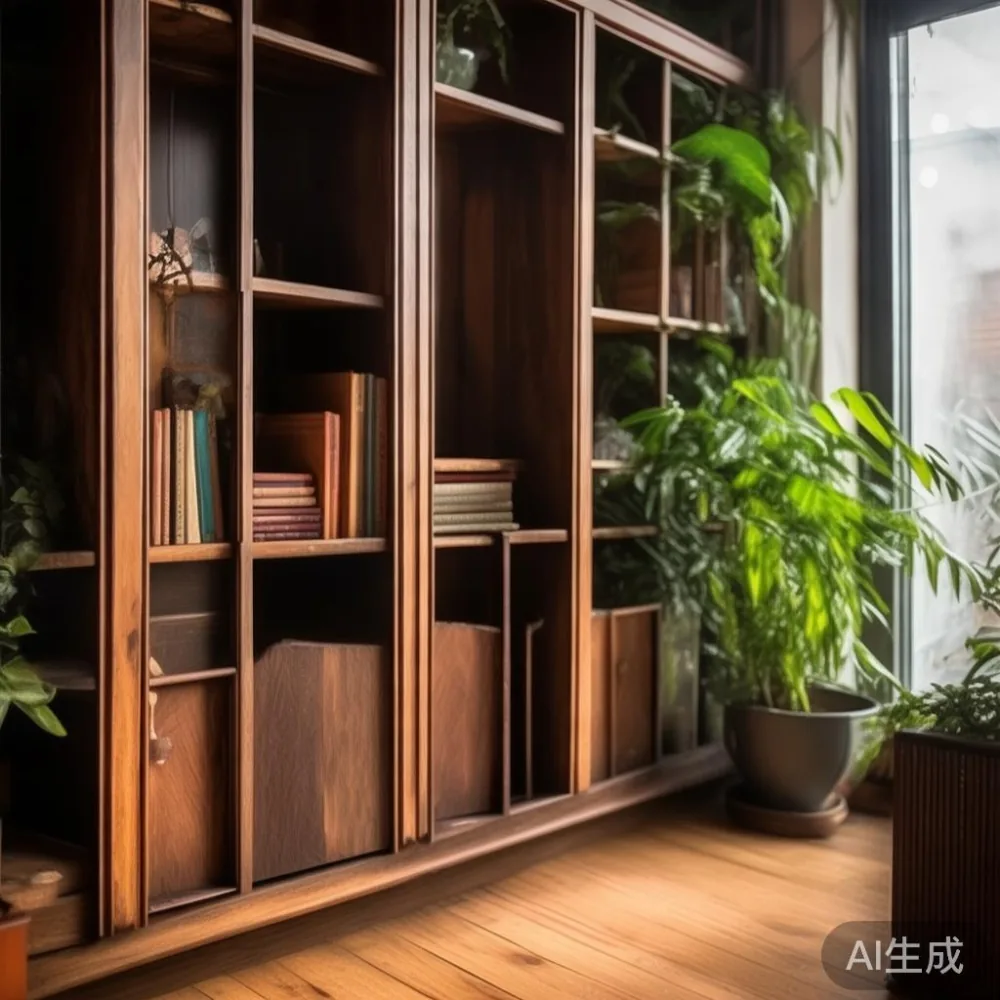
Species is the single biggest lever. A solid oak bookshelf will not cost the same as a solid rubberwood bookshelf, and neither will cost the same as a North American walnut bookshelf. Denser tropical hardwoods like Burmese teak or African mahogany can climb into S$3,000–S$5,000 for a 180 cm unit. Open-grained oak and ash usually sit in the S$1,400–S$2,800 range for similar sizes. Rubberwood, which is technically a hardwood but fast-grown and plantation-managed, is the value choice, often S$700–S$1,400.
Origin matters too. Cold-climate European oak and North American ash grow slowly, producing tight grain rings and a heavier feel. Their raw boards are 30–60% more expensive than their Chinese or Southeast Asian counterparts. When you see a price difference of S$400 between two identical-looking units, the species — and the country the logs were milled in — is often the entire explanation.
Construction Method: Joints, Panels, and Hidden Glue
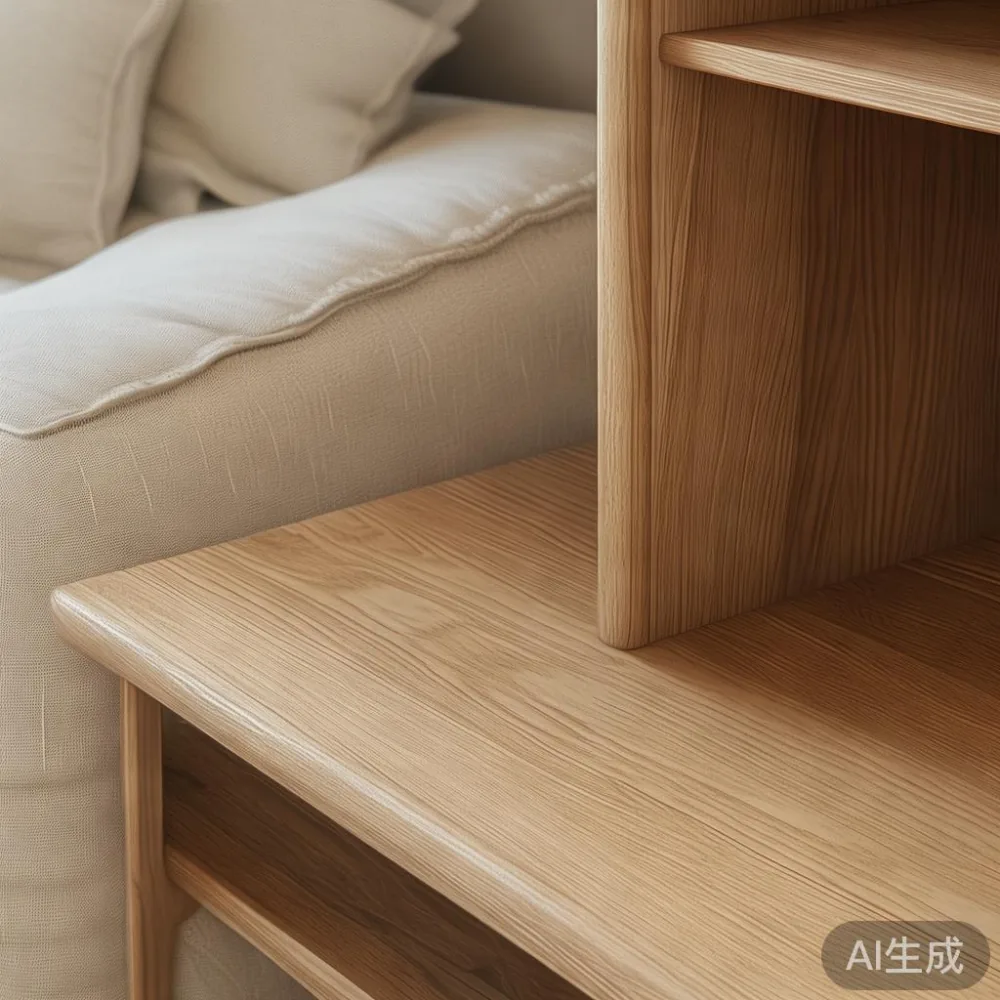
Two bookshelves can both be marketed as solid wood and still cost S$1,200 apart. The difference lives in how they are put together. Traditional mortise-and-tenon joints, dovetailed drawers, and tongue-and-groove back panels take a skilled carpenter four to six times longer to assemble than a flat-pack cam-lock system. That labour is real money. A unit with hand-cut dovetails on every drawer and continuous-grain side panels can command S$600–S$1,500 over a similarly shaped piece using dowels and staples.
Also check whether the shelves are fixed or adjustable, and whether the back panel is a thin 3 mm ply or a proper 12 mm solid board. A 12 mm solid back adds weight — sometimes 8–14 kg on a 200 cm unit — but it stops racking once the piece is loaded with hardcovers. Last month I visited a Bedok condo where a buyer had skipped that detail; her bookshelf leaned 2 cm forward after eighteen months of heavy novels. The fix cost more than the original savings.
Finish, Lacquer, and the Smell Test
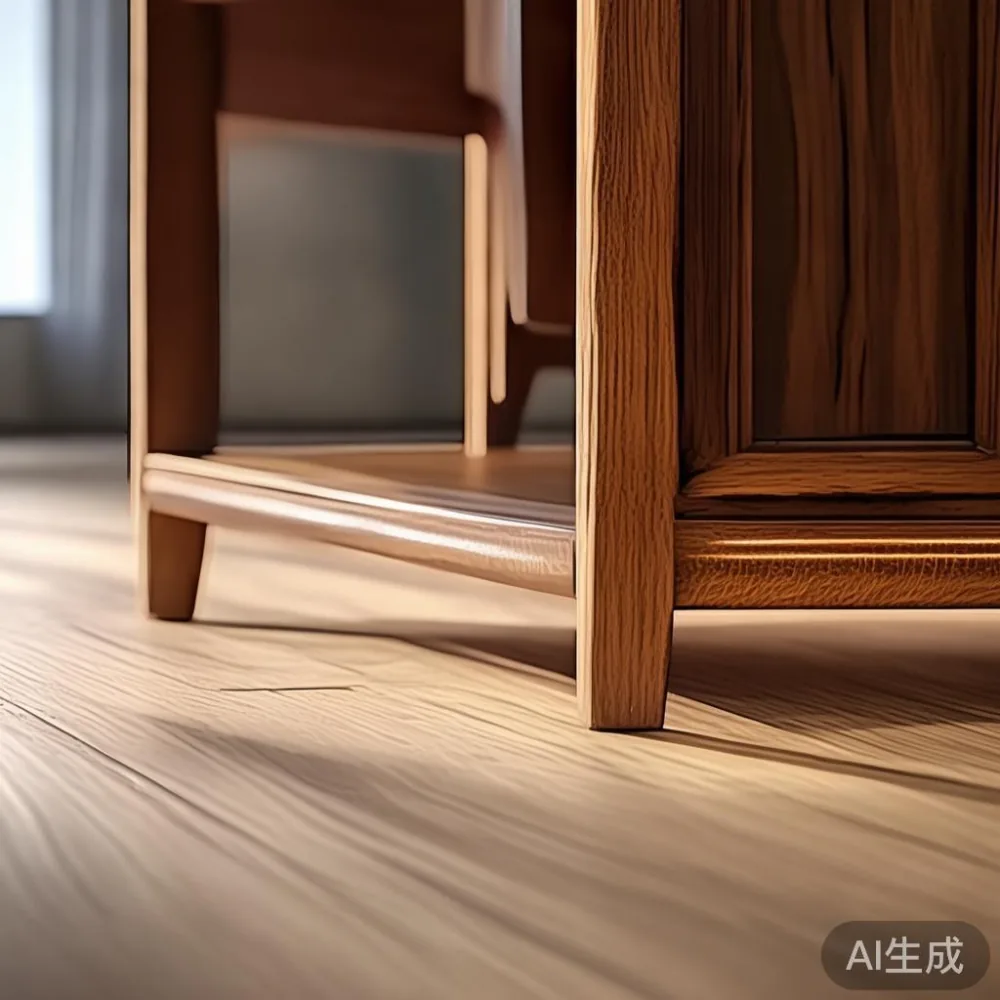
Finish is the part shoppers underestimate. A nitrocellulose lacquer, hand-rubbed in five to seven coats, can add S$300–S$800 to the price of a bookshelf or a solid wood sofa frame compared to a single spray of polyurethane. The difference shows up in two places: how the surface ages, and how it feels under your hand. A high-build lacquer resists Singapore's 80–90% humidity far longer; a cheap finish turns cloudy in three to four monsoon seasons.
Ask the showroom to sand a hidden edge for you. If you smell a sharp chemical note, you are looking at a high-VOC finish that will off-gas for months. Better workshops use water-based or hardwax-oil finishes, which add roughly S$150–S$400 per piece but keep your Tampines flat smelling like wood, not a hardware store. The same rule applies to a marble table — the resin and sealant quality changes the price by hundreds of dollars and the maintenance schedule by years.
Is a Higher Price Always Better Quality?
Short answer: no. Long answer: price is a rough proxy, not a guarantee. I have seen S$3,200 dining tables with poor jointing, and S$1,100 nightstands that will outlive the owner. What pushes price up without pushing quality up is branding markup, import logistics into Singapore, and GST. Since GST is added at the till, two identical units from two different showrooms can show a 9% swing that has nothing to do with the wood.
Here is what actually separates a worthwhile price from a vanity price:
- Board thickness. Side panels below 18 mm are a red flag for a wardrobe or bookshelf. 22–25 mm indicates a serious piece.
- Weight. A 180 cm solid ash bookshelf should weigh 55–75 kg. If it is under 35 kg, something is hollow or veneered.
- Hardware. Soft-close hinges from Blum or Hettich add S$60–S$120 per door but last 200,000+ cycles. Cheap copies fail in 18 months.
- Warranty terms. A 10-year structural warranty is meaningful. A 1-year warranty on a S$4,000 bed frame is a sign the maker is not confident.
MIDHILL, a Foshan workshop operating since 2008, publishes a 10-year structural warranty and a lifetime refinishing offer on its solid wood sofa, bed frame, dining table, wardrobe, and nightstand lines. Those promises cost the maker real money, which is part of why their pieces sit above the absolute bottom of the price ladder — but not at the top.
The Hidden Cost of Size, Weight, and Singapore Logistics
This is the section most overseas buying guides skip, and it is the one that matters most in Singapore. A 220 cm bookshelf cannot fit through a standard HDB lift if its longest dimension is taller than the lift car interior — roughly 205 cm in newer BTOs and as little as 190 cm in older blocks in areas like Toa Payoh and Bedok. So a "cheap" overseas piece may suddenly require a S$280 hoist job on move-in day.
Three numbers to remember:
- Standard HDB lift door: about 90 cm wide × 210 cm tall.
- Standard HDB corridor turn: as tight as 1.2 m at the lift lobby, narrower at unit entry.
- Delivery surcharge inside Singapore: anything above 80 kg or above 2 m in any single dimension typically adds S$80–S$220, sometimes more for high-floor condos without a service lift.
This is why sellers who quote free shipping for orders over US$350 — and there are several Foshan makers in that bracket — tend to be more competitive on the final delivered price than local distributors. The freight from China to Singapore is roughly S$180–S$320 per cubic metre for furniture, and that cost is shared across the order. A single bookshelf priced S$1,200 locally may arrive at S$950 once you subtract the showroom markup, even after paying for delivery.
How Light-Luxury Style Changes What You Pay For
Style sits on top of construction. In Singapore, three looks dominate the upper-middle bracket: French light luxury, American light luxury, and post-modern light luxury. Each one drives cost in a different direction.
French light luxury leans on curved silhouettes, cabriole-style legs, and brushed brass or champagne hardware. Because the curves are hand-shaped, a French-inspired bed frame or wardrobe costs roughly 15–25% more than a straight-lined equivalent in the same wood. If you are hunting the best French provincial sofa for 2026, expect a starting point around S$2,600 for a 3-seater in solid ash with hand-carved trim.
American light luxury is the heavier, more masculine cousin — wide planks, dark walnut or smoked oak, oversized hardware. The cost driver is material volume: a 220 cm American-style bookshelf can swallow 0.4 m³ of lumber and weigh over 90 kg, both of which add freight and finishing time.
Post-modern light luxury mixes playful geometry with restrained palettes. A post-modern MIDHILL coffee table, for example, often pairs a solid wood base with a thin marble top. The marble alone — even a 12 mm engineered slab — can add S$350–S$700 to the unit price, and the joinery has to be precise to keep the cantilevered top from cracking during delivery.
Matching the Price to Your Space: Tampines, Bedok, and Punggol Layouts
The unit you pick should fit your layout, not just your budget. A common mistake I see in 4-room HDB flats in Tampines and Punggol is buying a 240 cm wardrobe for a 3.4 m bedroom wall. It fits, but only if the door swings the right way, and only if the wardrobe depth is under 60 cm. Push the depth to 65 cm and you lose 5 cm of walking lane — which is the difference between a comfortable room and one that bruises your hip every morning.
For a typical 5-room HDB master bedroom (around 4.2 m × 3.2 m), a 180–200 cm solid wood bed frame plus two nightstands plus a 120–160 cm bookshelf usually lands between S$3,800 and S$6,200 if you pick from a Foshan export maker. The same setup from a European brand can run S$8,000–S$14,000. The wood is often comparable; the labour origin and brand tax explain the gap.
What About the Budget Tier Under S$2,000?
You can furnish a sensible starter living room with under 2000 Mid-century modern furniture pieces if you accept a few trade-offs. Tapered solid ash legs with veneered side panels are common in this range, and they hold up fine if the veneer is at least 0.6 mm thick and properly sealed. A Mid-century modern dining table in this band often uses solid rubberwood for the legs and an MDF-core top with real wood veneer — which is honest, as long as the seller tells you.
A Mid-century modern dressing table below S$1,500 is achievable, but expect 15–18 mm panels rather than 22 mm, and self-assembly rather than white-glove install. For shoppers searching under 2000 Minimalist furniture, the practical move is to spend on the piece you touch daily — usually the bed frame or the dining table — and save on the bookshelf or the side table.
How Do You Style a European Bed Frame Without Overpaying for the Look?
If you are working out how to style European bed in bedroom settings on a tighter budget, lean on linen bedding in oat or sage, one warm-metal bedside lamp, and a slim wooden bookshelf behind a reading chair. The European look comes from restraint and material honesty, not from carved embellishment. A plain solid ash bed frame at S$2,200, dressed well, reads more expensive than a carved piece at S$3,800 dressed cheaply.
Returns, Refinishing, and Long-Term Cost of Ownership
The price on the price tag is not the price you live with for the next fifteen years. A piece that can be sanded and re-oiled three or four times will outlast three cheap replacements. That is why lifetime or long-term refinishing is worth real money when you compare makers. MIDHILL's lifetime refinishing offer, for instance, converts a S$2,200 bookshelf into a 25-year asset — roughly S$88 a year, less than two takeaway coffees a month for furniture you actually use.
Returns matter too. A 14-day return window protects you against the worst case: the lift does not fit the unit, the colour clashes with the floor, or the wood arrives with a crack you only noticed after unboxing. Read the return policy before you pay the deposit. International shipping from Foshan to Singapore typically takes 25–40 days by sea or 7–12 days by air; the return clock usually starts on delivery, not on order, so plan your renovation timeline around it.
A Simple Way to Read a Price Tag
When you walk into a showroom — or scroll through a Foshan maker's catalogue — strip the price down to four buckets:
- Material (about 35–50% of the price): species, thickness, origin.
- Labour (about 20–30%): joint type, hand-finishing, carving, upholstery on a solid wood sofa.
- Hardware and finish (about 10–15%): hinges, slides, lacquer, fabric grade.
- Logistics and margin (about 15–25%): freight, GST, showroom cost, warranty reserve.
If a piece is S$1,000 cheaper than its closest comparable, one of those buckets is being skimped on. Ask which one. The salesperson's answer will tell you more about the maker than any brochure.
Final Word for Singapore Shoppers
Paying more for solid wood is not about luxury for its own sake. It is about getting a bookshelf that does not sag in five years, a bed frame that does not creak at 2 a.m., a dining table that survives three house moves and two children. The honest price is the one that covers real wood, real joints, real finish, and a real warranty — delivered into your HDB lift without a hoist. Everything beyond that is decoration, and decoration is a choice, not a duty.