What Actually Drives the Price of Solid Wood Furniture
When shopping for furniture in Singapore, especially for a statement piece like a solid wood bookshelf, the price range can be staggering. One shelf might cost SGD 800, while another, seemingly similar, could be SGD 3,500 or more. For residents in Tampines or Bedok HDBs, or those with spacious Punggol condos, understanding this difference is key to making a wise investment. The sticker price isn't just about the wood; it's a complex calculation of materials, labour, design, and logistics that unfolds over months and thousands of kilometres.
Why Does a Simple Bookshelf Vary So Much in Price?
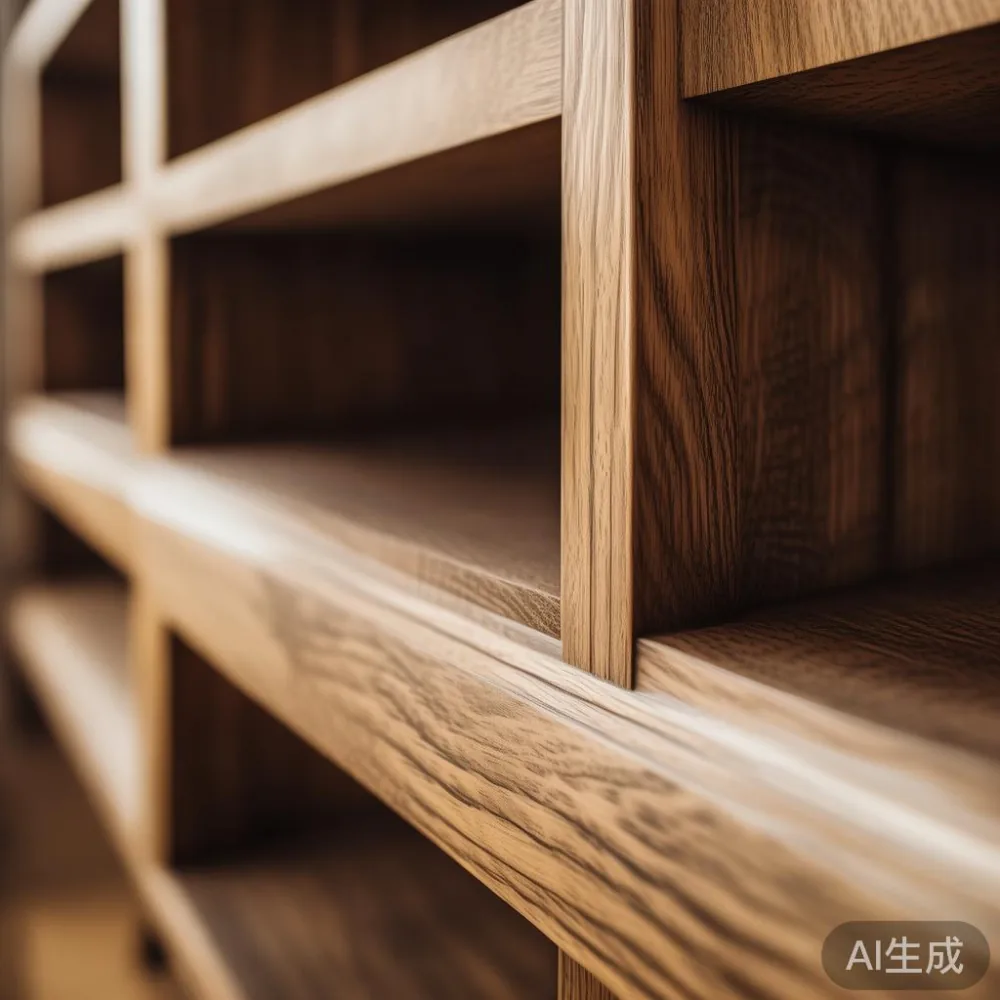
The core reason for price variation in a solid wood bookshelf lies in the fundamental components that constitute its final form. It's not merely a box with shelves; it's a product of specific choices made at every stage. The first major factor is the wood species itself. A bookshelf made from Rubberwood, a common and relatively affordable hardwood, will have a different price point than one crafted from American White Oak or European Ash. The density, grain pattern, and origin of the wood significantly impact the cost. For instance, a bookshelf crafted from solid Sheesham, known for its rich, dark grains, will command a higher price than one made from Pine.
Next is the construction method. A bookshelf held together with simple dowels and screws is less expensive than one using traditional mortise and tenon joinery. These interlocking joints, cut with precision, create a stronger, more durable piece that can withstand the weight of heavy books over decades. The thickness of the wood is another concrete detail. A shelf made from 2.5 cm thick solid wood boards is inherently more costly than one using 1.8 cm thick veneered particleboard. This difference in material not only affects the price but also the structural integrity and lifespan of the bookshelf. The final finish also plays a role. A natural oil finish that highlights the wood's grain is less labour-intensive than a multi-layered lacquer finish in a specific custom colour, adding to the final cost.
How Does Craftsmanship and Labour Translate to a Price Tag?
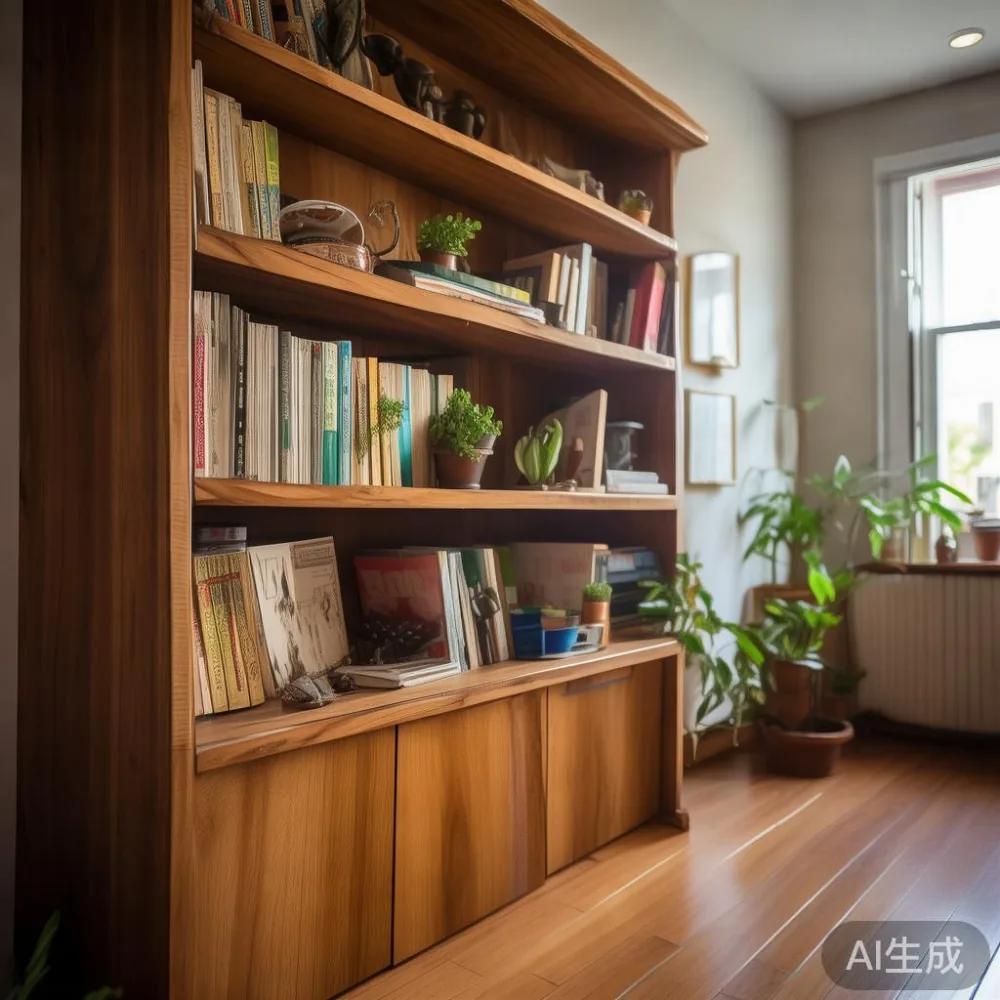
The human element is a substantial, often invisible, driver of a bookshelf's price. This is where the distinction between mass production and artisanal creation becomes clear. A factory in Foshan, the heart of China's furniture industry, might produce a bookshelf using automated CNC machines. These machines can cut, shape, and drill components with incredible speed and precision, requiring minimal human intervention for the basic construction. This high-volume, efficient process results in a lower price point, suitable for a wide market.
Conversely, a bookshelf crafted with a focus on French light luxury involves a different, more labour-intensive approach. Each joint might be hand-fitted, the surfaces hand-sanded to a perfect smoothness, and the finish applied in multiple thin coats by a skilled technician, with each coat needing time to cure. This level of craftsmanship takes time. A single master craftsman might only complete two or three such bookshelves in a week. This slower pace, combined with the higher skill level required, directly increases the labour cost. The price reflects hours of dedicated work, not just the materials. My colleague visited a workshop last month and observed a team of artisans hand-carving the decorative details on a single bookshelf; the process took three full days just for that one element, a stark contrast to the machine-carved alternatives.
Is a Heavier Bookshelf Always a Better Bookshelf?
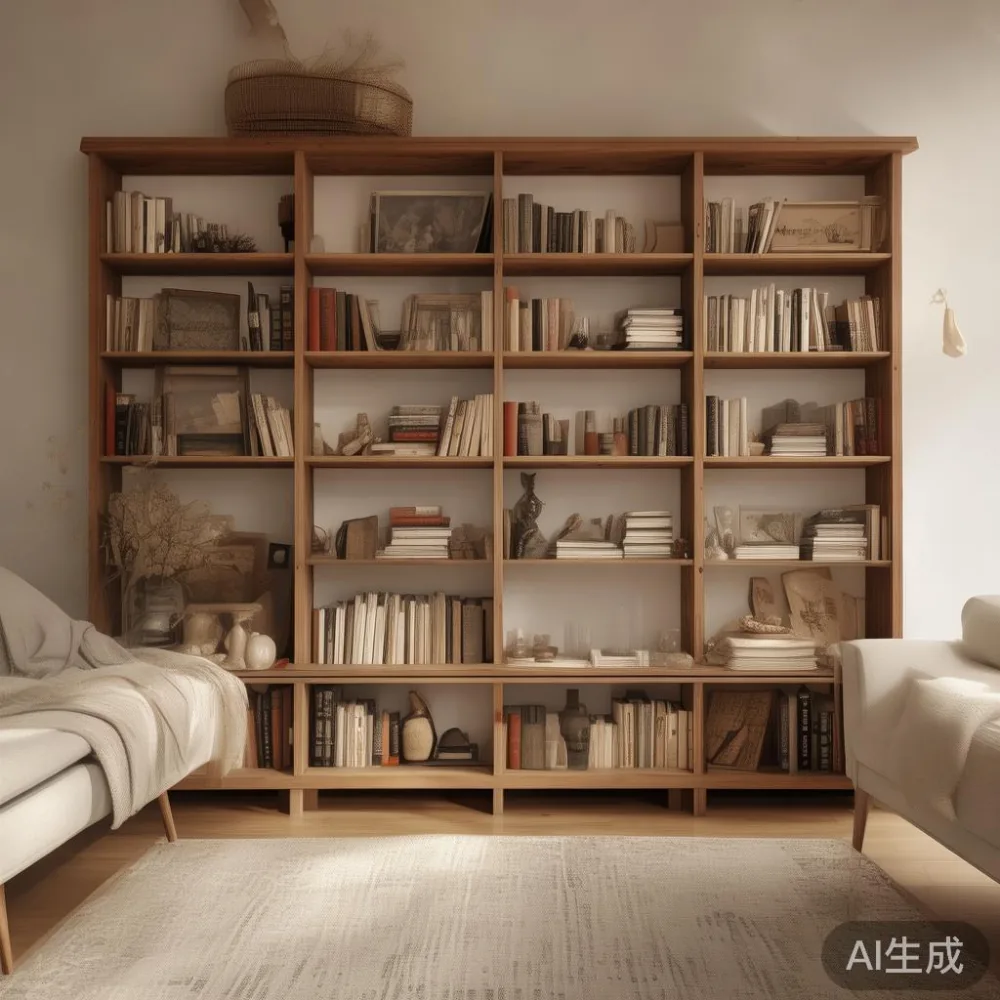
Weight is a tangible metric that often correlates with quality, but it's not the sole indicator. A solid wood bookshelf made from dense hardwoods like Oak or Walnut will be noticeably heavier than one made from a softer wood like Rubberwood or Pine. This weight is a result of using solid, substantial pieces of lumber throughout the entire structure—from the back panel to the internal shelf supports. A lighter bookshelf might use a combination of solid wood for the frame and veneered MDF (Medium-Density Fiberboard) for the shelves or back, which reduces weight and cost.
However, weight alone doesn't tell the whole story. The internal construction is just as important. A well-designed bookshelf, even if made from slightly lighter wood, will have solid internal bracing and thick, solid wood shelves (e.g., 3 cm thick) to prevent sagging under the weight of books. A heavier bookshelf with poor internal design could still be less durable. Therefore, when evaluating a bookshelf, it's wise to consider both its heft as a general indicator of material quality and the specific thickness and construction of its load-bearing components. For a homeowner in a Singapore HDB, where space is often at a premium, a bookshelf needs to be both sturdy and manageable during the move-in process.
How Does the 'Light Luxury' Style Affect a Bookshelf's Price?
The term 'light luxury' has become a popular descriptor in furniture design, and it carries a specific set of characteristics that influence pricing. This style, whether American light luxury or post-modern light luxury, often emphasizes clean lines, minimalist forms, and a focus on high-quality natural materials over ornate decoration. A bookshelf in this style might feature simple, geometric shapes, a neutral colour palette, and an emphasis on the beauty of the wood grain itself.
Creating this aesthetic requires precision in design and execution. The clean lines demand perfectly mitered corners and smooth joints. The minimalist look leaves no room for error; any imperfection in the wood or the finish is immediately noticeable. This design philosophy often results in furniture that looks simple but is, in fact, more complex to manufacture than a more ornate piece. The simplicity is a statement of quality. For example, a post-modern light luxury bookshelf might have asymmetrical shelving or incorporate a material like a thin marble inlay for a tabletop, adding a touch of elegance that requires skilled craftsmanship to execute perfectly. This focus on understated quality rather than overt ornamentation is a key factor in its positioning and price.
What About Delivery and Installation in Singapore?
The price of a bookshelf doesn't end at the factory gate. The journey to your home in Singapore adds another layer of cost. This includes international shipping from Foshan, customs clearance, and local logistics. A large, heavy bookshelf requires significant packaging to protect it during transit, which adds to the material and labour costs. Shipping a bulky item like a bookshelf is calculated by volume and weight, and a solid wood piece is heavy. For instance, a bookshelf measuring 180 cm in height, 80 cm in width, and 35 cm in depth could weigh over 60 kg, attracting substantial freight charges.
Once it arrives in Singapore, local delivery becomes a factor. Free shipping is often offered for orders over SGD 350, but this is a value-add that is built into the pricing structure. For customers in a Punggol condo with a narrow lift or in a Bedok HDB with a narrow corridor, the delivery process can be more complex. A standard delivery might involve a two-man team to move the bookshelf, but working through tight spaces might require additional personnel or special equipment, which can incur extra charges. Installation is another service. While some bookshelves are designed for simple assembly with an Allen key, others, particularly larger or more complex pieces, might require professional installation to ensure stability and proper fit within your home. This service, often included in the price of a premium piece, adds to the final cost but provides peace of mind.
How to Style Light Luxury Wardrobe in Bedroom: A Look Beyond the Bookshelf
While our focus is on the bookshelf, note that the principles of quality and cost extend to other pieces of furniture that create a cohesive home environment. A homeowner who invests in a well-made solid wood bookshelf might also be interested in other items like a solid wood bed frame or a wardrobe. The same factors—wood species, joinery, and craftsmanship—apply. When considering how to style a light luxury wardrobe in bedroom, the choice of materials and design is paramount. A wardrobe made from solid wood with a smooth, painted finish in a soft, neutral tone can complement a bookshelf made from a contrasting natural wood, creating a balanced and sophisticated look. The investment in a high-quality wardrobe, like a bookshelf, is a long-term decision that impacts the room's aesthetic and functionality for years to come.
For instance, a person comparing a European light luxury bed vs Mid-century modern bed will find that the price difference often stems from the design complexity and material choice. The European style might feature sleek, continuous lines and premium upholstery, while the Mid-century modern bed might focus on tapered wooden legs and simple, functional forms. Both are valid styles, but the cost reflects the specific design and manufacturing process. Similarly, when asking is Mid-century modern wardrobe worth it, the answer depends on its construction. If it's made from solid wood with dovetail drawers, it's a worthwhile investment. If it's primarily veneered MDF, the value proposition diminishes. These considerations show how the value of a single piece, like a bookshelf, is part of a larger perspective on furnishing a home with quality and intention.
What About Long-Term Value and Peace of Mind?
The initial price of a bookshelf is one thing; its long-term value is another. This is where the concept of warranty and after-sales service becomes a critical, albeit intangible, part of the price. A manufacturer that offers a 10-year structural warranty is confident in the quality of its joinery and materials. This warranty is a promise that the bookshelf will not warp, crack, or break under normal use for a decade. This level of assurance has a cost associated with it, as it reflects the company's belief in its product's durability and its commitment to supporting its customers.
Services like lifetime refinishing are another indicator of quality. Over time, the finish on a bookshelf may show signs of wear. A lifetime refinishing service means the manufacturer will restore the original finish, ensuring the piece looks as good as new. This service extends the life of the bookshelf indefinitely, making it a true heirloom piece. For a Singaporean family, this means a bookshelf purchased today could be passed down to the next generation, a stark contrast to a cheaper, disposable piece that might need replacing in five or seven years. The price difference, when amortized over 20 or 30 years, often makes the higher-quality option the more economical and sustainable choice. This long-term perspective is what justifies the investment in a solid wood bookshelf that is built to last.
Are Cheaper Materials Ever a Good Choice for a Bookshelf?
It's a valid question to ask whether opting for a less expensive material, like engineered wood or veneer, is a practical decision for a bookshelf. Engineered wood, such as MDF or particleboard, is designed to be stable, affordable, and consistent in its appearance. For a bookshelf that will hold lightweight items like decorative objects or paperbacks, an MDF core with a wood veneer can be a sufficient and budget-friendly solution. It will not expand or contract with humidity changes as much as solid wood, which can be an advantage in Singapore's climate.
p>However, for a bookshelf intended to hold a large collection of heavy hardcover books, the limitations of engineered wood become apparent. MDF can sag over time under sustained weight, especially if the shelf spans a wide distance without support. Veneers can also chip or peel, revealing the engineered wood underneath. Solid wood, while more susceptible to environmental changes, is inherently stronger and more capable of bearing heavy loads for a lifetime. The choice often comes down to the intended use and the desired lifespan of the furniture. A bookshelf for a child's room might be fine with an engineered wood option, but a primary bookshelf for a home library is better served by the enduring strength of solid wood.What's the Verdict on Price and Quality?
Ultimately, the price of a solid wood bookshelf is a reflection of the sum of its parts. It is the cost of the raw material, the labour of the craftspeople, the precision of the machinery, the design of the piece, the protection of its journey, and the promise of its longevity. A lower price point typically indicates a higher proportion of engineered materials, simpler construction, and less intensive finishing. A higher price point signifies the use of premium solid wood, superior joinery, meticulous craftsmanship, and comprehensive support services.
p>For the discerning customer in Singapore, the decision to invest in a higher-priced bookshelf is an investment in quality, durability, and beauty. It's about choosing a piece that not only serves its functional purpose but also enhances the living space. It’s about owning something that will not need to be replaced, something that develops a patina of character over the years. When considering a purchase, it's helpful to look beyond the sticker price and examine the details. Is the wood solid? Are the joints sturdy? Is the warranty substantial? These are the questions that reveal the true value of a bookshelf. A customer searching for the best European light luxury furniture might find a beautiful piece, but understanding the construction behind the style is key to appreciating its worth. Similarly, a person reading a midhillco review for a coffee table would be wise to look for comments on the material quality and build, as these are the indicators of a product that will stand the test of time.