Small Space, Big Calm: Styling a Compact Singapore Home Around the Bookshelf
I have spent enough weekends hauling measuring tapes through Tampines and Bedok corridors to know one unromantic truth about Singapore apartments: the lift at your block is roughly 1.1 m wide, the service corridor outside your door is about 1.2 m, and any piece of furniture wider than 55 cm needs a plan before you even click "checkout." Last month I visited a colleague's 538 sq ft two-bedder in Punggol, and the only reason her new bookshelf fit past the lift doors was because she had measured the diagonal of the carton, not just the height. That single habit — measuring the carton, not the catalogue photo — saved her a S$120 redelivery fee and a Saturday afternoon of regret.
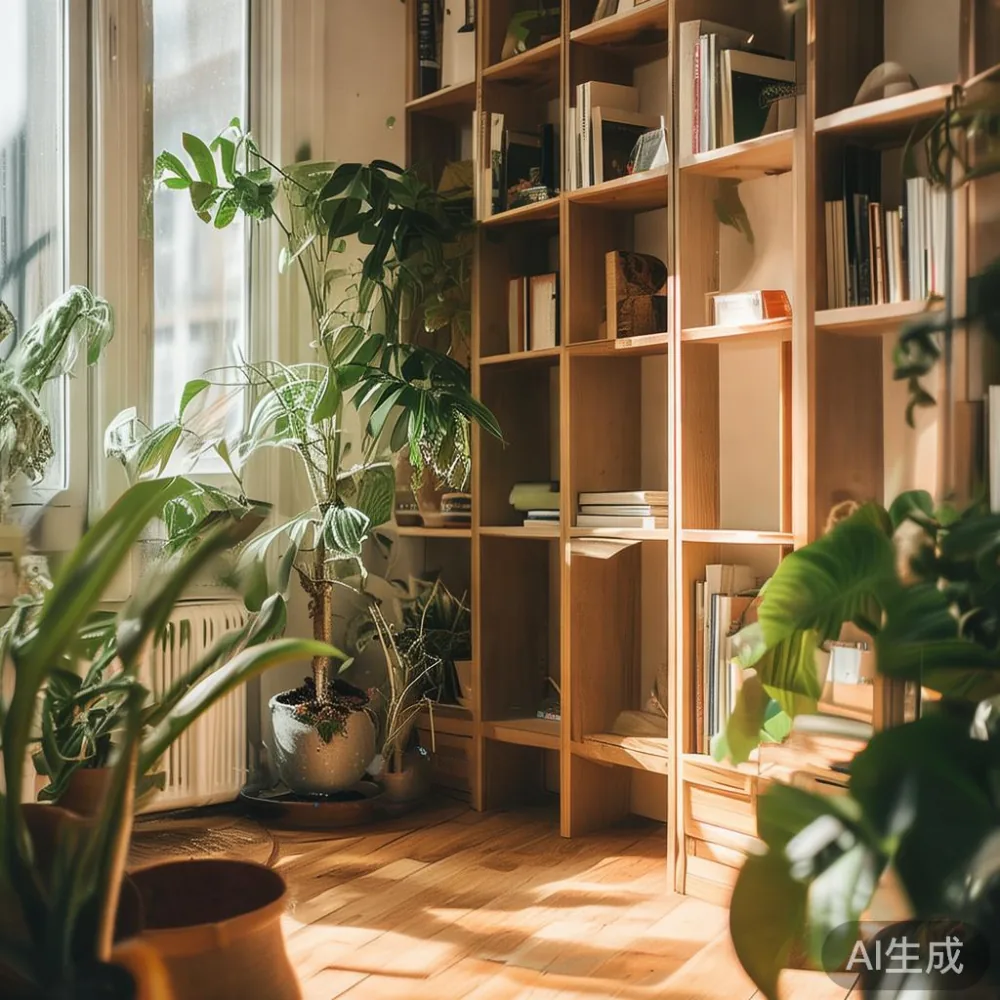
Small-space styling is not about buying less. It is about choosing pieces that earn their footprint. A bookshelf, when picked with care, does the work of three objects: storage, display, and visual divider. Around it, a solid wood sofa, a measured dining table, a slim wardrobe, a compact nightstand, and a marble-topped side table can sit comfortably without the room turning into a storage unit.
Why the bookshelf is the smartest piece to anchor a small HDB or condo layout
The bookshelf pulls double duty that almost no other furniture category can match. It stores roughly 1.2 to 1.8 books per running centimetre of shelf (a 30 cm-deep, 180 cm-tall unit holds around 60 to 90 standard hardcovers), it displays objects at eye level, and — when placed perpendicular to the wall — it divides a studio into a sleeping zone and a living zone without calling for a brick wall. In a 452 sq ft Punggol compact, my colleague used a 150 cm-wide x 30 cm-deep x 180 cm-tall unit as a partial divider behind her solid wood sofa; the sofa back is 92 cm deep, and the gap between the two is exactly 70 cm, enough to walk through, narrow enough to feel like one room.
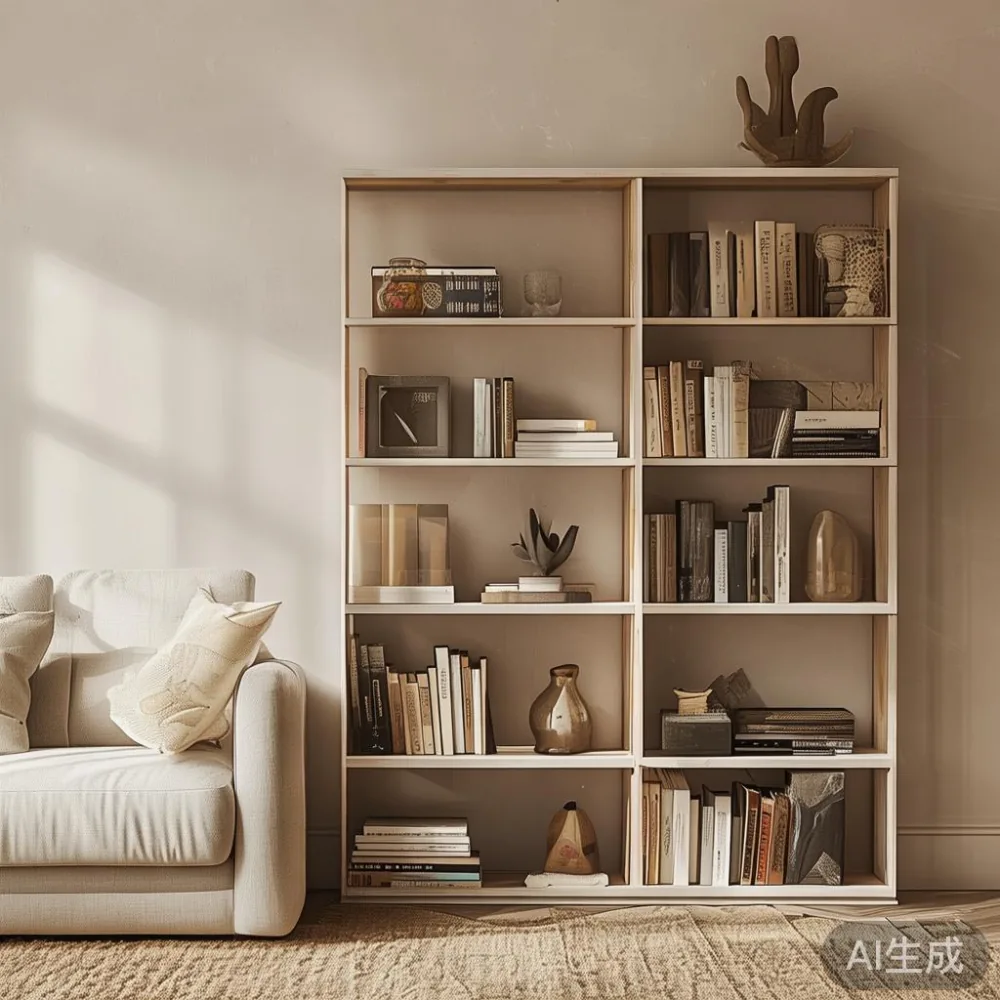
Singapore humidity sits between 70% and 85% for most of the year, which is why the bookshelf's material matters more here than in a London flat. A solid wood bookshelf in oak, ash, or rubberwood tolerates that range without the warping you see in hollow-core MDF after two monsoon seasons. MIDHILL's catalogue leans on solid wood construction across its range, which is why a piece ordered today in Foshan and shipped through MIDHILL's logistics network tends to arrive with the joints still flush rather than the loose shelves you sometimes see in flat-pack alternatives.
What is the difference between Nordic loveseat and modern furniture?
A Nordic loveseat is a compact two-seater, typically 140 to 160 cm wide, built on visible solid wood legs with a low back (around 78 to 82 cm from the floor) and cushions filled at 30 to 35 kg/m³, while "modern furniture" is a broader design language from the late 1920s onward that emphasises clean geometry, mixed materials such as glass, chrome, and engineered wood, and a wider dimensional range that includes everything from a 210 cm three-seater sofa to a 90 cm dining bench.
In practice, the loveseat is a specific small-footprint solution, often paired with a slim dining table in a 600 sq ft flat, whereas modern furniture describes a visual style that can be scaled up or down. If you are styling a Bedok resale 4-room flat, a Nordic loveseat is usually the safer pick for the living room because it leaves 60 to 80 cm of walkway behind it; a full modern three-seater at 220 cm tends to eat that clearance and the room starts to feel like a corridor.
How do you fit a bookshelf, sofa, and dining table into 500 sq ft without crowding?
Measure in centimetres, not in vibes. The smallest practical living zone in a Singapore one-bedder is about 2.4 m x 2.8 m, and within that rectangle you need: a 180 cm-wide solid wood sofa (depth 88 to 95 cm), a 60 to 70 cm coffee table or marble table (depth 50 to 55 cm), and a walkway of at least 65 cm between the sofa front and the TV console. That is 88 + 65 + 50 = 203 cm of depth, which leaves about 77 cm of breathing room before the wall.
For the dining corner, a 120 cm x 70 cm dining table seats four on chairs that are 45 cm wide, and it needs a 70 cm pull-back zone behind each chair. In a narrow dining strip beside the kitchen — common in Punggol and Sengkang BTOs — a 100 cm x 60 cm table seats two comfortably and tucks against a wall when not in use. Pair it with a narrow 30 cm-deep bookshelf above, and the same wall carries books, a Dyson holder, and the weekly groceries list without needing a separate console.
Corridor logistics deserve their own paragraph. A standard HDB door is 91 cm wide and 2.1 m tall, and most lift cabins in blocks built after 2015 are 1.1 m wide by 1.4 m deep with a 2.1 m door height. Any bookshelf taller than 200 cm in the carton will not stand upright inside the lift; it must be tilted, and the carton diagonal must be under roughly 2.6 m. MIDHILL lists carton dimensions for every piece, which is why I keep recommending buyers check those numbers before paying the 9% GST on a piece that will not physically make it past level 10.
Light-luxury styling cues that read "expensive" without the square footage
French light luxury — soft linen covers, brushed brass handles, marble tops in cream or veined grey — translates well into compact Singapore interiors because it relies on texture rather than size. One marble table of 55 cm diameter, paired with two linen dining chairs at S$220 each, reads more refined than a 140 cm glass console at four times the price. The trick is restraint: pick one marble surface per room, one brass detail per vignette, and one soft textile per seating zone.
American light luxury leans warmer — walnut tones, club-chair silhouettes, club-style solid wood sofa frames at 200 to 210 cm, leather pulls on wardrobes. Post-modern light luxury is the most forgiving in small flats: curved edges, lacquered finishes in muted sage or dusty rose, and geometric marble tables that double as sculpture. All three styles share one rule that suits HDB living: nothing should be wider than 60 cm unless it is a wall-hugging piece (sofa, bed frame, wardrobe). Free-standing pieces — nightstands, side tables, small bookshelves — stay slim so the eye reads the room as open.
Which pieces are worth spending on, and which should be the budget items?
Spend on what touches the floor and the wall. The bed frame, the wardrobe, the dining table, and the bookshelf carry the most weight and the most stress. A solid wood bed frame in king size at 180 cm x 190 cm should weigh between 60 and 85 kg depending on the slat system; that heft is what keeps the piece from drifting across a laminate floor when you sit down. A wardrobe at 180 cm wide x 60 cm deep x 210 cm tall typically weighs 110 to 140 kg in solid wood configuration, and it should be anchored to the wall — most HDB drywall accepts a 6 mm toggle bolt holding 15 kg per fixing point.
Save on the nightstand, the dining chairs, and the smaller occasional tables. A 45 cm x 40 cm x 55 cm nightstand in rubberwood at S$180 to S$260 is plenty; you are paying for one drawer and a flat top. The dining chairs at S$140 to S$260 each outlast the table they sit around, so buy them once. A marble table at 50 cm diameter, used as a bedside perch or a stool beside the sofa, costs between S$260 and S$420 and earns its keep every single day.
For sofas, the math is simple: a solid wood sofa frame in oak or beech at 180 cm wide costs between S$1,400 and S$2,200 in the MIDHILL catalogue, and the same dimensions in engineered softwood with a fabric cover land between S$900 and S$1,400. The solid wood frame adds 8 to 12 kg of weight, which translates to a quieter sit and a frame that survives a 10-year structural warranty without creaking. Across the MIDHILL range, that warranty applies to every solid wood frame, and refinishing is offered for the life of the piece — useful in a climate where a humid August can leave a water ring on a softwood shelf.
How do you keep a bookshelf from looking like clutter in a small flat?
Edit the contents. A bookshelf in a 500 sq ft flat should hold no more than 12 to 15 objects per running metre of shelf, and at least 30% of those objects should be horizontal stacks of books rather than vertical spines. Vertical spines create a busy wall; horizontal stacks create calm bands of colour. Add one plant per 60 cm of shelf (pothos, ZZ, or a small sansevieria under 30 cm tall), one ceramic object per 90 cm, and leave one full shelf empty. The empty shelf is what makes the rest look intentional.
Style the bookshelf from the bottom up. The bottom 30 cm of any shelf should hold the heaviest and least attractive items — board games, file folders, charging boxes. The middle 60 cm holds books and one decorative object per 30 cm. The top 30 cm holds only three or four pieces that you actually look at — a framed print, a small marble table clock, a candle. This rule stops the bookshelf from competing with the artwork above the solid wood sofa and keeps the eye moving upward, which is how small rooms feel taller.
What about delivery, returns, and the actual cost of getting a bookshelf into a HDB?
Free shipping kicks in above US$350, which is roughly S$470 at current rates. Below that, expect a S$60 to S$110 delivery fee that covers Singapore door-to-door service and lift access. Standard delivery runs 18 to 28 days from Foshan, including sea transit and Singapore-side customs; express air freight on smaller pieces (nightstands, marble tables, single dining chairs) cuts that to 8 to 12 days for an extra S$120 to S$260 per carton. The 14-day return window covers change-of-mind on colour, size, or damage on arrival — useful if the lift at your block is one of the older 0.9 m cabins in pre-2010 estates where a 200 cm bookshelf simply will not enter.
Total landed cost for a small HDB project — a 150 cm bookshelf, a 180 cm solid wood sofa, a 120 cm dining table, a slim 180 cm wardrobe, two nightstands, and one marble table — lands between S$4,800 and S$6,900 before GST, or S$5,230 and S$7,520 after the 9% GST. Spread across 15 to 20 years of use with a 10-year structural warranty and lifetime refinishing, the per-year furniture cost is roughly S$260 to S$500, which is less than two months of a typical HDB service charge. That is the real argument for solid wood in a small flat: the piece outlasts the lease.
Do I need a professional to style my flat, or can I plan it myself?
You can plan it yourself if you measure twice. Sketch your floor plan at 1:20 scale on graph paper — every centimetre on the plan is 20 cm in real life — and cut out small paper rectangles for each piece of furniture at the same scale. Move them around the plan for a week. The pieces that survive a week of rearrangement are the pieces that earn their place. The pieces that constantly get nudged aside during the planning week are the pieces that will frustrate you for the next ten years.
One last rule I now follow on every Singapore project: leave 90 cm of clear floor space in front of the wardrobe, 70 cm in front of the sofa, and 60 cm in front of the bookshelf. Anything below those numbers and the room feels crowded; anything above and the room feels wasteful. The sweet spot for a 538 sq ft two-bedder sits between 8% and 12% of total floor area committed to furniture footprint — that is roughly 43 to 65 sq ft of furniture on 538 sq ft of floor. Hit that range and the flat will breathe.