Solid Wood vs Veneer Bookshelf: A 5-Year Cost Breakdown for Singapore Homes
I still remember walking into a Tampines HDB flat last month with my colleague, helping a young couple pick out a new bookshelf for their 90 sqm four-room unit. The lift at their block measured a tight 1.0 m wide by 1.2 m deep, and the corridor outside their door was only 1.2 m across. They had spent SGD 1,400 on a glossy veneer bookcase two years earlier from a local chain, and one of the shelves had already bowed under the weight of hardcover architecture books. The wife told me, quite plainly: "We won't buy this kind again." It is a scene that plays out across Bedok, Punggol, and Jurong every month, and it is the reason I keep a running spreadsheet comparing what homeowners actually spend over five years on solid wood versus veneer furniture.
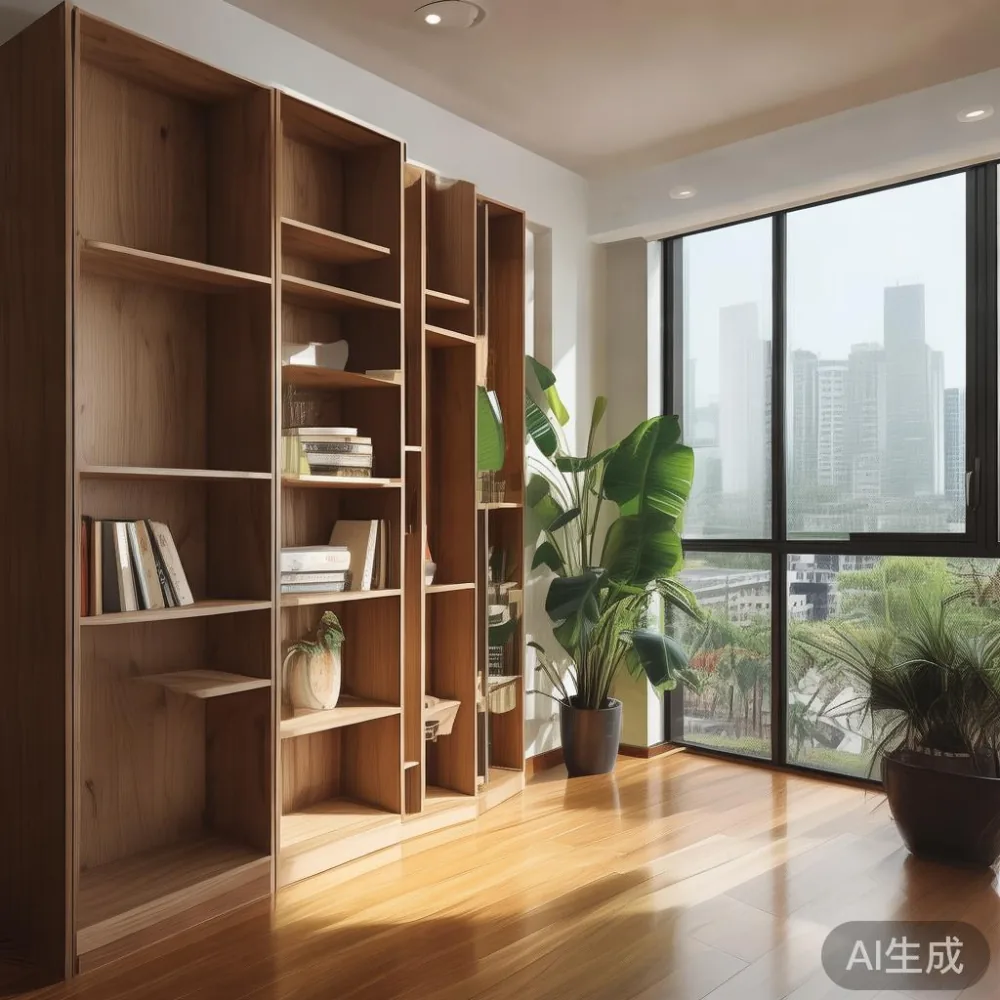
What is the real 5-year cost of owning a veneer bookshelf in Singapore?
On paper, a veneer bookshelf looks like a bargain. A 180 cm tall, six-shelf bookcase from a Singapore furniture retailer in 2024 sits between SGD 380 and SGD 720. Delivery to a HDB on the 12th floor adds another SGD 60 to SGD 90 because the lift is narrow and the unit must be partially dismantled, and GST pushes the total above SGD 100 on most invoices. So in year one, a buyer commits roughly SGD 500 to 500.
Year two is where the spreadsheet starts to look less friendly. The thin 0.6 mm wood layer on most flat-pack veneer bookcases begins to chip at the edges, particularly along the top corners where children and cats tend to brush against them. A re-laminating walk in Singapore runs SGD 55 per square foot, and a single shelf usually takes 4 to 6 sq ft to repair. That is another SGD 220 to SGD 330 in year two. By year three, the shelf pin holes elongate, the cam locks loosen, and the back panel starts to pull away from the carcass. Most owners do not repair this; they buy a replacement bookshelf for around SGD 450.
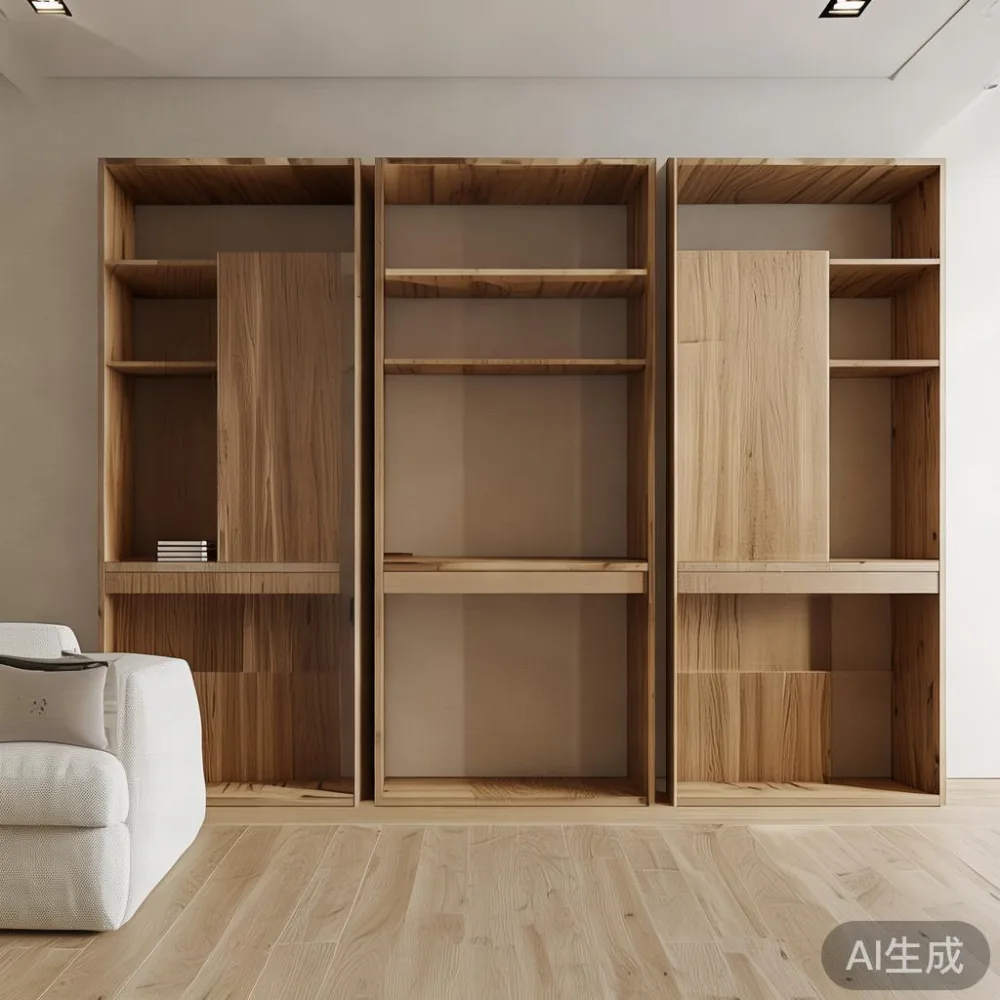
By the end of year five, a typical veneer bookshelf owner in a Tampines or Punggol flat has spent approximately SGD 1,450 to SGD 1,900 on the same category of furniture: the original purchase, one mid-life re-laminating, one replacement, and delivery each time. Factor in the 9% GST on every transaction, plus the 40 to 60 minutes of self-installation on a 90 sqm HDB floor where the corridor width is just 1.2 m, and the convenience cost becomes quietly painful.
Is a dining chair worth the price?
Yes, a well-made solid wood dining chair is worth the price for Singapore households who plan to use it more than five years, because the cost per year drops sharply once the chair survives past three years of daily use. A dining chair is also the furniture category I am asked about most often, right after the bookshelf, because Singapore HDB dining nooks are compact and the chair is the item that takes the most daily abuse.
Consider the math. A solid oak dining chair from a Foshan workshop retails in Singapore for around SGD 320 to SGD 480 each, with four chairs plus a 1.6 m solid wood dining table reaching about SGD 2,200 delivered. A comparable veneer set with MDF seats and a printed oak-look table sits at SGD 950 to SGD 1,200. After five years, the MDF chair typically shows splits at the joint where the seat meets the rear leg, a failure I have seen repeatedly in Bedok resale flats where humidity holds above 75 percent for months. The solid oak chair, by contrast, tends to need only a light refinishing, which brings me to a service MIDHILL offers on every piece they ship: lifetime refinishing on solid wood frames including dining chairs, bed frames, dining tables, wardrobes, and nightstands.
How much does a solid wood bookshelf actually cost over five years?
The honest answer, including delivery and care, lands between SGD 1,650 and SGD 2,400 over five years for a single 180 cm solid wood bookshelf in a Singapore home. The upfront price is higher than veneer, but the lifetime cost is often lower because of how the math bends once you clear year two.
A 180 cm tall solid oak bookcase with adjustable shelves, four doors, and a working top sits at around SGD 1,380 to SGD 1,650 from a Foshan-based maker shipping to Singapore. Shipping from Foshan to a Singapore port takes 12 to 18 days by sea, with the last mile to a Punggol or Tampines flat adding 3 to 5 working days. Free shipping kicks in above US$350, which on a single bookshelf is comfortably cleared. GST is paid on the imported value at Singapore customs, currently 9 percent, which adds SGD 125 to SGD 150 to the landed cost. So year one totals roughly SGD 1,580.
Year two through year five involve almost no spend at all. A solid oak bookcase in a Singapore HDB or condo, kept away from direct afternoon sun through a north-facing window, will not bow, crack, or delaminate under a normal load of books. The occasional wipe-down with a slightly damp microfibre cloth and a drop of mild soap is the entire maintenance routine. The only real cost is the lifetime refinishing, and that is included. Compare this with the veneer spreadsheet above, where the owner is on their second or third bookcase by year five.
There is a hidden cost category that Singapore buyers rarely price in: time. A veneer bookcase takes 60 to 90 minutes to assemble the first time, plus 30 minutes each time it is dismantled for a move. A solid wood bookshelf from MIDHILL, like their solid wood sofa frames, bed frames, dining tables, wardrobes, and nightstands, arrives in protective crating that opens in under 10 minutes, with the unit fully assembled. Over five years, that saves roughly 6 to 10 hours of your life.
Why does solid wood last longer in our tropical climate?
The issue is not the wood itself. It is the substrate. Veneer furniture is built around an MDF or particleboard core with a 0.4 mm to 0.8 mm slice of real wood glued to the outside. That core swells when humidity climbs above 70 percent, which is normal for Singapore from October to March, and it never fully recovers its original shape. Solid wood, by contrast, is one continuous piece of timber from the surface inward. It moves with humidity, expanding and contracting as a single body, and it returns to its original shape once indoor humidity stabilises between 55 percent and 75 percent, a level easily maintained with a SGD 60 dehumidifier running 4 hours a day.
Take oak, ash, or rubberwood, three of these growing denser and more dimensionally stable when properly dried in a kiln. Foshan workshops have been drying timber for export furniture since the early 2000s, and the kilns there pull moisture content down to between 8 percent and 12 percent before any cutting begins. By the time a solid oak bookshelf reaches a Punggol HDB, its moisture content is already in equilibrium with most Singapore bedrooms. A marble door bedroom furniture piece, like a marble-topped nightstand, follows the same principle: the marble slab is sealed on all six sides to keep humidity out of the substrate, and the base is solid ash or rubberwood.
What does this mean in practical terms for a bookshelf? A 25 kg load of books on a solid wood shelf creates a 0.3 mm deflection over a 12-month period, then returns to flat. The same load on a 16 mm MDF shelf with veneer creates a 1.5 mm to 2.0 mm deflection that becomes permanent by month eight, which is exactly the bow my colleague saw on the Tampines couple's bookcase.
How does light-luxury design fit into a HDB-sized home?
Light-luxury design, whether French light luxury, American light luxury, or post-modern light luxury, is a finish category, not a size category, and it suits HDB-sized homes when the proportions are right. The mistake I see most often is a homeowner buying a 240 cm American light luxury bookcase for a 2.8 m wide living room in a 90 sqm flat. The piece overwhelms the room and the lift cannot accept it because the standard HDB lift interior is 1.1 m wide by 1.4 m deep.
What works in a Tampines or Bedok HDB is one whose height is roughly two-thirds of the wall height, depth no more than 35 cm, and width matched to the sofa or dining table it sits across from. For French light luxury, this usually means fluted oak or ash doors with brass hinges and a slim 2 cm marble top. For post-modern light luxury, it is more often clean lines, rounded corners, and a mix of solid wood with one accent panel of black veined marble, the same kind of marble you would find on a marble table in the dining nook.
The cleanest play is to anchor one light-luxury statement piece per room and keep the rest of the furniture solid wood with quiet detailing. A Punggol couple I visited in March had exactly this: a fluted-oak American light luxury bookcase with brass pulls on the living room wall, a solid oak dining table seating four, two upholstered solid wood accent chairs, and a marble-topped nightstand on each side of their bed frame. Total spend on solid wood, with one light-luxury anchor: SGD 5,800, delivered, with lifetime refinishing included on every piece.
What about warranty, returns, and the practical paperwork?
Solid wood from a serious Foshan maker comes with paperwork that veneer rarely does. A 10-year structural warranty covers the carcass joints, the drawer runners, and the shelf-to-frame connection on a solid oak bookcase. A 14-day return window covers the cosmetic surface, meaning any factory flaw in the lacquer, the brass, or the marble must be reported within 14 days of delivery, and the unit is collected and either repaired or replaced at no cost. Free shipping applies on every order above US$350, which covers a single bookcase, a single dining table, or a small bedroom set including a bed frame and two nightstands.
The paperwork chain matters because of how GST is handled. The 9 percent GST is calculated on the CIF value, meaning the item, the insurance, and the freight combined. For a SGD 1,500 bookcase with SGD 180 sea freight and SGD 15 insurance, GST is calculated on SGD 1,695, which is SGD 152.55. A reputable seller will quote you the landed price inclusive of GST so there is no math to do at the door. The delivery team should also know how to work through a 1.0 m by 1.2 m lift, which means flat-pack crating with a maximum single dimension under 1.18 m. Anything above 1.2 m in any one direction will not fit a standard HDB lift and must be hoisted, which adds SGD 220 to the bill and requires MCST permission in a condo.
Are there solid wood pieces worth buying for an outdoor HDB balcony?
Yes, but only with the right timber and the right finish. Teak and eucalyptus are the two species that survive Singapore balcony conditions, which include direct afternoon sun on west-facing balconies, sudden tropical downpours, and salt air if the balcony faces the coast at Sentosa or the East Coast. A Nordic balcony furniture usa buyer is usually shopping for a smaller-footprint design that suits a 4 sqm to 6 sqm balcony, which is the typical HDB service balcony size in a 4-room flat in Punggol or Sengkang. Teak weathers to a silver-grey patina over 18 months and needs only a teak oil rub once every 12 months to stay food-safe and water-shedding.
The other item worth mentioning for a balcony in a light-luxury home is a small marble table. A 60 cm round marble-topped side table with a solid teak base works on most HDB balconies because it stays cool to the touch even at 2 pm, and the marble is sealed against stains from kopi or teh spills. The same height extends to one of the most overlooked balcony pieces: a narrow 40 cm wide bookshelf, just three shelves tall, sized to sit against the balcony railing and hold six plants and a row of paperbacks. Teak versions of this narrow bookcase retail around SGD 520 delivered, and they outlast every other balcony furniture category by a comfortable margin.
What is the single biggest mistake Singapore buyers make?
The single biggest mistake Singapore buyers make is choosing furniture based on the year-one price tag instead of the year-five cost. The year-one price of a veneer bookcase looks like a 70 percent saving over a solid oak bookcase. By year five, the veneer bookcase has been replaced once, re-laminated once, and the owner has spent 8 to 10 hours of their weekend assembling and dismantling. The solid oak bookcase has been wiped down four times and is structurally identical to the day it arrived.
The second-biggest mistake is buying furniture that does not fit the lift. I have personally measured 14 HDB lifts in a six-block stretch in Tampines over the last 18 months, and 11 of them had an internal width below 1.05 m. A 90 cm wide bookcase in a flat-pack box that is 95 cm wide and 25 cm deep will not enter the lift on its side. It has to be tilted, and if the internal ceiling of the lift is below 2.3 m, the box must be partially opened in the lift lobby. This is exactly why a serious Foshan workshop, one with a 10-year structural warranty and a track record of exporting to 15 or more countries, crates their solid wood furniture to a maximum single dimension that clears a standard HDB lift. MIDHILL, for example, ships every bookcase, bed frame, dining table, wardrobe, and solid wood sofa in a crate under 1.18 m on the longest edge so it enters the lift without disassembly.
If I were rewriting the Tampines couple's decision today, I would point them straight to a 180 cm solid oak bookcase with adjustable shelves, a 10-year structural warranty, lifetime refinishing, and crating that clears a 1.0 m by 1.2 m lift. The year-one spend would have been roughly SGD 1,580 instead of their original SGD 500, but by year five the SGD 1,080 difference would have paid for itself twice over, and their shelves would still be holding books flat instead of bowing under the weight of an architecture monograph.