Tropical Climate Care for Lacquered Bookshelves
A lacquered bookshelf can make a Singapore home feel calm, composed, and quietly luxurious. Glossy or soft-matte finishes also protect the grain beneath, but the combination of lacquer, humidity, heat, salt, and constant hand contact requires a considered care routine. In HDB flats and private condos across Tampines, Bedok, and Punggol, a well-placed bookshelf often shares space with narrow corridors, busy lifts, and rooms without dedicated storage. That makes maintenance as much a question of placement and daily habit as it is about the product itself.
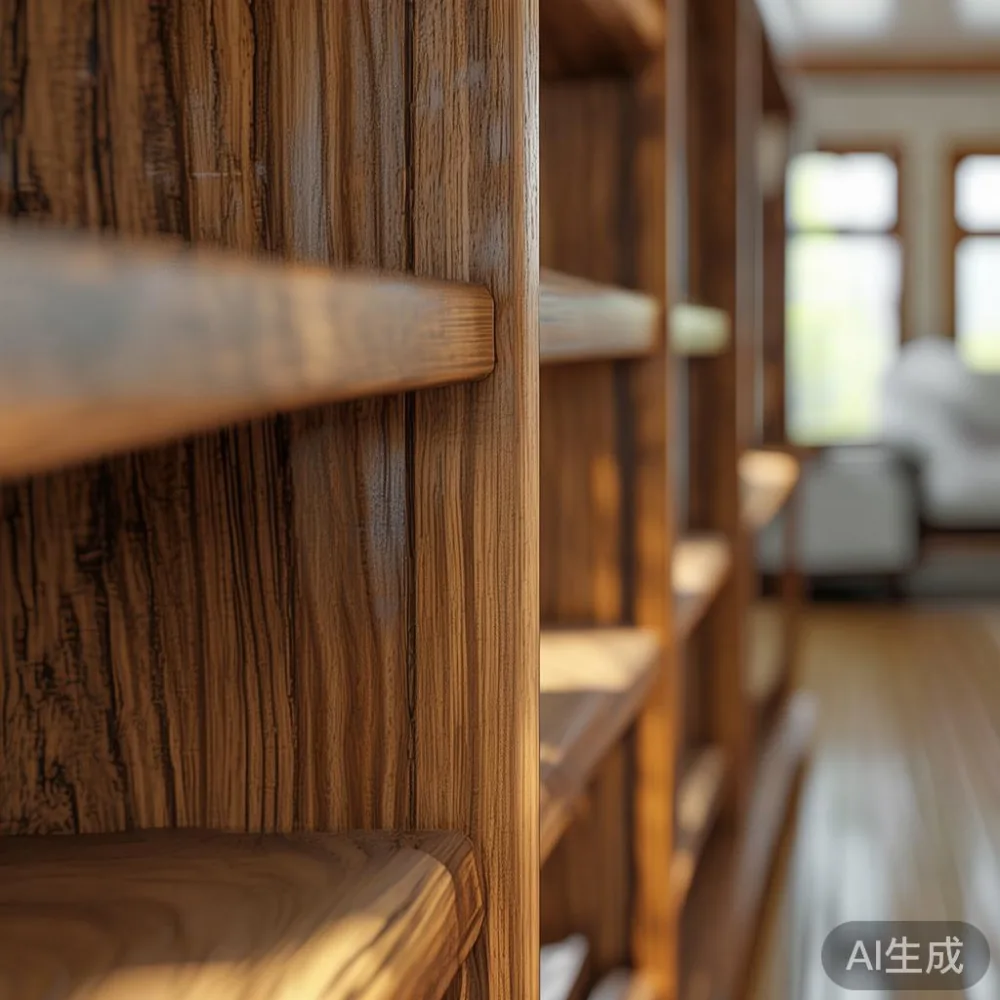
At MIDHILL, our approach to solid wood furniture combines practical durability with light-luxury detail: restrained profiles, tactile surfaces, and finishes intended for everyday homes. The same discipline applies to our solid wood sofa, bed frame, dining table, wardrobe, nightstand, and marble table ranges. A bookshelf deserves the same attention, especially where air conditioning switches on and off throughout the day.
What does tropical humidity do to lacquered wood?
Lacquer is not waterproof, even when it looks glassy and feels completely sealed. In Singapore’s humid months, relative humidity can remain above 80% for long periods. A finished bookshelf may absorb a small amount of moisture through its joints, edges, and exposed surfaces. The lacquer slows that exchange, but temperature changes and microscopic wear can still produce dull patches, haze, stickiness, or fine cracks.

Heat is another factor. A unit beside a west-facing window in Bedok may reach 34°C by late afternoon, while an air-conditioned bedroom can fall to 23°C by night. Repeated movement between those conditions encourages the wood substrate to expand and contract. A solid wood bookshelf with a stable frame and sound joinery has a useful advantage here, but the finish still needs sensible protection.
Do not confuse lacquer with solid lacquer. Genuine wood lacquer systems commonly use several thin coats, each sanded and polished before the next is applied. Spray lacquer, on the other hand, is a finishing material rather than solid timber. Ask the supplier for the exact finish type, care instructions, and coating count before accepting delivery.

How should I prepare a new lacquered bookshelf?
Allow the bookshelf to acclimate before filling it. Keep it in its intended room for at least 72 hours, with ventilation and no strong direct airflow from an air-conditioner vent. During that period, leave the shelves empty if delivery staff have not already installed them, and check that every surface is dry, clean, and free from impact marks.
Next, inspect the construction. A bookcase should stand within about 3 mm of level over a 100 cm span; uneven floors in HDB blocks can leave one side carrying more load. Use a 2–3 mm shim rather than forcing a tall frame flat. For a wide bookshelf, an anti-tip fixing is advisable, particularly in a family home with children. Follow the manufacturer’s anchoring instructions and use suitable wall plugs for masonry, drywall, or hollow substrates.
Protect the floor with a felt or cork pad under each foot. The pad should be at least 5 mm thick and slightly larger than the foot. Avoid placing the unit directly against an exterior wall in a ground-floor Tampines block if condensation is frequent. A 10–15 cm gap improves airflow, though it should not compromise the anti-tip clearance.
How do I clean lacquer without scratching it?
Use a soft, lint-free microfibre cloth, preferably one with approximately 200 GSM density, and a pH-neutral wood cleaner. Lightly dampen the cloth rather than spraying the bookshelf. A good test is to squeeze the folded cloth over a basin: if water escapes, it is too wet. The cloth should feel barely damp, not dripping.
Wipe in the direction of the grain with light pressure of roughly 2 kg of hand force. Circular motions can leave swirl marks on gloss lacquer, especially under warm light. Clean one shelf at a time, and treat spills immediately. A 30-second response is easier on the finish than leaving cola, soy sauce, hand sanitizer, or candle wax overnight.
For ordinary dust, a dry microfibre cloth is often enough. For fingerprints and light marks, dilute a pH-neutral cleaner with water at about 1:20 and re-test it on a concealed section, such as the underside of a shelf. Avoid ammonia, bleach, alcohol, dish soap, acidic cleaners, silicone polishes, and “baby wipes.” Their residues can cloud the surface or weaken the topcoat.
Never use abrasive pads, steel wool, scouring powder, or the green side of a sponge. Those tools may remove lacquer in seconds. Vacuum nearby books and vents with a brush attachment because grit repeatedly dragged across the finish causes the abrasion that polishing cannot fully repair.
How often should I treat and polish a lacquered bookshelf?
A weekly wipe is appropriate for a frequently handled bookshelf. Use a dry cloth for 7 days, then a barely damp cloth with pH-neutral solution every 2–4 weeks. If the finish is in a low-traffic study, monthly cleaning may be sufficient. In a humid room, inspect it every 3 months for haze, mould around books, or tackiness near the back panel.
Do not polish lacquer routinely. Many waxes and “wood polishes” are intended for oil-treated or unfinished timber, not modern sprayed lacquer. They can leave an uneven film that attracts dust and makes future cleaning harder. If the supplier approves a maintenance product, apply it to a hidden 10 cm × 10 cm area, wait 24 hours, and compare the sheen under daylight and artificial light.
For sheen restoration, use only a finish-compatible product supplied or approved by the maker. Apply a quantity about the size of a 5 SGD coin to a clean cloth, not directly to the shelf. Work over an area of roughly 30 cm × 30 cm and buff with a separate soft cloth. If the mark remains, stop; repeated aggressive polishing can create a hazy patch.
MIDHILL offers lifetime refinishing on eligible pieces, which can be useful when a lacquered bookshelf suffers deep damage that does not belong in normal surface maintenance. Still, a consumer-grade touch-up kit is not a substitute for a professional refinishing service, and colour matching depends on the original batch and age of the coating.
Can I control humidity inside a Singapore bedroom?
Yes, and consistent control is usually more effective than occasional deep cleaning. Keep relative humidity between 45% and 65% where possible, with room temperatures around 24–27°C. A small hygrometer placed at shelf height makes changes visible. Avoid locating the bookshelf immediately beside a bathroom wall, a kitchen splashback, a window air-conditioner, or a hot air vent.
For an HDB flat where wall space is limited, a digital hygrometer costs about SGD 25–60. A compact dehumidifier may maintain useful levels in a closed room, but it must drain continuously or be emptied before the tank shuts off. Leave at least 20 cm around the unit and follow its intake instructions. If a portable dehumidifier is not practical, run the room air conditioner for 20–30 minutes each evening and keep doors closed during operation.
Do not aim at the bookshelf with a fan. A continuous stream of air can accelerate moisture loss at one edge and encourage lacquer checking. The objective is gentle, stable conditions rather than aggressive drying.
Should books and objects touch the lacquered surface?
Leave a small breathing space where practical. Upright books can press moisture-rich paper against the back panel, particularly in humid conditions. A 3–5 cm gap behind books allows air to move. On open shelves, bookends should support the books without scraping against the lacquered side panels.
Keep heavy books on lower shelves. As a rule, distribute at least 80% of the load below waist height, especially in a 180–210 cm tall bookshelf. Do not overload a shelf beyond its stated capacity; compliant shelves may support around 20–30 kg, but the safe limit depends on span, thickness, fixing, and construction. A wall-anchored unit can still fail at the joint if it carries excessive load.
Add decorative objects carefully. Metal ornaments can corrode in salty air and leave rust-coloured stains; felt underneath them helps. Place candles on a tray, and use LED tea lights if children or pets are nearby. Plants should be in a cachepot with a 2 cm lip to contain water. Avoid fresh flowers whose stems release acidic sap, and do not place a hot mug directly on lacquer.
What if the bookshelf is scratched, swollen, or peeling?
Stop sanding or applying household products. Photograph the affected area under daylight, note its dimensions, and check whether the damage is only in the lacquer or extends into the wood. A shallow scratch under 1 mm may respond to a manufacturer-approved polish. A deeper split, lifting edge, or broad pale patch should be assessed professionally.
Peeling or blistering can occur when moisture enters through an exposed edge or damaged joint. Keep the area dry, improve room humidity, and avoid pressing the loose coating back down. If black spotting appears beneath the lacquer, isolate the shelf from adjacent books and seek advice promptly. A bookshelf that has been exposed to flooding should not be dried aggressively with a heat gun.
For severe water exposure, remove the books, improve ventilation, and contact the supplier within 48 hours. Do not stack wet books against the panels. Document everything before moving the unit, especially if it was delivered or installed by a third party.
Will a lacquered bookshelf fit through HDB lifts and condo corridors?
Measure before delivery day, not after the furniture reaches the lobby. Record the bookshelf’s packaged width, depth, and height in centimetres, then compare them with the lift door, lift interior, turning space, corridor width, and front door. A unit may fit the 82 cm lift door but still fail to turn inside a narrow common corridor. Allow at least 5–10 cm of clearance for protective packaging and hands.
For flat-pack shelving, check whether cartons can pass through the HDB flat entrance without turning. If the assembled unit is too wide, confirm in writing whether panels can be transported separately and assembled in the bedroom. Protect stair edges and lift corners, and appoint one person to guide each corner from the lift to the landing.
Condo loading bays often provide better maneuvering than public corridors, but building rules still apply. Reserve the service lift, check maximum load notices, and avoid delivery during peak arrival periods. For Singapore orders above US$350, MIDHILL provides free shipping, but lift scheduling and site access remain important details to confirm before dispatch.
How do I coordinate a bookshelf with light-luxury furniture?
A French light luxury scheme suits pale woods, curved edges, cream upholstery, and restrained metallic details. An American light luxury look can pair a darker bookshelf with clean-lined seating and warm neutral textiles. For a post-modern light luxury room, mix one strong bookshelf profile with simpler pieces rather than matching everything precisely.
The material language should remain coherent. A bookshelf can sit beside a solid wood sofa and dining table without dominating the room if the grain tone and sheen are balanced. A marble table introduces a cool surface, so warmer timber and textiles help prevent the arrangement from feeling stark. A wardrobe should have similarly controlled hardware and proportions, while a nightstand can repeat the bookshelf’s wood finish in a smaller form.
For broader planning, a search for European light luxury with storage can reveal useful combinations of cabinets, shelving, and concealed compartments. If an entertainment area is nearby, light luxury TV console is another useful reference, although its finish should not compete visually with the bookshelf. Questions such as is Italian light luxury bed worth it depend more on fit, comfort, and construction than on a country label.
Designers looking for for sale Nordic furniture may appreciate simpler forms and pale timber, yet the finish still requires the same humidity discipline. Likewise, how to style light luxury wardrobe in bedroom is a question of visual balance, while the practical requirement remains the same: preserve airflow around tall furniture and avoid damp corners. For a coordinated project, the MIDHILL wardrobe can share a finish palette with a bookshelf, bed frame, and nightstand without making the bedroom feel over-specified.
What should I check before accepting a lacquered bookshelf?
Check the finish across all visible planes under both daylight and warm LED light. Look for orange peel, dust inclusion, colour variation, pinholes, and scratches. Confirm that the inside and outside surfaces have been finished, and inspect corners, shelf pins, back panels, and the underside of each shelf. For solid wood construction, some natural grain variation is expected; abrupt colour changes that appear beneath the lacquer may merit clarification.
Ask whether the supplier offers a finish sample, and test it in the room for 24 hours. Place the sample against an existing wall colour and observe it under the same evening lighting used at home. Confirm whether the 10-year structural warranty covers frame and joinery while surface wear remains separately defined. Also confirm the refinishing terms, return window, and what evidence is required for claims.
Singapore purchases should show GST treatment clearly in the invoice. A local seller charging SGD 1,900 before GST should display SGD 2,085 with the 9% tax included. Keep the product specification, care guide, warranty, and delivery record together in one file. MIDHILL has exported to more than 15 countries since 2008, and the same documentation is especially helpful when a bookshelf moves between a Tampines HDB flat and a Punggol condo.
What is the simplest care routine for a tropical home?
Use four habits: keep the bookshelf away from direct heat and moisture, maintain indoor humidity at 45–65%, clean with a barely damp microfibre cloth, and inspect the finish every 3 months. Wipe spills within 30 seconds, lift heavy books rather than sliding them, and keep at least 5 cm of space behind books where the layout permits.
My colleague last month visited a client’s three-bedroom condo in Bedok and tested a care routine on a lacquered bookshelf beside a west-facing window. The room measured 26°C and 78% humidity in late afternoon. We placed the hygrometer at 145 cm above the floor, moved a metal ornament away from the side panel, and cleaned the shelves with a damp cloth rather than spraying them. After 14 days of similar habits, the visible haze had reduced noticeably, and no new stickiness appeared along the front edge.
The result was not a miracle cure; it was controlled care. Lacquered furniture can age gracefully in Singapore when owners respect the material, monitor the room, and address damage early. A bookshelf that is kept dry, stable, and clean will continue to support daily life while preserving the quiet refinement expected from light-luxury furniture.