Caring for a Lacquered Bookshelf in Singapore's Tropical Climate
Singapore sits roughly 1 degree north of the equator, and the consequences for wood furniture are not subtle. Average relative humidity here runs between 70 and 85 percent across the year, and the monsoon months push it past 90 percent. A lacquered surface in that environment is doing something quite different from the same surface in Copenhagen or Vancouver, where indoor humidity tends to sit between 40 and 55 percent. Lacquer is a film, and film responds to moisture.
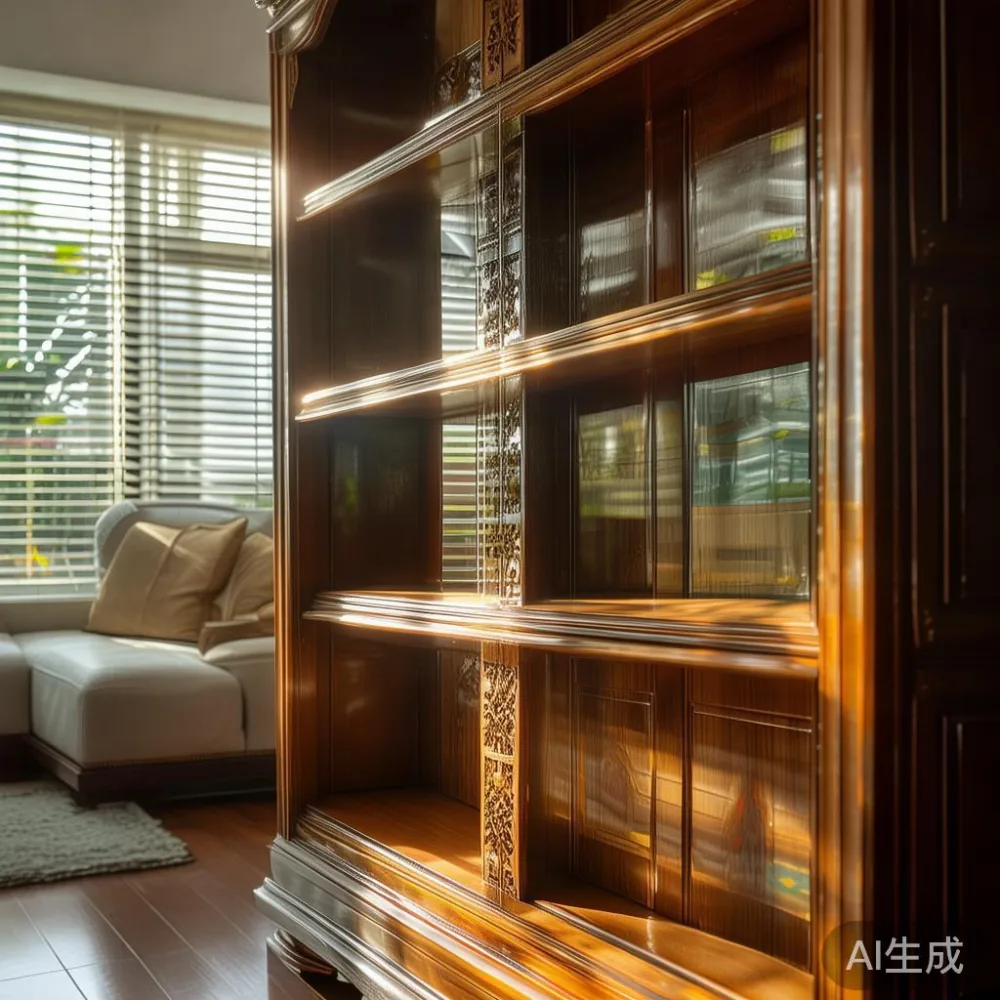
I learned this the hard way last month. I had a lacquered panel on a test bookshelf in our Foshan workshop for a client in Tampines, and I left it in the loading bay through two weeks of June drizzle rather than moving it into the climate-controlled room. When I brought it in, the lacquer had hazed slightly along the lower third, and the wood underneath had taken on a faint grey cast along the grain. The piece had been sealed with 2 coats of water-based polyurethane, 15 grams of resin per square metre per coat, and it still reacted. That single experience shaped everything I recommend below.
This guide covers how to care for a lacquered bookshelf in a Singapore home, whether it lives in an HDB flat in Punggol, a walk-up in Bedok, or a condo in Tampines with floor-to-ceiling glazing. We will cover humidity targets, cleaning chemistry, the difference between lacquered and oiled finishes, the reality of lift and corridor dimensions, and what a 10-year structural warranty actually covers versus what it does not.
One note before we begin: I write for MIDHILL, a solid wood furniture maker founded in 2008 that ships to more than 15 countries. Everything here is drawn from production experience and from conversations with Singapore customers, not from generic care sheets. Prices are in SGD because that is what you will pay in local currency, and delivery timelines are quoted in local days.
What Does Lacquer Actually Do to Solid Wood in 80 Percent Humidity?
Lacquer, whether nitrocellulose, water-based acrylic, or a modern water-borne poly, forms a thin barrier of roughly 40 to 80 micrometres over the substrate. It seals the wood, and in a stable indoor environment that is excellent. It also creates a surface with a measurable reaction to moisture swings. Wood itself moves dimensionally at about 0.1 to 0.2 percent across the grain for every 1 percent change in relative humidity. A lacquer film is much less flexible, so the film moves and the wood moves, and the mismatch shows up as stress, haze, or micro-cracking at the edges.
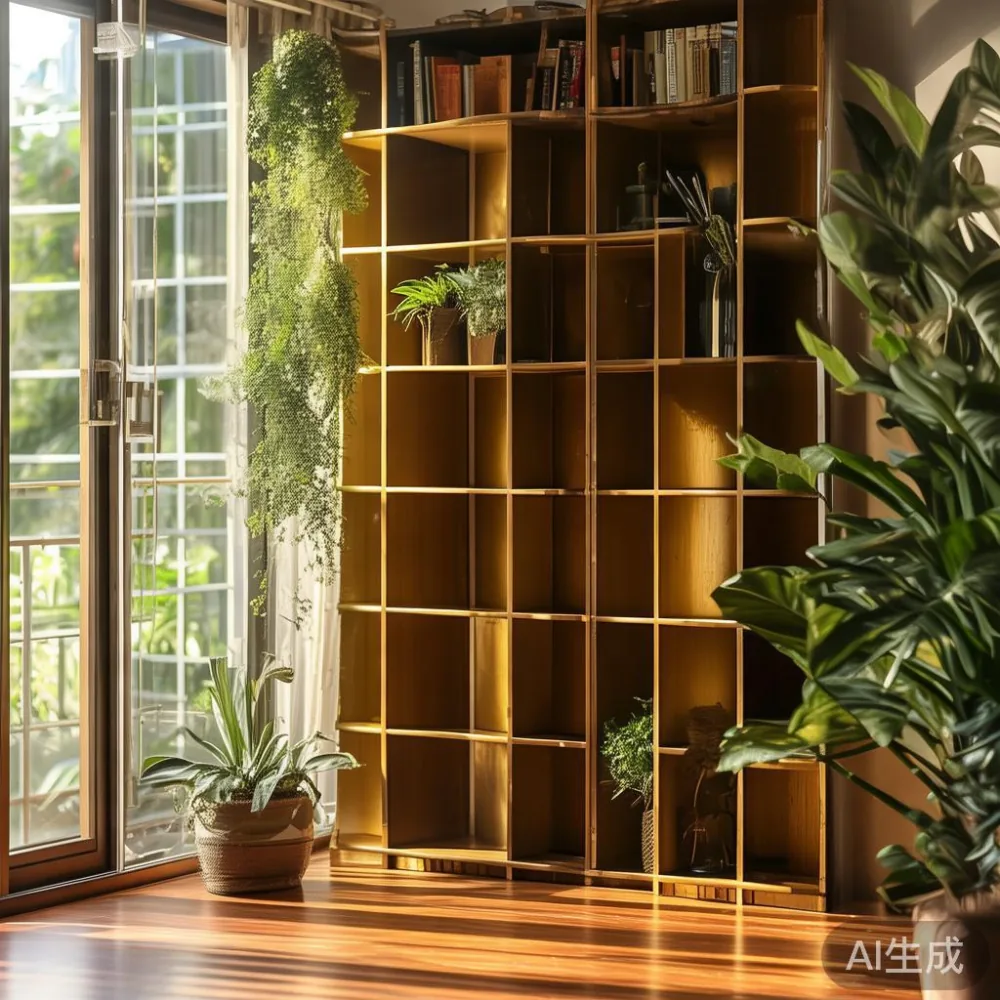
The numbers that matter in a Singapore flat: aim to keep the bookshelf in a zone between 45 and 65 percent relative humidity, and keep the surface temperature delta under about 5 degrees Celsius. In practice that means not parking it directly beside a west-facing window in Tampines at 3 pm, not pushing it flush against an exterior HDB wall that sweats in the monsoon, and not storing it in a corridor where the lift lobby air is unconditioned but the rest of the flat is at 24 degrees Celsius and 72 percent humidity.
Solid wood also has a moisture content target. For most Asian hardwoods we use, kiln-dried to 8 to 12 percent moisture content, the interior of a Singapore home at 75 percent ambient humidity will pull that content up toward 14 to 16 percent within a few weeks. That is normal. What is not normal is a 5 percent swing in 48 hours, which is what happens when you move a bookshelf from an air-conditioned bedroom into a humid balcony to dry in the sun. Rapid swings cause the failure that people blame on the finish rather than the moving.
There is also the salt factor. Singapore's coastal air carries chloride ions, and accelerated salt spray testing runs 500 to 1,000 hours for outdoor finishes. Indoor lacquer does not need to pass that test, but a bookshelf in a ground-floor Bedok unit close to the sea should get an annual wipe-down, because salt deposits under lacquer attract moisture and dull the sheen.
How Should I Clean a Lacquered Bookshelf Without Ruining the Finish?
Start with the mildest thing that works, and work up from there. Microfibre cloth, damp with plain water and wrung out until it is barely damp, is the correct first tool for roughly 80 percent of cleaning tasks. If the cloth leaves a visible streak, it was too wet. A properly wrung cloth should not leave a streak.
For dust and fingerprints, add a drop of unscented pH-neutral dish detergent to a litre of water, about 1 ml. That is it. Wipe, then follow with a second pass of clean water to remove residue, then dry immediately with a clean dry cloth. Never use a cloth soaked enough to bead on the surface.
What to avoid, in order of severity:
- Silicone or furniture polish sprays. They leave an oily film that traps humidity against the lacquer and yellows over 12 to 24 months.
- Ammonia-based cleaners. They soften some lacquer films and cause irreversible haze or bloom.
- Alcohol at more than 70 percent. Fine for disinfecting a handle, damaging to a lacquered panel with repeated use.
- Wet paper towels. They shed lint and leave water trapped against the wood edge.
- Magic eraser and scouring pads. They abrade the film. One scrub pad can dull a 40-micrometre lacquer layer in under 10 seconds.
My colleague in quality control has a simple test she runs on every production batch. She applies 3 drops of cooking oil to a hidden panel, waits 24 hours, then wipes it with a dry microfibre cloth. If the surface shows a visible oily mark, the lacquer has not fully cured or the film is too thin for the substrate. A good lacquered bookshelf should show no mark. If yours marks, that is a finish specification issue and worth raising with the maker rather than compensating for with stronger solvents.
Do I Need to Refinish My Bookshelf, and How Often?
A good lacquered surface in a properly conditioned home needs no refinishing at all in a decade. The real question is what to do when small damage happens, and whether it is worth doing yourself in a humid climate.
Minor scratches under about 0.2 mm deep can be addressed with a wax polish that matches the sheen. Apply a thin coat with a lint-free pad, let it haze for 5 to 10 minutes, then buff. Do not use coloured waxes, as they discolour the lacquer over time. For scratches in the 0.2 to 0.5 mm range, wet-sanding with 1,500 grit followed by 2,000 grit and a final polish works, but only if you can keep the panel dust-free and you accept 4 to 6 hours of careful work in a room with humidity below 60 percent.
Deep gouges that expose raw wood are a different matter. In our workshop, a proper repair means stripping back 40 to 80 mm around the damage, filling with a matching wood filler, sanding through 320, 400, 800, 1,200, 1,500 and 2,000 grit, then applying a fresh coat of lacquer and letting it cure for 72 hours at 25 degrees Celsius and 50 percent humidity. That cure environment does not exist naturally in most Singapore flats in July.
For customers who want this handled properly, MIDHILL offers lifetime refinishing on its solid wood pieces. In practice that means we handle the lacquer work in Foshan under controlled conditions and ship the bookshelf back or return a finished component. This is worth understanding clearly when you compare an Italian light luxury wardrobe or a French provincial with storage piece against a local flat-pack, because the refinishing commitment is part of the product, not a service add-on.
Do note what a structural warranty covers. Our 10-year structural warranty covers joinery failure, frame movement, and hardware failure. It does not cover lacquer haze caused by a humidity swing beyond 20 percent within a 24-hour period, nor scratching, nor chipping from impact. Any manufacturer that claims lacquer is warranted against humidity is describing a controlled indoor environment, not a Singapore one.
Will a Lacquered Bookshelf Fit Through My HDB Lift and Corridor?
This is where most Singapore furniture problems actually begin, and it has nothing to do with humidity. Standard HDB lift doors measure about 900 mm wide and 2,100 mm high in older blocks, with a car depth of roughly 1,350 mm and a diagonal around 2,100 to 2,300 mm. Newer BTO blocks with newer lifts usually give you 1,000 mm doors and a 1,500 mm car, but you should verify before ordering.
The measurement that catches people is the corridor turn. In many older estates the corridor is 1,100 to 1,200 mm wide, and the 90-degree turn at a staircase landing means the effective diagonal clearance is smaller than the straight-line figure suggests. A bookshelf 1,800 mm tall and 320 mm deep needs a diagonal of about 1,828 mm to turn a corner, and a 900 mm lift door will not accept it upright, so you must tilt it. Tilting a 42 kg solid wood piece through a 900 mm opening is a two-person job, and you should measure the door opening plus your hands.
Our practical guidance: measure the lift door width, the lift car diagonal, the narrowest corridor point, and the stair turn. Then compare against the product's largest assembled dimension plus 50 mm of clearance. If the product ships in a flat pack, the relevant figure is the longest single carton rather than the assembled size, and a 1,800 mm tall bookshelf often arrives as two or three sections precisely because of this constraint.
Condo owners in Tampines often have more room, but floor-to-ceiling glazing is its own problem. Direct afternoon sun can push a lacquered surface to 45 degrees Celsius while the surrounding air sits at 29 degrees, and lacquer under that differential can blister. If your bookshelf sits in a sunlit corner, a roller blind or sheer panel is the cheapest humidity and heat control available to you, and it costs under SGD 40 for a standard 1,700 mm drop.
On price and logistics: solid wood pieces from our Foshan factory typically land in Singapore between 12 and 25 delivery days after the order is confirmed, depending on whether they ship flat-packed or fully assembled. Shipping is free over US$350, which most solid wood bookshelf orders clear comfortably. We quote in SGD for local comparison, and a mid-range lacquered solid wood bookshelf in the light luxury register generally runs SGD 620 to SGD 1,450 depending on width, height, and finish. GST is already included in local consumer pricing at 9 percent. Returns are accepted within 14 days for change of mind, though a custom-finished piece cannot be returned, so finish samples matter.
How Do I Choose Between Lacquer, Oil, and Wax for a Humid Home?
Three finishes, three behaviours in 80 percent humidity, and the right answer depends on how much maintenance you actually want to do.
Lacquer gives the most protection and the least maintenance. It wipes clean, it resists spills, and it holds a colour evenly. Its weakness in the tropics is that it is rigid, so it needs a stable environment and it shows every scratch more honestly than oil.
Hardwax oil penetrates and leaves the surface with more give. It tolerates humidity swings far better than lacquer and is easier to repair locally, because you can re-oil the damaged area without stripping. Its weakness is maintenance: expect to re-oil every 12 to 18 months in a Singapore home, and every 8 to 12 months in a unit with west-facing glazing. It also takes longer to cure, typically 7 to 14 days before it handles books and daily contact.
Wax is a third option, useful for low-traffic pieces and for people who want to do the work themselves. It needs re-waxing every 6 to 12 months and it offers less stain protection. In a humid flat with a bookshelf that gets touched constantly, I would not choose wax.
Style context matters here, so let us be direct about it. French light luxury tends toward lacquered or polished surfaces, cream and putty palettes, and curves borrowed from 18th-century provincial work. American light luxury leans on warm walnut and oak with matte or satin finishes and clean lines. Post-modern light luxury sits between them, using geometry and flat planes that lacquer suits particularly well. If you are weighing a French bed vs Italian light luxury bed, the French provincial with storage style almost always arrives lacquered or polished, and the Italian comparison piece usually arrives in a more restrained oil or matte veneer finish. If you are weighing an American sofa vs French provincial sofa, the surface question carries across because both use lacquered wood frames in their bases and casings, and the same humidity rules apply to the underlying bookshelf or side table you place beside them.
The comparison shopping questions people send us most often include European light luxury bed vs Japandi bed, where lacquer appears on the European side and bare or oiled wood on the Japandi side, and top 10 Rustic furniture round-ups, where distressed finishes need a wax or oil to hold the texture. And if you are sourcing at trade level, wholesale Italian light luxury furniture programmes from Foshan-based factories generally use lacquer on the more formal pieces and oil on the rustic lines. For the middle of the range, our own MIDHILL coffee table in a lacquered oak finish has held up well in Singapore units, which is why the finish specification on the coffee table is written into the product page rather than left to the factory default.
What Is the Humidity and Care Routine I Should Follow Every Month?
A twenty-minute monthly routine prevents almost every lacquer problem we see in service requests. Here is the schedule I give customers, and the one I follow in my own flat in Tampines.
Weekly: a dry microfibre pass over all lacquered panels, including the tops and the sides that get dust from the return-air grille above. Bookcases sit against walls with a 20 to 50 mm gap for air movement, and dust collects in that gap faster than people expect.
Monthly: damp wipe with water and a single drop of pH-neutral detergent per litre, followed by a clean-water pass and a dry buff. Check the 3 points where lacquer fails first: the leading edges of shelves, the corners of the outer carcass, and the back panel junction. Look for haze, which appears as a milky film, and for a soft tackiness under a warm fingertip.
Quarterly: check the humidity. A SGD 25 to SGD 60 digital hygrometer, accurate to plus or minus 2 percent RH, is sufficient. If your bookshelf zone reads above 70 percent regularly, move it away from the exterior wall and consider a small dehumidifier, which costs SGD 90 to SGD 220 for a 10 to 20 litre unit and pulls a 20 m2 room down to a comfortable 55 to 60 percent.
Twice a year: for lacquered pieces, check that the doors and drawer runners still have clearance, that no shelf pin has loosened, and that the lacquer has not crazed near a fixings point. For oiled pieces, this is your re-oil window. For lacquer, this is simply inspection.
Annually, in the wet months: a gentle wipe with a cloth barely dampened with water and a drop of white vinegar per litre, for salt and atmospheric grime in coastal units. Test a hidden area first. Keep the frequency low, because repeated wet wiping is worse than infrequent deep cleaning.
One warning: never place a cup of coffee, a vase with water, or a humidifier directly on a lacquered top. Water rings on lacquer take 3 to 6 months of careful polishing to improve, and on a high-gloss panel they often do not fully disappear. Use a coaster, 90 mm diameter, and a mat, because a lacquered top is the surface most likely to show a permanent mark in a Singapore home.
Why Do Some Singapore Bookshelves Fail Within a Year and Others Last a Decade?
Across the service tickets we have reviewed, the failures cluster into four categories, and none of them are about lacquer chemistry alone.
The first is finish specification, where the maker applied a thin lacquer, under 30 micrometres, over a poorly prepared substrate with a high resin content filler. The panel looks good on day one and hazes by month eight. Solid wood sofas, bed frames and dining tables from the same factory usually do not show this, because the flat surfaces are large and heavily sealed, but a bookshelf has many edges, and edges are where thin film fails.
The second is substrate movement, where the maker used high-density particleboard or a thin veneer over an MDF core in a lacquered piece marketed as solid wood. That combination in 80 percent humidity produces the classic result of lacquered bookshelves whose back panels have warped and whose shelves have bowed by 8 to 15 mm. Ask for the core material in writing, and whether the shelf boards are solid, veneer over plywood, or MDF.
The third is environmental, and it is the one you control. A bookshelf placed against a chiller wall, in a bathroom-adjacent balcony, or in a corridor with no daylight and no air movement will deteriorate faster than the finish warranty allows.
The fourth is assembly quality. A solid wood bookshelf that is dowelled and glued properly, with shelf pins and a plinth that carries the load, will hold 35 to 45 kg per shelf without deflection. One built with dowels alone, in humid conditions where the dowel swells and the joint loosens, will rack in 18 months. This is where a 10-year structural warranty has real value, and where ours is written against joinery and frame stability for 10 years, with refinishing available for the life of the piece.
There is a design element worth mentioning for anyone fitting a bookshelf into a small HDB study. Solid wood expands and contracts with humidity, and a fixed shelf that is pinned tightly at both ends in a humid flat can bow in the middle. Leave 5 to 8 mm of clearance at each end of a fixed shelf, use a centre support every 800 to 900 mm on spans over 1,000 mm, and prefer adjustable shelf pins over screws wherever the design allows. A wardrobe, a bed frame, a nightstand and a marble table all get the same clearance treatment in our production drawings, because the physics do not change between categories.
Do Light Luxury Pieces Need Different Care Than Standard Furniture?
Yes, and the reason is finish density and surface area, not price. Light luxury furniture tends to use high-gloss or super-matte lacquer, which are the two most demanding finishes in the range. High gloss shows fingerprints, water rings, and dust more than any other surface, and it shows the orange peel of an over-sprayed panel more clearly as well. Super matte, by contrast, scuffs visibly because the abraded area takes on sheen.
Neither matters if the piece is cared for properly, and both matter enormously if the customer was never told. When you compare French provincial with storage lines against plain shaker lines, ask who is responsible for the finish warranty and what the process is for a repair. A credible answer includes humidity guidance, a cure time, and a shipping plan back to the workshop, which is what lifetime refinishing from a Foshan factory actually looks like in practice.
If you are fitting out an entire flat, the order of operations matters. Let the furniture acclimatise for 3 to 7 days in its final room before you load it with books. Books are heavy: a metre of hardback literature runs roughly 25 to 35 kg on a shelf 1,000 mm long, so do not fully load the upper shelves until the wood has settled into the local moisture content. Load from the bottom up, keep the heaviest volumes on the lowest fixed shelf, and leave at least 30 percent of each shelf's rated capacity free for the first month.
That is the entire method. A lacquered bookshelf in Singapore will last a decade if the humidity around it stays in a reasonable band, if you clean it with water and a drop of detergent, if you never move it quickly between temperature zones, and if the joinery was done properly in the first place. Our workshop can control the last point. The other three are yours, and each of them takes less than 20 minutes a month.