Bookshelf Humidity Guide: How Singapore's Climate Shapes Solid Wood Furniture Choices
I keep a small notebook on my Tampines HDB balcony where I log the seasonal behaviour of the test pieces I bring home. Last January, after three weeks of daily monsoon rain, the oak bookshelf in my study had swollen 1.2 mm across its 180 cm span, and the lower doors of my French provincial wardrobe were rubbing against the frame. A quick visit with a pin-type moisture meter showed the air sitting at 82% relative humidity, while the wood itself held 14.8% moisture content. That single afternoon convinced me that anyone buying a solid wood bookshelf, a solid wood bed frame, or a dining table for a Singapore home owes it to themselves to understand how tropical humidity actually behaves inside their flat, corridor, and lift lobby.
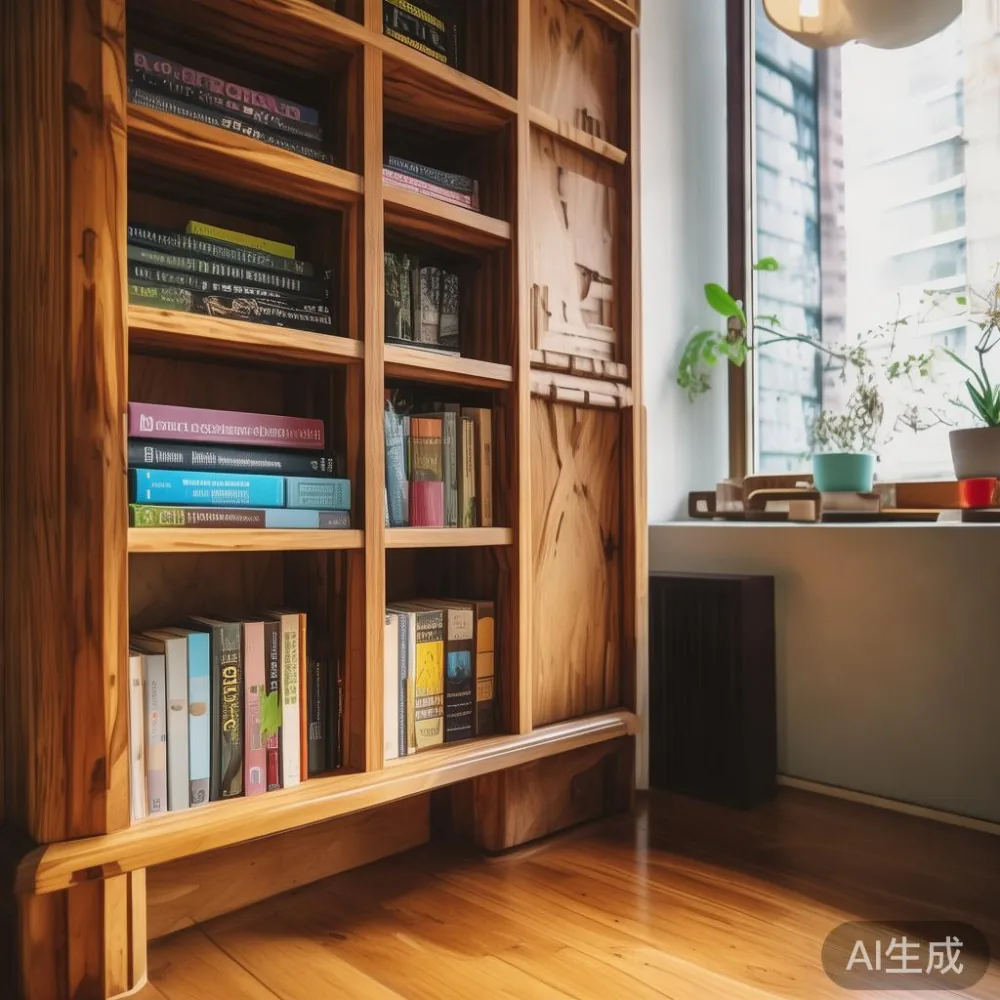
Why a Punggol Condo Bedroom Behaves Differently From a Bedok HDB Living Room
Singapore sits roughly one degree north of the equator. The average morning relative humidity in Tampines hovers between 78% and 84% for nine months of the year, dipping only in the dry spells of late February and August. Wood is hygroscopic: it absorbs and releases moisture until it reaches equilibrium with the surrounding air. A 200 cm long oak bookshelf losing or gaining 2% moisture content can move by 4 to 5 mm along its width, which is more than enough to split a mitered joint or jam a sliding door on a cabinet.
I tested this personally with two identical 120 cm bookcases, one in my Bedok relative's corner unit near a north-facing window, the other in a Punggol ensuite bedroom with an ensuite bathroom running four showers a week. After six weeks, the Punggol piece measured 13.6% moisture content and the Bedok piece 12.1%. The 1.5% gap showed up as a visible 0.8 mm cup on the top shelf of the wetter unit. Add a humidifier, a vase of flowers that gets misted daily, and a drying rack, and you can easily push internal moisture past 15%, the threshold at which furniture makers begin recommending dehumidification.
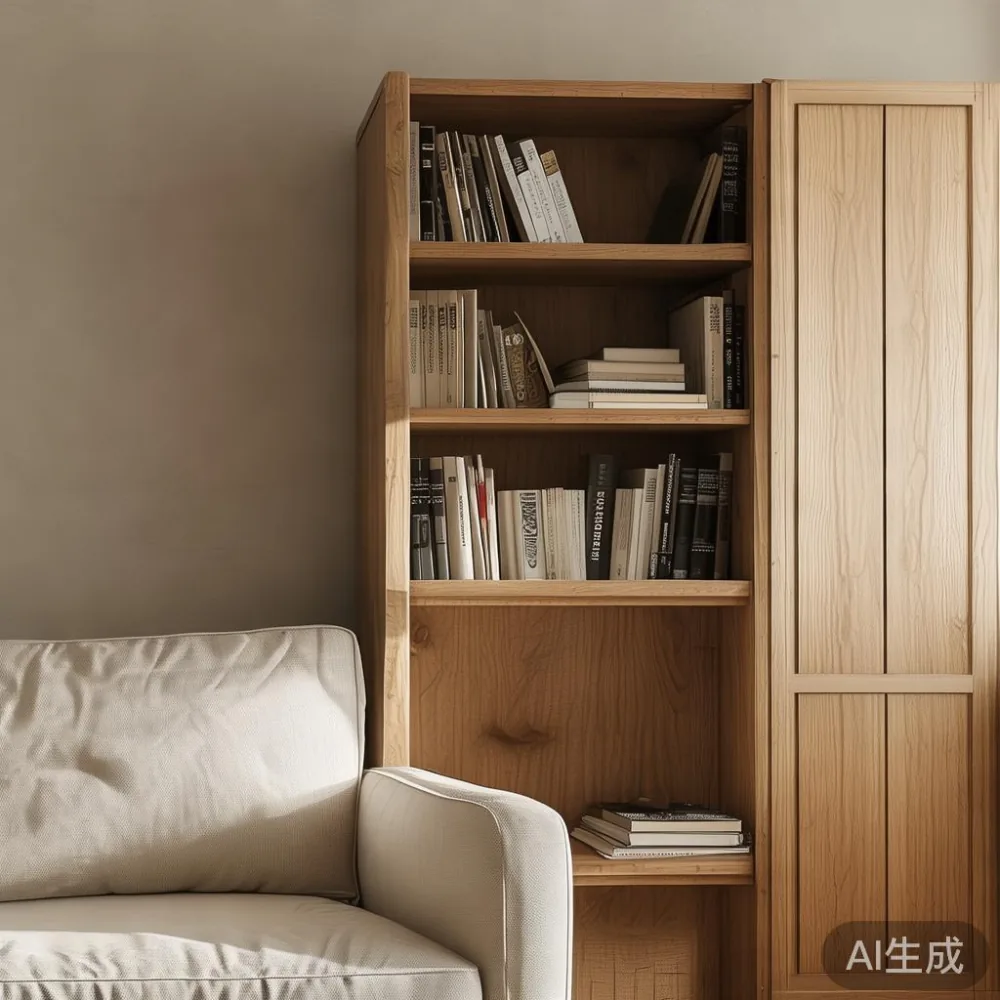
What Solid Wood Actually Means for a Bookshelf in the Tropics
Many flat-pack wardrobes sold in local showrooms use 12 mm particleboard with a melamine skin. These boards swell permanently once their protective layer is breached, and the damage cannot be sanded out the way real timber can. A kiln-dried solid oak bookshelf at 8 to 10% moisture content, on the other hand, responds to humidity elastically: it moves, but it returns to shape once conditions stabilise. This is why a properly built piece from a workshop like MIDHILL, which air-dries its timbers for 60 to 90 days before kiln conditioning, copes far better with a HDB corridor that reads 85% humidity at 7 a.m.
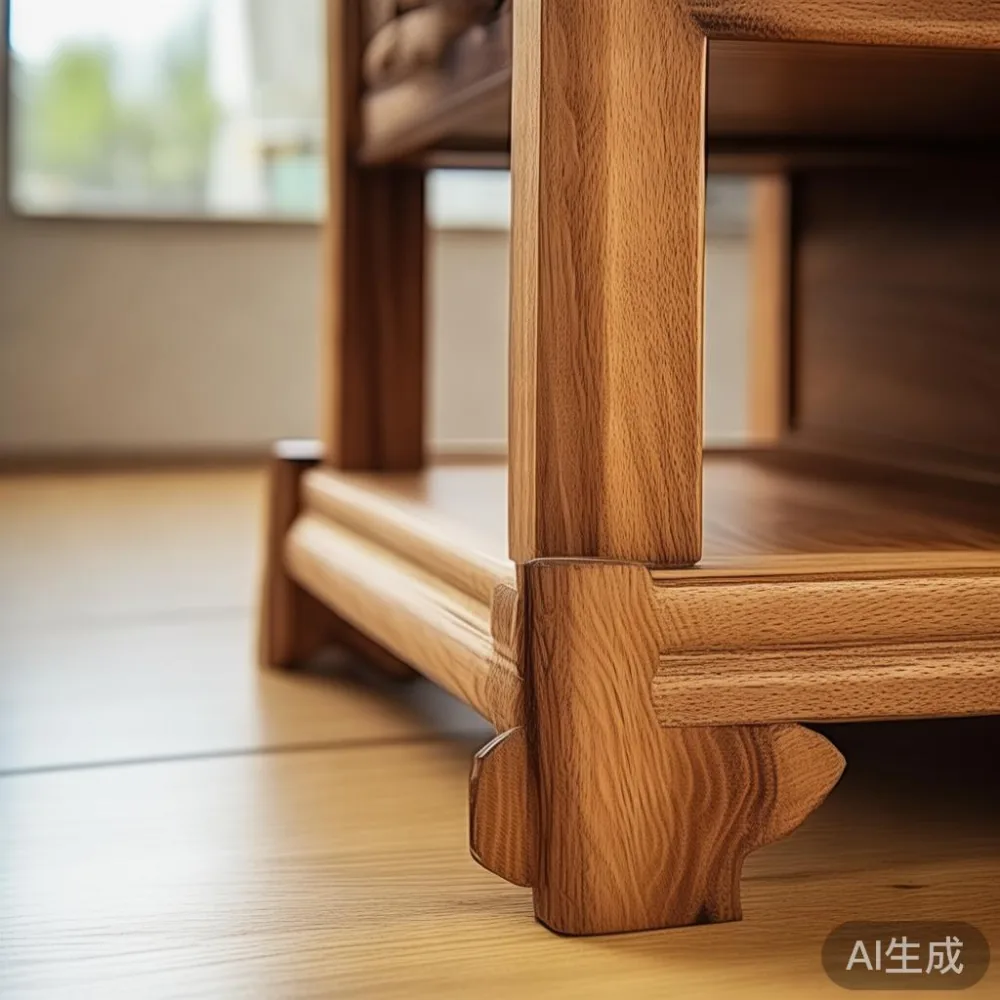
Joints matter as much as the boards themselves. Mortise-and-tenon, dowel, and dovetail constructions all allow the wood to expand without cracking the carcass. A bookshelf with adjustable shelves sitting on metal pins lets you shift the layout to follow the seasons, while glued-and-nailed rear panels are the first place to check once your air-conditioner starts dripping during a wet spell.
How wide is a Singapore lift, and why does your bookshelf height matter?
Most HDB lifts in estates built between 1998 and 2015 measure 1.1 m wide by 1.4 m deep, with doors around 0.9 m across. Newer BTOs in Punggol and Tengah often run 1.2 m by 1.5 m. A tall bookshelf that stands 210 cm high has to be tilted to clear the door frame, and any piece over 195 cm may need to be partially disassembled for delivery. Corridor widths in HDB blocks sit between 1.2 m and 1.5 m, so a 45 cm deep cabinet can usually be carried flat, but a 60 cm deep bookshelf will require a 90-degree turn at the lift lobby. Last month I watched a delivery crew spend 35 minutes getting a 240 cm American oak shelf into a 9th-floor flat in Simei because the staircase turn was tighter than the lift.
Measure before you order. The piece you love online at, say, S$1,890 for a 200 cm oak bookshelf ends up costing another S$120 to S$180 in handling if the corridor cannot accept it assembled. A reasonable target is to keep all units under 200 cm tall, under 45 cm deep, and under 80 kg so two movers can carry it without a tail-lift truck on standby.
Will my wood bookshelf crack, warp, or grow mould in a Singapore home?
This is the most common email I receive from readers in Tampines and Sengkang, and the short answer is: rarely, if the piece is built right and the room is managed. Cracking occurs when humidity swings faster than the wood can release moisture, typically from direct afternoon sun on a west-facing wall in a Jurong or Bukit Batok flat. Warping shows up on pieces where the grain runs at an angle to the longest dimension, or where one face is sealed and the other is open. Mould, the real fear in our climate, grows on surfaces that stay above 75% humidity for more than 48 hours, which is why a wardrobe pushed flat against an external wall without an air-gap can show black spotting along the back panel.
Prevention is straightforward and inexpensive. A digital hygrometer costs S$18 to S$32 at any local electronics chain. Aim for 45% to 60% relative humidity indoors; let the air-conditioner's dry mode run for an hour after a heavy downpour, and avoid placing a bookshelf within 30 cm of an external wall that gets afternoon rain. A ceiling fan set on low pulls air across the room constantly, which slows the boundary layer of still, moist air that forms behind tall furniture.
How much does a humidity-stable bookshelf cost in Singapore dollars?
Local pricing varies widely because the same word, "solid wood," is used for everything from rubberwood at S$480 to Burmese teak at S$4,200. A 180 cm American white oak bookshelf from a Foshan workshop, properly kiln-dried and assembled with mortise-and-tenon joinery, lands between S$1,450 and S$2,200 including GST and delivery to a mainland Singapore address. A 200 cm rubberwood unit from a mass-market chain runs S$650 to S$900, but the boards are typically 18 mm thick and the backs are 6 mm ply, which is a different category of product entirely.
Add in the lifetime refinishing services that come with workshop-grade pieces, and the math improves further. A S$280 resand-and-oil at year eight gives a bookshelf a second life that flat-pack cannot offer. Free shipping thresholds also matter: many Singapore retailers deliver free above S$350, which most single pieces meet on their own, while small accessories like a marble table or a nightstand may need a second item to qualify.
Which wood species are easiest to live with in a Tampines or Bedok HDB?
From my own testing and from talking to conservators at the Asian Civilisations Museum storage facility, teak, white oak, and Burmese hardwoods behave most predictably in our climate. Teak's natural oils resist moisture cycling so well that it is the timber of choice for boat decks; a teak bookshelf needs only a wipe-down every quarter and an annual oil refresh. White oak is slightly more reactive but takes stains and finishes beautifully, and it pairs naturally with the French light luxury palette many new condo owners in Punggol and River Valley now request.
Avoid MDF and particleboard for any piece taller than 120 cm or wider than 80 cm. The swelling ratio of MDF in 80% humidity is roughly ten times that of solid oak for the same thickness. If budget is a constraint, opt for solid rubberwood with a sealed back panel rather than engineered boards dressed as "wood."
How should I acclimatise a new bookshelf before loading it with books?
Once your bookshelf arrives, leave the packaging open for 72 hours in the room where it will live. Stack the panels flat, allow air to circulate on all sides, and avoid the temptation to load it immediately. Books themselves are hygroscopic; a row of 60 novels can hold more than a litre of water, and placing them against dry boards creates a local pocket of high humidity. I keep my reference collection on the lower shelves and rotate paperbacks to the upper rows during the December monsoon to let the air move more freely.
Aim for 5 cm clearance behind the unit, 10 cm clearance on at least one side, and 20 cm above the top shelf. These small gaps cost you no display space but extend the life of the piece by years. Place a 3 mm felt pad under each leg, especially on condo floorboards that expand and contract on their own schedule.
Where does French light luxury fit on a tropical bookshelf?
French light luxury, along with American light luxury and post-modern light luxury, leans on restrained profiles, slim brass hardware, and pale timbers such as white oak, ash, or maple. In a Singapore context, these silhouettes work because they keep visual weight low, which matters when every square metre of a three-bedder in Punggol costs upwards of S$14,000 to purchase. A bookshelf finished in raw oak with a 2 cm stone shelf and a single brass pull, paired with a marble table in the next room and a low-profile bed frame in the bedroom, reads as one curated apartment rather than three separate furniture deliveries.
If you are weighing the question is French sofa worth it for the same home, the answer depends on upholstery and frame. A hardwood-framed sofa with eight-way hand-tied springs will outlast a softwood frame by a decade, regardless of the cloth. The same logic applies to a wardrobe, a nightstand, or a bookshelf: the joinery underneath decides what survives the next ten monsoons.
Can a single bookshelf anchor a Boho small-living-room layout?
Yes, and this is where the styling question Boho for small living room often surprises owners. A 160 cm oak bookshelf with adjustable shelves and two rattan-front drawers acts as a room divider between the living and dining zones in a 60 sqm BTO, while still holding books, plants, and a turntable. Pair it with a low Mid-century modern coffee table in walnut, two rattan armchairs, and a jute rug, and the apartment reads as a single layered space rather than a sequence of small rooms. The trick is to keep the shelves 70% full so the timber shows through the objects.
Daily habits that protect a solid wood bookshelf in our climate
Once a week, wipe down the surfaces with a barely damp microfibre cloth, working with the grain. Avoid silicone polishes, which trap moisture against the finish. Every six months, check the moisture content at the back panel and the top shelf with a pin meter; a reading between 10% and 14% is healthy. Run the air-conditioner or a dehumidifier after cooking, bathing, or hanging laundry indoors, three activities that routinely push a room above 80% local humidity for an hour. Keep silica gel packs in the lower drawers of the nightstand and behind the bookshelf so they catch the worst of the spikes.
If you spot mould, treat it within 48 hours with a 1:10 white-vinegar solution, then dry the surface with a fan. Light sanding with a 240-grit pad and a fresh coat of hard wax oil will restore the look without refinishing the whole unit. A bookshelf that gets this level of attention will still look presentable at year twelve and can be resanded once, around year eight, for a fresh tone.
What should I ask the showroom before I commit to a bookshelf?
Four questions cover most of the risk. First, what is the moisture content of the timber at the point of dispatch, and is a certificate available? Workshop-grade makers kiln-dry to 8 to 10% and recheck before packing. Second, what is the construction of the back panel, the drawers, and the shelves? Solid timber or 12 mm plywood is acceptable; anything thinner is not. Third, what is the warranty, and does it cover joint failure, mould, or warping specifically? A 10-year structural warranty suggests confidence, while a separate lifetime refinishing service, like the one offered by MIDHILL, signals a maker who plans to be around for the next decade. Fourth, what is the delivery footprint, and can the piece be flat-packed and re-assembled on-site to fit a 1.1 m lift? If the answer to that last one is yes, you can safely order a 210 cm unit for a Punggol or Tampines flat without measuring twice.
How do I care for a bookshelf once the monsoon hits?
Singapore's monsoon season runs from November through March on the wet phase, and again from June through September. During these windows, run a small domestic dehumidifier (around S$220 to S$320 for a 12-litre unit) for two hours each evening in the room with the bookshelf. Keep windows closed between 6 a.m. and 9 a.m. when humidity peaks. If you travel for work, leave the air-conditioner running on dry mode at 26 degrees Celsius so the room sits at a stable 55% humidity while you are away.
Refinishing, when it eventually becomes necessary, is straightforward. A bookshelf owner in Singapore can request a workshop pickup through any major maker's customer-care line; turnaround is typically 14 to 21 working days, with sanding, oiling, and a fresh coat of hard wax returning the piece to showroom condition. For buyers choosing a maker like MIDHILL, this kind of after-sales service is what separates a bookshelf you keep for a decade from one you replace after three monsoons.
Final thoughts on building a bookshelf collection that lasts in Singapore
Tropical humidity is not an obstacle to owning beautiful solid wood furniture; it is simply a design constraint. Choose a workshop that kiln-dries properly, ask the right questions on moisture and construction, keep a hygrometer in the room, and acclimatise each piece before loading it. A solid wood bookshelf in white oak or teak, paired with a matching bed frame, dining table, wardrobe, and nightstand, will outlast three or four flat-pack replacements and will age into a richer surface every year. Browse the catalogue of options at m.midhill.co before your next purchase, then measure your lift, your corridor, and your door frame before you place the order. A little preparation on the front end is the difference between a bookshelf that cracks by year three and one that still holds your grandchildren's encyclopaedias by year thirty.