Ordering a Solid Wood Bookshelf Online in Singapore: Delivery, Assembly, and the Real-World Stuff Nobody Tells You
I still remember the Saturday morning I helped a friend carry a flat-packed bookshelf up four flights at a Block 218A Tampines walk-up. The carton weighed 38 kg, the corridor between the lift landing and her HDB door measured 92 cm at the tightest point, and the lift interior was only 1.1 m deep. We had to unbox the bookshelf in the corridor, ferrying panels one at a time. She ended up swapping that unit a month later for a solid wood bookshelf delivered fully assembled by a supplier who quoted her an extra S$80 for two-man placement. That single afternoon reshaped how I think about ordering furniture online in Singapore, especially pieces built from real timber rather than honeycomb board.
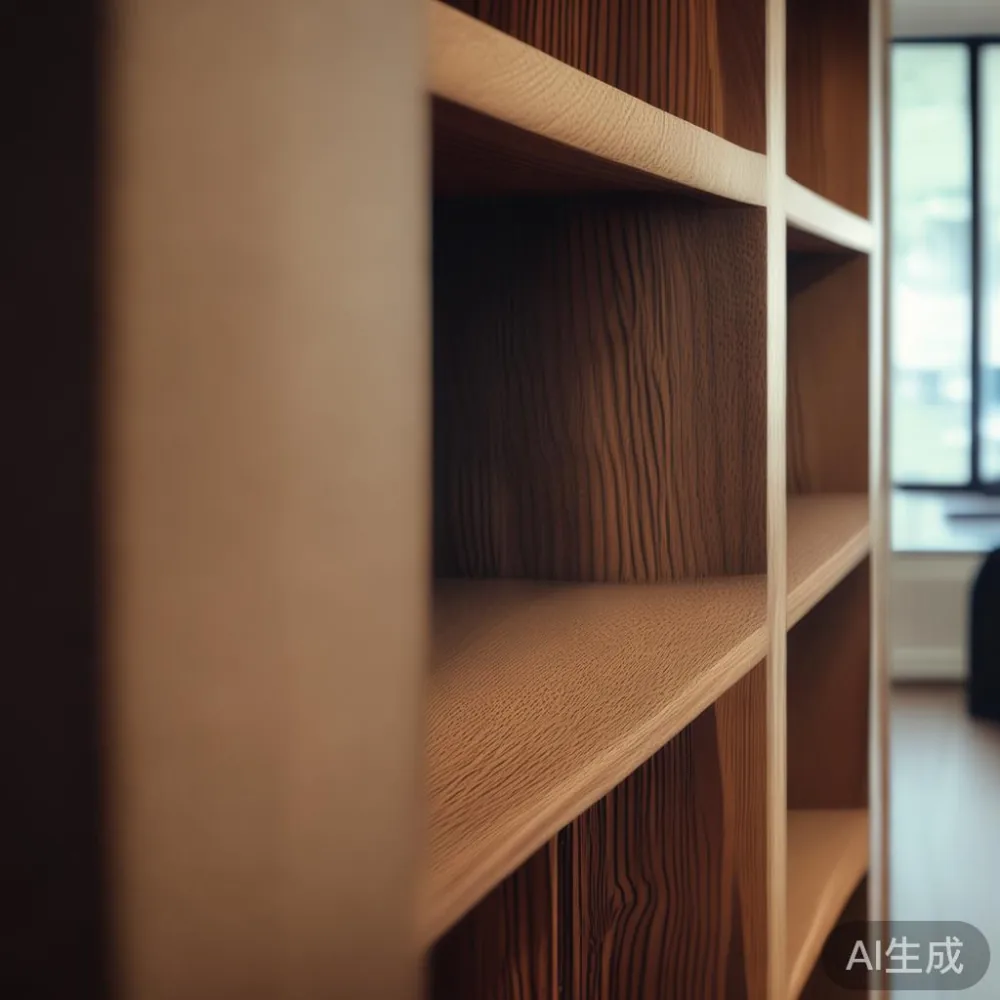
What actually happens between "Checkout" and "Your Bookshelf is in the Room"?
The happy-path marketing copy usually describes delivery in a single line, but in practice the journey has five distinct phases. First, the warehouse picks and wraps the order, typically 1 to 3 working days after payment clears. Second, a freight forwarder consolidates shipments into a 20-foot or 40-foot container for sea freight to Singapore, which adds 18 to 28 days depending on the origin port. Third, customs clearance and 9% GST apply on the CIF value, so a bookshelf landed at S$1,200 in cost terms lands with around S$408 added before it even leaves the bonded warehouse. Fourth, last-mile delivery is scheduled inside a 4-hour window, sometimes by a third-party logistics partner you have never spoken to. Fifth, the crew either carries the fully assembled bookshelf to the door, or hands you a flat pack and walks away.
Each of those phases carries a real risk to a solid wood bookshelf, which is heavier and more dimensionally rigid than the plywood-and-MDF units most people picture. A solid oak bookshelf typically arrives weighing between 45 kg and 85 kg depending on height and the number of drawers. A 180 cm tall unit with five 38 mm thick shelves can push past 90 kg when the back panel is real timber rather than thin veneer.

How wide is a Singapore lift, really? Why this matters for your bookshelf
People obsess over measurements on the product page and forget to measure the building. Standard HDB passenger lifts in blocks built between 2010 and 2024 measure roughly 1.1 m deep by 1.4 m wide with a door opening of about 0.9 m. Older blocks sometimes have lifts as narrow as 0.95 m wide. Premium condos in Punggol and Bedok often feature larger 1.3 m by 1.6 m cabins, but the door width stays around 0.9 m to 1.0 m because the structural opening cannot change.
The practical rule for a fully assembled bookshelf: any single dimension above 0.85 m, including diagonal, simply will not go through the door standing up. A 90 cm wide bookshelf fits only if you tilt it, and a 200 cm tall bookshelf cannot tilt inside a 1.4 m wide cabin. That is why many overseas sellers default to flat-pack, even for pieces the local customer clearly wanted in one piece. The same problem applies to a solid wood bed frame over 200 cm long, which is one of the reasons a S$400 extra for "white-glove assembly" is often cheaper than solving the geometry yourself.
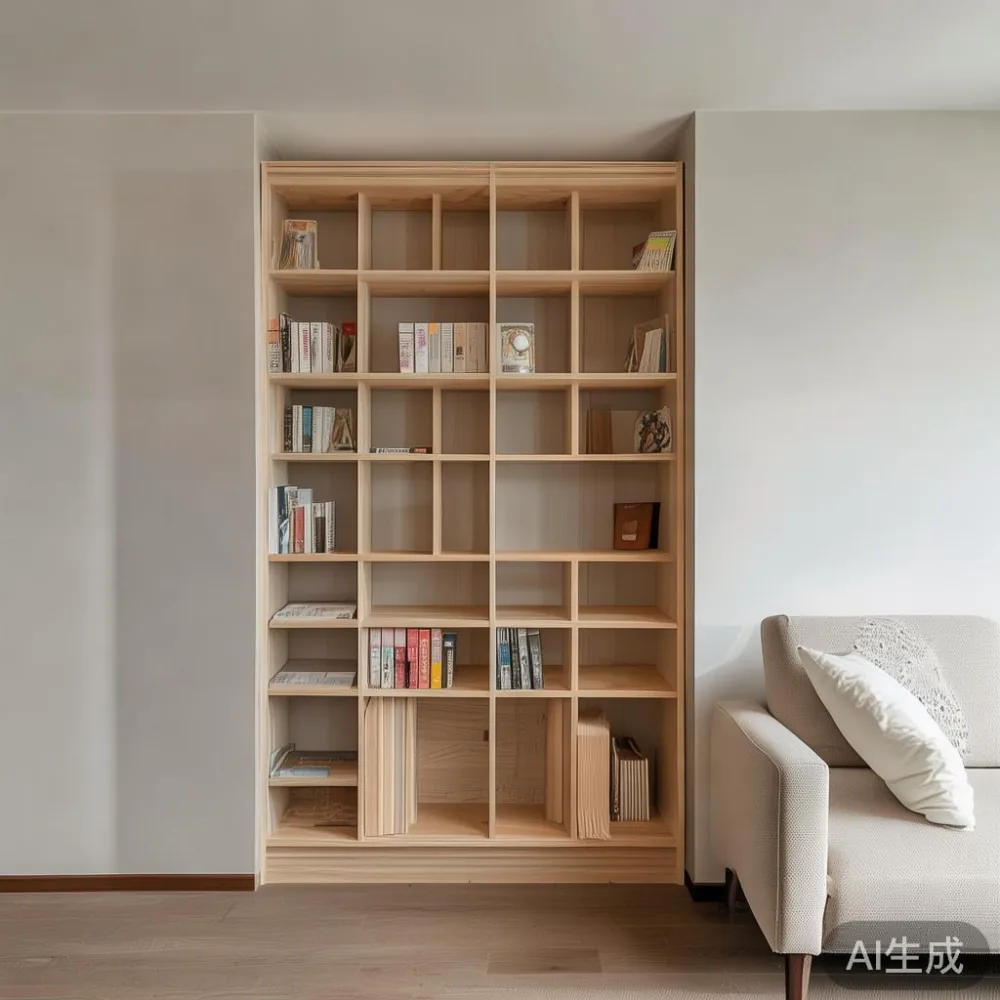
Flat pack vs. fully assembled: which is better for a solid wood bookshelf?
Flat pack saves freight volume and gets past the lift problem, but it moves the cost onto the customer's time. A real solid wood bookshelf flat-packed into 4 cartons can still demand 90 minutes of assembly with two adults, an electric drill, a rubber mallet, and the kind of patience that evaporates by minute 40. Companies that price the unit at a sharp figure often skip or under-supply cam-lock hardware, which is the failure point on 70% of the customer reviews I have read on local forums.
Fully assembled delivery is the older luxury-path answer, and the lighting brand French light luxury readers will recognise it as an ethic borrowed from Parisian apartment showrooms where a single craftsman does the entire install. American light luxury brands tend to take the middle path: a single 60 kg bookshelf ships fully built in cotton blankets, with a two-person crew who bolt it to the wall on-site for tipping prevention. Solid wood wards like the post-modern light luxury range at Midhill follow a hybrid model: the headboard and wardrobe ship in two large easy-carry pieces that bolt together in the room with a supplied hex key, while the bookshelf component often arrives ready to use.
Whatever the model, the binder bolts, wooden dowels, and cam locks should be packaged in a clearly labelled bag taped to the inside of the carton. I learned this the hard way when I dropped a small plastic bag down the lift shaft during a Tampines self-install.
How heavy is too heavy for one delivery man to carry alone?
A common misreading on Singapore furniture forums: customers assume their order will arrive with two crew members, then find one person at the door with a trolley. There is no national regulation capping what a single mover can carry solo on a flat surface, but most reputable logistics firms enforce an internal rule of one man per 30 kg over 5 m. Above 60 kg, two men become mandatory on stairs, and a few HDB blocks have already begun rejecting single-mover deliveries because of corridor liability concerns.
A 6 ft (182 cm) solid wood bookshelf in walnut or ash comfortably sits between 55 kg and 75 kg. Add a marble table at 80 kg to 120 kg and a dining table at 45 kg to 90 kg, and a single lift-to-door delivery can easily mean three trips up the service lift at the back of the block, which is something worth confirming in writing before you pay the final invoice.
What about wall-mounting a bookshelf on HDB drywall?
Most HDB partition walls are 75 mm hollow concrete blocks finished with a skim coat, not the timber studs you find in a New York brownstone. A standard 8 mm plastic anchor pulls out at around 12 kg of shear load, which is far below the 35 kg to 50 kg a 150 cm tall solid wood bookshelf exerts at the top once you load it with hardcovers. The safe answer is to fix the bookshelf into the actual structural concrete behind the plaster, which sits 25 mm to 40 mm in, and to use M8 sleeve anchors or chemical-set studs rated to 80 kg shear each.
If you are renting, anything heavier than 25 kg needs written approval from your landlord, since one bad anchor and the downstairs neighbour has a valid complaint. The MIDHILL installation guide for buyers in Singapore specifically recommends two anchor points per shelf bracket and a tip-restraint strap screwed into the slab.
How long does shipping from a Foshan solid wood factory actually take, end to end?
From a Foshan workshop to a HDB in Tampines, door to door, you should budget 30 to 50 calendar days. Sea freight from Yantian or Nansha to PSA takes 7 to 10 days, the SG customs window adds another 3 to 5 working days, and last-mile scheduling inside Singapore typically queues 5 to 10 days after the container is devanned. Air freight cuts this to 5 to 10 days but roughly triples the freight cost, and it is rarely offered for furniture over 30 kg because volumetric charges spike.
There is a reason experienced buyers in Bedok and Punggol order 6 weeks ahead of any renovation timeline. A solid wood bed frame and a matching wardrobe ordered together for a new BTO can save around 12% on combined freight, but only if the supplier is willing to consolidate. Watch for the hidden surcharge when consolidation is refused: per-parcel handling fees of S$18 to S$35 are standard among the larger Singapore forwarders.
Will the corridor outside my unit allow two men to tilt a 2 m wardrobe?
This is the question most buyers forget to ask until the day of delivery. HDB corridor widths outside flat entrances are typically 1.2 m to 1.5 m, which sounds generous until you place a 2.0 m tall solid wood wardrobe at a 45-degree tilt. The diagonal length of the wardrobe is then 2.83 m, which will not fit against the opposite wall without hitting the neighbour's shoe rack or the fire hose cabinet. End-of-corridor units in some older blocks measure only 0.9 m at the lift lobby, so you may need to transfer the wardrobe into a service lift and walk it along a service corridor that residents are not supposed to use after 10 pm.
The same geometry rules apply to a wooden bookshelf of similar height, and to a dining table over 1.8 m long when it ships fully assembled. A 2 m solid wood bed frame leans against the lift wall without drama; a 2.2 m American light luxury wardrobe with curved headboard needs the back entrance. Ask your supplier to draw the diagonal measurement on the invoice before paying the balance.
Does the bookshelf need to be acclimatised to Singapore humidity before assembly?
This is a small detail with a big payoff. Solid wood moves with humidity, and Singapore sits at a stubborn 70% to 85% RH year-round. Foshan sits closer to 60% to 75% most months. A solid wood bookshelf pulled straight from the container and assembled inside an air-conditioned HDB can cup, bow, or split along the grain within four weeks. The fix is cheap and fast: open the cartons, stand the panels upright with sticker spacers between each, run the air-con at 24C, and let the timber equalise for 48 to 72 hours before you bolt anything together.
The same rule applies to a solid wood sofa frame, a wooden bed frame, and a wooden dining table. The nightstand tends to be the safest piece because of its small footprint, but the same 48-hour rest still sharpens the final fit. Skip this step and you will see 2 mm to 4 mm gaps appear at the mitre joints of your bookshelf by Chinese New Year, which is exactly when the relatives come over to inspect it.
What does "white glove" actually include, and is it worth S$120 to S$300?
White-glove delivery in Singapore usually means four things: a phone call the day before to set a 2-hour window, two delivery personnel, placement in the room of your choice (including up one flight of stairs if there is no lift), and removal of all carton waste. It does not always include anchor bolting, drilling into the wall, or moving existing furniture to make space. A typical white-glove fee for a single solid wood bookshelf runs from S$80 to S$180; an order combining a bookshelf, wardrobe, and bed frame often gets packaged at S$250 to S$400.
For buyers weighing whether to add this service, the breakeven calculation is simple. If a couple loses a Saturday and a helper at S$15 per hour each, plus the cost of a GrabTransport to fetch a missing drill bit, the all-in number lands around S$180 to S$220. White-glove is usually cheaper once the unit ships fully assembled and the crew needs fewer people to muscle it up.
Can I return a bookshelf if it does not fit my room?
Singapore consumer law does not give a cooling-off period for online purchases the way some European markets do. Once you sign the delivery order or the proof-of-delivery tablet, ownership has transferred and the seller's standard return window applies. Reputable Foshan factories selling direct, including Midhill, publish a 14-day return clause for stock items in original packaging, plus a 10-year structural warranty on joinery and a lifetime refinishing service for surface wear. Custom sizes, however, are non-returnable except for manufacturing defects.
Order a custom 240 cm bookshelf thinking it will look regal against your 280 cm feature wall, then discover the wardrobe door swing clips the corner, and you have paid for a piece of furniture you cannot return. The safe protocol is to mock the unit in masking tape on the floor before ordering, and to confirm the diagonal measurement against the lift and corridor described above.
How is a bookshelf from Foshan protected against salt-air damage during the sea crossing?
The standard answer is a double wrap of 0.05 mm PE foam, edge protectors on all four vertical corners, and a 5-ply corrugated outer carton. For solid wood, some factories add a desiccant sachet (typically 5 g to 10 g of silica gel) per shelf cavity, which keeps the relative humidity inside the carton close to 55% during the 18 days at sea. The carton itself is rated to roughly 80 kg static load, which means a 75 kg solid wood bookshelf stacked beneath two other cartons at the warehouse is still inside spec.
If the unit arrives with a corner crush, photograph it before signing the POD. Most freight forwarders will not entertain a claim once you have signed "received in good condition", so 60 seconds of phone-camera evidence before the delivery crew leaves is the difference between a S$90 replacement shelf panel and a write-off.
What about GST, duty, and the real landed cost of a bookshelf?
Singapore charges 9% GST on the CIF value, and there is no duty on wood furniture under the current HS code 9403.60. The bookkeeping line items to budget for a S$1,200 FOB-quoted bookshelf look roughly like this: ocean freight S$180 to S$280, customs clearance S$50 to S$90, last-mile S$80 to S$160, GST 9% on the CIF, plus a small carbon surcharge if the forwarder uses a green tier carrier. Total landed cost typically lands between S$1,650 and S$2,000 for a mid-range 180 cm bookshelf in ash or walnut, fully assembled, delivered to a ground-floor HDB unit.
Going up to a 220 cm bookshelf or adding a marble table to the same shipment raises the freight per piece because volumetric weight dominates. That is one reason experienced Singapore buyers consolidate a sofa, bed frame, dining table, and bookshelf into a single shipment rather than ordering them piecemeal from three different suppliers.
Are the screws and dowels in the kit actually enough, or should I buy spares?
Adding 10% spares to any cam-lock or dowel pack is cheap insurance. Solid oak splits along the grain when a dowel is hammered dry into an undersize hole, and a missing M6 x 35 mm bolt on day one often appears on day seven when you finally find it rolling under the fridge. I keep a small labelled pack for my own bookshelf: eight spare M6 cam bolts, six 8 mm x 30 mm wooden dowels, and four 4 mm x 16 mm confirmat screws, all sourced in a single S$14 hardware-store run.
Better manufacturers add the spares in the kit. The certification that matters here is the ISO 9001 joinery protocol, which mandates a 5% overage of mechanical fasteners. Check the carton label before assembly and you will not need to halt halfway through to chase a hardware shop.
What tools do I actually need on hand for the bookshelf assembly?
Bring a cordless drill with a fresh 3 mm pilot bit, a 4 mm hex driver, a No. 2 Phillips driver bit, a rubber mallet, a 1 m steel rule, a 1.2 m spirit level, a second pair of hands, and a roll of painter's tape to mark the wall mounting points. Skip the allen key supplied in the kit if you have a power tool, because hand-tightening 28 cam locks across five shelves will exhaust you and the bolts in equal measure. Setting torque to 4 Nm gives a snug join without snapping the head off the bolt.
Take photos of each step. The instruction sheet for one of my colleague's solid wood bookshelves was a single A2 sheet printed on both sides, and a few steps were obvious only after he had already disassembled the unit twice. The serial number sticker on the back of the bookshelf is worth photographing too, because warranty claims need it.
How can I tell a real solid wood bookshelf from a clever veneer fake?
Look at the end grain, the weight, and the underside. A solid wood shelf has continuous grain on the top edge, the front edge, and the side edge. A veneer over MDF wraps the printed grain around all three faces but reveals a brown-black core if you scrape a hidden corner. A real solid wood bookshelf in 38 mm oak typically weighs 30% to 50% more than an MDF lookalike of the same dimensions.
For a bookshelf destined for a climate-controlled HDB, the difference rarely matters for the first two years. By year five, the MDF bookshelf sags under the weight of a hardcover collection while the solid wood unit still stands straight. That is why buyers researching light luxury bed vs Mid-century modern bed, how to choose European sofa, or how to style French bed in room usually end up asking the same downstream question about the matching bookshelf: is it built to outlast the lease, or just the next reno?
What daily care keeps a solid wood bookshelf looking new for ten years?
Three habits cover 90% of the wear. First, dust with a dry microfibre cloth weekly; water is the enemy of any French light luxury French-polished surface. Second, keep the bookshelf 200 mm clear of the wall behind it so air circulates and moisture does not pool. Third, rotate the books every six months so heavy hardcovers do not bow the shelf over time. Conditioning the timber with a paste wax once a year adds another layer of protection and brings out the grain on walnut and ash.
A lifetime refinishing clause, like the one Midhill offers, means the factory can sand and re-oil the bookshelf at its workshop in Foshan and ship it back for a fraction of the replacement cost. For a Singapore buyer that is roughly a 50-day round trip and a bill somewhere between S$180 and S$320, which is cheaper than buying a new bookshelf every decade.
So, ordering a solid wood bookshelf from a Foshan factory online: sensible or risky?
It is sensible once the geometry has been measured, the freight has been budgeted, and the supplier has answered the awkward questions in writing. It is risky if the loft apartment in Punggol has a 0.9 m lift, if the wardrobe is taller than 2.0 m, if the dining table is longer than 1.8 m, or if the bed frame arrives in three cartons without a single page of English instructions. The same caution applies to any side order: a Mid-century modern dressing table sized to a Japandi aesthetic, a marble table, or a nightstand in post-modern light luxury timber.
The pattern that keeps showing up in well-reviewed local orders: pick the supplier for joinery and warranty first, freight cost second, and unit price third. Sketch the bookshelf footprint on the floor with tape, measure the lift diagonal with a friend, write down the GST line items, schedule a white-glove deliver for the Saturday morning, and you will avoid the four flights of stairs I had to climb in Tampines. Your bookshelf will then sit in place for the next decade, doing the only job it ever promised to do, which is holding books steady without complaining.