A 5-Year Cost Comparison: Veneer and Solid Wood Bookshelves for Singapore Homes
Choosing a bookshelf for a Tampines HDB flat, a Bedok condo, or a Punggol home is rarely just a choice about grain colour. Over 5 years, purchase price, moisture exposure, repairs, replacement, and delivery access can change the economics completely. A veneer bookshelf may suit a controlled interior and a lighter budget, while a solid wood bookshelf can remain in service longer if it is proportioned for local conditions. The useful question is not which material has a better label, but which bookshelf delivers the performance you need at a sensible total cost.
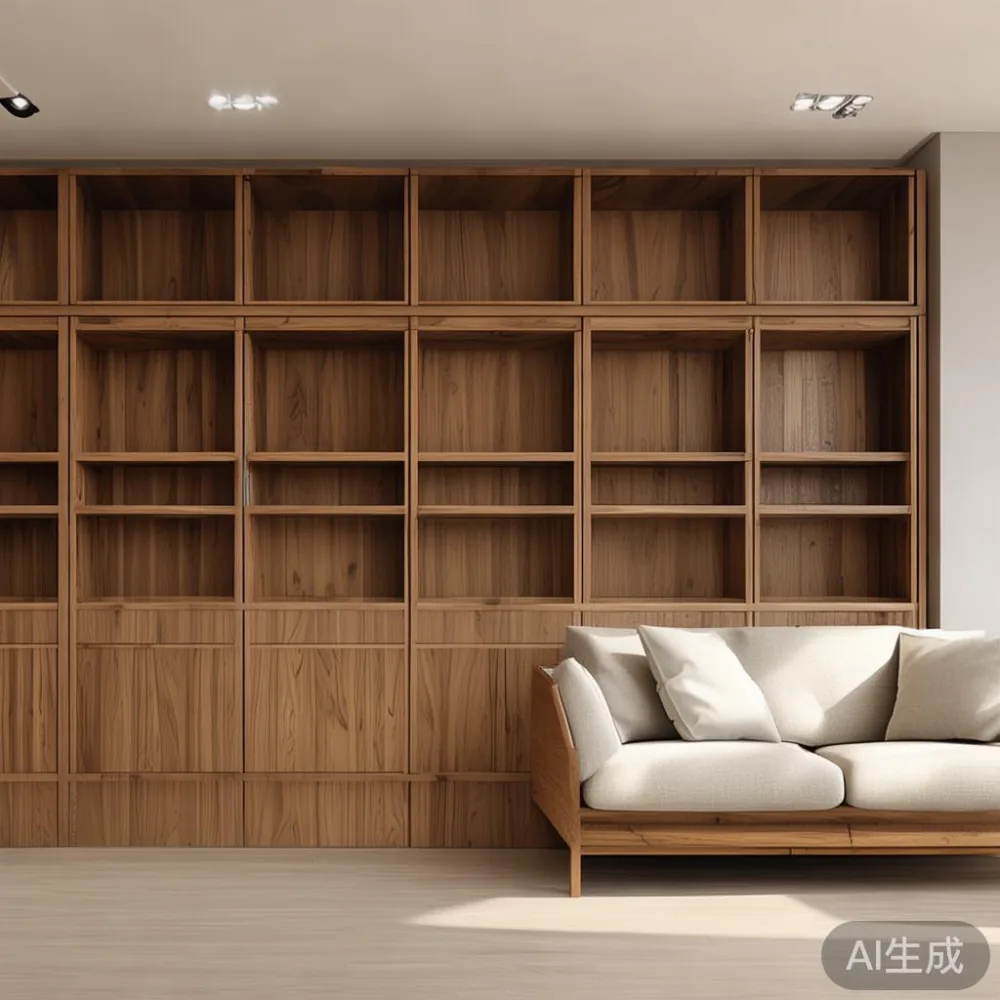
This comparison follows the costs of 1 bookshelf over 5 years. I use Singapore dollars because the decision is local: GST is 9%, delivery to most Singapore addresses is free above US$350, and the dimensions must pass through common lift doors and apartment corridors. MIDHILL furniture examples are included because MIDHILL is a Foshan solid wood maker established in 2008, with export experience across more than 15 countries and a 10-year structural warranty.
What is the realistic 5-year cost of a veneer versus solid wood bookshelf?
The simple purchase price can be misleading. A 180 cm wide, 30 cm deep, 200 cm high veneer bookshelf might cost SGD 620 before GST, while a comparable solid oak or ash bookshelf might cost SGD 1,480 before GST. Those figures produce SGD 678.80 and SGD 1,613.20 after 9% GST. The solid wood example begins at about SGD 934.40 more.
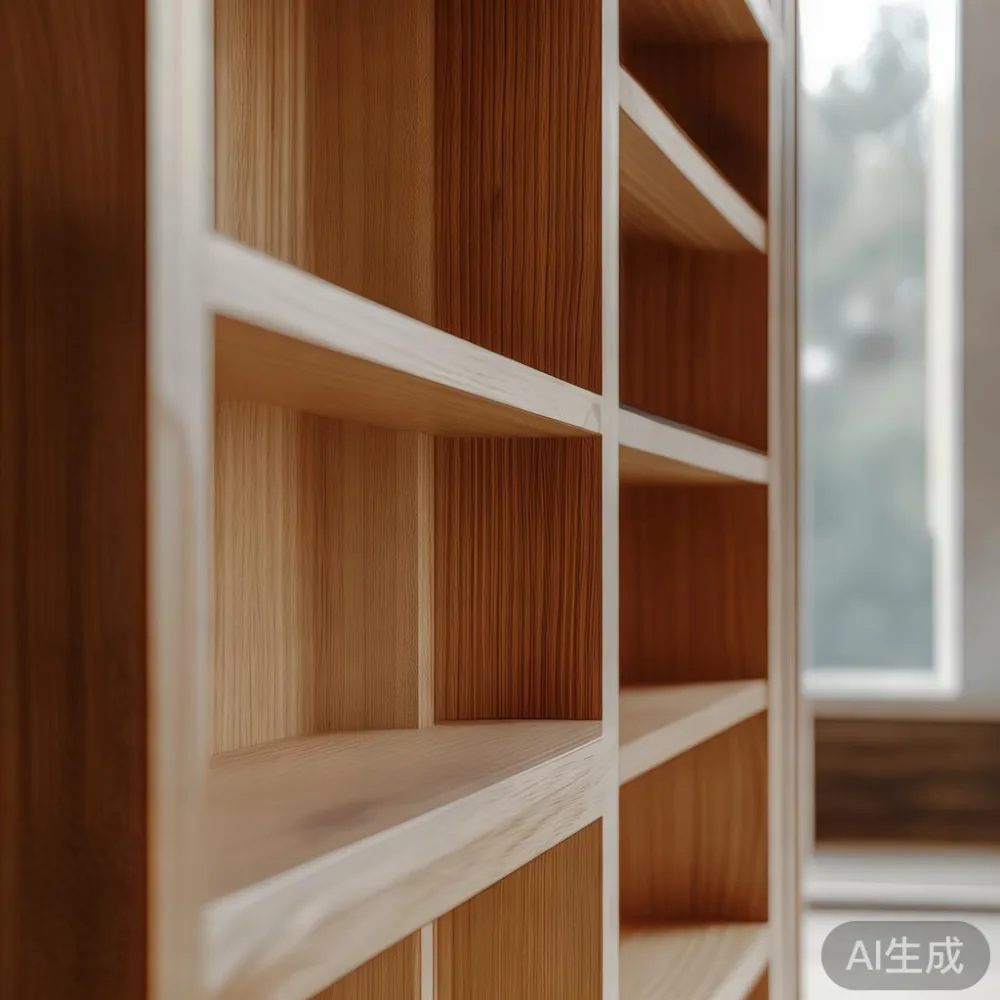
Now add realistic 5-year expenses. Assume one bookshelf, ordinary daily use, no deliberate water exposure, and no renovation. Maintenance includes dusting, polishing, and minor surface care. Veneer may need 1 edge repair at SGD 95 and 1 sheet repair at SGD 180 in year 4. Solid wood may need no sheet replacement, but localised sanding and oiling could cost SGD 140 once. A full replacement at the end of year 5 is also relevant: the owner might accept another veneer bookshelf at SGD 679, or spend SGD 1,613 on a comparable solid wood model.
| Cost over 5 years | Veneer bookshelf | Solid wood bookshelf |
|---|---|---|
| Initial price including GST | SGD 679 | SGD 1,613 |
| Estimated repairs | SGD 275 | SGD 140 |
| Estimated care products | SGD 55 | SGD 95 |
| Delivery and carrying | SGD 0–120 | SGD 0–180 |
| Residual value after year 5 | SGD 170 | SGD 490 |
| 5-year cost without replacement | SGD 839 | SGD 1,358 |
| 5-year cost if replaced once | SGD 1,348 | SGD 1,738 |
Under those assumptions, veneer remains less expensive in year 5, while solid wood retains more value. A buyer who replaces a low-cost bookshelf after 5 years can spend around SGD 1,348 in total; the solid wood route reaches about SGD 1,738 once a replacement is included. The comparison is not a promise of identical outcomes. A veneer edge can chip if struck during a move, while solid wood can move, check, or swell if stored against a damp wall.
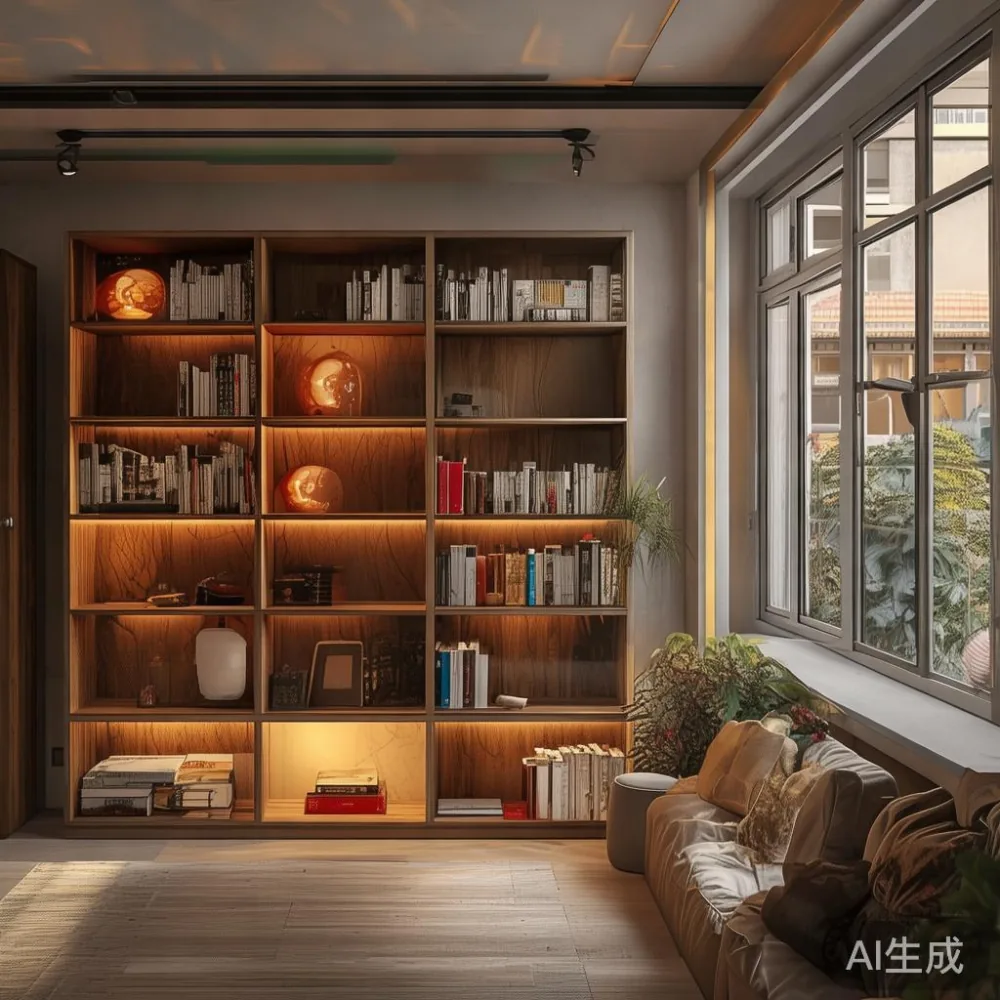
For a 90 cm doorway, a packed bookshelf should be no wider than 84 cm and no deeper than 32 cm. Check the lift too: many HDB and condo lifts have internal door widths around 90 cm, but some have clear widths closer to 80–85 cm. A 180 cm solid wood bookshelf may need 2 cartons, each carrying roughly 28–36 kg. Ask the supplier for carton dimensions, gross weight, and whether assembly is completed before delivery.
How does Singapore humidity change the material decision?
Singapore's climate makes substrate stability important. Outdoor relative humidity often ranges from roughly 70% to 90%, while air-conditioned interiors may remain around 50% to 65%. A bookshelf near a Bedok balcony or in an unconditioned corridor can see more daily movement than one inside a Punggol living room. Solid wood expands and contracts across its grain; engineered veneer on a stable core generally moves less, but its thin face layer can crack or peel if moisture reaches an exposed edge.
Solid wood is not automatically moisture-proof. Its advantage is repairability: a small scratch can be sanded and refinished without replacing the whole bookshelf. MIDHILL offers lifetime refinishing on qualifying solid wood pieces, so long-term care can be part of the ownership calculation rather than a future replacement expense. Veneer must be protected with a proper sealer and should not be repeatedly sanded, because each sanding session can expose less material underneath.
Keep a bookshelf at least 10 cm from a wall where possible, and at least 20 cm from a wet-area door or balcony opening. Use a hygrometer, ideally one that logs readings. A target of 45% to 65% relative humidity suits most indoor wood furniture. Wipe spills within 10 minutes, and do not use a soaked cloth on either material. For tall units, fix them to the wall with suitable anti-tip hardware; 200 cm of shelving can tip if several heavy books are concentrated on one side.
Load matters more than a marketing label. A 180 cm bookshelf with 5 shelves should not carry more than 35–45 kg when evenly distributed. Heavy books, files, or amplifiers should sit on lower shelves. A 25 kg load on one span can create visible deflection in a weaker shelf even when the frame remains intact.
What does veneer cost when damage, lifting, and moving are included?
Veneer usually wins on the invoice because the material cost per square metre is lower and the core can be engineered efficiently. That does not make it an inferior choice in every home. In a dry, climate-controlled study with children or renters, a lower-cost bookshelf may be replaced or repaired more easily. The key is to include the chance of a second purchase inside the 5-year window.
Delivery and carrying can narrow the gap. A packed veneer unit might weigh 34 kg and arrive in 2 cartons of 92 cm by 38 cm by 12 cm and 88 cm by 38 cm by 12 cm. A solid wood unit might weigh 58 kg, with cartons of 96 cm by 42 cm by 14 cm and 84 cm by 42 cm by 14 cm. The heavier solid wood shipment may need a 2-person carrying service at SGD 90–180. Veneer may need only 1 mover for SGD 0–120, depending on the building.
Look for a supplier that provides clear delivery timing rather than a vague dispatch window. For Singapore orders, allow 7–14 business days for production and consolidation, plus 1–3 local delivery days. A written 14-day return period and a 10-year structural warranty can protect against assembly or manufacturing defects, but neither covers accidental chipping, wall moisture, or unstable loading.
Veneer terminology also varies. Some products use natural veneer over particleboard, while others use a plywood or engineered-wood core. Ask for the core material, veneer thickness, edge banding, back panel thickness, and shelf deflection data. A 0.6 mm face veneer sounds substantial until an edge is exposed; 18 mm plywood or solid timber shelves can tolerate more demanding use.
Is solid wood worth the extra price for a bookshelf in an HDB flat?
For many HDB households, solid wood is worth considering when the bookshelf will remain for 8–10 years, hold frequently accessed books, and receive occasional refinishing. The extra first-year cost in this model is about SGD 934.40. Over 5 years, the difference before replacement is around SGD 519 because solid wood has lower estimated repair costs and a higher residual value. That figure does not include personal time, sentimental value, or resale proceeds beyond the conservative SGD 490 estimate.
Space also affects the answer. In a compact Tampines flat, a 120 cm wide, 28 cm deep, 180 cm high bookshelf may use only 0.605 square metres of floor area. A deeper 40 cm unit uses 0.864 square metres, a difference of 0.259 square metres. A narrower design can therefore avoid a wall or create a useful passage. The bookshelf should not project into a lift lobby, block a fire door, or reduce a corridor below the building's clear access requirements.
Style can influence lifetime satisfaction. A light oak finish in a post-modern light luxury room may need only a restrained update as interiors change. Searches for top 10 Post-modern furniture often include substantial bookshelves with clean geometry, solid timber accents, and visible joinery. Likewise, an under 2000 Scandinavian furniture brief often points toward pale wood, simple proportions, and functional storage, all of which suit a solid wood bookshelf if the grain remains attractive after refinishing.
By contrast, a painted or laminated finish may be easier to coordinate with rental white walls. Veneer can suit a renter who expects to move in 2–3 years. If the bookshelf is moved twice, allow 2 hours to dismantle, 3 hours to carry, and SGD 140–260 for a small delivery vehicle or van. Scratches and corner damage during each move can erase the initial savings.
How should you compare the bookshelf price with other solid wood furniture?
Look at unit price, not only total furniture expenditure. A bedroom package might include a solid wood sofa at SGD 2,980, a bed frame at SGD 1,780, a dining table at SGD 2,260, a wardrobe at SGD 2,440, a nightstand at SGD 620, and a marble table at SGD 1,580, all before GST. The marble table adds a different care profile: sealing every 6–12 months and using coasters can cost around SGD 70–150 per year.
Bookshelves need a different quality test. Inspect shelf ends, back joints, fasteners, and the front edge. For solid wood, look for controlled drying of about 8% to 12% moisture content appropriate to interior use, clean joins, and continuous shelf supports. For veneer, check that edges are sealed and that the back panel is fitted closely enough to limit racking. A 2 mm gap over 180 cm can let a bookcase distort under alternating humidity.
Design references can help, but they should not replace measurements. A search for the best French wardrobe for 2026 may lead to pale oak, linen-coloured finishes, and restrained profiles. The same French light luxury language works with a bookshelf, provided the colour and grain remain coherent. An Italian light luxury nightstand may use figured veneer and bronze-toned details, so pairing it with a solid wood bookshelf can create a mixed-material room rather than a matching suite.
There is also a useful comparison for anyone examining a broader room: American sofa vs Japandi sofa concerns proportion, comfort, and visual weight rather than timber construction. It does not change the bookshelf calculation. A solid wood sofa may last 10–15 years, but a damaged shelf can make a whole reading wall impractical. Budget the bookshelf as functional infrastructure, especially in a home where books are used weekly.
What should you inspect before ordering a 5-year bookshelf?
Ask for a physical sample if possible. My colleague and I tested a 60 cm section of white oak and an equivalent oak-veneer panel last month in a Singapore showroom. We wiped both with 20 ml of water, then placed them under 75% relative humidity for 72 hours. The veneer sample showed no immediate stain, but its sealed edge lifted slightly after repeated damp wiping. The solid oak darkened temporarily and returned closer to its original appearance after drying and a light oiling. This was a controlled 3-day comparison, not a laboratory test, but it demonstrated why finish, edge sealing, and maintenance instructions matter.
Request 6 specific pieces of information: dimensions, shelf clear height, shelf thickness, maximum recommended load, carton dimensions, and total packed weight. A useful 180 cm bookshelf might offer 5 shelf bays with 31–36 cm clear heights. If the model has a closed cabinet at the bottom, the usable open shelf height may only be 29–33 cm, which can limit large art books.
Check the colour in 3 lighting conditions: daylight, 3000 K warm light, and 4000 K neutral light. Veneer leaves may vary slightly between panels; this can be attractive in natural wood or appear inconsistent in a highly uniform finish. Solid wood also varies, but sanding can preserve continuous grain. Ask whether replacement boards and matching veneer leaves are available for the warranty period.
For cost control, use the room's actual clearance before selecting the largest size. Measure the wall, skirting, sockets, lift opening, and turning space. A 180 cm unit may cost SGD 1,613, but a 150 cm unit at SGD 1,260 could be more comfortable in a narrow HDB living room and easier to move. Free shipping above US$350 may apply to an international order, while local delivery and carrying in Singapore should still be confirmed separately.
Finally, define the 5-year plan. For a solid wood bookshelf, schedule an inspection every 6 months and refinishing when the finish becomes thin, perhaps once between years 3 and 5 at SGD 120–250. For veneer, inspect edges every 3 months and repair chips early. A modest SGD 80 repair in year 2 may prevent a SGD 300 replacement later.
Which bookshelf gives you the lower total cost over 5 years?
The veneer route costs about SGD 839 over 5 years without replacement, compared with SGD 1,358 for solid wood. If one replacement occurs during the period, the totals become roughly SGD 1,348 and SGD 1,738. Solid wood therefore provides better value if it stays in the home, can be refinished, and retains about SGD 490 of residual value. Veneer provides the lower cash outlay and can be the more sensible choice for temporary use, rental homes, or a room where appearance takes priority over long-term repairability.
The decisive factor is duration. If you expect to keep the bookshelf for more than 5 years, a solid wood model often deserves the premium. If replacement is likely within 3 years because of frequent moving, rent, or changing décor, veneer can avoid tying up more money than necessary. For either route, choose the actual dimensions, verify load limits, measure the lift and corridor, and confirm delivery in 7–17 business days.
A useful purchasing rule is to reserve no more than 15% of a 5-year furniture budget for one bookshelf's expected care and replacement. On an SGD 1,348 veneer plan, that is about SGD 202. On an SGD 1,738 solid wood plan, it is about SGD 261. Both figures should be treated as planning allowances rather than inevitable charges. The better bookshelf is the one whose material, size, and service life agree with how your Singapore home is actually used.