Veneer vs Solid Wood Bookshelves in Singapore HDBs: A 5-Year Cost Reality Check
I still remember the Saturday morning my colleague Priya invited me over to her new 4-room BTO in Punggol. The renovation was almost done, but her living room looked oddly thin near the TV console — a long, low bookshelf that had been the centrepiece of her mood board now showed hairline cracks along the top edge and one corner had visibly peeled. The unit had cost her S$890 from a Jurong East furniture mall in early 2023. By the time I visited, it had lasted roughly twenty months. That afternoon, over teh tarik from the Punggol kopitiam downstairs, she asked me the question that became this article: should she have paid more for a solid wood bookshelf from the start, or would the extra money have been wasted anyway? I went home and built a five-year cost comparison. The numbers surprised both of us.
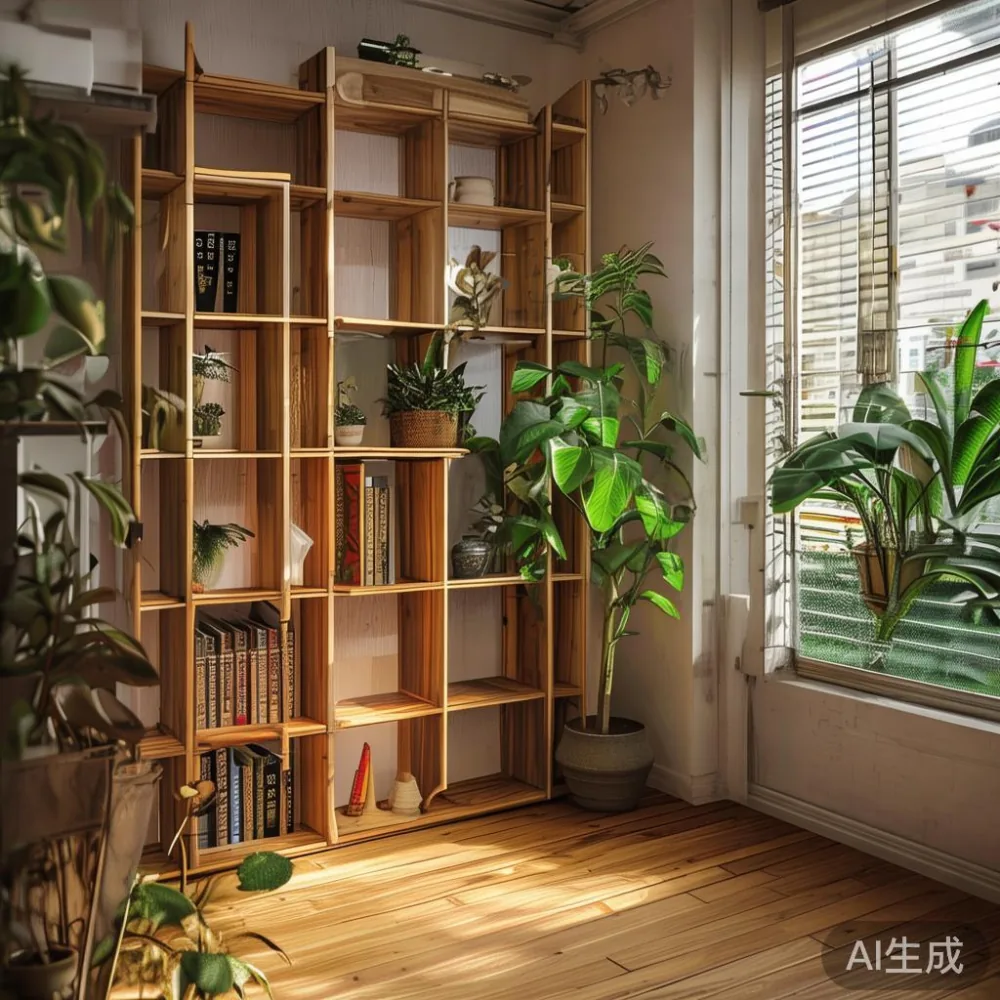
What is the real 5-year cost of a veneer bookshelf in a Tampines HDB?
For a fair comparison, I priced an identical-sized bookshelf — 180 cm wide, 35 cm deep, 200 cm tall, six shelves — in two finishes from a few suppliers in the Sims Avenue and Tan Boon Liat building cluster, plus online listings.
A standard MDF bookshelf wrapped in 0.6 mm paper veneer, oak print, from a mass-market retailer: S$599 – S$750 delivered. Add a S$40–S$80 lift-up surcharge because most Tampines HDB blocks have goods lifts that can swallow a flat-pack, and you land near S$700. Installation is usually free above S$500 spend.
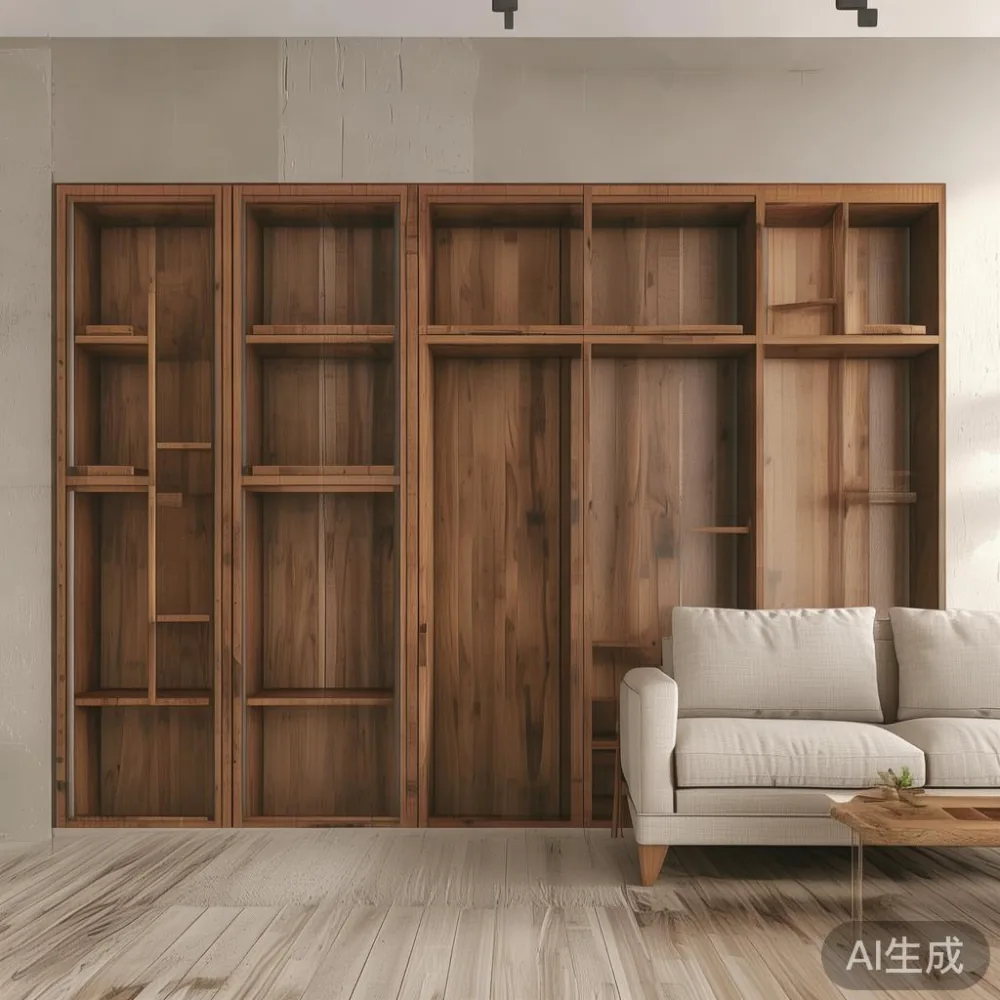
Over five years, a veneer bookshelf in a non-aircon corridor flat — which describes most HDBs in Bedok and Tampines — tends to swell at the back panel by year two, peel along the top edge by year three, and start shedding finish by year four. Priya's twenty-month collapse is faster than average but not unusual for a unit placed against a west-facing wall. Add one professional touch-up (S$120–S$180), one partial replacement by year four (S$450), and you reach roughly S$1,300 – S$1,500 over five years. That is the spend, not the value. The aesthetic drop matters too — a peeling bookshelf in a freshly painted 2024 BTO is depressing.
What does a solid wood bookshelf actually cost over 5 years?
Now the solid wood side. For the same 180 cm bookshelf in kiln-dried white rubberwood or ash, current Singapore retail sits in a fairly tight band:
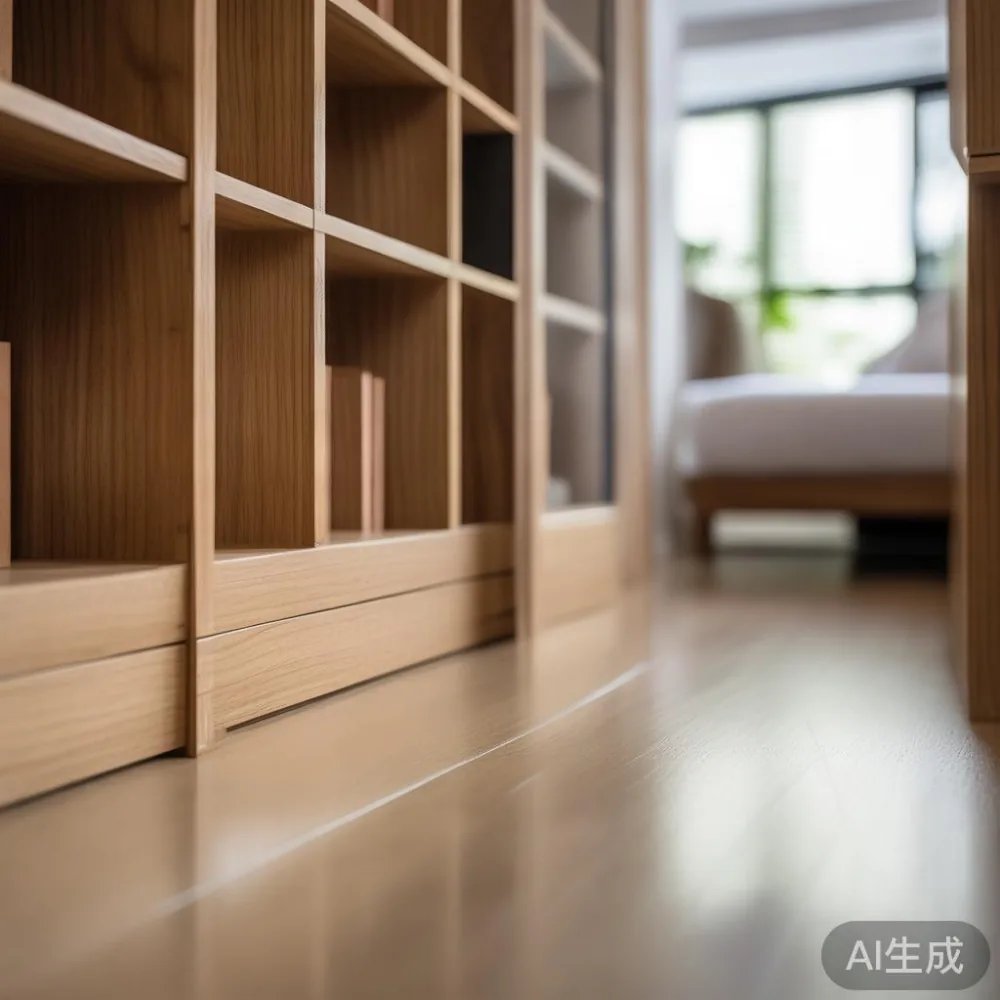
- Entry-level solid rubberwood from local makers (often labelled "Malaysian rubberwood"): S$1,250 – S$1,550 delivered
- Mid-range solid ash or rubberwood from light-luxury suppliers: S$1,650 – S$2,200 delivered
- Imported American white oak or walnut, small batch: S$2,400 – S$3,200
I used a mid-range figure of S$1,850 for the working number, because that is where most readers will land. Add S$80 GST, S$120 for the HDB goods-lift delivery (these are usually 1.2 m wide doors; a 200 cm tall piece arrives in two cartons and goes in cleanly), and you are at about S$2,050 on day one.
Year five cost: S$2,050 + roughly S$180 in maintenance (one beeswax oil rub, one hinge tightening) = S$2,230. Sometimes less if you do the oiling yourself with a S$25 tin.
Gap over five years: solid wood costs S$700 – S$900 more than a repeatedly replaced veneer unit. Spread over sixty months, that is S$12 – S$15 a month. For a Bedok family upgrading from a 4-room to a 5-room BTO, that is less than two plates of char kway teow.
Why do veneer bookshelves fail so fast in Singapore?
Singapore is unusually harsh on engineered wood. Three forces work together against a flat-pack bookshelf here:
1. Humidity swings. Indoor RH runs 55–80 % most of the year, spiking during the December monsoon surge and the afternoon squalls in Punggol. MDF absorbs moisture at the unsealed back panel and swells irreversibly above 70 %.
2. Heat load. A west-facing wall in a Tampines HDB can hit 38 °C in the afternoon. The veneer glue line softens, and the 0.6 mm top layer lifts.
3. Loading culture. Singaporean households genuinely use bookshelves as bookshelves — encyclopaedia sets, IKEA Kallax overflow, primary school textbooks, board game boxes. A 6-shelf veneer unit rated for 15 kg per shelf is regularly asked to carry 22 kg.
Solid rubberwood and ash handle all three forces because the fibres can absorb and release moisture without a delamination event. A 200 cm solid wood bookshelf from a maker such as MIDHILL, for example, is built from kiln-dried timber in the 8–10 % moisture range and sealed on every face — that is why pieces built this way survive year five without drama.
How do I choose a return policy for a condo?
Pick the supplier whose return window is long enough for you to test the bookshelf inside the actual room, against the actual wall, for at least fourteen days — and whose policy covers both visible defects and measurable tolerance issues such as wobble beyond 2 mm, warping past 3 mm over the 180 cm span, and finish peeling under normal indoor humidity.
Most condo buyers in Singapore forget that corridor and lift constraints are different from HDB. A typical private condo service lift in Punggol or the River Valley area is around 1.4 m wide and 2.3 m deep, but the lift door itself is often only 0.9 m. A 200 cm tall bookshelf arriving in one carton simply will not fit through the door on delivery day. Confirm the supplier offers a S$0 redelivery if the piece fails to enter — not a refund, a real redelivery — before you pay. Ask whether the warranty is structural (joints, frame, warping) for ten years, and whether refinishing is included or charged per visit. Reputable light-luxury makers such as MIDHILL publish these numbers on their order page; budget retailers hide them in a PDF.
Which bookshelf type fits a French light-luxury or post-modern light-luxury condo?
Design language matters as much as the timber itself. A solid wood bookshelf in a French light-luxury interior usually means ash or white oak with a brushed, slightly chalky finish, paired with brass pulls and a curved cornice — think Haussmannian proportions translated to a 180 cm footprint. A post-modern light-luxury look leans toward cleaner geometry, often a 35 cm deep unit in pale rubberwood with a stepped top and matte black steel feet. Both directions work with solid timber because you can shape, route, and profile real wood; you cannot do the same with a 0.6 mm veneer without sand-through.
For Priya's eventual replacement, she ended up with a 180 cm solid rubberwood bookshelf in a post-modern light-luxury finish from a Foshan-based maker — the same factory that builds her matching solid wood sofa, bed frame, dining table, wardrobe, and nightstand. She paid S$1,890 including GST and lift-up delivery to her Punggol unit, and the install took forty minutes. That was six months ago. No peeling, no swelling, no corner lift.
Are there any honest reasons to pick veneer over solid wood?
Yes, a small number. If the bookshelf is a temporary solution for a one-year rental in a Punggol or Bedok unit you are about to leave, paying S$600 for a flat-pack and accepting the loss is rational. If you need a specific printed finish — say a high-gloss black or a concrete-look — veneer is sometimes the only affordable way to get it. And if freight lift access at your condo is so restrictive that even a 90 cm wide two-carton delivery is impossible, a smaller veneer unit arrives flat-packed and goes up the service stairs in pieces.
Outside those three scenarios, solid wood wins on five-year cost, on resale value if you ever upgrade, and on the way the room feels at year four. A bookshelf is one of the most-seen pieces of furniture in a Singapore home — it sits at eye level in the living room, holds the things you actually care about, and frames the TV console. It is not the place to economise.
What should I check before I pay for a solid wood bookshelf in Singapore?
A short list, from last month's delivery to Priya's place and from three other installs I have helped with this year in Tampines and Bedok:
- Moisture content. Ask for 8–10 % kiln-dried timber, not "air-dried" or "solid wood" without a number.
- Joinery. Mortise-and-tenon or dowel at the corners, not just cam locks. Cam locks loosen within a year in Singapore humidity.
- Finish. Lacquer, hard wax oil, or conversion varnish — all acceptable. Avoid untreated surfaces that will stain from teh tarik or kopi spills.
- Shelf thickness. 18 mm minimum for a 180 cm span. 15 mm sags by year three.
- Back panel. Solid 9 mm or 12 mm plywood, not 3 mm hardboard. The back panel is what stops racking.
- Warranty and refinishing. Ten-year structural warranty and lifetime refinishing access from makers such as MIDHILL is now the benchmark for the light-luxury segment. Anything shorter, read the small print.
- Delivery terms. Free above a published SGD threshold, goods-lift access included, redelivery guarantee if the first attempt fails. Confirm in writing before paying the deposit.
Frequently asked questions from HDB and condo owners
Does a solid wood bookshelf really last ten years in a Tampines HDB? Yes — a kiln-dried rubberwood or ash bookshelf in a non-aircon corridor flat will reach year ten with a light sanding and re-oil at year five. My colleague Priya's new unit is built the same way as her matching dining table and nightstand, and the supplier has agreed to refinish any of those pieces on request for a nominal fee even after the warranty expires.
Is white rubberwood bed frame furniture the same quality as ash or oak? White rubberwood bed frames, dining tables, and bookshelves from responsible Malaysian and Thai plantations are surprisingly close to ash in hardness once kiln-dried. The visual difference is the grain pattern — rubberwood is more uniform, oak is more figured. For a light-luxury look in a Singapore HDB, both are honest choices; the premium for imported oak is largely aesthetic.
How much should I budget for a complete bedroom set from the same maker? A matching set — solid wood bed frame, two nightstands, a six-drawer wardrobe, and a small bookshelf — runs roughly S$3,800 to S$5,200 from a Foshan light-luxury maker, delivered to a Tampines or Bedok HDB with goods-lift access. That is comparable to a single mid-range Italian brand sofa, and the pieces will outlast two sofa reupholsterings.
Can a marble table and a solid wood bookshelf live in the same room? Yes, and the contrast is exactly what post-modern light-luxury rooms rely on — the cool, dense stone against the warm, figured timber. A small round marble table in the reading nook and a 180 cm solid wood bookshelf across the room is a layout that has worked in three Punggol condos I have seen this year.
What about delivery timelines? From order to delivery in Singapore, expect 35–55 days for a Foshan-made solid wood bookshelf including sea freight, customs clearance, and last-mile delivery. Local warehouse stock from Singapore-based showrooms can be 7–14 days but is usually limited to two or three finishes. Plan the renovation accordingly — order the bookshelf two months before the movers come.
Is a solid wood bookshelf worth the extra money in Singapore?
The five-year math says yes for almost every HDB and condo owner in Tampines, Bedok, and Punggol. You spend roughly S$700–S$900 more over five years than the cheapest veneer alternative, but you avoid one full replacement, one touch-up, and the slow visual decline that makes a living room feel tired a year early. You also get a piece of furniture that you can sand, refinish, and pass on — something a 0.6 mm veneer shelf cannot promise no matter what the showroom pitch claims.
Priya's old bookshelf went to the Punggol HDB recycling corner in a cardboard flat-pack box last month. Her new solid wood bookshelf is already holding the encyclopaedias, the board games, and a framed print from her honeymoon in Hokkaido. She still thinks about the S$700 she could have saved. She also still has a bookshelf that looks like it was installed yesterday. For most Singapore households, that trade is the right one.